Visualizzazione post con etichetta F INDIA TODAY. Mostra tutti i post

19 agosto 2022

THE ERA OF RANBIR


[Archivio]

Il suo ultimo film, Shamshera, distribuito un mese fa, non ha incontrato i favori del pubblico, quindi ora tutti gli occhi sono puntati sulla prossima pellicola, Brahmāstra - Part One: Shiva, nelle sale fra qualche settimana. Comunque vada, il 2022 rimarrà memorabile per il sempre talentuoso Ranbir Kapoor: in aprile l'attore si è sposato con Alia Bhatt (sua partner in Brahmāstra), e la coppia sta aspettando un bambino. Proprio la settimana scorsa i due erano in vacanza in Italia, una sorta di brevissima luna di miele incastonata fra i rispettivi impegni professionali (clicca qui). In attesa di applaudire nuovi trionfi, vi propongo un lungo, entusiastico articolo dedicato a Ranbir pubblicato da India Today il primo luglio 2013, anticipato da un editoriale e, naturalmente, dalla copertina. L'attore era allora in corsa per il titolo della più giovane superstar del cinema hindi popolare contemporaneo (buon sangue non mente). Cos'è successo in seguito? La carriera di Ranbir ha sperimentato alti (Tamasha, Ae Dil Hai Mushkil, Sanju) e bassi (Besharam, l'intrigante Roy, Bombay Velvet, Jagga Jasoos), oltre alla concorrenza di un certo Ranveer Singh.

EDITORIALE, Aroon Purie:

'Every superstar in the Hindi film industry has banked on a formula to become a national icon. If Rajesh Khanna was the eternal romantic of the 1960s, Amitabh Bachchan embodied the repressed anger of a young nation in the 1970s. The 1990s belonged to Shah Rukh Khan, who represented a post-liberalisation globalised generation. He gave a new twist to the romantic lover boy, naughty and passionate, yet totally devoted to Indian values. Ranbir Kapoor, the new superstar of Indian cinema, doesn't have a formula to his stardom.
He is just 30 and has done 10 films since his towel-dropping debut in Sanjay Leela Bansali's Saawariya in 2007, but it's impossible to slot him in any particular image. From the goofy salesman in Rocket Singh Salesman of the Year (2009) to the scheming political heir in Raajneeti (2010), from the good Samaritan in Ajab Prem Ki Ghazab Kahani (2009) to the superstar rocker in Rockstar (2011), from the aimless and confused youngster in Wake Up Sid (2009) to the ambitious traveller in Yeh Jawaani Hai Deewani (YJHD), his roles are as varied as that of a seasoned character actor.


Some may argue that the credit should go to the new environment in Bollywood as several talented directors are experimenting with subjects and forms that don't conform to type. But such experiments have rarely created superstars. "I challenge any star from my time till now to take the kind of risks this boy has taken," his proud father, actor Rishi Kapoor, says. With the risks have come great rewards. His latest film, YJHD, grossed over Rs 170 crore in three weeks. His previous release, Barfi!, was also a Rs 100-crore blockbuster.
This is a rather curious phenomenon in the Hindi film industry which is likely to be worth nearly Rs 30,000 crore next year. Ranbir defies almost all the market tricks supposed to ensure an entry into the coveted Rs 100-crore club-six-pack abs, gravity-defying action sequences, mindless comedy, provocative item numbers and songs with beautiful women in foreign locations. Movie-goers paid to watch him not utter a single word in Barfi! and lose his girl in Rockstar. This is where Ranbir has evolved beyond his star power. His biggest USP is perhaps this element of unpredictability. Viewers still don't know what to expect of him.

Deputy Editor Kunal Pradhan spent 50 hours over four days with Ranbir to decode the man behind the star. He followed the actor to his film shoots, discussed film promos in his vanity van, worked out with the actor in the gym and even spent time with him in his first-floor room. In his real world, the reel superstar is quite predictable. He still lives with his parents, is obsessed with video games, watches football with friends and is terrified of his dominating father. "Interviewing Ranbir feels like hanging out with any regular person just entering his 30s. He is unafraid to reveal himself, which is a rare trait in any public figure, particularly an actor," says Pradhan.
Being on the cover of India Today was one of Ranbir's four wishes when he joined films. With this issue, his wish gets fulfilled twice over. We put him on the cover first in our June 21, 2010, issue for being the boy wonder who dared to shun formulaic films. Three years later, that risk-taking ability has allowed him to be emblematic of new-age Bollywood. The real big test for the actor is what he will do from here. As his friend Ayan Mukerji, director of YJHD, says: "To see how he changes as a superstar will be interesting. When he's 40, will he still be open to meeting a young, unknown director with a new script? That will decide whether he becomes the next Shah Rukh Khan or someone even bigger." That's for later. Let's revel now, in the new superstar hero who's defying every stereotype of superstardom'.


'Ranbir Kapoor, 30, is India's new acting superstar. His latest film Yeh Jawaani Hai Deewani, released on May 31, has notched up collections of Rs 170 crore at last count, on the back of another Rs 100-crore blockbuster, Barfi!. His new custom-made Mercedes Benz G63 AMG now gets chased down the Bandra-Worli Sea Link by teenagers who recognise him through his lightly tinted windows. There is a gaggle of girls waiting at the gate of his Pali Hill bungalow for an audience; some so persistent and regular they're on first-name terms with his watchman, particularly because Ranbir gets pictures clicked with each one of them. (...)
But in the middle of all this adulation, Ranbir seems strangely unaffected. "I don't know what's wrong with my son," his mother Neetu Singh, 54, tells India Today. "This boy is as relaxed when his film doesn't do well as he is when it's a smash hit. I sometimes wonder if I gave birth to a yogi." His father Rishi Kapoor, 60, a bullish patriarch who admits he had gone on a wild streak after his own debut film Bobby had smashed box-office records in 1973, describes Ranbir as his polar opposite. "I marvel at what keeps him so grounded," he says, swelling in equal measure with pride and bewilderment.

Ranbir (...) jokes about how his state of Zen is being seen as a character flaw. (...) But stoic or not, Ranbir is more calculating, and unabashedly chasing success, than he lets on. Afternoons in his vanity van are spent cruising through one film promo after another. He watches them again and again, seeking opinions on how they are. "Did you see the Chennai Express spot?" he asks about the new Shah Rukh Khan movie. "Good or run-of-the-mill? What about Lootera?" That's the new Vikramaditya Motwane film starring Ranveer Singh. His Yeh Jawaani Hai Deewani director and closest friend Ayan Mukerji, 29, says it is Ranbir's way of constantly testing waters, analysing, and trying to break down how his own promo will stand out from all the others. "He has his ear to the ground," says Mukerji. "How can my film be different, that's the only question on his mind."
It's this constant craving to be different that allows Ranbir to do the kind of roles he's done: from Rocket Singh Salesman of the Year in 2009 to Barfi! in 2012, at a time when everybody around him was telling him not to. "I challenge any star," says Rishi Kapoor, "from my time till now, to take the kind of risks this boy has taken." Rishi, sitting in a vanity van next to Ranbir's on the sets of Besharam, which also stars both him and his wife Neetu, is now speaking with a passion that automatically amplifies his volume. "A lot of people did different cinema but that was when they were working with four other regular films on the side. They didn't put their careers on the line like Ranbir has, working on one project at a time," he says, getting louder with every pause. "I can't tell him what films to do now, because what the hell do I know? A lot of people prove their detractors wrong, but he has proven his well-wishers wrong."


Not prone to such passion when off camera, Ranbir looks at his odd choice of roles a little differently. "The first time I thought I should be an actor was in school. I thought at least this is something for which I won't have to study," he laughs. "But I've realised that an actor needs to be constantly unsure about what he's doing, and about what's going on around him. The moment you think you've nailed it, you're dead."
As a Punjabi boy from Bandra, Ranbir, who went to study film in New York, admits he doesn't fully understand the world outside his tiny bubble. "What do I know about my character from Rockstar, (...) or Rocket Singh, or Samar Pratap (Raajneeti, 2010), or the deaf and mute Barfi? The idea is to use the experience of the people who do know. I can relate to Sid (Wake Up Sid, 2009) or Kabir from Yeh Jawaani but that's about it. I'm fortunate to be working with directors who're willing to invest in my education," he says. Anurag Basu, who Ranbir calls Dada, talks to him regularly about new ideas and new characters. Imtiaz Ali, concerned that he doesn't have the command over Hindi or Urdu needed for good diction, and by extension good dialogue delivery, sends him books by Premchand or poetry by Faiz. "You don't need to go through every life experience yourself when you have people to share them with. I have my own point of view and my own understanding through my relationships with women, and my exposure to world cinema. The characters I portray engage me, and I assume they would engage an audience," he says.

Today Ranbir's star meter is at a point few actors have reached before. Yeh Jawaani Hai Deewani is a rare, epochal moment that comes along perhaps once in a decade, when the audience starts believing that the person they're seeing on the screen is not the character, but the actor himself. It happened with Shah Rukh Khan in Dilwale Dulhania Le Jayenge (1995) when viewers thought Raj was a physical embodiment of Shah Rukh. They thought he was a passionate lover who would go to any lengths to win the girl of his dreams, charming his way past any opposition. Shah Rukh emerged from that film as a funny, confident, upright, master-of-all-trades who women wanted to fall in love with and men wanted to be friends with.
Yeh Jawaani Hai Deewani has struck a similar chord. The movie-watching public somehow believes that the man they see on screen is not Kabir, but Ranbir. That he is naughty and fun-loving. That he takes life lightly. That he is loyal to his friends but wouldn't give up on his dreams for the woman he wants to share his world with. That he is the life of every party and the soul of every song. "It's too soon for me to analyse the film," says director Mukerji. "We had thought it would do well but fall short of being a blockbuster-like, say, a Cocktail (2012). But something multiplied its business. Perhaps it was Ranbir and how the public saw him as Kabir." Unlike any other Bollywood superstar before him, Ranbir's USP is how he reins in his emotion, rather than how he lets it out. He's not a master of tragedies like Dilip Kumar, or an angry young man like Amitabh Bachchan, or a fervent lover like Shah Rukh. Ranbir is a new hero for a new age. 


Sociologist Shiv Visvanathan, professor at the O.P. Jindal Global University, Sonepat, and senior fellow at the Centre for the Study of Developing Societies in Delhi, says: "Ranbir is, first, part of a legacy, a nostalgia-Raj Kapoor incarnate, a clown but an adolescent clown. Second, he is a subject of gossip, which sees him as playful and light, and with a roving eye. If Aamir Khan is a social project and Salman Khan is a muscular project, Ranbir is an individual project. He is narcissistic without being self-obsessed, which makes him connect with the India we are becoming, and the India we want to be."
This change in perception now follows him everywhere he goes. There is a smile on the faces of the Besharam unit when Ranbir walks on the set. (...) The assistant directors and grips watch him through tints of rose as he bends down to touch the feet of veteran action director (...) or refers to the cinematographer (...) as "Madhu sir". They gather around as he raps with co-star (...) between shots. They want to know what Ranbir's room is like, who his friends are, which restaurants he goes to, what turns him on, and what has made him this friendly, humble superstar who throws no tantrums and remembers everybody's names.

Ranbir's bedroom on the first floor of the Krishna Raj bungalow, where he chooses to live with his parents despite a bank balance now estimated to be in the range of Rs 200 crore, is a strange mix of young and old. His king-size bed, covered by high threadcount sheets, sits on a wooden floor. The lamp on the side table is perched next to The King Of Oil: The Secret Lives Of Mark Rich by Daniel Amman. "I read autobiographies because there is too much fiction in my life," says Ranbir. There is a beige three-seater sofa for friends, and small tables all around which hold his numerous awards. The decor is inspired by film and family: A poster of Barfi!, a photograph of the first shot of Mughal-e-Azam featuring his great grandfather Prithviraj Kapoor, a mosaic of his grandfather Raj Kapoor's face created from movie stills, and a 3,300-image mosaic of his own face presented to him by the Ranbir Kapoor fan club.
The centrepiece of the room is a 103-inch TV on which he's watching the Netflix series House of Cards. He has an Xbox 360, on which he plays FIFA 2010 and Halo 4, and a Playstation 3, on which his latest favourite is Uncharted 3. His mini-refrigerator is stacked with beer, caviar, sardines, and his favourite chocolate wafers, Quadratini. "When I'm in this room, I vegetate," says Ranbir.


Despite living with a strict father and an indulgent mother, Ranbir has a clearly defined personal space, borne partly out of rebellion and partly out of success. When he was in college, he would derive great pleasure in violating his 1.30 a.m. curfew. "I came home by midnight, waited for everyone to go to bed, then snuck out." His girlfriends often stay over despite his folks living on the floor below. "I don't take them for breakfast with my parents. But I'm sure they know who stayed over," he says.
Ranbir's relationship with women is a little more complicated than he likes to admit. He's been in five "meaningful" romances. His last girlfriend, Deepika Padukone, was his co-star from Bachna Ae Haseeno (2008) and Yeh Jawaani Hai Deewani. "We're okay now. We sorted things out a while ago," he says about her. The closure has come at a price, hinting that an inveterate romantic is hiding beneath textbook intimacy issues: Ranbir avoids riding the Segway he would use to go to her Bandra home when they were dating. "I associate it with her. That was my Deepika vehicle."

But his inability to invest too much is obvious from how Ranbir has never been dumped. "I haven't really gone in deep enough to allow myself to get hurt. I'm weak; I pull away when things start to stagnate. I'm aware that I've broken five hearts, and it's not a good feeling." Ranbir says he doesn't really have a 'type'. "I like conflict - someone who challenges me, someone who I can look up to, someone who can keep me in check. Love has to be extraordinary, otherwise there's no point in it. I just haven't met anyone who's made me feel that way." At least not for long enough.
All this talk could also be a ploy to kill the rumour that has been raging in Bollywood - of his relationship with Ajab Prem Ki Ghazab Kahani (2009) co-star Katrina Kaif. "Everybody seems to think we're together, but it's not true," Ranbir insists. "She gets along with Ayan as well so we hang out together. It gets tiresome sometimes to talk about what Katrina and I have, and what we don't." His fans, and somehow even his film unit, don't seem to buy that.


But the defining relationship of his life is the one with his father Rishi Kapoor. It's an awkward, uneasy connection though the distance between them is slowly reducing. When Ranbir was a child, his father would either be out shooting, or would get into loud drunken brawls with Neetu that stretched deep into the night. "There were times when my sister (...) and I would be sitting on the steps till 6 a.m., waiting for them to stop," says Ranbir. It made for a difficult adolescence, stemming from an early realisation of how complicated a relationship between a man and a woman can be. "I always knew Dad loved my mother. He is still deeply possessive about her. They would have long arguments and passionate reconciliations. But he always held the upper hand in the house. He was the dominant force, and the rest of us had to cower." It was only when Ranbir returned from college did he noticed the dynamic had changed. His mother had become assertive. "She now had a point of view and got her way," he says.
His misgivings about alcohol spring from seeing what its overindulgence had done to his father. Ranbir is a reluctant social drinker but has smoked his share of weed, especially while at film school. "I used it again during Rockstar," he says, "this time as an acting tool. It was hard to get in the moment on stage with 300 bored junior artistes posing as a real audience. Pot made those moments feel real." But he says he's quit now, partly because he's too busy to get high, partly because he can't afford the lack of concentration and short-term memory loss that comes with smoking up. Rishi Kapoor acknowledges that his relationship with Ranbir remains somewhat strained. "I don't believe a father and son should be friends. I don't want him smoking in front of me, and I'm not comfortable talking to him about his girlfriends. But maybe," he adds, "I've missed something. Maybe I could've been a little different."

Ranbir still wants his father to handle his acting contracts for two reasons. One, Rishi Kapoor is a hard nut to crack in the boardroom and always gets him a great deal. Two, he doesn't want to let commercial negotiations come in the way of a partnership with producers and directors, many of whom are his friends. His only condition is that any creative decision must be his own.
"Today Ranbir is a young actor making fresh films with new directors telling different stories," says Mukerji. "To see how he changes as a superstar will be interesting. When he's 40, will he still be open to meeting a young, unknown director with a new script, or will the Rs 100-crore blood that he's tasted force him to play safe? That, for me, is the question which will decide whether he becomes the next Shah Rukh or someone even bigger." It's past midnight now. Ranbir is back in his room. (...) But he won't be going to bed anytime soon. "I am too insecure to crash early," says Ranbir. "I feel life will pass me by while I'm sleeping".'

10 dicembre 2021

IL FENOMENO SALMAN KHAN


[Archivio] 

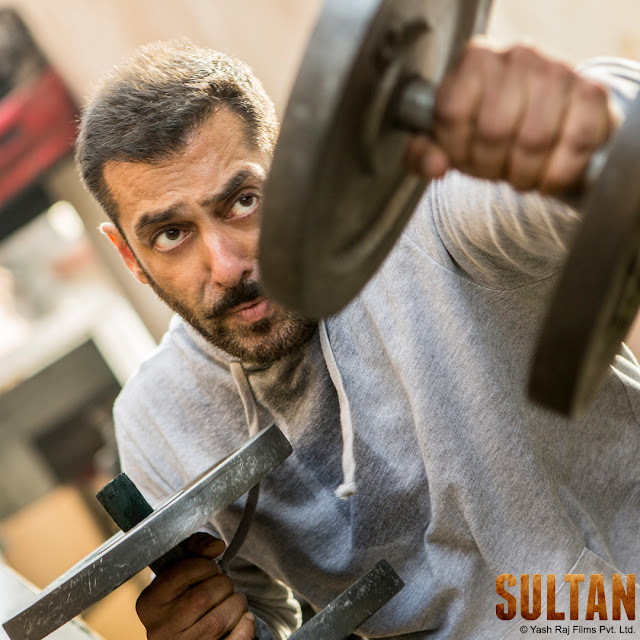
In questo periodo sono in vena di revival, quindi vi propongo una serie di articoli, pubblicati nel 2010 e nel 2011, che tentano di analizzare il fenomeno Salman Khan. Dal 2018 l'aura di Sallu sembra un po' appannata, ma la superstar non è nuova a cicli di tonfi e resurrezioni. In una carriera ormai lanciata a ripercorrere le orme di un certo Rajinikanth, non è difficile pronosticare nuovi clamorosi successi. Mi porto avanti rinfrescando la memoria circa le ragioni che hanno consentito a Salman Khan di incendiare il botteghino in quegli anni, ragioni valide a spiegare anche gli incassi stellari delle sue pellicole sino a tutto il 2017 (Ek Tha Tiger, Kick, Bajrangi Bhaijaan, Sultan - solo per citare i titoli più interessanti).

EDITORIALE, Aroon Purie, India Today, 1 novembre 2010

'Bollywood is dominated by the trinity of Khans - Shah Rukh, Aamir and Salman. Though united by their surnames, they have nothing in common either in style or in appeal. The first is the reigning superstar, a fulltime showman. The second is the so-called thinking star. The third, the subject of our cover story this week, is the shirtless wonder whose mass appeal surpasses all the others. (...) 
Most often, the bare-chested Khan is in the news for all the wrong reasons, whether it is for shooting blackbuck or for rash driving or for courting some of Bollywood's most beautiful women. He is the most adored bad boy of the industry and symbolises the old style Bollywood masculinity. He has that habit of putting his foot in his mouth whenever he is not using it for kicking baddies in his films. He is the action hero who has reduced the distance between the make-believe and the real. He's also surprisingly versatile. He started his career as a charming loverboy and then became the first Khan in Bollywood to discover the sixpack. He's got great comic timing and is not afraid of making a fool of himself onscreen. (...) 
He is our cover subject not just because he is the biggest hit-maker of the year. As this year's Entertainer Number One, he also dominates the small screen. The Salman part of the Khan market is flourishing. (...) 
Yet for a superstar, he lives fairly simply. His parents live in an apartment above him, and he's always willing to part with his things, be it money for medical treatment for the needy or even a favourite pair of boots. Apparently, he sleeps only for three hours a day. That should be good news for his fans as well as the industry. His waking hours have become the biggest source of escapism for the millions who swarm the multiplexes. And those hours earn him millions. Obviously, being bad pays'.

THE GOOD BAD BOY, Kaveree Bamzai, India Today, 1 novembre 2010

'The biggest paycheck in Bollywood this year has landed. It reached a star who's 5-foot 9-3/4 inches and weighs 78 kg. He dresses in clothes chosen by his two sisters and lives a floor below his parents. He sleeps for three hours a day and eats five meals daily. He's Salman Khan. And he's made Rs 170 crore and still counting from Dabangg, Rs 24 crore from Bigg Boss 4, and Rs 15 crore from three endorsements signed earlier this year. He is at the top of the entertainment game, measured in the only language Mumbai understands: money. (...) 
For someone who started work at 14 and whose first pay was Rs 75 as a background dancer, becoming the star of Bollywood's second biggest hit ever has not been easy. The pinnacle has come 22 years after he began as a doe-eyed, silken-haired 45-kg son of a famous father, a second lead in the tepid Biwi Ho To Aisi. Salman has reason to be pleased though he cannot look you in the eye, mind you. A little accident with a surgery to fix the unflattering pouches under his eyes has ensured that he cannot take off his dark glasses for another week. But as the star sits on his black leather couch, the centrepiece of his one-bedroom flat in Mumbai, with the steaming cup of coffee to be replaced by successive glasses of Bacardi and Coke as the evening wears on, he knows his fans have seen worse. They have seen him wearing a bikini in Baaghi, dancing with a towel between his legs in Mujhse Shaadi Karogi, being a "manly" Marilyn Monroe in Jaan-e-Mann and in Dabangg, romancing a girl who was a year old when he began his career. 
And they are not surprised that he now commands Rs 5 crore for each of his five endorsements; that he's taken the ratings of the opening episode of Bigg Boss 4 to a high of 4.83, bettered only by Amitabh Bachchan's Kaun Banega Crorepati 4 TRP of 6.21; and that his next yet-to-be-shot film is being sold at Rs 75 crore. The bhai who never grew up seems to have finally become the boy who can do no wrong. Or even if he does, it is quickly forgiven. Perhaps because he is seen as someone with his heart in the right place and his tongue in the wrong place. As an equal opportunity offender, who, if he is unprofessional, is so with everyone big or small. As a loveable lout who may be feudal and flawed but is still very funny. As a star who is less about the brand and more about the body. Which may explain why while everybody is busy wearing branded clothes, he's happy taking them off. 
Perhaps it's because the audience watching him suspects that behind the bluster is a boy who can still get slapped by his father, scriptwriter Salim Khan, and still stands to attention when he's on the phone. In many ways, Salman is the retrosexual man every boy would like to be. His brothers are his best friends and despite having dated four stunningly beautiful professional actors, he still believes that women should not "expose" onscreen. Unlike middle class darlings Shah Rukh Khan and Aamir Khan, film scholar Shohini Ghosh believes Salman's films echo our more complicated "good and bad times". Movies like Tere Naam and Garv portray him as a brooding hero while even in his most raucous comedies he often loses the girl or gets trumped by another star. Like the young Amitabh Bachchan, despite his elite upbringing, he has a common touch. He can play the folk hero of the masses as much as he can embody the rock star swagger.
Salman hasn't worked with too many star directors and he still cannot remember the dialogue of Pyaasa that he and director Sajid Khan had to learn in acting classes with Daisy Irani, but he seems to have found a new commitment to work. Always known more for his body than his brains, he is not only completing movies in one schedule to maintain continuity of physicality and character, but he has also reserved the right of final edit. "When I see a film now, I see it from the point of view of the audience, not myself. Yuvvraaj was 25 minutes too long, London Dreams would have been super 35 minutes less, and for Veer, I just needed more shooting dates. It's my fault that I didn't put my foot down. But I didn't whether out of respect or not wanting a misunderstanding. Perhaps they would have been worse if I had put my foot down," he says.
It is rare to find a star so unaccustomed to asserting his veto. Perhaps because Salman regards himself as a worker bee, who's broken every bone in his body, save his head, at least three times. He's always worked, whether it was as an assistant to Shashilal Nair for Rs 30 a day or as a model trying to maintain a Rs 300 bank balance. Which is why, among the Khans, he's made the most films - 71 compared to 57 for Shah Rukh and 36 for Aamir. Now the madness has a method. Still, don't expect him to come to work before 11 a.m., kiss onscreen ("why mix business with pleasure," he murmurs), or play a villain ("people need to see heroes"). Also make allowances for the days when he won't want to shoot, or will do so only with dark glasses on, because his eyes are puffy. But then once he's on the set, surrounded by his toys (an all-terrain bike, a bicycle, perhaps his Yamahas R6 and R1, and his four dogs, the oddly named Veer, My Love, Saint and Handsum) expect him to do anything the director demands (...).
He sees a reason for the phenomenal success of Wanted last year, which was like Ghajini before it, a southern import, and re-established the action genre in Bollywood which involves heroes walking through doors and fighting battles with bare hands. "We've had the angry young man, the action hero who would fight for his family or neighbourhood, the romantic hero, the rom-com loser hero. There had to be a reaction," he says. (...) "I believe the entertainment industry is for children or for the child in everyone. Somebody wants to grow up like you, somebody wants to be you, somebody wants to remember their youth by you," he says.
He's not a great fan of change. "I get attached to things. It took me 35 years to go from the floor above to my house here. And that happened only because Sohail (his younger brother) took over my room when I went on a world tour," he says. Rather than being seen as a provider at large for his family, he believes they have been a great support to him. "I have no responsibilities. My family takes care of me more than I take care of them. They've always supported me," he says. Especially when he's in trouble, which can vary from being in Jodhpur Central Jail for six days in 2007 as Prisoner No. 343 in the blackbuck case to 17 days in Thane Central Jail in the hit-and-run case in 2002. His family bristles at the thought of being seen as parasites: "People behave as if he's been parking money in our accounts. No. The greatest thing about him is that he hasn't alienated us from his success. He wants us to enjoy it with him," says brother, actor Arbaaz who is also the producer of Dabangg.
Film critic Nasreen Munni Kabir says Salman doesn't show himself in real life as the perfect, intelligent man but as a feckless fellow who bumbles through life learning from his mistakes as he continuously makes them. "He becomes human to us in a more meaningful way than the high achievers," she points out. As Salman himself says, "Some people think I'm a total jerk. And some people love me to death." He also has a habit of loving to death, as all accounts of him stalking Aishwarya Rai at the height of their romance indicate. Salman seems to have become philosophical about his love life. "You get somebody better for you. That person gets somebody better for them," he says in his famously cryptic way. He has finally learnt to move on romantically, though there is the odd fixation he has with casting lookalikes of his one-time girlfriends. His father puts it more poetically: "Salman suffers from divine dissatisfaction."
For someone who grew up idolising Sanjay Dutt, (...) he's quite impressed by his own fitness. "My body is better than it ever was," he says, looking at himself in a mirrored wall conveniently next to the sofa on which he receives guests like a mini-head of state. "The only fat I have is under my eyes," he says, denying he ever went in for hair grafting but quietly writing the number of the Dubai doctor who did the honours in case you need it. He keeps himself fit, whether by swimming, playing cricket or football, or simply trekking or cycling to work. He sleeps three hours a day, usually by 5 in the morning. "Either my mind wakes up and my body is tired. Or my body wakes up and my mind says 'go to sleep'. Sometimes both are sleepy and I'm wide awake." And sometimes he wakes up weeping, his pillow wet, dreaming of his days at The Scindia School, Gwalior.
He's had a chequered academic career, weaving in and out of St. Anne's High School, Mumbai; The Scindia School; St. Stanislaus High School, Mumbai; and St. Xavier's, Mumbai, from where he was thrown out. Why? "Attendance. I always had that problem," he mumbles. He dropped out of third year at Elphinstone College, deciding not to take an exam one day because a cricket match seemed more interesting. He also gave up the idea of admission to the JJ School of Art because he thought the crowd was too "arty" for someone who was the proud possessor of a single pair of Wranglers bought by his mother's brother, Tiger Uncle, from Germany. "I wore them until they tore," he says, recalling a time when the family was short of cash. His father agrees. "Remember I struggled for 10 years as an actor before I began writing.(...)."
A Bandra boy who would often attend midnight mass with his gang after a drinking session, Salman has grown up with a Hindu mother, a Muslim father, and a Catholic stepmother. In many ways, he is Everyman. "What you see is what you get," says director Farah Khan. (...) "He's never stopped a movie or not completed it even if he knew it was a turkey in the making. When he's good, there's no one like him."
As he contemplates marriage ("I'd like to have children"), a post-retirement career involving painting and working with his charity, the Being Human Foundation, the coolest thing about the always underrated Khan is that he's happy even with his lack of inches. "It's just a bit taller than the heroines and shorter than the villain." Because, of course, it's fun to beat up the bigger guy. Isn't that what heroes do?'.

SOME PEOPLE THINK I'M A TOTAL JERK, India Today, 1 novembre 2010
(L'intervista è piuttosto insipida, e ne riporto un breve estratto solo per gossip. Gli intenditori capiranno)

'So are you ready to finally get married?
No, not now. I'm not ready. I don't feel like it. Nevertheless, whenever I've been in a relationship, I have always wanted to get married. But I would get cold feet. I would panic if I started thinking about it too much.
Who were you in a relationship with?
All the people that you know about. What's the point of naming them? Everyone is happy, everyone is married.
Not everyone.
Yeah, Somy (Ali) is not.
And Katrina ...
Katrina is too young to get married'.


BOLLYWOOD'S ROCKSTAR, Anupama Chopra, Open, 2 settembre 2011

'He’s rash and unpredictable, and the jury is still out on his acting skills. So what makes Salman Khan such a force to reckon with? (...) 
The intriguing thing is that he can’t act. Or at least, he prefers not to. There have been occasional flashes of craft, but mostly, Salman seems content to play one persona: a charming, irreverent, but morally upright superman who invariably drops his shirt (...). In a recent interview, he said that he chooses to do films that he himself would buy a ticket for. Over the past few years, these have been loud, largely mindless action movies in which he crunches bodies while delivering signature whistle-worthy dialogues. When I asked in an interview why he repeated himself in every role, his response was: “Why? Do you have a problem with my personality?”. 
His films have become so successful that Salman is now his own genre or franchise. He’s cinematic comfort food - you go into a theatre to watch him do the same thing over and over again. The story, the setting, the direction, the co-star, they are all irrelevant. 
Intriguingly, Salman has been an A-list star for over two decades without the consistent support of big production houses or strong scripts. Shah Rukh Khan has been the poster boy for the Chopras (Yash and Aditya) and Karan Johar. Aamir Khan, with uncanny instinct, has picked the best stories. But Salman has pretty much winged it. He prefers to work with friends and family. His relationships dictate his projects. There is no strategy or long-term planning. His personal life is equally haphazard. He’s had a slew of famous girlfriends, scandals, brushes with the police, the mafia and even stints in jail. And through it all, Salman stands tall. 
What makes Salman Bollywood’s Teflon man? Why does nothing ever stick? Why do viewers forgive him everything, including allegations of abuse and drunk driving and shoddy projects like Ready and Veer? My thesis is that Salman functions as Hindi cinema’s last Rockstar Hero. Aamir and Shah Rukh are wonderfully charismatic actors, but only Salman feels subversive and deliciously dangerous. He’s 100 per cent attitude. He’s our fantasy of a life lived large and without regrets. With him, there are no half-measures. Every facet is epic. So, he’s moody, but also so generous that he doesn’t blink before giving away watches worth lakhs to friends; he’s staggeringly eligible, and yet, unable to sustain a relationship - and therefore also lonely, so he often paints furiously into the dawn; he’s unpredictable, and yet, reliable like a rock. Salman is all testosterone, but also all heart. He hasn’t had a timid day in his life. He’s fierce and determinedly unlayered. Above all, Salman has no sub-text. What you see is what you get - both onscreen and off. 
Is Salman really all of this? I wouldn’t know. Over 20-odd years, I’ve only interviewed him thrice. I’ve enjoyed a few (too few) of his films. While I am intrigued by the cult of Bhai, I am not a convert. But clearly, I’m a minority. Bollywood’s number crunchers are predicting a Rs 60-crore opening five-day weekend for Bodyguard. This isn’t an actor. It’s an experience'.


KING OF BOLLYWOOD, Aroon Purie, India Today, 19 settembre 2011

'He's an actor who can't really act, his dancing is somewhat peculiar, at 45 he's kind of ageing, he has a great body but so do his peers. So, what makes this actor a superstar? I think it's because Salman Khan is a cool dude. Women, of course, drool over his body but I believe his fans love him because of his bad/good boy image, his nonchalance and above all, because he doesn't ever seem to take himself too seriously. He's the king of two other very successful Khans because he has, particularly in the last year, set the box office cash registers ringing like never before. In an industry where receipts at the box office, more than awards or critical acclaim, are the ultimate measure of success, Salman Khan truly stands out. (...) 
He was the first of the big stars to take off his shirt and bare his toned upper body-waxed chest, bulging biceps and enviable six-pack-way back in the 1990s when it was hardly fashionable to do so. It is a routine he has stuck to religiously since. (...) Other filmmakers have a formula for genres like romantic comedy, thrillers or slice of life but in Salman's recent films, he's the formula. That's the USP (Unique Selling Point). There are set pieces which Salman will do in his films and that's what keeps the fans coming back for more. (...) 
He has an uncanny ability to bond with the masses both off and on screen. (...) When asked about his success, Salman was quick to say, "It's no big deal. You can't go mad about these things." As always, the cool dude!'.

SALMAN KHAN ON BODYGUARD'S SUCCESS, Shilpa Rathnam, Nishat Bari, Kaveree Bamzai, Gunjeet Sra, India Today, 19 settembre 2011

'At any given time, there will be a gaggle of at least 50 people standing outside his home in Galaxy Apartments, in Bandra, Mumbai, waiting for help. Papers are sent in to his one-bedroom ground floor apartment, money or assurances are sent out. Khan insists on wearing simple clothes in his films, usually vests, shirts that are easy to clone, blue jeans or as in most of Ready, bermudas. "I make sure I wear one pair of shoes throughout a movie," he says, "otherwise children start harassing their parents to get them more." (...) "Parents have to want you as their son, youngsters have to think they can be like you, children have to idolise you," he says. (...) 
There's a more studied analysis of his appeal. Khan represents a certain kind of virile masculinity that no longer exists in Indian males but is something they aspire to achieve. He is single, with a string of beautiful girlfriends. He combines rural mobility with urban ideas, something that Govinda or Mithun Chakraborty were never able to do. The dichotomy comes from his small town roots (he was born in Indore and spent every summer there until he was old enough for regular school) and his status as the son of one of Bollywood's most successful screenwriters, Salim Khan. Since more people are migrating to cities from villages, they idealise it, says sociologist Sanjay Srivastava. Even his wealth is subdued, out of the public gaze. (...) 
Khan cashes in on this outsider-makes-it-big image by building his characters along the same aspirations, with names such as Radhey, Chulbul Pandey and Lovely Singh. He's both ordinary and special; Indian and not NRI; loyal to family, friends and servants, and emphatically Indian in style, dressing in neo-urban flash, with earrings and bracelet, says film scholar Rachel Dwyer. 
In an industry where his contemporaries want to be presented as youngsters, he doesn't pretend. His hair is courtesy a weave from a doctor in Dubai whose number he shares freely, his body is the result of constant hard work, and the eyes are often accompanied by bags. Then there is the visceral action. (...) 
He's the 70s-80s working class hero with a new noughties irreverence. Hence the break into comedy often in the middle of an intense action scene. (...) He observes people around him and remembers the simple things. (...)  "Most things I do are improvised from what I see in real life," he says. "There's nothing original." (...) 
He's developed a shrewd business sense too. (...) He endorses seven brands. (...) His Being Human T-shirts are the most pirated across India. (...) There's Bigg Boss for another season on Colors, co-hosted with friend Sanjay Dutt. Plus the movie business can only grow. (...) 
The fans adore him. (...) In a marketed fragmented by the rise of regional cinemas and divided by rising ticket prices, he is a powerful unifier. He's the Khan who can do no wrong'.


INTERVISTA, Kaveree Bamzai, India Today, 19 settembre 2011

'Salman Khan is recuperating in New Jersey, USA, after a complicated surgery to ease a nerve disorder called Trigeminal Neuralgia, which had been causing him excruciating pain for a year. He spoke on the phone about the enormous success of Bodyguard and capping a hattrick of blockbusters.

Q. So how does it feel?
You can't go mad about these things. It's the festive season. The past three films have done well. The business has grown. Aabadi badti ja rahi hai (the population is growing), even if I'm not contributing to it. There's a baby born every 30 seconds or something, right? But seriously I feel happy that a film I selected is something people liked. I hope that never goes wrong.
Q. What's the secret of your success?
I no longer do a film for the wrong reasons. I have to be convinced ethically and morally. Both the director and I have to be on the same page. There are just five songs in most films these days and they have to be amazing. There has to be a twist in the screenplay. The editing has to be crisp. Your hard work should show, but effortlessly. It has to be a subject people relate to. You have to approach the film like a member of the audience. When it's being narrated to you, you should enjoy it.
Q. What are the things you will never do in a movie?
Never kiss the girl on screen. I feel awkward. First, remember, it's primarily a family audience. And second, I learnt this a long time ago, every man's wife or girlfriend is for himself. He doesn't want to share her.
Q. Why is it so important to have a shirtless scene?
I think the whole point is when people see it they think if this guy can take his shirt off, so can we. But you have to prepare yourself mentally. I had just 15 days to work on my body for the climactic fight of Bodyguard. And I would work on every muscle of my body two/three times a week. I would have developed a superb body if I had three months, but squeezing it into 15 days can be harmful. Also, as you grow older, your metabolic rate slows down.
Q. You seem to have become far more serious about your work now.
You have to be. Ticket prices have increased. Your fans expect something. You can't let them down.
Q. And you're more involved?
Yes, I do think of some of the lines and jokes. I enjoy the process of composing music. The first time I hear a song, it has to bring a smile to my lips. You have to tap your feet and be able to sing the song'.

Vi segnalo inoltre l'articolo King Salman, firmato da Bharati Dubey e pubblicato da The Times of India il 12 giugno 2011. Il sito non consente di copiare il testo.

27 maggio 2013

AISHWARYA RAI AL FESTIVAL DI CANNES 2013


La divina Aishwarya Rai ha partecipato al Festival di Cannes per il dodicesimo anno consecutivo, confermandosi il volto del cinema indiano più noto in occidente e una delle stelle più attese sulla Croisette. Azzerate d'un colpo le polemiche riguardanti le sue rotondità da neomamma, polemiche che avevano avvelenato la scorsa edizione della manifestazione: Ash ha mostrato al mondo intero di che stoffa è fatta, offrendo ai flash dei fotografi il suo magnetico sguardo e le sue curve sinuose.
Numerosi gli impegni professionali. E numerosi gli abiti indossati. Uno su tutti: lo scintillante sari color oro, disegnato da Tarun Tahiliani, capo sfoggiato in occasione dell'evento amfAR. La diva è talmente regale da incantare chiunque, centrando il difficilissimo obiettivo di proporsi sofisticata e appariscente in un colpo solo.

Video L'Oréal: A proposito di Davis
Video Storm Shadow Crew: A proposito di Davis
Video Getty: Blood Ties
Video Getty: Dietro i candelabri
Video Getty: evento amfAR
Video: evento amfAR, intervista
Video NDTV: intervista
Video CNN News18: intervista
Video India Today: intervista
Video Astro Awani (canale televisivo malese): intervista
Video Getty: in aeroporto

Vedi anche:
- Aishwarya Rai al Festival di Cannes 2002, con i link a tutti i testi dedicati alle partecipazioni di Ash alla manifestazione.

* PRIMA DI A PROPOSITO DI DAVIS

Abito Elie Saab.


Aishwarya Rai, Jane Fonda e Maudy Koesnaedi


* PRIMA DI BLOOD TIES

Abito Abu Jani-Sandeep Khosla.


* PRIMA DI DIETRO I CANDELABRI

Abito Gucci.


* EVENTO DI GALA PER IL CENTENARIO DEL CINEMA INDIANO

Abito Sabyasachi.


Aishwarya Rai e Irrfan Khan

* EVENTO amfAR


* SESSIONE FOTOGRAFICA


* SESSIONE FOTOGRAFICA


* IN AEROPORTO