Visualizzazione post con etichetta MC A.R. RAHMAN. Mostra tutti i post

25 agosto 2022

HOW HINDI FILMS SAW LIBERALIZATION


Vi segnalo un originale articolo che illustra gli effetti della liberalizzazione economica degli anni novanta sul cinema popolare hindi, in particolare, ma anche sulla televisione e sulle campagne pubblicitarie. Il testo è molto lungo e ben dettagliato. Nel timore che in futuro potrebbe non essere più disponibile (è pubblicato da un sito tematico, dedicato alla liberalizzazione, collegato ad un istituto universitario), di seguito vi propongo qualche stralcio, ma vi suggerisco di leggere la versione integrale. “Maangta Hai Kya?”: How Hindi films saw liberalization, Uday Bhatia, agosto 2022:

'Badmaash Company (...) set in the 1990s (...) [i]s a surprisingly vivid illustration of the tectonic effects of liberalization in India. (...) As we see in Badmaash Company, the 1991 reforms and the ones that followed in their wake were dramatic enough to bring about visible and fairly rapid changes in people’s lives.
“Bollywood” today is used interchangeably with Hindi cinema. Yet the term did not exist until the mid-1990s. Before that, it might not have occurred to people in the industry to think of themselves as a professional ecosystem like Hollywood. The Bombay movie industry was a place where actors shot one film in the morning and another in the evening, where gangsters bankrolled features. (...) In 1998, the government fulfilled a long-sought demand and declared Hindi film an industry. This “industry status” allowed banks to advance loans for films, paving the way for corporate financing and professional studios and signaling the decline of private bankrollers with their attendant problems of black money and underworld pressure. Reduced tariffs lowered the costs of importing film stock, cameras, and tools for recording, editing, and mixing. Technological upgrades came in quick succession: Dolby sound, digital editing on Avid, sync sound, CGI. The industry turned a corner in 2001 with the release of Ashutosh Gowariker’s expansive Lagaan and Farhan Akhtar’s tasteful Dil Chahta Hai. Films looked and sounded different after that - and they weren’t watched the same way, either. The first multiplex, PVR, opened in 1997 in Saket, Delhi. Two and a half decades later, multiplexes have all but replaced single-screen theaters in metropolitan cities.

While these structural changes were taking place, cinema itself was changing. Much of this was tied to the visible and invisible effects of the liberalization process. Previously, conspicuous on-screen wealth had been a smoke screen for villainy or, at the very least, a corrupting influence. But from the 1990s onward, Hindi film protagonists were, increasingly, second- or third-generation rich kids. With Hum Aapke Hain Koun..! (1994), Dilwale Dulhania Le Jayenge (1995), Dil To Pagal Hai (1997), Kuch Kuch Hota Hai (1998), Mohabbatein (2000), and Kabhi Khushi Kabhie Gham... (2001), there was a marked tonal shift toward youth, romance, and enough money to take money out of the equation. Producers discovered a lucrative overseas market that wanted to be told pretty, reassuring tales of home. If “Hindi film” was about the working-class hero and the mass audience, “Bollywood” stood for wealth and family values. (...)
If Sooraj Barjatya, Aditya and Yash Chopra, and Karan Johar were happy to show viewers the impossible dream, a few filmmakers explored how ordinary Indians were dealing with the changes around them. Ram Gopal Varma’s Rangeela (1995) is a particularly potent encapsulation of the post-liberalization moment. The playful argument of the musical number “Yaaro Sun Lo Zara”, in which Aamir Khan’s (...) Munna and Urmila Matondkar’s (...) Mili trade verses, is the new India of 1995 arguing with itself. “Gaadi bangla nahin na sahi na sahi / bank balance nahin na sahi na sahi” (If you don’t have a house and a car, that’s fine; / if you don’t have a bank balance, that’s fine), Munna sings. Mili responds with “Gaadi bangla agar ho toh kya baat hai / bank balance se rangeen din raat hai” (It’s amazing if you have a car and a house; / if you have a bank balance your life is made). (...) In another musical number that includes a magic carpet ride from Mumbai to New York, Mili (...) challenges Munna: “Maangta hai kya? Woh bolo!” (What do you desire? Say it!). (...)
The word maang - to ask, desire, or demand, depending on the passion with which it’s said - featured in another 1990s landmark. In 1998, Pepsi debuted an ad featuring Shah Rukh Khan, Rani Mukherjee, a young Shahid Kapoor, and Kajol, with the tagline “yeh dil maange more” (this heart wants more). Like so many other “Hinglish” phrases in those early days of cable, it became a rage, supplying the title of a film (2004’s Dil Maange More!!!, starring Kapoor) and the code word used by Captain Vikram Batra in the Kargil War of 1999. The 2021 biopic Shershaah brought it full circle by having Batra, played by Sidharth Malhotra, watch the Pepsi ad.

No actor personified the drive toward upward mobility better than Shah Rukh Khan. In Aziz (...) Mirza’s Yes Boss, Khan’s advertising man is hustling his way to success. “Jo bhi chahoon, woh main paoon... bas itna sa khwaab hai” (Whatever I desire, I attain it... that’s my little dream). At one point in the song, Khan is seen rolling in a sea of cash, an image of such frank materialist desire that it would have signaled moral decay had it appeared in any film made before the 1990s. (Satyajit Ray’s 1966 Bengali classic, Nayak, has a dream sequence with Uttar Kumar running through a field of cash; it quickly turns into a nightmare.) (...)
Liberalization changed Bollywood’s attitude toward money - and its villain profile. The move away from protectionism meant that dealers in contraband weren’t needed as they had been before. This led to the fading away of the smuggler, a staple villain (and sometimes antihero) from the 1940s to the early 1990s, as well as the black marketeer (though these figures still resurface, as in the influential Gangs of Wasseypur [2012]). The corrupt politician survived and adapted, as did the Hindi film gangster. The power-hungry industrialist and the manipulative seth turned increasingly benign; the hero or heroine’s father in 1990s rom-coms was often a businessman of some kind. Wealth was no longer a red flag. This laid the groundwork for the cartel-disrupting entrepreneurs of the following decade: Abhishek Bachchan playing a version of Dhirubhai Ambani, founder of Reliance, in Guru (2007), and the young upstarts of Rocket Singh Salesman of the Year (2009) and Band Baaja Baaraat (2010).


The luxury of choice (...)

The entry of cable TV in India was as big a jolt as anything liberalization wrought in those early years. Though small cable channels had started proliferating in the 1980s, most TV viewing was still limited to state broadcaster Doordarshan. Then, as part of the 1991 reforms, the government allowed private and foreign broadcasters to start operations. Star TV was one of the first to enter, bringing with it Hollywood movies and English-language soaps and sitcoms and music. It was a whole new world.
Music channels shook up Hindi film song and dance. The flash zooms, rapid cutting, and glossy production of videos on MTV and Channel V were adopted by younger directors, technicians, and choreographers such as Farah Khan, Ahmed Khan, and Shiamak Davar. Sophisticated recording equipment became available, allowing composers to improve on the muddy sounds of the 1980s. A. R. Rahman brought energy and eclecticism to film soundtracks: Roja (1992), Thiruda Thiruda (1993), and Bombay (1995) in Hindi dubs and, Rangeela onward, original Hindi soundtracks. A pop music industry sprang up and flourished for a decade or so before being swallowed by Hindi film.
This was the first generation of Indians who could watch foreign TV shows at home. Young people learned English from reruns of Friends and The Wonder Years. Indian TV channels sprang up - some in English, but most in local languages - and society reconfigured itself accordingly. (...) This was also the first generation of Hindi filmmakers who had to deal with audiences fed on a steady diet of foreign movies. It wasn’t as easy to steal from Spielberg and De Palma when their films were playing on TV all day. Viewers had more opportunities to compare local and international films, and to ask why they should settle for drastically lower production values. Luckily, Bollywood was in a position to do something about it. Import restrictions had eased and the necessary equipment could be brought in. Almost overnight, Hindi films became slick.

It was a time of relative innocence. (...) Yet many parents in those days did a lot of hand-wringing about the “Western values” their children were imbibing. (...) Bollywood gleefully incorporated the new values as well as the conservative correction. The scene that comes to mind most readily is Shah Rukh Khan, in Dilwale Dulhania Le Jayenge, somewhat cruelly leading a distraught Kajol to think that they were intimate the night before, then turning serious and saying he knows how important any Indian girl’s honor is to her. Later in the film, Khan keeps a daylong fast on Karva Chauth [festività hindu] along with Kajol: a spoonful of allyship to help the patriarchal tradition go down. In Yash Chopra’s Dil To Pagal Hai, Madhuri Dixit goes on a shopping spree in a gift store decked up for Valentine’s Day. She’s buying presents “to make myself happy” - retail therapy articulated simply and without guilt. (...)
This idea of a mixture - Indian and Western, traditional and new - was central to the early years of liberalization. After an initial run with foreign veejays speaking aspirational but difficult-to-understand accented English, Channel V and MTV started to air shows and promos in slangy Hinglish. Advertisers slipped a bit of English into their taglines. (...) Fusion music became a big deal. Colonial Cousins, a successful pop duo of the time, switched awkwardly between English and Hindi in its songs. A particularly ill-advised cross-culture stew was the version of “Raghupati Raghav Raja Ram” in Kuch Kuch Hota Hai - half-bhajan [genere di canto devozionale hindu], half-dance pop, all cringe.


Selling the dream

Post-liberalization, a “cinema of things” emerged: cars, clothes, accessories, TVs, gadgets, computers, décor, homes. Above all, there were phones ringing louder and louder across a decade in Hindi cinema. Early 1990s films found excuses to place characters in telephone booths - ubiquitous across India thanks to a government push - that had both dramatic potential and, with their cheerful yellow color, visual appeal. (Two of my favorites: Aamir Khan in Dil Hai Ke Manta Nahin [1991] showing off for the other reporters who don’t know he’s being scolded by his editor, and Shah Rukh Khan in Dil Se.. [1997] watching a charming village scene turn tragic as soldiers shoot an unarmed man.) Then, around 1996-1997, mobile phones started turning up in films. In Ram Gopal Varma’s Satya, an ambush is coordinated - and, at the last minute, called off - via cell phones. In Company (2002), Varma’s next gangster film, phones are wielded like guns. (...)

Bollywood was eager to participate in the new consumer economy - perhaps a bit too eager. Very quickly, the capitalist drive of the market and the promotional instincts of the film industry synced up. Brand placement for everything from cars to soaps started to appear in films. In Taal (1999), Subhash Ghai constructed a love scene around a Coke bottle. (...) Nothing was beneath a plug, no matter how prosaic the product. (...) The blatancy of all this in-film branding seemed to justify the reasoning that Bollywood wasn’t just another name for Hindi cinema but something altogether more business-like: films as products in a booming market.
As brands signed actors to be the face of their campaigns, advertising and film dovetailed until it was difficult to tell the difference. Ten minutes into Baazi (1995), Aamir Khan’s cop (...) shakes the Lehar soda bottle vigorously and sprays it on his face, the Lehar Pepsi branding on a crate taking up a quarter of the screen. (...) And audiences would have immediately connected Khan the actor to Khan the Pepsi brand ambassador. In 1993, he starred in the company’s first ad campaign in India, a sensational obstacle-course commercial with Mahima Chaudhry and Aishwarya Rai Bachchan, which sparked a craze for the name Sanjana. (...) Multiplexes were often located in malls, so when you exited a film, the same movie stars you’d just seen on screen were now around you in the stores endorsing perfumes and sofas. (...)


Thirty years on (...)

The scaremongering about globalization changing the DNA of Hindi cinema is belatedly coming true in the streaming age. As taste flattens across the world, Bollywood is moving toward the global mean, with its eye on the success of Turkish dizi [serie] and Korean dramas. This means slowly tamping down the musical traditions that have defined it for over 80 years. Most films still have songs but with less dancing and lip-syncing, and there are not many directors left with a conception of Hindi film as a musical form. Even the lush romantic musical - the core of Bollywood - has seen a marked dip in the past decade. (...) Films about idle sons and daughters of rich parents became increasingly popular. (...) The occupational profile of Bollywood characters underwent a dramatic change. They were no longer doctors and lawyers and mid-level managers but rebellious entrepreneurs, photographers, architects, stand-up comics, video-game designers. (...) The working class receded from Hindi films altogether. It’s only in the non-Hindi cinemas that you’ll consistently find rural characters and the urban working class.
There has, however, been a return of the middle class. This new Middle Cinema began in the first decade of the millennium with the Delhi-set stories of Dibakar Banerjee and came to prominence over the next 10 years with the deceptively modest films of actors such as Ayushmann Khurrana, Rajkummar Rao, Pankaj Tripathi, and Bhumi Pednekar. These are life-size films, less exciting than the fantasies of the 1990s but more perceptive about the economic, familial, romantic, and interior lives of ordinary Indians. As the effects of liberalization spread outward from the urban areas, small-town settings for Hindi films have become increasingly common (though villages remain a rarity)'.

22 maggio 2022

FESTIVAL DI CANNES 2022


La 75esima edizione del Festival di Cannes si svolge dal 17 al 28 maggio 2022. Il documentario All that breathes, di Shaunak Sen, viene proiettato fuori concorso. Nella sezione Un certain regard, è in cartellone la pellicola pachistana Joyland, di Saim Sadiq. Deepika Padukone è membro della giuria nella selezione principale. Una nutrita delegazione di celebrità è sulla Croisette, fra cui Aishwarya Rai, Abhishek Bachchan, Ranveer Singh, R. Madhavan, Nawazuddin Siddiqui, Shekhar Kapur, Kamal Haasan, A.R. Rahman, Pa. Ranjith, Tamannaah, Aditi Rao Hydari e Pooja Hegde (Akshay Kumar è rimasto a casa perché purtroppo risultato positivo al covid). 
Da quest'anno il Marché du Film (17-25 maggio 2022) prevede un Paese ospite. L'onore di aprire le danze è stato concesso all'India. In programma una serie di eventi mirati e proiezioni di pellicole. Nel comunicato ufficiale si legge:


'India will be the official Country of Honour for the Marché du Film 2022, set to run in Cannes from 17-25 May. The country is celebrating its 75th year of independence just as the Festival de Cannes celebrates its 75th anniversary - a momentous milestone for both institutions! 
The celebration will kick off during the Marché’s traditional Opening Night festivities on Wednesday 18 May on the Majestic Beach following an introduction from the Marché du Film’s Executive Directors Jérôme Paillard & Guillaume Esmiol and a welcoming address from Anurag Singh Thakur, the Government of India’s Minister of Information & Broadcasting.
With more than 3,000 movies made per year, India is the largest film producer in the world. Apart from Bollywood, the country is home to over 30 regional film industries, and its film sector is estimated to generate a revenue of €2.6 billion by 2024.
As one of the highlights of India’s status as the Country of Honour, a special screening of a restored Indian classic film, directed by Indian auteur Satyajit Ray, has been planned as part of the Festival’s Cannes Classics selection. In addition, world premieres of a selection of Indian films will be held at the Olympia Cinema.
The India Forum will be the first event to open the conference program of the Marché du Film on Thursday 19 May and will feature acclaimed personalities from India and around the world on its Main Stage. The panel discussion, “India: The Content Hub of the World,” will feature the Government of India’s Secretary of the Ministry of Information & Broadcasting Apurva Chandra, Chairperson of India’s Central Board of Film Certification Prasoon Joshi and veteran Indian filmmaker Shekhar Kapur, among others.

Cerimonia d'apertura

India will also be spotlighted through several of the Marché du Film’s diverse group of industry programs, including:
Goes to Cannes: Film Bazaar and India’s National Film Development Corporation will present their special selection of feature films in post-production, still looking for sales agents, distributors or festival exposure on Saturday 21 May.
Cannes Next: On Sunday 22 May, on the Marina Stage, five cutting-edge Indian start-ups will showcase their projects through a dedicated pitching session, highlighting India’s latest innovations in front of film industry professionals and decision-makers.
Cannes XR: India will be a partner of our XR-dedicated program that will offer participants a fully immersive experience at the Palais des Festivals.
Animation Day: The Ministry of Information and Broadcasting will join Indian professionals and talents at the animation-dedicated networking cocktail on Sunday 22 May to meet and connect with animation film experts and enthusiasts.
Like every year, the India Pavilion will return to the Festival de Cannes at the iconic Village International. The India Pavilion, which will be officially inaugurated on Wednesday 18 May, will showcase Indian cinema in all its linguistic, cultural, and regional diversity and will serve as a networking platform for delegates from across the global community. The pavilion’s aim is to establish international partnerships in film shooting, distribution, production, script development, technology and promoting film sales and syndication.
This is the first time the Marché du Film has an official Country of Honour, and this special focus will continue annually with different nations in the spotlight at future editions'.


Comunicato ufficiale dell'evento India: The content hub of the world: 'India has an abundance of competent labour, cultural and linguistic diversity, and an ever-growing consumption expenditure. The country’s ever-increasing digital demography, immense talent in technology, cultural diversity, discourses with a multitude of local stories, and stature as the world’s highest film producer have put her at a position of global advantage in terms of content production. The rise of on-demand, subscription-based video content, and OTT platforms has brought stories from India’s hinterland to the globe to a great acclaim. Moreover, the growing participation of the country’s filmmakers in international film festivals and markets has enabled Indian content to get an ever-rising acceptance among global audiences. The country delivers high-quality services to the Media and Entertainment industry. India’s capability of producing high-quality IP and post-production output is substantial in taking giant strides into becoming the content powerhouse of the world'.

Presso l'Italian Pavilion si è tenuto l'evento Italy and India, a New Wave of Film Industry Collaborations. Vi riporto l'articolo Coproduzioni, basta con le cinecartoline, pubblicato da Cinecittà News il 20 maggio 2022: 
'Fare delle coproduzioni il luogo in cui prosperi la creatività internazionale. È questo l'appello alla comunità artistica emerso dal Rendez-vous "Italy and India: a New Wave of Film Industry Collaborations" tenutosi all'Italian Pavilion presso l'Hotel Majestic di Cannes. Dopo due anni di restrizioni ai viaggi e di limitazioni per festival e manifestazioni i due paesi, legati da reciproca ammirazione per le proprie opere filmiche fin da quando il regista Satyajit Ray vinse il leone d'oro a Venezia per Aparajito nel 1957, tornano a dialogare vis à vis per pompare linfa nuova alle loro relazioni.
Ad aprire l'incontro dedicato all'internazionalizzazione del cinema italiano è Roberto Stabile, Responsabile progetti speciali Mic - Cinecittà cui spetta il compito di introdurre l'Ambasciatore italiano in India Vincenzo De Luca che ricorda i tanti sforzi fatti dall'Italia per rendere possibile in India la partecipazione dei nostri film ai maggiori festival locali ma anche la realizzazione di retrospettive di titoli classici e recenti. Sforzi che ricevono l'endorsement del Presidente Anica Francesco Rutelli che si congratula anche con il Festival che quest'anno ha deciso di focalizzare la sua attenzione sull'India. “L'Anica pensa che sia indispensabile preservare spazi che permettano di mantenere le vedute più ampie possibile per consentire alla cultura e alla cooperazione di restare libere ed aperte, specie in questi tempi così geopoliticamente complessi”.
Un altro presidente, quello dell'Italian Film Commissions, Cristina Priarone racconta invece perché sia semplice lavorare insieme per questi due paesi: “Agli artisti indiani piace avere la possibilità di scegliere tra molte location: il territorio italiano è ricco e variegato, non ci sono solo le città d'arte, loro lo sanno e apprezzano, allo stesso modo a noi fa piacere sostenerli grazie al budget IFC che ogni anno mette a disposizione delle produzioni internazionali 50 milioni di euro”.


Porta il dibattito nel vivo Natarajan Vidyasagar, Chief Editor di Pickle Magazine: è lui a riflettere assieme ad alcuni professionisti dell'audiovisivo indiano su quali siano i prossimi passi da compiere per migliorare la collaborazione tra i due paesi. Da Bobby Bedi, Filmmaker e Managing Director Kaleidoscope Entertainment l'analisi più ficcante: “A volte i governi si allontanano dalle necessità del settore audiovisivo - spiega - il cinema non può solo far da traino al turismo realizzando opere che mettono più in risalto l'aspetto delle bellezze paesaggistiche che non i contenuti artistici. Girare all'estero può aiutare il turismo ma questo aiuta l'economia non la Settima arte. Le produzioni si devono concentrare di più sulle reali collaborazioni del settore cinematografico: il cineturismo deve essere una conseguenza non il motore che muove la collaborazione, per questo vanno utilizzati meglio i talenti e le competenze che l'India, così come l'Italia, può mettere in campo”.
A confermare questa tesi due coproduzioni, attualmente in sviluppo, che puntano tutto sulle storie e non sulle location. Il primo è un documentario su Osho, in realizzazione proprio dalla società di Bedi che sarà scritto in Italia ma girato in India, e narrerà la vicenda del guru attraverso il punto di vista di uno dei suoi seguaci nel nostro paese. L'altro è La bicicletta di Bartali, film di animazione che la Lynx Multimedia Factory di Evelina Poggi sta realizzando insieme alla Toonz Animation India capitanata da P. Jayakumar: una società con una lunga esperienza in Italia dove ha lavorato con la Rainbow di Iginio Straffi per le Winx e per un progetto su Pinocchio.
Il segreto come spesso avviene si cela nelle storie, meglio se dal sapore locale ma in grado di suscitare emozioni di un pubblico internazionale. E l'India sembra decisa a voler sostenere queste storie con nuovi incentivi, appena annunciati, a supporto delle coproduzioni. Si tratta di sostegni pari al 30% del film per un massimo di 260mila dollari per film realizzati in India da compagnie internazionali. Nel caso di opere girate in India va aggiunto un 5% pari a un massimo di 65mila dollari e un ulteriore 15% se alle riprese partecipa forza lavoro indiana. Per essere eleggibili i progetti devono aver siglato accordi di coproduzione dopo la data del 1 aprile 2022.
Strumenti utili che vanno a sommarsi a quelli italiani, ancora in vigore come ricorda Iole Maria Giannattasio responsabile delle attività internazionali, del supporto legale e dell'ufficio studi presso la segreteria tecnica della DGCA-MIC. Tra India e Italia esiste un solido accordo per le coproduzioni firmato nel 2005. Accordo che è ulteriormente supportato dal fondo per le produzioni minoritarie, ovvero i progetti in cui l'Italia è presente con un capitale che copre il film per una percentuale che va da 10 al 20%, possono accedere alla selezione che ogni anno mette a disposizione 5 milioni di euro per un massimo di 300mila euro per film'.

Aggiornamento del 28 maggio 2022: All that breathes, dopo il World Documentary Grand Jury Prize conquistato al Sundance Film Festival 2022, replica a Cannes aggiudicandosi l’Œil d’or con la seguente motivazione: 'L’Œil d’or goes to a film that, in a world of destruction, reminds us that every life matters, and every small action matters. You can grab your camera, you can save a bird, you can hunt for some moments of stealing beauty, it matters. It’s an inspirational journey in observation of three Don Quijotes who may not save the whole world but do save their world'. Comunicato ufficiale. Sen ha dichiarato: 'C’est un honneur pour moi et je dédie ce film à mon père qui est décédé durant le film et plus largement à toute l’équipe et à tous ceux qui ont perdu un être cher'. (Per inciso: l'anno scorso A Night of Knowing Nothing, di Payal Kapadia, presentato in prima mondiale alla Quinzaine des Réalisateurs, aveva vinto l’Œil d’or con la seguente motivazione: 'We were all taken by a film with a sustained artistic vision which blended the personal and the political in mesmerizing fashion. For a debut film, this makes it even more astonishing'). Joyland si è aggiudicato il premio della giuria - giuria presieduta da Valeria Golino. (Darling, sempre diretto da Sadiq, nel 2019 aveva vinto il premio per il miglior cortometraggio alla Mostra del Cinema di Venezia nella sezione Orizzonti).

Sessione fotografica giuria

RASSEGNA STAMPA/VIDEO (aggiornata al 24 maggio 2022)

Video Brut India: Deepika Padukone alla conferenza stampa della giuria della selezione principale, 17 maggio 2022
Video ANI: red carpet cerimonia d'apertura e dichiarazioni rilasciate da Deepika Padukone e Tamannaah, 17 maggio 2022
Video Brut India: red carpet cerimonia d'apertura e dichiarazioni rilasciate da Deepika Padukone, 17 maggio 2022
Video Brut India: red carpet giuria e presentazione Deepika Padukone alla cerimonia d'apertura, 17 maggio 2022
Video Press Information Bureau: dichiarazioni rilasciate da Deepika Padukone all'India Pavilion, 18 maggio 2022
Video Filmfare: Deepika Padukone, Tamannaah, Pooja Hegde e Urvashi Rautela all'India Pavilion, 18 maggio 2022
Video Film Companion: intervista concessa da Kamal Haasan, 18 maggio 2022 (testo)
Video Film Companion: intervista concessa da Tamannaah, 18 maggio 2022
Video Marché du Film, 19 maggio 2022
Video Ministry of Information and Broadcasting: India Forum, dichiarazioni rilasciate da R. Madhavan, 19 maggio 2022
Video Ministry of Information and Broadcasting: incontro con Aditi Rao Hydari, 20 maggio 2022
Video Film Companion: intervista concessa da R. Madhavan, 20 maggio 2022 (testo)
Video Film Companion: intervista concessa da Deepika Padukone, 23 maggio 2022 (testo)
Video Film Companion: intervista concessa da Shaunak Sen, 24 maggio 2022 (testo)
Video Film Companion: intervista concessa da Saim Sadiq, 24 maggio 2022
Video BBC: intervista concessa da A.R. Rahman, 24 maggio 2022

Vedi anche:

Deepika Padukone


Conferenza stampa giuria

Cerimonia d'apertura


R. Madhavan: cerimonia d'apertura

Kamal Haasan e Shekhar Kapur: cerimonia d'apertura

Kamal Haasan e A.R. Rahman: cerimonia d'apertura

India Pavilion

A.R. Rahman, Shekhar Kapur e Prasoon Joshi: India Pavilion

Deepika Padukone: India Pavilion

Tamannaah: proiezione Top Gun - Maverick

Pooja Hegde: proiezione Top Gun - Maverick

Pa. Ranjith

Deepika Padukone e Vincent Lindon: prima di Armageddon Time

Deepika Padukone e Thierry Frémaux: prima di Armageddon Time

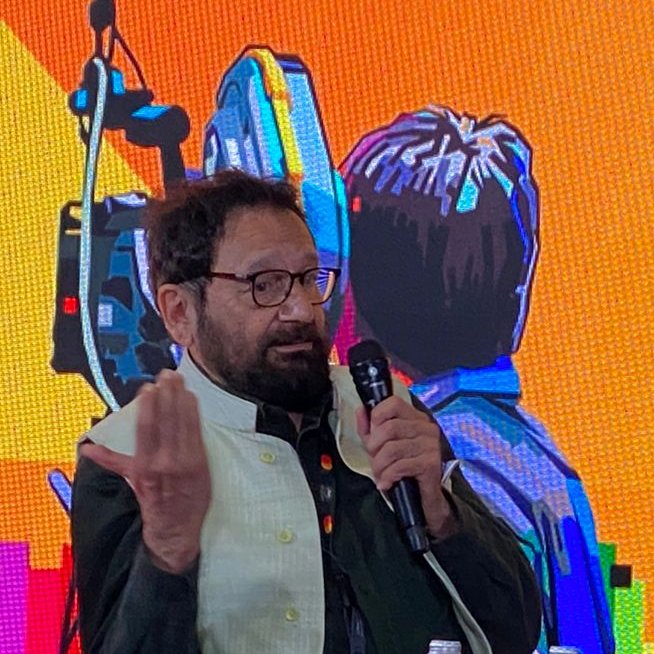
Shekhar Kapur: India: The content hub of the world

La giuria della selezione principale

Kamal Haasan

Shaunak Sen

Joyland


Aditi Rao Hydari

Deepika Padukone: prima di Decision to Leave

A.R. Rahman

Kamal Haasan

Deepika Padukone: celebrazione del 75esimo anniversario


Deepika Padukone: prima di Elvis

Shaunak Sen: premiazione

Deepika Padukone: cerimonia di chiusura


Deepika Padukone, Vincent Lindon e Joachim Trier: conferenza stampa post premiazione


11 luglio 2019

DIVI INDIANI SUL LAGO DI COMO

Da destra: Aamir Khan, Kiran Rao e Karan Johar
[Archivio]

Dal 21 al 23 settembre 2018 le rive, e le ville, del lago di Como vengono pacificamente invase da uno sciame di divi indiani da perderci la testa: Aamir Khan e Kiran Rao, Priyanka Chopra (con Nick Jonas), Anil e Sonam Kapoor, A.R. Rahman, Karan Johar, Juhi Chawla, Jacqueline Fernandez, Manish Malhotra, Janhvi Kapoor. L'occasione è data dalla festa di fidanzamento di Isha Ambani e Anand Piramal, chiaramente nullatenenti. Per i dettagli, vi segnalo l'articolo Miliardari indiani. Show a Villa Olmo. I fuochi d’artificio (video), pubblicato da La Provincia il 23 settembre 2018. Di seguito una nutrita galleria di immagini, da gustare con cardiotonico a portata di mano.

Aggiornamento del 31 maggio 2024: Anant Ambani, fratello di Isha, in questi giorni sta celebrando in Italia un evento prematrimoniale (clicca qui).

Anil Kapoor

Juhi Chawla


Priyanka Chopra

Priyanka Chopra, Nick Jonas e Manish Malhotra


A.R. Rahman

Sonam Kapoor

Sonam Kapoor con il marito Anand Ahuja


Janhvi Kapoor