Visualizzazione post con etichetta CINE INTERNAZIONALE. Mostra tutti i post

23 gennaio 2025

PRIYANKA CHOPRA, SAMANTHA PRABHU E MATILDA DE ANGELIS: EVENTO CITADEL


Il 24 settembre 2024 Prime Video aveva organizzato a Londra un evento speciale per presentare le serie Citadel: Diana e Citadel: Honey Bunny, spin-off italiano e indiano della serie principale Citadel. Ospiti d'onore le tre attrici protagoniste: Priyanka Chopra (Citadel), Matilda De Angelis (Diana), e Samantha Prabhu (Honey Bunny) accompagnata dai registi Raj & DK. Citadel: Diana (trailer) è disponibile sulla piattaforma streaming Prime Video dal 10 ottobre 2024, Citadel: Honey Bunny (trailer) dal 7 novembre 2024. Video ufficiale di celebrazione delle tre serie, con dichiarazioni del cast - inclusa Matilda.
Il primo ottobre 2024, sempre nella capitale britannica, Priyanka e Matilda avevano inoltre partecipato all'evento Prime Video Presents: Trailblazers. Priyanka in ottobre era a Londra per le riprese della seconda stagione di Citadel
Vedi anche: Priyanka Chopra a Roma: evento Citadel, 23 aprile 2023


Vi segnalo l'articolo Citadel-Diana's Matilda De Angelis: ‘Watched Priyanka after I had shot for my Citadel’, di Mayank Shekhar, pubblicato da Mid-Day l'11 ottobre 2024:

'“I was over for the London première of Citadel and watched Priyanka Chopra for the first time,” says Italian lead actor, Matilda De Angelis, from Citadel Diana. (...) By then, Matilda says, she had already shot for her own show: “So, I couldn’t take anything from Priyanka’s performance in Citadel [into mine]. But I just thought to myself - please, let me be, at least, as good as her!” In the series, Matilda plays spy Diana. That’s pronounced ‘Dee-a-naa’, the Italian way. As against ‘Die-a-naa’ for the late princess, from London - where Mid-Day exclusively met Matilda, along with her showrunner, executive producer, Gina Gardini. (...)


The final frame of Citadel (2023) lets out that there will be Diana. One wonders, if the Indian version was planned alongside. Gina says, “We started at the same time, five-and-a-half years ago. The fantastic part of the experience was the [Indian and Italian] showrunners, writers, would get together every two weeks, to spend two hours on Zoom, to check where we were at [in the writing process].” Which is different from a common writers’ room “that involves 27 people, over 10 months, breaking down episodes. Our mission from the Russos and to Raj & DK [creators from India] was the shows have to stand on their own. The idea isn’t [to develop] interconnected stories, like Marvel. There are, however, several winks in both shows - subtle easter eggs for super-fans, where Diana’s world is in Honey Bunny, and Citadel itself.” That Italy and India got picked first for expanding the Citadel spy-verse, appears natural to Gina: “Histories of cinema in both countries go back a hundred years, with strong cultural identities. Our family values are similar. Also, despite genres, we try and tell deeply emotional stories. This isn’t just true for Diana and Honey Bunny, but the overarching Citadel as well.”


While Matilda would like to be favourably compared to Priyanka in her Italian Citadel, what she has in common with the dually hyphenated (Bollywood-Hollywood) star is she’s also a singer. To drill in the fact of how big Matilda is, back home, the Italian press in London - rightly mesmerised by her performance in the show’s first episode première - told Mid-Day, what beats everything else is, she’s hosted Sanremo! Matilda laughs, “Can you imagine? I did 20 movies, but the time I conducted that one show, everybody got to know me, what am I doing [with myself]!” And what’s Sanremo? “It’s our Super Bowl.” Only, that instead of sport/American football, it involves Italy’s top musicians competing annually, as if on Indian Idol, that the whole nation is collectively hooked to. Matilda doesn’t sing in Citadel. For her favourite musical movie-moment, she points us to “the sequence of singing and acting in the film, Robbing Mussolini - really proud of that scene” .'

Video Mid-Day

Priyanka Chopra, Samantha Prabhu, Matilda De Angelis, Raj & DK


Evento Prime Video Presents: Trailblazers


05 gennaio 2025

MOSTRA DEL CINEMA DI VENEZIA 2024


L'81esima edizione della Mostra del Cinema di Venezia si è svolta dal 28 agosto al 7 settembre 2024. Nessun titolo indiano in cartellone, però il film di chiusura della sezione autonoma Settimana Internazionale della Critica è stato Little Jaffna, pellicola francese diretta da Lawrence Valin ambientata nel quartiere parigino dove risiede la comunità di origine tamil. Nel cast anche l'attrice indiana Radikaa Sarathkumar, che ha presenziato alla proiezione. Shekhar Kapur aveva annunciato nel suo profilo X/Twitter lo sbarco a Venezia in occasione del festival, ma in rete non ho trovato fotografie o altri testi relativi al suo soggiorno. Amy Jackson, fresca di nozze, ha sfilato con Alberta Ferretti (stilista del suo abito da sposa) sul tappeto rosso organizzato per la prima mondiale di Beetlejuice Beetlejuice, film che ha inaugurato fuori concorso la Mostra.

Radikaa Sarathkumar


Amy Jackson e Alberta Ferretti


11 aprile 2024

FESTIVAL DI CANNES 2024


La 77esima edizione del Festival di Cannes si svolgerà dal 14 al 25 maggio 2024. In sintesi:
All we imagine as light, di Payal Kapadia (sesso femminile), è in concorso - udite udite, un film indiano dopo decenni - nella selezione principale. Scusate, ripeto perché godo troppo: nella selezione ufficiale - per me è già una vittoria quindi stappo lo champagne;
Santosh, di Sandhya Suri (sesso femminile), con Shahana Goswami, è in concorso nella sezione Un certain regard
Sunflowers were the first ones to know (cortometraggio), di Chidanand Naik, è in concorso nella sezione La Cinef dedicata alle opere realizzate dalle scuole di cinema;
In Retreat (coproduzione indofrancese), di Maisam Ali, è in programmazione nella sezione parallela Acid;
Sister Midnight (produzione britannica?), di Karan Kandhari, con Radhika Apte, è in concorso nella sezione parallela Quinzaine des Cinéastes.
Segnalo inoltre The Shameless (produzione internazionale), diretto da Konstantin Bojanov, ambientato in India e interpretato da un cast indiano, in concorso nella sezione Un certain regard.


08 dicembre 2023

IL RAGAZZO GIUSTO - LA SERIE


[Archivio]

Nell'autunno del 2020 Netflix propose - anche in italiano - la serie BBC in sei episodi Il ragazzo giusto, tratta dall'omonimo romanzo di Vikram Seth, diretta da Mira Nair e con un cast ricchissimo: Tabu, Vijay Raaz, Vijay Varma, Shahana Goswami, Ram Kapoor, Ishaan Khatter, Vivaan Shah, Ranvir Shorey, Randeep Hooda, Kulbhushan Kharbanda, Vinay Pathak, Vivek Gomber e Manoj Pahwa. Trailer. Vi segnalo di seguito un paio di interviste concesse dalla regista in quel periodo. 


'How much is A Suitable Boy itself a homecoming for you? How lived in does it feel to you?
Very lived in. I read the novel in 1993 soon after it came out. I read it twice. I didn’t want to leave my best friend at the end of it - it was that kind of a feeling. Vikram [Seth] had so extraordinarily captured that Nehruvian India [at] the moment we were trying to create [a] new country after freedom from the British. And yet we were so anglicised and spoke and dreamt in English. He coupled all that with a very astute eye on the politics of that time. So prescient in some ways. But, besides that, the wit and the sensuality, the great depths and layers of friendship between the families - the Khans, the Mehras, the Chatterjees, the Kapoors. It’s a world I do know, but I [have] also longed for. My parents married in 1951, the year of A Suitable Boy’s story. They travelled from Punjab to Orissa where he [Nair’s father] was an administrative officer [IAS officer], setting up the new capital of Bhubaneswar. That’s where I grew up, in those bungalows, with hardly any roads and a new airport, when I was eight years old. The idealism of that time has always attracted me.

The society that you are talking of - what hits home is a longing and a sense of nostalgia: what we were and where we have come.  Do you also see parallels with the situation now? 
I only came back to A Suitable Boy. I haven’t been holding a torch for it for the last 25 years, hoping to make it. Not at all. I moved on to my own work. Only when I heard that it was being made perhaps [that] I said, anyone but a gora [White] to make it, man! I need to make it [laughs]. Even the story of Babri Masjid is in it. The stories in it, the prescience of Vikram’s vision - the seeds were planted then. But there was the great beauty of the syncretic culture where we come from. The same cloth [from which they are cut], Hindu and Muslim, whether it be language or poetry or music. (...) That was actually the biggest magnet for me. (...) This is (...) the reason why I just had to make it. And make it with such great artistes who [are] deeply imbued [with] what I am talking about in terms of that syncretic culture. Tabu was the first one cast in my head and fortunately she loved it. It’s all about finding that spirit in who you choose and who you bring to the party, and I swear the greatest satisfaction of making A Suitable Boy was this great cornucopia of actors. And pretty much everyone said yes. (...) We cast for over 18 months, [from] all over India - 110 characters and they are all great. And, of course, I have old friends. Many of them started with me so they can’t say no to me. Even Vijay Raaz, who is now a big star, did two scenes for me, memorable scenes. Or Manoj Pahwa. These are  extraordinary actors who just came and lit up the screen. That was the real joy; to see Shahana Goswami completely sparkle without any inhibition and with great skill.

You have adapted many other literary works for the screen. What is it that made this fun or [conversely] a nightmare?  
I came to it when it had already been adapted by Andrew Davies, who is a master distiller of great big tomes like War and Peace, Les Misérables. He has craftsmanship on his side in such a fantastic way and also a great sense of humour and also the television structure of the cliffhanger, and there are so many in our book. It was there but it had to be culled out. At that time, it was eight hours [duration] and, frankly, the financing for an eight-hour, all-Asian drama in the Western world is always going to be challenging. I used to joke and say, it’s The Crown in brown, as magnificent, with as much sweep as [that] series, but the budget was some 10% of it. I don’t have the statistics, but it is always the case. You don’t have what you need when you are not a gora [White]. I am used to it and I always show it. I always give it to them: “Don’t see my struggle baby. But this is as good as anything out there”. (...) Having said that, we had to distil it further into six episodes of six hours. At that point I was deeply involved and basically added two things. One was to make the political interweave with the personal, [to say]  that it would not just be a marriage story - who will she marry,  who is the boy? It’s not only that. But it is much more interwoven with the politics of then, which is [also] the politics of now. That balance is what I tried to bring back in. Also, in the process, bringing back certain characters that had not been given the time of day. Like Mrs. Mahesh Kapoor, (...) who is the unspoken cornerstone, the foundation of this political family and is really the glue that holds this family together. Restoring some weight to some characters. And sadly, as is often the case, killing some characters, [by] just not having them. Secondly, I insisted on the language. It’s a beautiful novel in English that people spoke at that time. [But] if Saeeda bai would sing in Urdu, then why wouldn’t she talk in Urdu? Or the villagers. That was the discussion at every level. Vikram, thankfully, supported me, thanked me for “translating it back”, as he put it. For BBC it was quite radical to have their first big drama show in Urdu, Awadhi and Hindustani, mixed with English. But I could do this much and not more. I tried to juice it and do it as skilfully as I could and as naturally to the character as possible. There were other things. Music is my oxygen and it’s a huge part of everything that weaves these worlds together.

Even the incidental music ties in with the larger narrative very well. 
This is a very different style for the BBC: “Is it a Bollywood thing? What are these musical interludes? Can’t we just have some kind of a singing over there?” I would say, this is not Bollywood style; this is what I do, and this is why I am doing this. Basically, it was a vocabulary that was not familiar to them. But I must say they came around and they love it for what it is. And then I worked directly and closely with Vikram to get the balance and the nuance and the love and the complications, but most of all the friendship - the depth of it - correct between the Hindu and the Muslim characters. I did not want to fall into any traps of today. I wanted to make sure that we really got (...) what I wanted to say, which is syncretism. The structure of it was given to me and I carefully worked within.

The society as seen in A Suitable Boy is syncretic, but also at a point in time when the threads are beginning to unravel. Is there a sense of regret on how far we have come as a culture, country, society?  
Regret is like giving in to defeat. I am confronted by it - we all are - in such a direct, transparent fashion, whether it be renaming things, or pretending things just didn’t exist and, of course, the more targeted attacks we see every day. We cannot be defeated [by] this. We have to persevere, and we have to remember who we actually are. It’s within ourselves'.


- Going down Mira Road, Mayank Shekhar, Mid-Day, 21 novembre 2020 (il testo include il video dell'intervista integrale):

'Mira Nair's journey as an Odisha-born/bred filmmaker in America will seem greater to you, if you consider the first thing she did, landing up as an under-grad student at Harvard in the mid '70s. She went over to her course-mate from Bombay, Sooni Taraporevala, desperately to check on who the other Indians around were. There were only two - studying film. One of them, a gentleman named Anand Mahindra; the industrialist, whose surname carries the massive fleet of automobiles on Indian roads. "Anand was a really talented filmmaker. He's still an artist in his soul. I'll never forget the wonderful thesis-film he made, following a holy man up a mountain," Mira remembers. Screenwriter Sooni and Mira of course became great friends and colleagues thereafter - collaborating on notable productions like Salaam Bombay! (1988), Mississippi Masala (1991), and The Namesake (2006). Anand was the "big brother, who'd encourage everyone to move back to India [once done with studies]." As he did, taking over his family empire.

Speaking of famous associations from unrelated fields, a picture that once got widely circulated online was of Mira as Cleopatra and Shashi Tharoor as Mark Antony, in an inter-college Shakespearean production from the '70s. Mira was a student at Delhi University's Miranda House then; Shashi Tharoor, the undisputed star of St. Stephen's College. She's been asked about this picture on occasion during interviews. And I gauge from her responses before - it doesn't seem like she liked the college-kid Shashi Tharoor much! Did he throw big words at her? "Oh no, I just didn't like kissing him [in the play]. Back then, you know how it was - even if you got slightly physically close to someone, people would start cat-calling. It was ridiculous." As for the Tharoorosaurus bit, "Well, we used to tease Shashi [who hadn't lived or been abroad yet] about where he had got that accent from. (...) But he's always been a sport. He used to take it well!" (...)

Mira remains still one of the most critically acclaimed filmmakers - for a majority of her filmography. (...) Mira is formally trained in cinema verite - art/technique, mostly associated with documentary filmmaking, intended to convey realism. (...) The main muse for Mira's realistic lens was in fact the city of Bombay itself. (...) "Now they can call me a New York-based filmmaker in Bombay, but the fact is that not many saw Salaam Bombay, right under their noses. It was a life around us. When you live in it all the time, you can't see it well - having numbed yourself to it." This seamless transition from documentary filmmaking to fiction - something that writers of non-fiction find harder to be equally adept at - Mira admits, has helped define her work. And you can still sense strong stamps of it, even in later movies. (...) "Cinema of truth [cinema verite] sounds a little pretentious. It is very real, in the sense that you don't script everything. You just have to be humble enough to enter the world. Just be there. Of course your presence is shaping [the moment] to some extent. But it is also about being an observer to the situation, and eliciting things from [actors] - as they feel them, rather than you telling them what to say."

What this has also led to since her celebrated debut feature is - film after film, an established practice of casting 'real' people, as it were, or non-professional actors, alongside trained actors/stars, in the same frame. And watching this unique alchemy come to life on screen. For instance, Mira discovered Sarita Choudhury, who played Denzel Washington's love interest in Mississippi Masala, biking on a street in Cambridge once. She found Tillotama Shome (Alice in Monsoon Wedding) in the corridors of Delhi's Lady Shri Ram College. Even better, she picked up Kamini Khanna for a typically Delhi-Punjabi Shashi Aunty in the same film - spotting her on the walking track of a South Delhi park. Does she think everyone is essentially an actor then? "Not at all! It's about several things, but mostly instinct. I can tell immediately if the camera will love you or not. Or sometimes it doesn't matter if the camera won't love you, but can I use that in a way? Like [Pedro] Almodovar and his ladies are fantastic. And they so destroy the notion of what's beautiful before a camera. But the roles need that. So it depends on the role, of course."

While casting for Monsoon Wedding, she recalls, a newbie Vijay Raaz's face had caught her eye: "He'd walked in from the train station to (...) Churchgate. I don't know how I even remembered his name. Paresh Rawal, whom I admired a lot, had approached me for (...) Dube's part. We had a workshop in Delhi, which Paresh couldn't join. So then I had to take Tillotama [Alice] back to Bombay to rehearse with Paresh [Dube]. Naseer bhai [Naseeruddin Shah] had given us space above his flat for rehearsal. The door opened, and my eyes fell out. Paresh had gained 30 to 40 pounds. He looked like Alice's father, and this was supposed to be a love-story with him! (...) He said, 'I'll just lose [weight].' But we were shooting in literally four days! I just thought of the bald man with long ears and the widest mouth in the world, Vijay Raaz, and called him. I had not auditioned him, but I loved his look." The role expanded as Raaz came on board, killing it along the way. (This conversation between Mid-Day and Nair took place a day before Raaz was summarily arrested and subsequently bailed over a molestation charge on a movie set.) He's had a solid career since. 

Several Indian actors in the Bombay film industry similarly owe their first frame on the big screen to Mira. Right from Nana Patekar and Irrfan in Salaam Bombay!. Late Irrfan, she always felt, was cut from a different cloth from Bombay's leading men in the '80s and '90s. He delivered, arguably, his finest work with Mira in The Namesake (2006). Or Randeep Hooda and Ram Kapoor, for that matter. They were debutants in Monsoon Wedding; bona fide stars now. Why, even Kamini Khanna! She's played multiple versions of Shashi Aunty in every other Bollywood movie. This contribution to the Bombay film industry in particular, I suspect, isn't acknowledged enough about the New York and Kampala-based filmmaker.

Even more than a keen head-hunter, Mira is an all-encompassing aesthete, wholly invested in cinematography, literature, production design, colours, costumes, the craft of moulding actors/characters... (...) Given the résumé and musical references seeped into her work, besides an army of previous recruits from among top Bombay actors, I'm almost amazed that in all these years, Bollywood folk haven't ever attempted to co-opt Mira with a grand scheme/project? "I am not looking for that either. But I have really lovely friendships. Yash Johar and I were very close. (...) I really respect Aditya Chopra's mind. I had taken him on an idea - not for me to do, but for us to work together on. But, no, I don't think so. I think they think correctly - that I just make my own movies!" (...)

A film that would've brought (...) [Mira] back to Bombay - her early muse, and that too with Johnny Depp - was the adaptation of Gregory David Roberts' Shantaram. Regrets - that the film fell through? "I only regretted that I gave one-and-a-half years of my life to it. And we really had a good thing going. Not, otherwise. They were starting it again, and I was not interested!" Mira also famously let go of directing the fourth Harry Potter film, for the sake of The Namesake. She declined The Devil Wears Prada, going by the same measure of what interests her - and what she can do, better than similar directors on hire. (...) Exuding power, all right, in an industry that when she entered it - doing theatre in New York during day, waiting tables at night - there were barely any coloured people around, let alone desis, or women. (...) Mira first got on the road, splitting rent for an editing suite at a basement collective for offbeat artistes in New York. This is after she had shot Salaam Bombay!. Which she knew the West had no similar reference point for. Spike Lee, same age, also editing his film, would pay the other half of the rent!'. 

23 aprile 2023

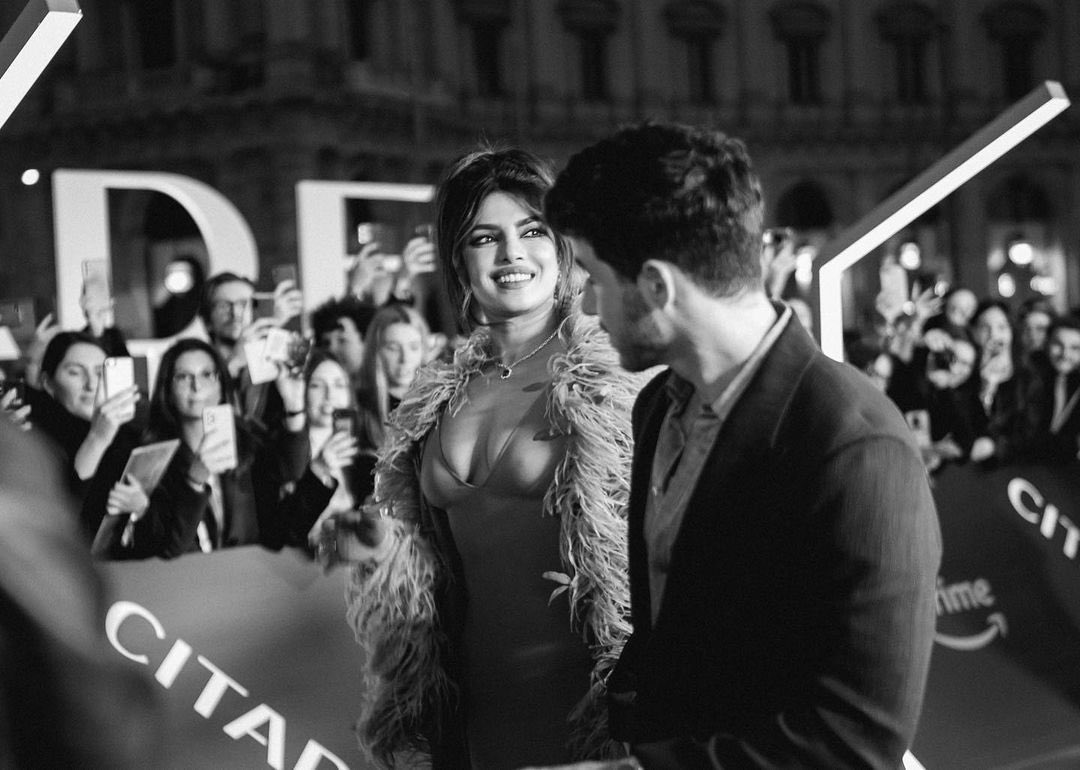
PRIYANKA CHOPRA A ROMA: EVENTO CITADEL


Lo scorso 21 aprile Priyanka Chopra e Nick Jonas erano a Roma per promuovere la serie americana Citadel. In programma conferenza stampa, red carpet e proiezione in anteprima delle prime due puntate presso la sala The Space Cinema Moderno, cena al ristorante Antica Pesa. Fedez aveva annunciato che avrebbe intervistato la diva indiana per conto di Prime Video Italia, intervista sembrerebbe poi annullata. Per la serata Priyanka ha sfoggiato un magnifico abito di Valentino color verde salvia.  
Citadel sarà disponibile sulla piattaforma streaming Prime Video a partire dal prossimo 28 aprile. Priyanka Chopra è la protagonista della serie insieme a Richard Madden. La prima stagione prevede sei episodi. Trailer. Sono già in produzione uno spin-off indiano, diretto da Raj & DK e interpretato da Varun Dhawan e Samantha Prabhu, e uno italiano interpretato da Matilda De Angelis. Lo scorso 18 aprile, all'evento analogo organizzato a Londra avevano partecipato anche Varun, Samantha, Raj & DK e Matilda. Il tour promozionale di Citadel era partito da Mumbai il 4 aprile; in quell'occasione Priyanka aveva indossato un capo di Versace.


RASSEGNA STAMPA/VIDEO (aggiornata al 24 aprile 2023)

'Priyanka Chopra Jonas: Ciò che mi ha attirato è stata l’ambizione dello show è l’idea che avremo una serie italiana e una indiana, ma anche la possibilità di avere più show in giro per il mondo. È un modo figo di globalizzare l’intrattenimento. Dalla prospettiva di una persona che ha lavorato in altri Paesi è un mio sogno quello di vedere attori e registi di posti diversi lavorare insieme per qualcosa di grande come questa serie. Questo è stato fighissimo. Ovviamente il mio personaggio è incredibile, perché vedi una meravigliosa spia donna nel mondo dello spionaggio, notoriamente dominato dagli uomini. Ma più di ogni cosa, l’ambizione internazionale della serie tv è qualcosa di inedito e particolarmente elettrizzante per me. (...) Non so se mi mancava l’azione ma è qualcosa con cui mi sento a mio agio. Adoro l’idea di questa serie incredibile, entrambi i personaggi hanno questa dualità: chi erano prima dell’incidente, chi sono dopo e chi diventano. È stato molto divertente scavare in questi personaggi, poi amo lavorare con persone che ammiro e stimo come i fratelli Russo, è stato esaltante lasciarsi dirigere da loro e vedere come pensano e costruiscono questo incredibile universo. Poi David [Weil] [responsabile creativo] è arrivato e ci siamo seduti a parlare del mio personaggio per cinque ore, l’ho percepito come molto rispettoso ma anche molto collaborativo, è stato meraviglioso'.


'Chopra: "Fin da subito mi è piaciuta l’idea che ci fossero diversi progetti in più paesi". (...) Chopra era già stata in Quantico: "Non so se mi mancava l’azione, ma qui mi interessava molto la dualità del mio personaggio che è in un modo prima dell’incidente e poi cambia subito dopo. Mi è piaciuto lavorare con i fratelli Russo e il loro approccio al genere. Ho lavorato per diverse ore con David Weil allo sviluppo del personaggio e questa attenzione e cura mi ha colpito molto. (...) Dopo un anno e mezzo Richard Madden si è rasato, questo è stato uno dei momenti più divertenti che ho vissuto sul set, così non poteva essere richiamato per altre riprese". (...) Stanley Tucci vi ha insegnato l’italiano? Tucci: "Non sono bravo". Chopra: "Non è vero che lo sa parlare!". Madden: "Non so nulla di italiano, ho imparato pochissime parole per le riprese". (...) Chopra: "A me piacciono tanti generi, sono cresciuta con le rom-com, poi ho imparato ad apprezzare i thriller, alla fine dipende dai momenti della giornata, magari ci sono occasioni in cui mi va di picchiare qualcuno".'


'Priyanka Chopra Jonas non è nuova ai ruoli action e infatti si è detta molto a suo agio a interpretare la super spia di Citadel, Nadia Sinh: “Mi piaceva moltissimo l’idea che questa storia fosse raccontata attraverso personaggi complessi. Nadia ha una dualità rispetto alla sua personalità e in base agli eventi, che vive, si manifestano diverse parti di lei. È stato divertente scavare in questo personaggio e poi è stato bello lavorare con i Fratelli Russo e costruire questo mondo con loro. È bello lavorare con chi ammiri e condividere l’ambizione di questa serie così internazionale. Era una possibilità imperdibile far parte di una serie internazionale, da molti punti di vista. E poi il mio personaggio è splendido perché è una spia davvero in gamba in un mondo, quello dei film di spionaggio, che tradizionalmente è fatto solo da uomini”.'

Priyanka Chopra, Richard Madden e Stanley Tucci

- Richard Madden e Priyanka Chopra Jonas, due irresistibili spie in ‘Citadel’, Cristina Locuratolo, Taxidrivers, 21 aprile 2023:
'Priyanka Chopra Jonas parla dell’aspetto globale della serie: “Mi stimolava l’idea di far parte di un progetto in cui lavorassero attori e produttori di diverse parti del mondo, che globalizzasse l’entertainment a livello mondiale. Citadel ha un’ambizione enorme, il fatto che vi siano una versione spagnola, una italiana, una messicana e una indiana è davvero eccitante e innovativo. Ho già lavorato in progetti di caratura internazionale e in paesi diversi, ma l’idea che un italiano possa guardare la versione hindi della storia in lingua originale, o viceversa, mi rende molto felice e orgogliosa del lavoro che stiamo facendo”. Il suo personaggio Nadia Sinh è una spia dall’incredibile talento, quasi una supereroina, in un mondo dominato da uomini: “Ho amato l’idea di interpretare un personaggio così forte, ricco di sfaccettature. Collaborare con i fratelli Russo, che ammiro moltissimo, è stato esaltante”.'


'Alla domanda se fosse tornata a recitare in un spy thriller (dopo Quantico) perché le mancava l’azione, Priyanka Chopra ha risposto divertita: “Come ha già detto Richard, la dualità dei nostri personaggi è l’aspetto più interessante di Citadel, anche più dell’azione che comunque mi mancava un po’. Il fatto di scoprire insieme a loro cosa sia cambiato in quegli otto anni di buco dopo l’incidente ferroviario rappresenta l’aspetto emozionale dello show, ma anche un modo per farci entrare più in empatia con Mason e Nadia, il mio personaggio: chi sono, chi erano, come la loro vita sia stata stravolta da Manticore e cosa faranno per riprendersela indietro”.' 


- Richard Madden e Priyanka Copra a Roma per Citadel: «Siamo spie speciali in stile Avengers», Alessandra De Tommasi, Vanity Fair Italia, 23 aprile 2023:
'«Questa serie ha grandissime ambizioni - spiega la protagonista, che interpreta Nadia Sinh - e non solo d’intrattenimento. Intrecciando i Paesi e le culture rende il mondo più accessibile». (...) «Accade un incidente - spiega Priyanka - e c’è un senso fortissimo del “prima” e del “dopo”. Nulla è lasciato al caso, anzi i Russo mi hanno tenuto 5 ore intere per spiegarmi il personaggio prima ancora d’iniziare il lavoro». (...) «Senza entrare nei dettagli di quello che succede ai protagonisti - aggiunge Priyanka - si vede subito che l’elemento spy è arricchito da forti momenti drammatici legati all’identità, il che rende le sfumature del racconto ancora più intense».'


- Priyanka Chopra Jonas: «Il doppio cognome? Solo sui social», Simona Siri, Vanity Fair Italia, 24 aprile 2023:
'Al telefono da Londra c’è lei, (...) Priyanka Chopra Jonas. (...) Quarant’anni, indiana, ha saputo conquistare prima Bollywood e poi Hollywood, dopo la fascia di Miss Mondo nel 2000. Oggi, con una cinquantina di film, (...), pochissime serie ma buonissime, (...) e una società di produzione (...) che ha lanciato una dozzina di notevoli progetti cinematografici, è icona internazionale. In Citadel è l’agente speciale Nadia Sinh. (...) I sei episodi mischiano azione, avventura e ambientazioni incredibili, dove il volto e il fascino senza confini di Chopra Jonas sembrano perfetti.

Che cosa l’ha attratta del progetto?
Quando si parla di diversità e globalizzazione, ecco, in questa serie ci sono per davvero. E poi è divertente. Citadel è un’impresa di spionaggio che non è fedele a nessuna nazione, quindi è fondamentalmente fedele all’essere umano. Mi piacciono le storie di spie e qui oltre a questo c’è il divertimento, le risate, l’azione. Ne sono davvero molto entusiasta e non vedo l’ora di sapere che cosa ne penserà il pubblico.


Parlando di azione: è vero che non usa controfigure?
È vero, mi piace girare scene d’azione. Mi fido del mio corpo e per questo ruolo mi sono allenata per un anno e mezzo. Mi piace sfidare me stessa fisicamente così come mi piace trovare complessità nelle parti che scelgo.

In tema di globalità, penso che lei la rappresenti perfettamente. Ormai vive a Los Angeles con un marito americano, ma allo stesso tempo è ancora uno dei volti più noti del cinema indiano. Qual è il rapporto con le sue origini e con quello che è adesso?
Mi sento una fusione dei miei due Paesi, quello natale e quello adottivo. In fondo sono cresciuta in entrambi. Ho vissuto in entrambi, ho lavorato in entrambi, sono stata amata in entrambi. È un po’ come essere sempre divisi in due, ed è anche il motivo per cui non voglio scegliere, voglio essere in grado di lavorare in entrambi i settori. Sono molto fortunata, me ne rendo conto: a pochissimi attori capita di poter lavorare nelle due più grandi industrie dell’intrattenimento del mondo. E io voglio continuare a farlo, anche attraverso la mia attività di produttrice: mi circondo di tutto ciò che è del mio Paese, e voglio raccontare storie che provengono da lì, dall’Asia meridionale. Mi piace narrare storie femminili che hanno l’essenza della mia cultura. Mi piace sostenere cineasti e in generale artisti che provengono dalla mia parte del mondo. È per questo che la mia società di produzione lavora con molti nuovi talenti, nuovi registi, e li aiuta in qualche modo a orientarsi in questo settore. Detto questo, nessun progetto può competere con l’emozione che provo quando torno a casa e atterro all’aeroporto e soprattutto quando mangio cibo indiano con i miei amici e la mia famiglia. È una sensazione speciale e cerco di farlo il più spesso possibile.


In Italia il cibo è una parte importante della cultura e del modo in cui si socializza. Anche in India è così?
Assolutamente. Io poi amo il cibo, penso di vivere per il cibo. Vengo da una regione chiamata Punjab, siamo noti per essere dei buongustai. Mentre pranzo penso già alla cena, sono quel tipo di persona.

È questa la sua caratteristica più indiana?
Questa e l’umorismo. Ho un modo di parlare agli altri rumoroso, sfacciato e impertinente. E ne sono fiera, così come sono fiera della mia personalità. Quando torno nel mio Paese è tutto fragoroso, eccessivo. E io sono così.

Da italiana le confesso che una delle incomprensioni con mio marito americano è stata sul tono di voce: lui all’inizio pensava che fossi sempre arrabbiata perché parlavo ad alta voce. Gli ho dovuto spiegare che siamo fatti così, che è il nostro modo normale di discutere.
Infatti. È successo anche a me con mio marito. Quando sono negli Stati Uniti mi sembra tutto così quieto e silenzioso rispetto all’India. Da noi è normale che in una conversazione ci si parli addosso, anzi bisogna proprio parlarsi uno sopra l’altro per essere ascoltati.


La cosa che più colpisce di lei, oltre naturalmente alla bellezza, è la sicurezza e la determinazione. È nata così o l’ha sviluppata strada facendo?
La fiducia in sé stessi è la risorsa più grande. A 20 anni fingevo di averla, mettevo in pratica il famoso fake it until you make it (fingi fino a quando non lo diventi, ndr). A 30 l’avevo conquistata. Oggi se guardo indietro mi sento arrivata a un punto in cui la mia autostima è più radicata e reale, viene dall’aver accettato i miei alti e bassi, dalla consapevolezza che il bene e il male possono accadere e che, se ci sarà una brutta giornata, se ci sarà un fallimento, pazienza. Viene inoltre dalla mia capacità di rinascere. Ho anche imparato che è bello essere vulnerabili. Penso che ci sia tanta forza nella vulnerabilità, nell’essere effettivamente in grado di accedervi invece di nasconderla sotto le spoglie dell’eccessiva sicurezza.

Ha sofferto anche di questo, di troppa sicurezza?
Assolutamente. Il mio pendolo è andato da un estremo all’altro. In questo momento mi sento come la superficie dell’acqua: calma e non tumultuosa.

Come è arrivata a questa pace interiore?
Riflettendo e capendo che il mio valore non è direttamente proporzionale al lavoro. Mi ci è voluto molto tempo. Nella vita di un attore non c’è coerenza: un film o va bene o va male, e non sai neanche perché, vivi costantemente nella paura che ti venga tolto il tappeto da sotto i piedi. Non hai controllo e se, come me, cresci sotto gli occhi del pubblico, non è semplice. Oggi sono davvero grata di aver raggiunto un punto in cui sono in grado di separare le due cose. Lavoro, sono ispirata, ci metto tutta me stessa, non ho paura. E poi torno a casa e trascorro del tempo con la mia famiglia e nutro la mia anima, finché non torno a lavorare e ricomincio tutto da capo.


Ha dichiarato che con Citadel è la prima volta che il suo compenso è uguale a quello del coprotagonista maschile. Perché era importante dirlo?
Se contribuisci allo stesso modo della tua controparte maschile nel tuo lavoro, se il tempo che dedichi è lo stesso, se la tua esperienza è la stessa, allora deve esserci parità. E noi donne dobbiamo restare unite per continuare a combattere in questo senso. Lo dico perché gran parte del merito lo devo a Jennifer Saki, che è il capo degli Amazon Studios: i miei agenti hanno avuto una conversazione con lei sul tema del salario equo e lei ha detto che era d’accordo. È per questo che ci vogliono più donne in posizione di potere, perché fanno spazio ad altre donne.

Da quando è sposata con Nick Jonas ha preso anche il suo cognome.
In India è tradizione cambiarlo, e infatti mia madre ha preso il cognome di mio padre. Io ho deciso di tenerli entrambi perché da una parte sono orgogliosa del mio, è quello con cui mi sono affermata nel mondo del lavoro, è quello delle mie origini, della mia famiglia. Dall’altra volevo onorare mio marito, la mia nuova vita, il Paese in cui ho scelto di vivere. Confesso però una cosa: non ho mai fatto il cambio sui documenti. Su quelli sono ancora solo Chopra. Il doppio cognome per ora lo uso solo sui social'.


Video Oggi: Priyanka Chopra ci parla della nuova serie Amazon, Giulia Peroni, 17 aprile 2023
Video: Priyanka e Nick a spasso per Roma
Video Noi degli 80-90: conferenza stampa
Video Prime: Priyanka e Nick all'anteprima italiana di Citadel
Video Getty Images: Priyanka e Nick all'anteprima italiana di Citadel
Video Prime: promo dell'evento
Video Prime: intervista concessa da Priyanka
Video Terza Pagina: red carpet
Video: Priyanka e Nick all'anteprima italiana di Citadel
Video: Priyanka e Richard Madden in sala per la proiezione
Video: Priyanka sul palco
Video: ristorante Antica Pesa
Video: Priyanka a Roma


Priyanka Chopra e Fedez

Priyanka Chopra e Lucia Silvestri, direttrice creativa Bulgari


Mumbai (abito Versace)

Priyanka Chopra, Varun Dhawan, Samantha Prabhu e Matilda De Angelis - Londra

Priyanka Chopra, Varun Dhawan, Samantha Prabhu, Raj & DK e Matilda De Angelis - Londra