07 maggio 2023

VIKRAMADITYA MOTWANE: VIKRAM, ET AL

Vikramaditya Motwane e Mayank Shekhar

Vi segnalo la lunga intervista concessa da Vikramaditya Motwane a Mayank Shekhar, pubblicata da Mid-Day il 27 aprile 2023. L'articolo include il video. Sit With Hitlist: Vikram, et al:

'His latest series, on Amazon Prime Video, Jubilee, is (...) actually a mammoth exercise in world-building, without the filmmaker getting overawed by it - sticking to drama and storytelling still. While so classical in its production design and shot-taking, it isn’t placed wholly inside a filmy bubble either. (...) It isn’t full of the usual exaggerations that naturally come with surveying showbiz either. (...) Jubilee captures the real world around it, equally. Whether that be the bloody Partition, or the Cold War. Once you buy into this world - and it takes a while, perhaps fourth episode onwards - we know no other Indian series that progressively gets better with every minute. It may even age better with time! Also, it’s to do with the dialogue. (...) Motwane says, “We wanted the language to be accessible. The language may not be completely correct to the period. But it’s not incorrect. (...) Motwane recalls the idea really took off in 2016: “What if we did our own definitive story of the Indian film industry, from the ’40s and ’50s onwards - the behind-the-scenes, the producers, directors, actors, press, all that sort of stuff coming together. This could be a season, or multiple seasons.” (...) 

If Jubilee does go through multiple seasons, leading up to Bombay cinema, late ’90s onwards as well, there will be few filmmakers more qualified to relive the times than Motwane. On one end is Bhansali, who he was the chief handyman for. (...) At the other end is filmmaker Anurag Kashyap. (...) There aren’t more separate filmy worlds that you could belong to simultaneously in Bombay! Bhansali and Motwane’s mother once ran an advertising production house together. He first met Kashyap on the sets of Deepa Mehta’s Water, where his job as the “wrangler” was to ensure the procrastinator Kashyap, as all writers are, delivers dialogues on time - not an easy task! “Anurag’s wife, [editor] Aarti [Bajaj], his ex-wife now, was with me at XIC [Xavier Institute of Communications], when we were doing a film production course in 1994-95. Anurag had done the same course a year before that. He says I met him then. I have no recollection of this.”


Also, few directors own a CV as varied as Motwane’s - so far as filmmaking departments go. What all has he been credited for? Let’s start: Sound design? “Yes, for Devdas, and Paanch.” Choreography? “Directed songs for Paanch. For Water as well. Well, choreography is a broad term. Because there was no dancing in Water. Deepa wanted me to help her with songs, because she felt I had a better music sense.” Acquired from Bhansali, one’s guessing. Okay, cinematography? “Short films.” (...) How about acting? “Acting in cameos in certain places, which I am not very proud of.” Like, Kashyap’s No Smoking (2007)? “Yeah, everybody sees me in No Smoking!” What’s left, production design? “No, I don’t like that part.” 

Yet, in terms of capturing the fuller gamut of Bollywood, his most uncanny credit might well be as the writer of a film by director Vivek Agnihotri, titled Dhan Dhana Dhan Goal (2007). No, seriously, how did that happen? “So, UTV was producing this film. Vivek had approached them. He said he had this story idea about football. He wanted a really good writer. They called up Anurag, who said he doesn’t know anything about football. But he knows this guy, who knows everything about football. So, they approached me. I have loved this game since I was eight years old. I said, let me write you an original script instead.” What, they gave him a DVD to rip? “Something like that!” Something like that, as in? “So, well, I wrote the script. But the film that got made was not exactly the way that Anurag and me, to put it mildly, kind of wanted. I liked the time though. Beggars can’t be choosers. We got paid for the work, and that was more important than anything else. I still believe the original script of mine is one of the best things I have written.”


Motwane’s first script to be made into a film (...) was the near-masterpiece, coming-of-age, Udaan (2010), that went straight to Cannes in the prestigious Un Certain Regard section: (...) “That was really trippy!”. It’s set in Jamshedpur, (...) about a boy who finishes school with ambitions in arts and poetry, but is forced into the mundane, by a disciplinarian father, who brooks no dissent. It’s almost the opposite of Motwane’s own life, since he was actually driven into the media world, because his mother needed help with a TV show she was producing for teenagers. He was a teenager then, chilling all day in the Mithibai College canteen. What did he even know of a strict boarding-school or small-town life, let alone the Tata Steel township, Jamshedpur, to get it so right with Udaan, we wonder. Motwane says Udaan was originally set in Nashik, in his head, because that’s a similarly industrial, small-town he knew, since his father owns an audio-equipment factory there. “They live in nice little bungalows. The town is very organised. So, I wrote it as a generic place, in fact. Because I knew that world. I could not write in Nashik. It’d be too close to home. And I didn’t want it to be that. So, I wrote it like a Ghaziabad or Faridabad kinda set-up - outskirts of Delhi, where the family lives. The boy sneaks out, comes into Delhi-proper, to party and stuff.” 

And then he handed the script to director Imtiaz Ali: “Imtiaz read the script and he’s like, ‘You know what, just take a train, go stay with my family in Jamshedpur. Have a look. I am reading this, and I can see those streets.’ I was going to cast Imtiaz’s younger brother, Sajid, in the lead, at that time. This was 2005. “Sajid and I hopped on to a train, went to Jamshedpur, spent four to five days with his family, saw the place - this was perfect! I moved the film to Jamshedpur. The film finally got made in 2009, which is also great, because by then, the viewership had changed; audiences had changed. In 2005, multiplexes were still not what they were by 2010, when we did the film with UTV, with a 225-screen release, which is a big deal for a small film.” Kashyap produced Udaan. (...) This also means the original lead actor, Imtiaz’s brother Sajid, would have passed his teenage by then. Young Rajat Barmecha was brought in for the (...) protagonist. The homework Motwane gave him was “the literature I’d read growing up, movies I’d watched.” (...)


The directorial career that Motwane scripted for himself after Udaan is indisputably marked by a range that’s hard to match - going from a period piece (Lootera) to super-hero (Bhavesh Joshi Superhero), a one-man survivor drama, set in a building, suggesting the dystopia of cities (Trapped), to the ultimate Mumbai-mafia sweeping-epic (Sacred Games), that he was the showrunner for - first Indian to hold that title. (...) The leaps are so wide that it piques your interest to know what inspired each film, since none suggest self-expression alone. Firstly, where the heck did AK vs AK (2020) come from - a meta movie that firstly defies genre, about a director and actor playing themselves. The director turns rogue, kidnaps the actor’s daughter, to film in real-time, what happens next! Wut? 

“It’s just such a great one-line idea. Which is what excites you most. As a young filmmaker, you fight the fact that the idea of your film should be encapsulated into one, single line. As you grow older, you realise that one, single line is what drives you forward. Writer Avinash Sampath, who’s now become a good friend of mine, sent the script to us. He’d written it for Aamir [Khan] first. I was sure Aamir is never gonna do it, so let’s not even try! There is Akshay Kumar, who we did approach, and it was a very interesting meeting - I mean, he didn’t sort of outrightly say, ‘Get out of my office,’ but it was close enough! For a while, I was making it with Shahid [Kapoor], which kind of happened, and then it didn’t. The [actor] AKs kept changing. The [director] AK, that is Anurag Kashyap, was a constant. He’s a fantastic actor.” Well, Kashyap says he sucks at acting! “I think he is fab. In fact, everybody on the AK set was talking about Anil Kapoor. I think Anurag, especially in the last scene, is incredible. You actually tear up, when shit happens to him.”


Okay, how about Lootera? It’s practically a Bengali film! “Practically. And that [part is all Satyajit] Ray. I wanted to do a thriller, with a love story in it, as opposed to a tragic love story. Our first trailer got it right. And then there became a problem with the pitching to the audience. People were expecting to watch this epic love story. And they probably went, ‘Hang on a second, this is not that!’” (...) 
Consider Motwane’s take on Bhavesh Joshi Superhero (2018). While he loves the film the way it is, immensely, he says, “I’ve never said this publicly, but I think Bhavesh should have been a woman. As in, Siku’s character should have been female. [Firstly] the world thinks there’s a guy, who turns out to be a girl. When she unmasks, you go, ‘What the f***. Also, then the film is not about a friend, saving a friend, in terms of the Ashish Verma character. He is actually deeply in love [with the female superhero], but has never been able to tell [her that]. The conflict is way deeper. The layers get more interesting too.”

As for reasons for smoothly jumping styles and genres, where each Motwane movie is unrecognisable from the other - unlike a subtle or strong voice/style that laces through most auteurs; think Bhansali, Kashyap - the impetus is quite simple. “It’s the excitement of trying something new. So, Jubilee is exciting, because it is something I have never done before - a classical style of storytelling, 10 playback songs, and all that stuff - the fact of telling a specific story, in the form that is most suited to it. I feel that the film is always the boss. I am not.” Motwane says his forthcoming film is titled Control. It’s a ‘computer-generated’ movie, flitting between screens, centred on an Instagram influencer: “Again, it is a cyber thriller, it is new. I get excited by it. And you learn. Every film is an audition for the next one, having learnt from the last one!” 


That said, surely, if one looks deep enough, they’ll be able to spot a personal thread. (...) His grandfather (...) once produced a film: “It was called Andolan, in 1949, with young Kishore Kumar in the lead. It was a film about the freedom struggle. It didn’t do well, which is why nobody in the family talks about it. Because I think the family lost a lot of money on it.” You also see the Sindhi refugee camp in Jubilee. Given his own Sindhi lineage, we wonder if there is a personal history to it as well? “So, my family didn’t have to make their way during Partition. We were already here from the 1930s. The business was already set up. But for a while, my family house in Khar was a refugee camp. I have seen photographs. People were also demarcated into tents in garden-area or permanent structures, depending on the social status of the refugees.” Motwane says he learnt of his family’s film lineage, only much after he became a filmmaker: “Nobody tells me anything! Now, I’m the family archivist.” He’s named his production company, Andolan, after his grandfather’s maiden and only production. AK vs AK and Jubilee are Andolan productions. 

Of course, the more famous production company he’s been associated with is Phantom Films, which shut down, following allegations of negligence, dealing with a sexual harassment case against one of the partners, Vikas Bahl, in 2017. Prior to that, it was a company rolling out quality films after another. (...) “It was an unfortunate end to what was a good journey.” (...) Is there anything that Motwane thinks they could have done differently over the workplace sexual harassment issue? “Externally, we could have [handled it better]. But again, this is in hindsight. If you’re going through something you haven’t before, you may not know how to handle it. From a professional, empathetic and personal point of view - I am saying all three - we could have done better.” (...)


Motwane and [Abhay] Deol were buddies in school: “He used to invite us over to his house to watch movies.” Isn’t that a close enough Bollywood connection for someone who claims to have grown up far removed from showbiz in general, with no practical understanding or ambition to enter films as such? “But it’s a movie star’s house, ya. That way, Abhishek Bachchan used to be in my school [Jamnabai Narsee] for a couple of years. His cousin Namrata is a close friend. I have been to Abhishek’s birthday parties in Madh Island, where [Amitabh] Bachchan made an appearance. This is peak-Bachchan, in 1984. You are seeing the hero of your dreams, standing in front of you! He’d come off the set, wearing boots. We hero-worshipped him, and I’d gone to Dharmendra’s house to watch movies. There used to be a badminton court. Maybe it’s still there. We were like, wow, Dharmendra plays baddy here!”. As for Abhay: “It’s when he returned from LA that we became close. Because when he came back, we shared an interest in the same kind of music and movies. We were hanging together, and writing some stuff together. We worked together on [the script of] Dev. D, and on a couple of things before that. I was actually in the room, when Imtiaz [Ali] narrated to him Socha Na Tha [his debut film]. So, yeah, that historical moment happened in my presence! We have tried a couple of times [to work together] and then it just has never happened, and then we have sort of given up.” (...)

Saif Ali Khan (...) wholly trashed the second season of Sacred Games altogether - speaking about how a friend and him had popped a champagne to catch it together at home. A little later, they just shut off the frickin’ TV. Rather harsh! “But that’s Saif. You can’t hold a grudge against things he says. He speaks his mind. That is exactly the way he is. I totally love him for that. You can say things back to him, and he will take it. He respects that. We respect him.” That said, Sacred Games season one (S01), that Motwane put together for Netflix, (...) was incredibly received. While Netflix seldom shares its viewership numbers, they were quick to point out that two out of three viewers of Sacred Games came from outside India - making it truly the first Indian global show. What one noticed was the sheer audacity of the characters. Again, the world-building. And just the use of uninhibited, uncensored visuals, language, grime, grit, and the madness of Nawazuddin Siddiqui’s Gaitonde, opposite the vulnerability of Saif’s Ali Khan’s Sartaj. 


And then, whatever happened to Sacred Games in the second season - the thriller lost its sheen, veering into spaces so separate from the first. For all the criticism its way, it was hardly the ghastly season it was made out to be. Just not close enough to the first. Motwane admits, “I think what happened with Sacred Games is that on S01, we had the luxury of time. Once Netflix said, okay, fine, we are going to do it - we got about a year to write the stuff, before starting shoot. I just wanted to do it without any assistance. I wanted to create a writers’ room. (...) What happened on S02 was that we had to turn it around in 12 months! So, while I was almost in the middle of shooting [S01], there is already the idea [that you have to start to work] on what to do with S02. While I was on post-production, the writing was actually happening. By the time I’m free to be able to get far deeper into [the writing of] S02, it’s too late for me to make my presence felt. In the way that I wanted to make it felt. Which is not to say [there’s] anything wrong with the writing. It’s just that, okay, it’s not mine. It has gone in a different way from what I would have done.” 
Time, Motwane says, is what he had the luxury of, with Jubilee (2023; seven years). As with Udaan, of course (2010; five years)'.

04 maggio 2023

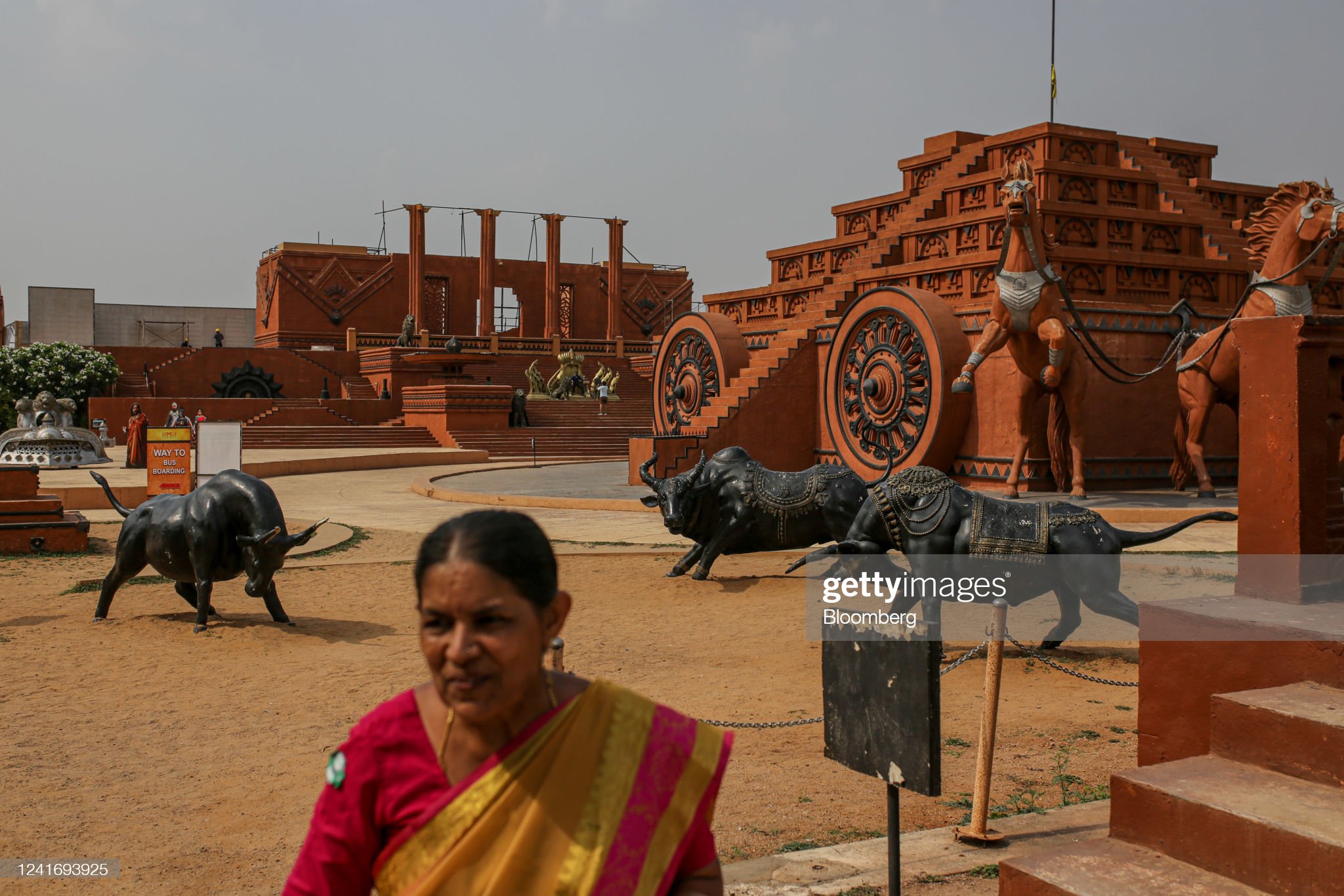
THE WORLD'S LARGEST FILM STUDIO - RAMOJI FILM CITY


Vi segnalo l'articolo The World’s Largest Film Studio - Ramoji Film City, di Meher Tatna, pubblicato ieri nel sito ufficiale dei Golden Globe Award. Ne approfitto per proporvi anche una succulenta collezione di immagini.

'The world’s biggest working film studio (...) lies about 25 miles outside Hyderabad, (...) and is certified as such by the Guinness World Records. Ramoji Film City covers 1,666 acres - Universal Studios, in Hollywood, covers 400. Ramoji Film City has 47 soundstages, 50 studio floors, 12 power substations, theaters, equipment and prop warehouses, outdoor movie sets, and post-production labs with editing, processing, visual effects, and dubbing facilities. This is the center of Tollywood filmmaking, the Telugu-language film industry in South India.


RFC is also a massive theme park. It is one of the most visited tourist destinations in India, attracting 1.5 million visitors each year. Studio tours in bright red trams ferry them around the complex. Guides point out police stations, five jails, (...) outdoor markets, a Japanese garden, underground caves, a railway station, airport and hospital, and recreated sites like the Taj Mahal in Agra, the Bulund Darwaza in Fatehpur Sikri, the Brindavan Gardens in Mysore and even the Hollywood sign and the Statue of Liberty. Sometimes, sets built for movies that become megahits, like S.S. Rajamouli’s (...) Baahubali, are saved and become part of the tour.
Daily live shows and parades are held in the theme park. The stores on Meena Bazaar (...) sell souvenir mugs and T-shirts. A wide variety of restaurants are all on the property. Guests can stay at the many affiliated hotels with package deals. Corporate events are welcomed. As are birthday parties. And weddings. Festivals like Diwali and Dussehra are celebrated with special events. Even International Women’s Day was marked by offering a special ‘Ladies Tour’ with two-fer tickets for a month. (...)


The primary purpose of Ramoji Film City, though, is film production. Up to 20 international films, or 40 domestic films, can be shot simultaneously in 500 locations with 6,000 personnel available for hire. (...) The sets range from Japanese garden to lions in Africa, to mock architectures of Paris, to miniature of Taj Mahal. Different landscapes, costumes, antiques, furniture, and paintings allow tourists to experience different eras, from the stone age to contemporary times. (...) Guidelines and permissions for aerial filming and filming with animals are also facilitated. (...)
Tollywood films shot at RFC include scenes from the recent blockbuster RRR. The same director, S.S. Rajamouli, shot his other two hit films at RFC as well: Baahubali. The Beginning (...) and Baahubali. The Conclusion. (...) Shah Rukh Khan has shot a number of films in RFC. Those include Chennai Express (...) and Dilwale. (...) So have superstars Salman Khan, with Wanted (...) and Tere Naam; (...) and Hrithik Roshan, with Krrish 3, (...) on the Mumbai set of RFC.
The bulk of filming is for the South Indian film industry, which includes Kannada, Bangla, Malayalam, and Tamil-language films. (...) Crocodile 2: Death Roll was shot at RFC, as were (...) Centipede, Nightfall (...) and Beeper (...) (with Harvey Keitel)'.

Vedi anche Ramoji Film City, 11 luglio 2012


Set di Baahubali

Set di Baahubali

Set di Baahubali

Set di Baahubali

Set di Baahubali

Set di Baahubali

Ramoji Rao, fondatore di Ramoji Film City


28 aprile 2023

RAJAT KAPOOR: CLOWN PRINCE OF INDEPENDENCE


[Archivio]

Vi ripropongo la lunga intervista concessa da Rajat Kapoor a Rukshana Tabassum, pubblicata il 2 settembre 2015 da India Independent Films: Clown Prince Of Independence. Di seguito un corposo estratto:

'How did ‘Ankhon Dekhi’ happen? (...)
I had it for 2-3 years, kept meeting people, they liked it but - you know. And one day, I finally tweeted saying: to hell with all the producers; I’m going to start a new play instead. So I get a tweet back from a gentleman called Manish Mundra saying, “Sir, I’m a big fan. I’ll produce your film.” So I obviously tweeted back thinking it was a joke, and that he couldn’t possibly be serious about such a thing on twitter; gave him my phone number just in case. He called me, telling me that he is based in Dubai and Nigeria, and asked about the budget. 4 crores, I said. No problem, I’ll do it. I pleaded with him not to joke around, and that this has happened to me way too often; people agree and just disappear. At least read the script, how can you just say ‘yes’? He read it, came to Mumbai to meet me - very nice man - and in the intervening few weeks, he had seen all my interviews and had learned everything about me. All he said was, “Sir, you don’t have to prove yourself to me. I have to prove myself to you. Let’s sign the dotted line.” And boom! Just like that, Ankhon Dekhi had a producer.


Have things been easier after you made the film? For your next script?
Not really. Things only become easier when your film makes money. And Ankhon Dekhi, unfortunately, did not make money. So, back to the same old shit. Things had become easier for me just for a brief while, around 2 or 3 years after Bheja Fry. Because the film made so much money, and was made on a shoestring budget. (...) For two years, life was relatively easier in terms of work opportunities; producers were actually chasing me for those few years (laughs). So you live like you’re in a dream - Wow, I’ve arrived! And boom, it crashes, and you’re back to square one. Which is fine, really. I’m not complaining. (...) This is something one has chosen for oneself. When I chose this, I knew very clearly what the consequences would be. It was never going to be easy. (...) The biggest and most hurtful wait is between films. When one is making a film, it’s absolute joy, whether you’re shooting, editing or doing sound - it’s all a big high. Or even showing your film. (...) I’ve seen it [Ankhon Dekhi] 50 times with audiences all over the world and within India. And the love I get out of it - I can’t even begin to tell you - I haven’t gotten as much love in my life as I did for Ankhon Dekhi. People just connect at various levels, or find depth in it; they just come out and hug me. It’s really very nice and priceless, and I’m very grateful for that... (...) But the awareness of Ankhon within the industry is still very low. They don’t even know of its existence. General audiences are more aware, but within the industry... nothing.

So when you were making Ankhon Dekhi, did you have a particular audience in mind?
I don’t think you make films like that. I don’t think anyone should make films like that; it’s the worst approach possible. (...)


Do you think this attitude of approaching a new script or project on their part is a big problem? Can it be fixed? (...)
The industry - before the corporates came in - knew of only one way to make a film: Who is in it? If it has Shah Rukh or Amitabh, they know that recovery is guaranteed - well, almost - because sometimes, even then, they end up losing money on big films. But somehow, they prefer to take those risks, because they’re familiar risks - rather than risk some money on a completely unknown territory. Corporates came in with a slightly better way of gauging things, and made it less about instinct, and far more streamlined. Some weren’t happy to see them come in, and some were, of course, over the moon thinking - now, things will change. BALLS. They came in and they also wanted Akshay Kumar. What is the game-changing device here? Nothing. In fact, they had lesser idea than even the individual producer - who at least might take a risk because he is not answerable to anybody. It’s his money. But with corporates, that is gone. So, I really don’t know how things will change. But somebody like Manish Mundra came in; he isn’t from this business, but has a lot of passion and his own sense of aesthetics. (...) He just reads scripts and picks some purely based on instinct. More importantly, he has deep enough pockets to lose some money. And I think that’s how independent cinema has made inroads - because of pure passion, not only from the creative team, but from the people who put in money. (...)

Do you think if more money was spent on the marketing of Ankhon Dekhi...?
We spent a lot of money on the marketing - around 3.5 to 4 crores, which is HUGE. (...) After spending all the money, we just didn’t get shows. Even the big films have become much bigger. When Bajrangi Bhaijaan releases, it comes in over 4000 screens. There is just no space left. Where do you show your film, even if you spend 20 crores on P&A? (...) That, in my opinion, is the biggest problem. Hollywood blockbusters have become as big as Indian films too. So you can’t release your film (...) anymore. There are only 52 weeks in the year. Another thing is that there’s a plethora of so-called independent, small-budget films. So, every week, you have four stupid films releasing, which aren’t really independent, but small-budget films. It’s not the same thing. They’re just really bad films, which confuses the audience even more. (...)


What about alternate distribution routes?
What are these routes exactly? They’ve been talking about digital releases, and how it’ll change the revenue model and so on - I’ve been hearing it for 10 years. Speeds will increase, revenues will increase, but really, nothing has changed. On the other hand, the DVD avenues have decreased considerably - to almost a fourth of its price. Earlier, we’d get 30 lakhs for DVD distribution rights, now we get 10. I don’t think this will change either. If people want to watch something on their phones or any mobile medium, they will still watch Sheila Ki Jawani instead of Ankhon Dekhi. For Ankhon, they will either wait for a pirated copy or when it is broadcasted for free through Satellite. And who can blame them? Even we don’t go out of our way to pay and watch movies lately. “Let’s watch Masaan, the makers are our friends” - that’s the only attitude at times. And I will go to watch what my son wants me to watch. (...) 

Is there a solution? Will things change at all?
No. There is no solution. Nothing will change. People want to watch films that help them live out their fantasies. They want to watch beautiful people making love to each other. (...) Why escape our dreary lives only to watch more dreary lives on screen?

But there have been people who watched Ankhon Dekhi and appreciated it deeply...
How many? 60,000? 80,000? That’s it, right? (...) Again, I’m not complaining. This is how it is. It won’t change. When you pay money, you want larger-than-life movies, huge extravaganzas. And it’s not only here. In Europe, the same shit is happening to independent cinema. (...) The only difference I’d say, between them and us, is that they are still supported by big stars in their country. (...) That’s not the case here. Firstly, most of our stars are bad actors; they have no ambition as artists, and definitely not enough to lend their names to smaller films.


After FTII [Film and Television Institute of India], it probably wasn’t easy to make your first film straightaway. Did you turn to theatre as sort of a creative outlet?
Even now, I still do. Before FTII, and after - it’s one way to keep working, and keep creating and evolving as an artist. (...) For about 10 years from 1991, there was no work, no opportunities to make money, nothing. (...) Yes, so after that, something very good happened.(smiles) In 1998, I got my first ad film, just by chance. (...) And they paid me 50,000 for one day’s work! Shit, man. And it freaked the hell out of me. I couldn’t believe it. This happens? Wow. So I decided to act in some more ads, and save up some money, hoping to produce my own film one day. Who needs a producer when you’re earning this kind of money, right?

How did that ad film happen though?
An actor friend of mine just called me last minute (...) to fill in for him. He had to back out of it, and I was apparently doing him a huge favour. So I went for the audition. They loved it. And then somebody else saw the ad, which eventually led to ‘Dil Chahta Hai’. It was a complete accident, because I had no intentions of becoming an actor. But I was very grateful, because for the first time, some money began to come in. Life became a little less stressful. In about 5 years - by saving around 2-3 lakhs a year - I had 15 lakhs. So I thought - let’s do this! Let me make my own film, screw the world! I went to NFDC [National Film Development Corporation], and they said they’d put 100% of what I put. I got some friends to contribute too, which sort of made it the first crowd-funded film here. Naseer saab [Naseeruddin Shah?] gave 5 lakhs, and this way, I managed to raise 25 lakhs for the film. NFDC put in 40 lakhs then, and that’s how we made Raghu Romeo. It went to Locarno, and we had a grand screening at the Piazza Grande. There were 9000 people, laughing and clapping and enjoying it. I looked at Saurabh Shukla, and we were like, what’s happening? This is so cool. We thought we had an international hit on our hands. Who can stop us now! Then it didn’t get released, we didn’t get any sales overseas, and when it finally came out in India, it bombed miserably. That was the first time I went into depression for a month. Because I had to then return those 25 lakhs, and I had no money. But over the next five years, I managed to return the amount. But even darkness resulted in some light. Sunil Doshi [produttore] saw Raghu Romeo in Locarno, and told me he had 60 lakhs to make a film with. I gave him the ‘Mixed Doubles’ script. Immediately, we shot it. Next year, one of the guys who assisted on Raghu Romeo - Sagar Ballary - said he wanted to remake this French film. So Mr. Doshi let us make ‘Bheja Fry’ too. Things looked good for a few years. Then, recession came and - finished. That’s pretty much my life’s story. Now, what else is left to ask?


I’ve wondered how you manage to come out of your theatre world to make films - the aesthetics and processes are so different. How seamless is it?
It’s completely different. Luckily, I learned filmmaking at FTII, so it was made clear to me what film aesthetics are. Of course, working with masters like Mani [Kaul] sir only helped further. My three years at FTII weren’t very easy, in the sense that, films almost became a burden on me. There was so much pressure - how could I make films at the same level as these masters? It was daunting. And Kumar [Shahani] would do these workshops and I’d not understand a damn thing, and I’d wonder - hell, what will I do in life? I’ll remain such a fool. I had no self-worth. So I was telling Chhabria saab - a beloved and respected teacher of mine - that I have to continue doing theatre. He vehemently opposed this idea. He told me that cinema and theatre were so close, and that I’ll mix up things and mess up my career. But I was convinced that I had to do theatre for my sanity. For me, there was nothing in common between the two. One is the medium of the actor, and the other is the medium of the camera - where actors are a very small part of the area. (...) Film happens through the immediacy of this moment, and theatre happens in a space where nothing exists. We make things exist with our gestures or traits. Not that I had planned it, the processes have become very different. Over the last 15 years, the 3-4 plays that I’ve done have been without a script. We’ve improvised and worked only with the idea, developing them into plays. When we did ‘C for Clowns’, I just knew that I wanted to do a film with clowns - there was nothing else. Everyday we would rehearse, and the play emerged. Hamlet was done the same way. (...) More shows in September here. Next month, I’m staring ‘As You Like It’. I’m excited, but it’s also a bit scary. With every play, or every film, you don’t know what to expect. Even with Ankhon Dekhi - we had great fun shooting it - and things just fell into place, and you see magic happening on the shoot. It’s exciting when that happens. But then, we started editing in April, and in May, ‘Fatso’ was released. Nobody liked it. I was startled. (...) After the well-appreciated ‘Mithya’, nobody liked Fatso. It was difficult to accept. So, the editing of Ankhon Dekhi became hellish for me. I didn’t know if I was going about it the right way. You never know, and you only follow your instincts. It’s difficult, because every time we take the risk of falling flat on your face. I’ve realized that when you’re writing, everything is a notion. You create characters, but they’re ideas. Then casting makes the notion more concrete. Then you go to the space, and so on. But it’s still a notion, because you plan shots - close-ups, two shots, and you’re thinking emotions will flow in a certain direction. And in the edit, when it doesn’t happen, you realize that it’s just an idea in your head. It starts becoming real only during the edit. Now there is no escape, and it’s only here that you create these emotions out of instincts and ideas. It’s always on the edit that you realize if you’ve messed up or not. That’s why the Ankhon Dekhi edit took five months, a long time, because it was so anxiety-ridden. I’m glad it worked out in the end. But imagine if ‘Fatso’ had released before the AD shoot - we’d have been full of doubt right on camera. At least, it was shot. You can’t allow doubt to creep in. Belief is important if you have to reach the end of the journey - not in a megalomaniac sense, but you have to fight through. You can’t be unsure and get into that dark space.

So when you start your films, do you indefinitely stop theatre?
Plays don’t take so long. In three months, everything is done and dusted with. And then, it becomes all about shows. We travel, and perform. We only don’t do shows when we’re shooting, otherwise even during the release of Ankhon Dekhi, we were doing Hamlet all over. And Hamlet has now done 180 shows. Imagine that number - 180 shows - and ‘Nothing Like Lear’ has done 95 shows. It’s bizarre. Vinay [Pathak] and I were in Israel two years back with ‘Nothing Like Lear’, and we were walking from the hotel to the theatre. I was telling Vinay - what a life! This is a fantasy we didn’t even dare dream of - traveling the world, people loving it, watching it and laughing, reacting, what more do you want? It’s a blessed life. I’m so grateful, even today, every single day. That’s why all this waiting and cribbing about lack of producers - in the end, it doesn’t even matter. What I’ve got is immense. It just is. Like I was saying, that Ankhon Dekhi screening just last week - it’s so overwhelming. The joy you get when you stand outside after the show and meet happy viewers - it’s just priceless, and more than I’ve asked for. And we are some of the luckiest people in the world because we’re doing what we love. I feel like I’ve never worked a single day. When I’m writing, shooting, editing or doing a show - that’s not working. It’s a gift. There’s no scope of regret or bitterness of any kind at the end of the day. If I can’t make a film for another two years, it will be frustrating. But so what? I’ll write a film that can be made in 30-40 lakhs. If you want to make a film, you’ll make a film. Nobody can stop you.


Suppose you write a film today, it reflects the kind of person you are today. As time passes, everything changes - including your perspectives of the scripts you’re working on for years...
When you shoot it, that’s when you really put a stamp of time on it. Till then, it’s nebulous.

But Ankhon Dekhi was so different from your other films. It wasn’t really what you’d call a ‘Rajat Kapoor’ film.
It is, and is not. It feels different because it’s a very lower middle-class family, so the feel is different. But there are similar themes and characters. I’m almost embarrassed to say it - but the mother in Raghu Romeo, the mother in Fatso, mother in Ankhon Dekhi aren’t very different. Obsessive guys like Raghu, Bauji, VK - there’s a pattern there. I’m not seeking these people, but they keep coming back to me, script after script. Perhaps I have some kind of fascination subconsciously for that eccentric and obsessive character. These are things that become apparent only later though - themes of identity especially. I don’t sit down and decide to do it. I only realize that certain themes excite me. (...)

What would you like to tell a lot of youngsters about to enter the struggle - the idealistic ones who want to tell a story and don’t really make it for certain audiences? (...)
The biggest fear for any creative person is the fear of your own mediocrity. And I think that’s what stops all of us from really pushing the barriers and saying what we want to say. We have the fear of being judged, and what it will do to our image. I think that also marks the difference between the person who does it and the person who does it in their heads. Everyone is a writer in his/her head, but the one who finishes a novel is a writer. I suppose - if you want to make a film, it’s like a disease. You just have to make a film if you have to. Nothing will stop you. There were times when it was humiliating to look for money. There were points when I questioned my motivation to make films - why do it when there’s acting work that pays so well? But it’s not something that you can just stop. It’s a sickness. You have to make films, because it will kill you if you don’t. That madness is important, otherwise you’ll stop after one film. You’ll think it’s too much work, too much stress and humiliation and dealing with people. You’d rather sit at home and write a novel, irrespective of whether it gets published. But you can’t even make a film till somebody puts in money. But you do it because you’re slightly mad. (...) Imagine what Bhansali has to go through, to get Aishwarya Rai, Deepika Padukone, and then to get a producer, then to make a set which everybody often laughs at; they mock him for such lavishness. But he made it because this is his vision; it’s how he sees the world. This is how he sees his cinema, and he fights to get it made. He doesn’t just put a camera somewhere and starts shooting. He has a vision; whether we agree or dislike his vision is irrelevant. But there’s something in his head that compels him to put it on celluloid, and he will go to any extent to do it. Even if it’s Ram Gopal Varma - whatever he makes, he makes it with a certain madness and passion. I think that is the only criteria to make a film'.

23 aprile 2023

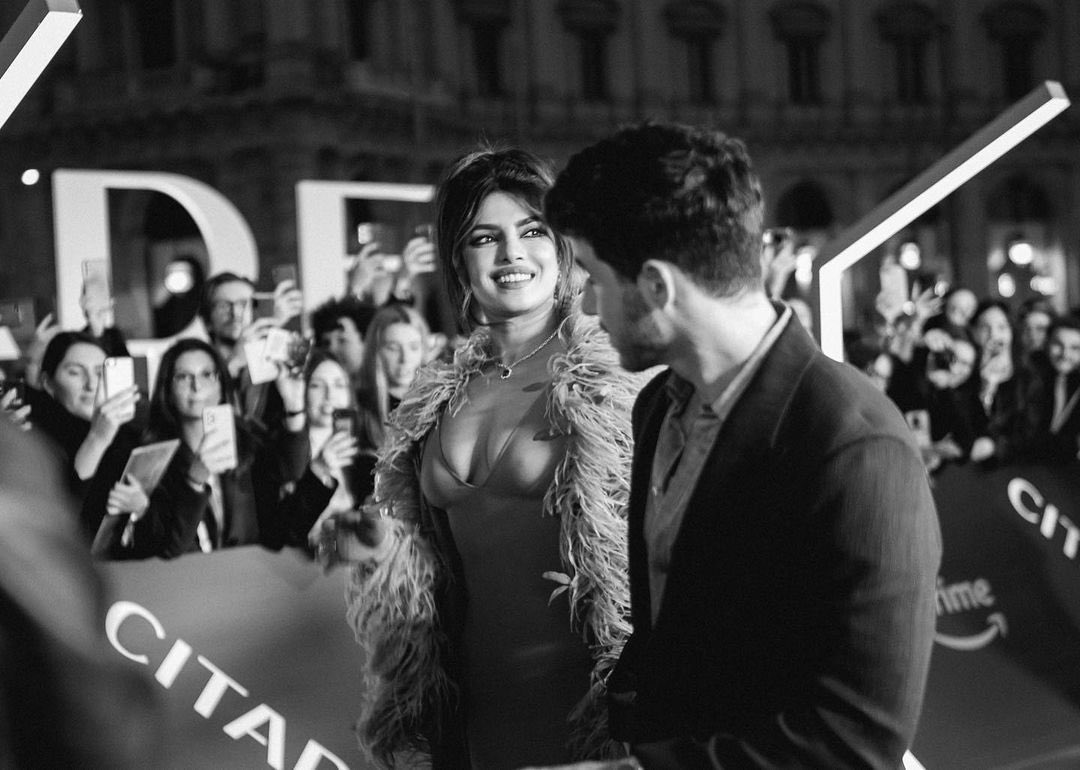
PRIYANKA CHOPRA A ROMA: EVENTO CITADEL


Lo scorso 21 aprile Priyanka Chopra e Nick Jonas erano a Roma per promuovere la serie americana Citadel. In programma conferenza stampa, red carpet e proiezione in anteprima delle prime due puntate presso la sala The Space Cinema Moderno, cena al ristorante Antica Pesa. Fedez aveva annunciato che avrebbe intervistato la diva indiana per conto di Prime Video Italia, intervista sembrerebbe poi annullata. Per la serata Priyanka ha sfoggiato un magnifico abito di Valentino color verde salvia.  
Citadel sarà disponibile sulla piattaforma streaming Prime Video a partire dal prossimo 28 aprile. Priyanka Chopra è la protagonista della serie insieme a Richard Madden. La prima stagione prevede sei episodi. Trailer. Sono già in produzione uno spin-off indiano, diretto da Raj & DK e interpretato da Varun Dhawan e Samantha Prabhu, e uno italiano interpretato da Matilda De Angelis. Lo scorso 18 aprile, all'evento analogo organizzato a Londra avevano partecipato anche Varun, Samantha, Raj & DK e Matilda. Il tour promozionale di Citadel era partito da Mumbai il 4 aprile; in quell'occasione Priyanka aveva indossato un capo di Versace.


RASSEGNA STAMPA/VIDEO (aggiornata al 24 aprile 2023)

'Priyanka Chopra Jonas: Ciò che mi ha attirato è stata l’ambizione dello show è l’idea che avremo una serie italiana e una indiana, ma anche la possibilità di avere più show in giro per il mondo. È un modo figo di globalizzare l’intrattenimento. Dalla prospettiva di una persona che ha lavorato in altri Paesi è un mio sogno quello di vedere attori e registi di posti diversi lavorare insieme per qualcosa di grande come questa serie. Questo è stato fighissimo. Ovviamente il mio personaggio è incredibile, perché vedi una meravigliosa spia donna nel mondo dello spionaggio, notoriamente dominato dagli uomini. Ma più di ogni cosa, l’ambizione internazionale della serie tv è qualcosa di inedito e particolarmente elettrizzante per me. (...) Non so se mi mancava l’azione ma è qualcosa con cui mi sento a mio agio. Adoro l’idea di questa serie incredibile, entrambi i personaggi hanno questa dualità: chi erano prima dell’incidente, chi sono dopo e chi diventano. È stato molto divertente scavare in questi personaggi, poi amo lavorare con persone che ammiro e stimo come i fratelli Russo, è stato esaltante lasciarsi dirigere da loro e vedere come pensano e costruiscono questo incredibile universo. Poi David [Weil] [responsabile creativo] è arrivato e ci siamo seduti a parlare del mio personaggio per cinque ore, l’ho percepito come molto rispettoso ma anche molto collaborativo, è stato meraviglioso'.


'Chopra: "Fin da subito mi è piaciuta l’idea che ci fossero diversi progetti in più paesi". (...) Chopra era già stata in Quantico: "Non so se mi mancava l’azione, ma qui mi interessava molto la dualità del mio personaggio che è in un modo prima dell’incidente e poi cambia subito dopo. Mi è piaciuto lavorare con i fratelli Russo e il loro approccio al genere. Ho lavorato per diverse ore con David Weil allo sviluppo del personaggio e questa attenzione e cura mi ha colpito molto. (...) Dopo un anno e mezzo Richard Madden si è rasato, questo è stato uno dei momenti più divertenti che ho vissuto sul set, così non poteva essere richiamato per altre riprese". (...) Stanley Tucci vi ha insegnato l’italiano? Tucci: "Non sono bravo". Chopra: "Non è vero che lo sa parlare!". Madden: "Non so nulla di italiano, ho imparato pochissime parole per le riprese". (...) Chopra: "A me piacciono tanti generi, sono cresciuta con le rom-com, poi ho imparato ad apprezzare i thriller, alla fine dipende dai momenti della giornata, magari ci sono occasioni in cui mi va di picchiare qualcuno".'


'Priyanka Chopra Jonas non è nuova ai ruoli action e infatti si è detta molto a suo agio a interpretare la super spia di Citadel, Nadia Sinh: “Mi piaceva moltissimo l’idea che questa storia fosse raccontata attraverso personaggi complessi. Nadia ha una dualità rispetto alla sua personalità e in base agli eventi, che vive, si manifestano diverse parti di lei. È stato divertente scavare in questo personaggio e poi è stato bello lavorare con i Fratelli Russo e costruire questo mondo con loro. È bello lavorare con chi ammiri e condividere l’ambizione di questa serie così internazionale. Era una possibilità imperdibile far parte di una serie internazionale, da molti punti di vista. E poi il mio personaggio è splendido perché è una spia davvero in gamba in un mondo, quello dei film di spionaggio, che tradizionalmente è fatto solo da uomini”.'

Priyanka Chopra, Richard Madden e Stanley Tucci

- Richard Madden e Priyanka Chopra Jonas, due irresistibili spie in ‘Citadel’, Cristina Locuratolo, Taxidrivers, 21 aprile 2023:
'Priyanka Chopra Jonas parla dell’aspetto globale della serie: “Mi stimolava l’idea di far parte di un progetto in cui lavorassero attori e produttori di diverse parti del mondo, che globalizzasse l’entertainment a livello mondiale. Citadel ha un’ambizione enorme, il fatto che vi siano una versione spagnola, una italiana, una messicana e una indiana è davvero eccitante e innovativo. Ho già lavorato in progetti di caratura internazionale e in paesi diversi, ma l’idea che un italiano possa guardare la versione hindi della storia in lingua originale, o viceversa, mi rende molto felice e orgogliosa del lavoro che stiamo facendo”. Il suo personaggio Nadia Sinh è una spia dall’incredibile talento, quasi una supereroina, in un mondo dominato da uomini: “Ho amato l’idea di interpretare un personaggio così forte, ricco di sfaccettature. Collaborare con i fratelli Russo, che ammiro moltissimo, è stato esaltante”.'


'Alla domanda se fosse tornata a recitare in un spy thriller (dopo Quantico) perché le mancava l’azione, Priyanka Chopra ha risposto divertita: “Come ha già detto Richard, la dualità dei nostri personaggi è l’aspetto più interessante di Citadel, anche più dell’azione che comunque mi mancava un po’. Il fatto di scoprire insieme a loro cosa sia cambiato in quegli otto anni di buco dopo l’incidente ferroviario rappresenta l’aspetto emozionale dello show, ma anche un modo per farci entrare più in empatia con Mason e Nadia, il mio personaggio: chi sono, chi erano, come la loro vita sia stata stravolta da Manticore e cosa faranno per riprendersela indietro”.' 


- Richard Madden e Priyanka Copra a Roma per Citadel: «Siamo spie speciali in stile Avengers», Alessandra De Tommasi, Vanity Fair Italia, 23 aprile 2023:
'«Questa serie ha grandissime ambizioni - spiega la protagonista, che interpreta Nadia Sinh - e non solo d’intrattenimento. Intrecciando i Paesi e le culture rende il mondo più accessibile». (...) «Accade un incidente - spiega Priyanka - e c’è un senso fortissimo del “prima” e del “dopo”. Nulla è lasciato al caso, anzi i Russo mi hanno tenuto 5 ore intere per spiegarmi il personaggio prima ancora d’iniziare il lavoro». (...) «Senza entrare nei dettagli di quello che succede ai protagonisti - aggiunge Priyanka - si vede subito che l’elemento spy è arricchito da forti momenti drammatici legati all’identità, il che rende le sfumature del racconto ancora più intense».'


- Priyanka Chopra Jonas: «Il doppio cognome? Solo sui social», Simona Siri, Vanity Fair Italia, 24 aprile 2023:
'Al telefono da Londra c’è lei, (...) Priyanka Chopra Jonas. (...) Quarant’anni, indiana, ha saputo conquistare prima Bollywood e poi Hollywood, dopo la fascia di Miss Mondo nel 2000. Oggi, con una cinquantina di film, (...), pochissime serie ma buonissime, (...) e una società di produzione (...) che ha lanciato una dozzina di notevoli progetti cinematografici, è icona internazionale. In Citadel è l’agente speciale Nadia Sinh. (...) I sei episodi mischiano azione, avventura e ambientazioni incredibili, dove il volto e il fascino senza confini di Chopra Jonas sembrano perfetti.

Che cosa l’ha attratta del progetto?
Quando si parla di diversità e globalizzazione, ecco, in questa serie ci sono per davvero. E poi è divertente. Citadel è un’impresa di spionaggio che non è fedele a nessuna nazione, quindi è fondamentalmente fedele all’essere umano. Mi piacciono le storie di spie e qui oltre a questo c’è il divertimento, le risate, l’azione. Ne sono davvero molto entusiasta e non vedo l’ora di sapere che cosa ne penserà il pubblico.


Parlando di azione: è vero che non usa controfigure?
È vero, mi piace girare scene d’azione. Mi fido del mio corpo e per questo ruolo mi sono allenata per un anno e mezzo. Mi piace sfidare me stessa fisicamente così come mi piace trovare complessità nelle parti che scelgo.

In tema di globalità, penso che lei la rappresenti perfettamente. Ormai vive a Los Angeles con un marito americano, ma allo stesso tempo è ancora uno dei volti più noti del cinema indiano. Qual è il rapporto con le sue origini e con quello che è adesso?
Mi sento una fusione dei miei due Paesi, quello natale e quello adottivo. In fondo sono cresciuta in entrambi. Ho vissuto in entrambi, ho lavorato in entrambi, sono stata amata in entrambi. È un po’ come essere sempre divisi in due, ed è anche il motivo per cui non voglio scegliere, voglio essere in grado di lavorare in entrambi i settori. Sono molto fortunata, me ne rendo conto: a pochissimi attori capita di poter lavorare nelle due più grandi industrie dell’intrattenimento del mondo. E io voglio continuare a farlo, anche attraverso la mia attività di produttrice: mi circondo di tutto ciò che è del mio Paese, e voglio raccontare storie che provengono da lì, dall’Asia meridionale. Mi piace narrare storie femminili che hanno l’essenza della mia cultura. Mi piace sostenere cineasti e in generale artisti che provengono dalla mia parte del mondo. È per questo che la mia società di produzione lavora con molti nuovi talenti, nuovi registi, e li aiuta in qualche modo a orientarsi in questo settore. Detto questo, nessun progetto può competere con l’emozione che provo quando torno a casa e atterro all’aeroporto e soprattutto quando mangio cibo indiano con i miei amici e la mia famiglia. È una sensazione speciale e cerco di farlo il più spesso possibile.


In Italia il cibo è una parte importante della cultura e del modo in cui si socializza. Anche in India è così?
Assolutamente. Io poi amo il cibo, penso di vivere per il cibo. Vengo da una regione chiamata Punjab, siamo noti per essere dei buongustai. Mentre pranzo penso già alla cena, sono quel tipo di persona.

È questa la sua caratteristica più indiana?
Questa e l’umorismo. Ho un modo di parlare agli altri rumoroso, sfacciato e impertinente. E ne sono fiera, così come sono fiera della mia personalità. Quando torno nel mio Paese è tutto fragoroso, eccessivo. E io sono così.

Da italiana le confesso che una delle incomprensioni con mio marito americano è stata sul tono di voce: lui all’inizio pensava che fossi sempre arrabbiata perché parlavo ad alta voce. Gli ho dovuto spiegare che siamo fatti così, che è il nostro modo normale di discutere.
Infatti. È successo anche a me con mio marito. Quando sono negli Stati Uniti mi sembra tutto così quieto e silenzioso rispetto all’India. Da noi è normale che in una conversazione ci si parli addosso, anzi bisogna proprio parlarsi uno sopra l’altro per essere ascoltati.


La cosa che più colpisce di lei, oltre naturalmente alla bellezza, è la sicurezza e la determinazione. È nata così o l’ha sviluppata strada facendo?
La fiducia in sé stessi è la risorsa più grande. A 20 anni fingevo di averla, mettevo in pratica il famoso fake it until you make it (fingi fino a quando non lo diventi, ndr). A 30 l’avevo conquistata. Oggi se guardo indietro mi sento arrivata a un punto in cui la mia autostima è più radicata e reale, viene dall’aver accettato i miei alti e bassi, dalla consapevolezza che il bene e il male possono accadere e che, se ci sarà una brutta giornata, se ci sarà un fallimento, pazienza. Viene inoltre dalla mia capacità di rinascere. Ho anche imparato che è bello essere vulnerabili. Penso che ci sia tanta forza nella vulnerabilità, nell’essere effettivamente in grado di accedervi invece di nasconderla sotto le spoglie dell’eccessiva sicurezza.

Ha sofferto anche di questo, di troppa sicurezza?
Assolutamente. Il mio pendolo è andato da un estremo all’altro. In questo momento mi sento come la superficie dell’acqua: calma e non tumultuosa.

Come è arrivata a questa pace interiore?
Riflettendo e capendo che il mio valore non è direttamente proporzionale al lavoro. Mi ci è voluto molto tempo. Nella vita di un attore non c’è coerenza: un film o va bene o va male, e non sai neanche perché, vivi costantemente nella paura che ti venga tolto il tappeto da sotto i piedi. Non hai controllo e se, come me, cresci sotto gli occhi del pubblico, non è semplice. Oggi sono davvero grata di aver raggiunto un punto in cui sono in grado di separare le due cose. Lavoro, sono ispirata, ci metto tutta me stessa, non ho paura. E poi torno a casa e trascorro del tempo con la mia famiglia e nutro la mia anima, finché non torno a lavorare e ricomincio tutto da capo.


Ha dichiarato che con Citadel è la prima volta che il suo compenso è uguale a quello del coprotagonista maschile. Perché era importante dirlo?
Se contribuisci allo stesso modo della tua controparte maschile nel tuo lavoro, se il tempo che dedichi è lo stesso, se la tua esperienza è la stessa, allora deve esserci parità. E noi donne dobbiamo restare unite per continuare a combattere in questo senso. Lo dico perché gran parte del merito lo devo a Jennifer Saki, che è il capo degli Amazon Studios: i miei agenti hanno avuto una conversazione con lei sul tema del salario equo e lei ha detto che era d’accordo. È per questo che ci vogliono più donne in posizione di potere, perché fanno spazio ad altre donne.

Da quando è sposata con Nick Jonas ha preso anche il suo cognome.
In India è tradizione cambiarlo, e infatti mia madre ha preso il cognome di mio padre. Io ho deciso di tenerli entrambi perché da una parte sono orgogliosa del mio, è quello con cui mi sono affermata nel mondo del lavoro, è quello delle mie origini, della mia famiglia. Dall’altra volevo onorare mio marito, la mia nuova vita, il Paese in cui ho scelto di vivere. Confesso però una cosa: non ho mai fatto il cambio sui documenti. Su quelli sono ancora solo Chopra. Il doppio cognome per ora lo uso solo sui social'.


Video Oggi: Priyanka Chopra ci parla della nuova serie Amazon, Giulia Peroni, 17 aprile 2023
Video: Priyanka e Nick a spasso per Roma
Video Noi degli 80-90: conferenza stampa
Video Prime: Priyanka e Nick all'anteprima italiana di Citadel
Video Getty Images: Priyanka e Nick all'anteprima italiana di Citadel
Video Prime: promo dell'evento
Video Prime: intervista concessa da Priyanka
Video Terza Pagina: red carpet
Video: Priyanka e Nick all'anteprima italiana di Citadel
Video: Priyanka e Richard Madden in sala per la proiezione
Video: Priyanka sul palco
Video: ristorante Antica Pesa
Video: Priyanka a Roma


Priyanka Chopra e Fedez

Priyanka Chopra e Lucia Silvestri, direttrice creativa Bulgari


Mumbai (abito Versace)

Priyanka Chopra, Varun Dhawan, Samantha Prabhu e Matilda De Angelis - Londra

Priyanka Chopra, Varun Dhawan, Samantha Prabhu, Raj & DK e Matilda De Angelis - Londra