31 dicembre 2020

RADHE SHYAM: LE RIPRESE IN ITALIA


(Testo aggiornato il 12 aprile 2022)

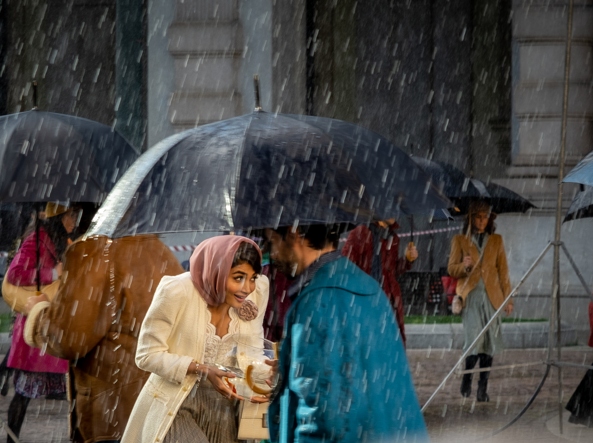
Nei primi giorni dell'ottobre 2018 la troupe di Radhe Shyam era in Toscana per girare alcune sequenze. La pellicola, in lingua telugu, è diretta da Radha Krishna Kumar e interpretata da Prabhas e da Pooja Hegde. I set erano stati allestiti ad Arezzo (Pieve e Duomo) per riprese in notturna, Pisa (Ponte di Mezzo, Lungarni) e Lucca (Mura e centro storico).

Esattamente due anni dopo, nell'ottobre 2020, la troupe è tornata nel nostro Paese. Per la precisione in Piemonte: Torino (Parco del Valentino, Piazza Castello, Accademia delle Scienze, Palazzo Civico a Piazza Palazzo di Città, Palazzo Carignano, Palazzo Madama, Museo Nazionale del Risorgimento Italiano, Galleria Subalpina, Ristorante Al Cambio), Reggia di Venaria, Pian del Frais di Chiomonte, Stazione Ferroviaria di Ceres, Museo Ferroviario Piemontese di Savigliano (in provincia di Cuneo), castello di Barolo (in provincia di Cuneo), valli di Susa e di Lanzo.
Chiara Appendino, sindaco di Torino, a seguito dell'incontro con Pooja Hegde, ha dichiarato: 'Nonostante le enormi difficoltà dettate dalla pandemia, Torino è ancora meta di grandi produzioni cinematografiche internazionali, anche grazie all'importante lavoro di Film Commission Torino Piemonte. Quando mi hanno detto che si sarebbe girato a Torino il colossal di Tollywood Radhe Shyam ero molto soddisfatta: è una bellissima notizia e siamo orgogliosi che abbiano scelto la nostra città, sia perché occasione di lavoro per le nostre maestranze, sia per le ricadute economiche per l'indotto cittadino e anche per l’opportunità di portare Torino e le sue bellezze nel mondo. In questo periodo siamo tutte e tutti chiamati a rivedere il nostro modo di lavorare, ma la filiera cinematografica continua a darci lustro e non posso che ringraziare Film Commission e tutti gli operatori coinvolti. Pooja Hedge, has been a great pleasure'. 

A fine ottobre la troupe si è trasferita in Liguria, a Malpasso (in zona Finale Ligure). Sembra che anche nel 2018 fossero state girate alcune sequenze in Liguria. Agli inizi di novembre è la volta della Valle d'Aosta: La Thuile (Petosan), Breuil Cervinia (Plan Maison e Lago Blu), prato di Sant’Orso a Cogne. 
Anche Roma è inclusa nella lista delle location italiane (Parco archeologico del Colosseo, Parco degli Acquedotti). All'allestimento dei set hanno contribuito le scenografe Illia Boccia e Giulia Parigi.

- Teaser nel quale Prabhas pronuncia delle battute in italiano

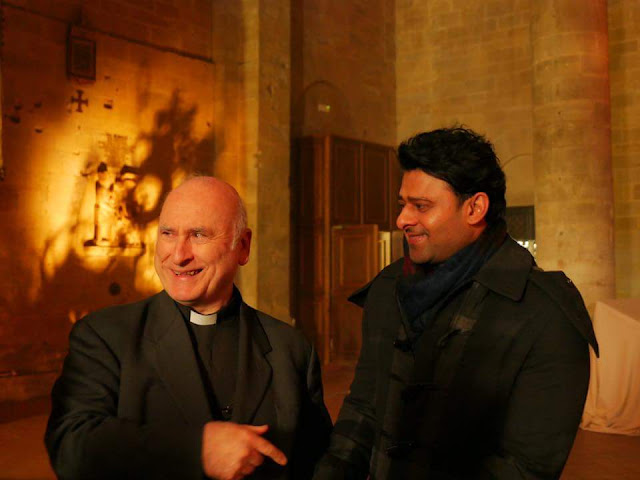
Da sinistra: Don Alvaro Bardelli, Prabhas, Marcello Comanducci - Arezzo, 2018

RASSEGNA STAMPA/VIDEO

'Bollywood scambia il giorno con la notte. Come i bambini più scatenati di giorno si riposa e di notte sta sveglio fino all’alba. L’alba della Pieve, fino all’altra sera. L’alba del Duomo da stanotte. Perché la macchina da guerra del cinema indiano si è trasferita armi e bagagli da un angolo all’altro del centro. Un trasloco nel quale ha conservato il parroco, visto che don Alvaro Bardelli guida sia la basilica che la Cattedrale. Un don Alvaro che ha seguito passo passo perfino di notte le riprese. Un po’ curioso, forse, ma anche tanto attento alla sua chiesa. Trasformata ma non snaturata. Impossibile avventurarsi tra le navate ma il passaparola va da sé: grandi lampadari pendenti, luci soffuse stile monastero, un gigantesco tavolo di legno, la copertura di quanto nel tempio non fosse in linea con il film. E fuori una mobilitazione d’altri tempi. Le gru si arrampicano da un lato all’altro della Pieve: e le luci esterne influenzano quelle interne, fasci «lunari» che potremo ammirare solo nel film. (...) Al centro lui, Prabhas. Il divo del cinema indiano, per una volta senza barba: basta una foto su Facebook e i like volano, trainati dall’altra parte del mondo. La stretta di mano con il padrone di casa, don Alvaro, e l’assessore Marcello Comanducci, che da mesi preparava questo sbarco, vengono riprese rapidamente in India. Prabhas stavolta è sbarbato e questo quanto basta a scatenare la curiosità dei fans. (...) Al centro una storia romantica: lui e lei che si incontrano, lontani come Giulietta e Romeo ma poi nel film fatalmente legati. Lei è Pooja Hegde, bella come solo le indiane sanno essere, da ieri sul set. (...) Intanto Prabhas, parlando con Comanducci, ha confessato di essere stato conquistato dalle bellezze della città. Bene, che ne parli in India, ai milioni di connazionali che pendono dalle sue labbra. Li aspettiamo a braccia aperte.'

- Video Rai 3: TGR Piemonte
- Bollywood porta i kolossal sul Po, Alessandra Muglia, Sette, 16 febbraio 2021:
'«In Italia mi sento libero: posso andare in giro senza che nessuno mi riconosca. (...) Del resto ogni mestiere ha qualche aspetto critico». Così dopo l’ultimo ciak italiano, eccolo dedicare le ultime ore prima del rientro a Mumbai allo shopping per le vie di Firenze. Via dal set piemontese e gita in Toscana. «Volevo vedere il museo di Leonardo da Vinci ma era chiuso, così ho ripiegato sugli acquisti. Ho preso delle bellissime scarpe di Ferragamo per mia sorella», racconta con un filo di voce, scusandosi per le ore di ritardo con cui si presenta al telefono per l’intervista. Del resto lui è Prabhas, l’attore del momento in India, Paese che venera i divi del grande schermo come dei. (...) Il suo Baahubali 2 (2017) ha segnato il record di incassi in India. Si capisce che siano altissime le aspettative sul prossimo film: Radhe Shyam, diretto dal giovane Radha Krishna Kumar. È la prima produzione indiana quasi tutta girata in Italia, tra Roma, Liguria, Valle d’Aosta, ma soprattutto a Torino e dintorni.
«Sarà una cartolina molto importante per la nostra regione» scommette Paolo Damilano, esportatore di Barolo nel mondo e presidente della Film Commission Torino Piemonte, la prima nata in Italia, nel 2000, per supportare le produzioni straniere nella logistica e nel reperire tecnici e troupe. La distribuzione prevista è da kolossal: Covid permettendo, ottomila sale nell’estate prossima. Del resto Prabhas è considerato il primo vero divo di tutta l’India. Il suo blockbuster Baahubali è stato doppiato nelle principali lingue del cinema indiano: non c’è soltanto l’hindi di Bollywood, a Mumbai, ma anche il tamil usato a Kollywood, Chennai, e il malayalam di Mollywood, in Kerala. Prabhas, uomo del Sud, nasce come stella del cinema di Tollywood, quello di Hyderabad, parlato in telugu. Poi il grande salto con Radhe Shyam, girato contemporaneamente in hindi e in telugu e doppiato nelle altre due lingue.
E pensare che Prabhas seppur figlio d’arte da ragazzo aveva altri progetti: «Avevo studiato business, ero timido, non pensavo di fare l’attore. Poi mio zio mi ha tirato dentro». Suo zio è l’ormai ottantenne Krishnam Raju, celebrità del cinema telugu poi datosi anche alla politica. Dedizione e disciplina hanno reso Prabhas una superstar. Per riuscire a interpretare al meglio il principe-guerriero buono di Baahubali si è preparato al ruolo per 5 anni. In Radhe Shyam, dismessi i panni da supereroe, è un chiromante indiano chiamato Shyam, altro nome di Krishna, «un dio molto romantico» ricorda lui. Radhe nella mitologia indù è la sua amata. Radhe Shyam: i due che sono uno; l’energia femminile e quella maschile che formano la perfezione dell’amore cosmico. «La storia inizia a Varanasi», la città sacra sul Gange. «Shyam vive lì, fa il chiromante», rivela Prabhas a 7, «poi lascia l’India, raggiunge l’Italia, si stabilisce a Torino e un giorno incontra Radhe, un’indiana che fa il medico a Roma», la magnetica Pooja Hegde.
Credenza lui, scienza lei: la storia appare incentrata sulla dialettica di lotta e attrazione tra tradizione e ragione, destino e libertà. Radhe Shyam diventa quasi un ossimoro: si riferisce a due personaggi distanti per modo di pensare e professione che l’amore avvicina. «Io in realtà non ho mai creduto alla lettura della mano o delle foglie di palma» confida Prahbas. Eppure in India indovini e astrologi hanno un gran da fare: molta gente continua a consultarli anche oggi prima di prendere qualsiasi decisione importante, dall’acquisto della casa al cambio del lavoro, alla data di matrimonio. Prabhas non ha ancora trovato il giorno propizio per convolare a nozze. E nemmeno la compagna, per la verità. Anche se rumour sui media locali parlano di nozze con Anushka Shetty, co-protagonista in Baahubali 2, a lungo osteggiate dalle rispettive famiglie.

Pooja Hegde - Pisa, 2018

«Io e Anushka siamo soltanto buoni amici, ma la gente ci vorrebbe insieme anche nella vita», chiarisce l’attore. Resta il fatto che, nonostante il matrimonio d’amore sia il classico sogno del cinema di Bollywood, il 90% delle unioni in India sono ancora combinate o quanto meno semi-combinate, con la selezione dei maritabili fatta dalla famiglia. «Si dice che i matrimoni combinati siano più solidi. Ma io voglio sposarmi per amore». Per ora però Prabhas ha altro per la testa: «Non sono innamorato, l’unica cosa che desidero è che Radhe Shyam piaccia al pubblico».
In Italia, durante le riprese, il film è stato presentato come una sorta di Giulietta e Romeo in salsa indiana. Un’altra storia romantica con finale tragico (...) o con il tradizionale happy end bollywoodiano? «Come va a finire lo scoprirete guardando il film», taglia corto Prabhas. Quel che si sa è che questo amore corre sui binari. I due vagano per l’Italia in treno. Radhe Shyam è un film romantico, non ci sono combattimenti, non è un tipico masala film, dove il nome della mistura di spezie è preso in prestito per descrivere il mix di sentimentalismo, dramma, thriller, azione, canti e danze che ha fatto la storia e la fortuna del cinema popolare bollywodiano, genere mainstream per l’audience indiana, che ama guardare più generi diversi in un unico film, che tocchi tutte le emozioni. Ma non rientra nemmeno nel genere a vocazione più internazionale come The Lunchbox di Ritesh Batra, o Monsoon Wedding di Mira Nair, Leone d’oro a Venezia 2001.
È un film sui generis. «Anche il soggetto non è mai stato trattato prima: l’amore tra mondi opposti, osteggiato non da fattori esterni come famiglie, classi sociali, caste, ma dalle loro stesse convinzioni», considera Ivano Fucci, 35 anni. Sposato con Shweta Pandit, cantante e attrice di Bollywood, ha fatto da ponte tra la produzione indiana e l’Italia: la sua Odu Movies ha assistito oltre 80 titoli indiani dal 2010. Il primo trailer di Radhe Shyam è stato lanciato durante le riprese a Torino, a ottobre, nel giorno del 41° compleanno di Prabhas: si vede l’attore che taglia la torta e festeggia davanti a Palazzo Carignano con una Mini alle spalle e addosso un giubbotto nero alla Fonzie! Assaggio dell’ambientazione Anni 70 della pellicola. «Anche questa distanza temporale è un carattere distintivo del film: un passato vicino, che non sconfina nel mondo epico indiano di tante pellicole. Il regista riteneva che il contrasto ideologico tra i due protagonisti così diventasse più credibile, la credenza astrologica tempo fa era infatti più forte».
È soprattutto la quantità di scene girate in Italia a fare la differenza. «Prima le produzioni indiane andavano all’estero soltanto per girare le canzoni, il momento onirico del film. Tante erano ambientate sulle cime innevate della Svizzera, un paesaggio esotico per loro. Poi hanno iniziato a girare lì anche altre scene: una cinquantina di film dagli Anni 90 al 2005. Ho capito che c’era un sistema che attraeva le produzioni di Bollywod in Svizzera e poi anche i turisti indiani». Un caso di cineturismo che ha fatto scuola. «Bollywood era già approdata a Torino nel 2017 ma Radhe Shyam ci ha permesso di raccontare anche i luoghi della regione meno noti» si entusiasma Paolo Manera, direttore della Film Commission Torino-Piemonte. Anche Prabhas era già stato in Italia più volte. «Questo è stato il soggiorno più lungo: un mese. Mascherine e distanziamento hanno reso l’Italia più sfuggente ma è un miracolo essere riusciti a girare lo stesso in sicurezza».'


- La musica di Alberto veste i colori. Vatteroni approda a Bollywood, Cristina Lorenzi, La Nazione, 28 luglio 2021: il compositore italiano Alberto Vatteroni firma la colonna sonora del Making of Radhe Shyam.
- Radhe Shyam: il blockbuster indiano realizzato a Torino, 11 marzo 2022, sito di Cinecittà: 'Il primo grande film indiano interamente ambientato in Italia, e realizzato in particolare in Piemonte (le pochissime scene ambientate a Londra, sono comunque girate a Torino). (...) Il Presidente di Film Commission Torino Piemonte Beatrice Borgia precisa che “Radhe Shyam è un progetto che evidenzia al meglio il legame tra audiovisivo e turismo e che ha un potenziale promozionale unico per il territorio piemontese, grazie soprattutto alla grande notorietà dei suoi protagonisti. Da sempre il cinema contribuisce alla costruzione di un immaginario capace di incidere sul turismo: siamo certi che questo film potrà portare importanti benefici in tal senso e, inoltre, attrarre in Piemonte altre importanti produzioni asiatiche”. Le riprese - che hanno coinvolto complessivamente circa 1.000 professionisti in tutta Italia - hanno coinvolto anche le Alpi della Valle d’Aosta, il mare della Liguria, la Toscana e la Città di Roma grazie al sostegno delle locali Film Commission'.

Prabhas - Torino, Palazzo Carignano, 2020

- Valle d'Aosta - Il Kolossal indiano arriva in sala, CinemaItaliano, 11 marzo 2022: 
'La Valle ha ospitato le riprese alla fine di ottobre 2020. (...) “Il cinema indiano ama la nostra regione” ricorda la direttrice di Film Commission Vallée d’Aoste Alessandra Miletto, “questa è stata la decima produzione ospitata in Valle grazie al lavoro di collaborazione tra la Film Commission Vallée d’Aoste e il produttore esecutivo Ivano Fucci, (...) con il quale abbiamo un rapporto ormai più che decennale; dal 2011 ad oggi questo è infatti il decimo film indiano che si gira in valle. Questa è stata sicuramente la produzione più importante che abbiamo avuto finora, sia per la fama delle star coinvolte che per la dimensione produttiva. Attori, regista e produttori sono rimasti ammaliati dalla bellezza delle nostre location che sono diventate protagoniste dei momenti clou del film, le scene di ballo e canto tipiche del cinema indiano che sono anche contenute nei videoclip delle canzoni che la produzione ha lanciato nel corso dei mesi passati per promuovere l’uscita del film. Basti pensare che i 3 videoclip diffusi fino ad oggi hanno raggiunto un totale di circa 150 milioni di visualizzazioni. Come ben sappiamo, il cinema ha un enorme ruolo nel creare un immaginario che ha ripercussioni anche a livello turistico, e questo film che raggiungerà un pubblico di oltre 200 milioni di spettatori sarà uno straordinario biglietto da visita per fare scoprire il nostro territorio a livello internazionale. Entrambi i protagonisti sono inoltre seguiti da milioni di follower sui social, ciò che aumenterà ulteriormente la visibilità delle nostre location. Siamo felici di averlo potuto ospitare, grazie al grande lavoro di Ivano Fucci insieme alla nostra responsabile per le produzioni Monica Amato e alla collaborazione di tutte le amministrazioni coinvolte, che come sempre hanno offerto la loro massima disponibilità con un grande spirito di collaborazione che non può che fare bene all’economia del territorio e alla sua immagine”.'


- Prabhas credits Italian authorities for Radhe Shyam shoot despite odds, Murtaza Ali Khan, The Sunday Guardian, 12 marzo 2022:
'Radhe Shyam is (...) shot extensively in Italy. Prabhas is grateful to the support extended by the Italian government which allowed them to shoot the film at the height of the pandemic. “For Radhe Shyam, we had to create 1970s Italy. So, the idea was to shoot everything in Italy and mostly Rome. So we started in Rome with as part of a small schedule that was planned. We had to stop in the middle in order to complete Saaho as a lot of action sequences were still pending. When we returned to Italy for our next schedule, Covid started but the Italian government supported us a lot otherwise we wouldn’t have been able to do it,” reveals Prabhas who is chuffed that the film is finally releasing.
The Italian Embassy’s Deputy Head of Mission Pietro Sferra Carini is grateful to all those who made the project possible despite the great uncertainty created by the pandemic. He also presented Prabhas with the national flag of Italy as a token of his appreciation to the Baahubali actor in Delhi. “I am aware that all the shooting was done in a very safe environment as everyone involved was very respectful of the need to contain the spread of the disease. I am grateful to Prabhas and his entire team. I would also like to thank Ivano Fucci and the producing team from Italy because they were the persons engaged in making that happen. It was a multi-year project that was affected by the pandemic. Also, I would like to thank all the people in Italy who made it possible, notwithstanding what was going on in Italy in terms of restrictions. I am also grateful to my own colleagues here in India of the Italian diplomatic and consular network for their help with the visas,” explains Carini while describing it as a “total team effort”.
ENIT Italia, known in English as The Italian Government Tourist Board, played a pivotal role in bringing the project together. Abhijeet Dalvi, Manager, ENIT explains, “Our task is to bring it all together. If the makers want to shoot in Italy it is our job to get them in touch with the right people. So we connect the people and we also help them with their day to day requirements. For Radhe Shyam since we were behind schedule we had to take special permissions and shoot in the middle of the pandemic. I feel the perseverance of the Italians and the Indians really made it happen. A lot of the times we took advantage of the pandemic as we got to shoot in places with almost no crowd. And some of these places are known to be very busy.”

Prabhas e Pietro Sferra Carini - Delhi, 2022

The cast and the crew of Radhe Shyam had to face a lot of hardships during the course of the shoot. Prabhas credits the Italian authorities for ensuring the completion of the shoot despite insurmountable odds. “When we went first day both our director and our cameraman got Covid. The situation was really bad. I remember the director was directing us using an iPad while he was in quarantine. We had to replace our cameraman with an Italian cameraman to ensure that we completed the schedule. Whenever the cases were rising locally we had to shift to another place. At one place we had tryouts. It was just 5 minute away from the hotel. But next day the shooting was about to get cancelled but the government supported us and gave us full security which allowed us to complete the shoot. We should thank them a lot. If the Italian government had not backed us so wholeheartedly, we would have perhaps struggled to finish Radhe Shyam even today,” recollects Prabhas. Prabhas who plays a palmist in the film had a lot of support from the director Radha Krishna Kumar, which allowed him to get a better understanding of his character. “As part of my preparation for the part, I learnt some basics about the various lines on the palm. I also talked to some experts. Radha has a lot of experience with palmists that I don’t have. So, he told me lot of stories about how the palmists work, how they look, how they see, etc,” reveals Prabhas. Ever since the film’s trailer was released there has been a lot of buzz around the pairing of Prabhas and Pooja Hegde. “Well, it’s very important for a love story that the chemistry should work. A lot of the credit of course goes to the director’s vision, the cinematographer, choregraphers, and the art department. I feel the music is very important along with the visuals to get the chemistry right. And I think the real magic comes from the story and the treatment that the director chooses to give to the screenplay,” opines Prabhas.
The amount of time that Prabhas spent in Italy of late has allowed him to get a better understanding of the Italian culture and the people. “I must say that I like Italy a lot; the people there are so sweet and the authorities are very supportive. Also, I believe there are a lot of common qualities between Italians and Indians. We like to party a lot and so do they. We like to talk loud and so do they. They love food like us. So, you see, there are many things that bond us. I remember I was in Italy for a holiday and I had gone for a football match during the Euro Cup where I was cheering for the Italian team,” recounts Prabhas. (...)
A film of such a big scale with Prahbas in the lead will certainly inspire more Indian filmmakers to shoot in Italy which offers a wide variety of scenic locations. “For those who want to shoot in Italy, the most correct way to initiate is to have contacts in Italy. And this is something that Embassy in Delhi as well as the Consulate Generals in Mumbai and Kolkata can facilitate. We are opening very soon in Bengaluru. So once the contacts are established the most important thing is having Italian partners. There are field commissions in all Italian regions that are eager to cooperate and I must tell you that Italy offers amazing landscapes. And Radhe Shyam is the just right example. The film is shot across different parts of Italy such as Rome, Turin, Florence, etc. You will see the mountains, shorelines, and the architecture,” says Carini.
According to the Deputy Head of Mission Pietro Sferra Carini, Italy is committed to working closely with Indian filmmakers. “Last year Italy celebrated the festival of Italian culture in India and India celebrated the festival of Indian culture in Italy. And this triggered several dialogues on various issues and one of them is cinema. We upgraded the agreement of co-production a few months ago so that our companies, operators, producers, actors and all the people involved in the process can also have a legal framework within which to work. I am sure with the pandemic subsiding we will be able to see more of those examples of such co-operation,” sums up Carini'.

Prabhas e Radha Krishna Kumar

- Prabhas took off to Italy for a 10-day holiday before 'Radhe Shyam' release, Tejashree Bhopatkar, The Times of India, 13 marzo 2022: 'Prabhas often flies abroad to enjoy a quick holiday ahead of his film releases. Sticking to the norm, this time as well, the 'Radhe Shyam' actor has jetted off for a vacay. Prabhas has chosen Italy as a destination this time to get rejuvenate before he could start shooting for his next. A close source to the actor has revealed (...) that Prabhas had already left for his holiday on March 10. Before the release of 'Radhe Shyam', Prabhas took off a flight to Italy along with his friends. He will spend some gala time over there and will be back in the next 10 days'.
- Radhe Shyam, il film d'amore indiano girato tra le meraviglie d'Italia, da nord a sud, Elisabetta Pina, Dove, 16 marzo 2022: 'Realizzato grazie alla Direzione Generale Cinema del Mic, con la collaborazione dell’Ambasciata italiana in India e con il coinvolgimento di ENIT, (...) il film (...) è stato apprezzato dalla critica principalmente per la bellezza delle location italiane. (...) “I luoghi italiani una volta legati al cinema si fortificano e diventano portatori di esperienze memorabili che invogliano alla scoperta dei territori. I film sono uno stimolo alla valorizzazione delle location, valorizzazione che non è così automatica ma occorre predisporre strategie e spazi per l’accoglienza e una spinta a maturare interesse crescente per luoghi anche meno noti visti da angolazioni e punti di vista differenti”, ha dichiarato il Presidente Enit Giorgio Palmucci'.

Vedi anche Italy says Benvenuto, intervista nella quale Ivano Fucci di ODU Movies rivela alcuni dettagli interessanti relativi all'organizzazione dei set italiani di RS. L'articolo raccoglie le dichiarazioni di Prabhas e del produttore: 
'Prabhas: Italy has beautiful locations and we have shot here before, and I think it is always a wonderful experience shooting in Italy. I was fascinated by the scenic beauty and the awesome food there. Communication wasn't really an issue because I felt most of the natives are comfortable and happy speaking in English to tourists who can't speak Italian. (...) 
Pramod Uppalapati, (...) Producer (...): The Italians are some of the most friendly and cooperative people in terms of getting permissions for a shoot. They took measures to help us complete our shooting process without any hiccups in the schedule. Approximately 70 members were hired to be part of the local crew. They were very professional and a joy to work with. They understood what was expected from them and ensured that they gave a 100 per cent effort to deliver it. I would like to thank them for their cooperation and effort, which helped us in the successful completion of the shoot'. 

Pooja Hegde e Chiara Appendino


Malpasso, 2020

Barolo, 2020


Torino, Piazza Carignano, 2020

Barolo, 2020

Barolo, 2020

Torino, Palazzo Carignano, 2020

Torino, 2020

Valle d'Aosta, 2020


30 luglio 2020

MOSTRA DEL CINEMA DI VENEZIA 2020


La 77esima Mostra del Cinema di Venezia si svolgerà dal 2 al 12 settembre 2020. È un'edizione significativa perché si tratta del più grande evento di rilevanza internazionale del settore organizzato dopo la diffusione del covid-19 in Europa. 
The Disciple, pellicola in lingua marathi diretta da Chaitanya Tamhane e interpretata da Aditya Modak, è in concorso nella selezione ufficiale. Trailer. Vi ricordo che Court, il primo lungometraggio di Tamhane, nel 2014 si aggiudicò il premio per il miglior film della sezione Orizzonti e il premio Luigi De Laurentiis per la migliore opera prima (clicca qui). Nel 2016 il regista era membro della giuria della sezione Orizzonti
Tornando al 2020, nella sezione Orizzonti sono in concorso Meel Patthar (Milestone) di Ivan Ayr (trailer) - il cui primo lavoro, Soni, era stato presentato nella stessa sezione nel 2018 (clicca qui) -, e il cortometraggio in lingua gujarati Anita di Sushma Khadepaun. Inoltre il regista Asif Kapadia è membro della giuria della sezione Venice Virtual Reality
Aggiornamento del 20 settembre 2020: The Disciple ha conquistato il premio per la migliore sceneggiatura (video ufficiale) e il premio FIPRESCI assegnato dalla federazione internazionale della stampa cinematografica. 


RASSEGNA STAMPA/VIDEO (aggiornata al 30 aprile 2021)

- Ivan Ayr on returning to the Venice Film Festival, Gayle Sequeira, Film Companion, primo agosto 2020:
'Ivan Ayr is two films old and, as of next month, both of them will have premiered at the Venice Film Festival. (...) Ayr submitted a rough, soundless cut of the film to Venice and its selection means that he has to squeeze two to three month’s worth of sound editing into the next three weeks. It’s an accelerated timeline for a film that’s been brewing inside his mind for years. As a software developer in San Francisco, where he lived for a decade, Ayr saw firsthand the large community of Indian truck drivers in the US. He initially planned to set Milestone against that backdrop and film it there, but certain logistical roadblocks, like the high cost of production, made him change his mind. “One of the first things that the producer of an arthouse film will tell you is that you would be lucky to make your money back,” he says. Transposing the film to an Indian setting felt like a natural next step. “It wasn’t too much of a stretch because even though the truck drivers aren’t in another country, they’re still away from home for long periods of this time and that affects them. They get almost addicted to what they do. Those truths hold anywhere.”
Ayr moved back to India in January 2019, bringing with him a 10-page treatment of the film, which he developed into a script over the next six months, spending a month just interviewing truck drivers in the Delhi NCR [National Capital Region] and in Punjab. He soon found that specific questions about their lifestyle, temperament, health, background and aspirations evolved into larger ideas about the nature of the trucking business. “From a filmmaking and philosophical standpoint, it’s unique because these trucks are going places physically, but their drivers are stuck in one place. These trucks are basically their second home and they remain there for a large part of their life,” he says. Many stories came from Ayr’s own extended family in the transport sector.
The film was shot in 27 days at Sanjay Gandhi Transport Nagar, Asia’s biggest transportation zone, on the outskirts of Delhi, which he describes as “a fascinating place, with its own economy, own set of people and own flavor.” He then spent most of the lockdown working on the edit. Choosing to write, direct and edit Soni helped - this time around, he knew that instead of spending time at the edit table snipping extra footage, he could pare down his work at the script stage itself. At 75 pages, Milestone’s script is 25 pages shorter than Soni’s. The finished film, he estimates, will be around 97 minutes long'.


- Court director Chaitanya Tamhane on working with Alfonso Cuarón, Anupama Chopra, Film Companion, 5 agosto 2020: 
'The Disciple is the first [Indian] film to be selected for the competition at the Venice Film Festival since Mira Nair’s Monsoon Wedding in 2001. It’s also showing at the Toronto Film Festival and filmmaker Alfonso Cuarón has come onboard as an executive producer. What is going through your head right now? 
I am very excited. We are still processing all of this and it’s very overwhelming. We have seen some tough times and there was a lot of uncertainty. I was very worried about what would happen to the film and how it would be released. So when we got a competition slot at Venice and then at Toronto, which was followed by Alfonso coming on board as a producer, we couldn’t have asked for a better fall festival première. It’s one of the first films to make it to any of the three main European festivals in the last 20 years. So it does feel surreal. 
This film is based on Indian classical music. Can you tell me from where the story originated?
I was working on another film. I don’t know how or when this spark of music just bit me. I don’t even know why it happened but I was in denial for the longest time because I had to work on another project. But I was gravitating towards this music. I was reading books and watching documentaries and attending concerts. 
You weren’t already a fan? 
I had no idea about Indian classical music. I had not grown up listening to it. So I had to start from scratch, which was also exciting because I like to immerse myself into worlds that I have no idea about. So there was this  big process of being completely enamoured by it, then finding it mundane and then rediscovering it. After that, came the script, which was the last part. It’s also such a rich world, filled with tales of masters, secret knowledge and these anecdotes with such a rich history. The music is also so magical. So it was an entire process of falling in love, then falling out of love and then falling back in love and then I decided, after a lot of thought, to abandon the other project. And that’s how I started writing the script.
For your first film, Court, I heard that you had auditioned around 1,800 actors over 10 months. How did it work for this film, which requires the actors to be steeped in such a specific knowledge? 
When I gave the script to my friends and other people to read it, they said it was great but would ask how I was going to cast the film. They said it could not be cast for because we were working with so many limitations. The actors need to have a screen presence. Since the primary characters are musicians, they need to be able to perform the music. They also need to speak Marathi. If you’re a musician, you have to be interested in the project to be able to give it so much of your time. We auditioned more people than we had for Court. The pool was quite narrow because we harassed every Marathi-speaking musician in the state and in the country to come and audition for this film. They were wondering what this project was and why they were constantly getting calls about it. But we had a very dedicated casting team who really stuck it out. It was 9 to 10 months of auditioning musicians and actors. There are absolutely no professional actors in this film. There are theatre directors but it’s mostly musicians who are acting for the first time. 
How did you get them to give you the performance you wanted? 
Once you know that the performance, the actors are your priority - you engineer your entire shoot around them. It’s an expensive and tedious process. We would shoot one scene a day. It’s about creating an atmosphere on set so the actors to feel comfortable. So, in essence, we were performing for them because even though we were freaking out, we kept saying that everything is okay. I did a lot of takes but that’s to do with the the form I use. We had to ensure that we had the perfect cast. Then we conducted a lot of workshops and formed a rapport with them. After that, it wasn’t too difficult to get the performances. 
How did Alfonso came on board as a producer? 
I had shown him a rough cut and I was really scared about what his reaction was going to be. Then he left for Cannes. He was involved with the film right from its genesis. Even before I wrote the script, I told him about this project and he said it sounded beautiful. He helped me find a cinematographer. He helped me during the edit. He read the script and saw the film as well. He has been guiding us through the entire journey of this film. It’s a relationship that has developed organically over the last three or four years. He keeps saying that he is helping me because of the film, which makes sense because a person of his stature wouldn’t put his neck on the line just because we’re friends or because we met through a program. (Producer) Vivek (Gomber) and I are very grateful to him because it obviously helps the film. The Rolex mentorship program I did with Alfonso has been very beneficial. The gains go much beyond the program. 
In one of your interviews, you said that since meeting him, you have become more sensitized and aware. Can you tell me what that means as a filmmaker? 
It was not just one thing, it was a lot of things. There are some things that you learn through having deep conversations with a master like him and there are others you learn by watching him work. I’m not professionally trained as a filmmaker, whereas he is a filmmaker who is at another level of understanding the medium and challenging it. He pushed me out of my comfort zone many times, not only on my film but also during Roma. He pushes me all the time to think big and to not be fearful of anything. I used to think that I was very detail-oriented and then I saw Alfonso at work. As a filmmaker, he has expanded my filmmaking vocabulary. For instance, he is the master of using VFX in the most deceptive manner. I’m not talking of films like Gravity or Children of Men but I’m talking about a film like Roma. Even his usage of Dolby Atmos or editing. He was editing the final cut of Roma at three frames or four frames, there was that level of detail. There’s also his understanding of light and image and the relationship of cinematography with storytelling. I’ve imbibed a lot of that into The Disciple in conscious and unconscious ways. He keeps saying he sees me in every frame of The Disciple. He’s very kind. I’ve become even more of a control freak now. 
Your journey has been amazing. At 17, you were writing daily soaps for Balaji. At 33, you have a film at the Venice Film Festival. And you’ve never learnt filmmaking in a formal way.
I started working very early and met some terrible people who tried to convince me that I wouldn’t go anywhere in life. I’ve been taken to a fake astrologer at the age of 17 or 18. He told me to work only under one particular person. I’ve been bullied by people on my short film. But that gave me strength and made me decisive about what I want to do and the kind of people I want to surround myself with. I realised the importance of the energy or vibe your collaborators create. I’ve been very lucky to have a great crew on both my films. I became very vigilant about who I was working with and whether they understand my vision. But in the larger sense, there is only one answer and that is Vivek Gomber. The films and I exist only because of him. At 23 or 24, I was on the verge of completely giving up, not just on films but on life as well. My friends used to check up on me to see if I was doing okay. This theme is somewhat visible in Court. I was a different person back then. I had a different kind of fire in my belly and I wanted to prove myself but I did not have any opportunities. I still don’t see any opportunities outside of Vivek, to be honest. We met when I was 21 and had done a play together in Denmark called Grey Elephants. Then I did my short film, which in many ways was not a good experience for me. We reconnected and I told him that I wasn’t doing very well. I told him I had this idea of a courtroom drama but I didn’t have the money to either make it or to sustain myself. Without any conditions or agreements, he said he would provide money for my sustenance and that I should write the film. We’ve had this relationship for the past 10 to 12 years and I can’t tell you the paternal love he has for me. I remember when the Lion of the Future award was announced at Venice, I could see tears in his eyes - not because the film won an award but it was like a father won an award.
Your first film premiered at the Venice Film Festival and won best film there. It also was India’s official entry to the Oscars that year. It won the National Award. What was it like to experience that rush of fame and then to put it all aside and make your next film? 
Court‘s journey was like a fairytale. I was just 25 when I made it. Vivek had produced it and it was just a small Marathi film with few non-actors, but with a lot of passion and ambition. What happened was beyond our expectations. The journey was quite long because we had to submit the film to all the festivals and then do an Oscar campaign in LA. I got offered the Rolex mentorship program then. I don’t take the success part of it seriously, I keep all of those things at bay. The way of life that I’ve chosen is very disconnected. You won’t see me at parties or screenings or giving many interviews. It’s a conscious decision so I don’t get distracted. Any kind of pressure or fear that I felt was before I wrote the first page of The Disciple. That was just my process of getting it all out of my system. After that, I didn’t care because I was busy with work. 
You’re a lover of long takes and stillness. There is a certain gravitas you see in Court. Where does that come from? 
That neither comes from films nor from theatre. That came from my understanding of magic. I’ve been learning magic and mind-reading as a subject for the past 13 years. It’s got something to do with communicating with the subconscious and understanding time and space to create a convincing illusion. A lot of the filmmakers whose work I admire have that sort of conviction and assurance in their work, which I’m definitely inspired by. Alfonso keeps telling me that cinema is a language. The Disciple has an eight-minute-long scene, which we shot in one continuous take. The actors rehearsed for it for one month. But on the day of the shoot, I said that this would put viewers off and it wasn’t right for the film. So it’s all about how you play with that language and how you evolve with it. It’s also about how you play with the audience’s expectations. 
Alfonso said that his daughter asked him whether you would be a successful filmmaker and Alfonso said that you already are. How do you define success? 
This is the first question I asked him when I met him for the first time in London. I am obsessed with the idea of internal success and internal failure or worldly success. All of these ideas are a part of The Disciple. I asked him what it feels like to be a filmmaker who has not seen failure. His last five films have either been financially successful or critically successful or both. He told me that success or failure is all internal and not what the world thinks. And that hit me. I’m scared of too much success because that brings too much attention. The higher you get, the bigger the fall. We’re living in a scary world and I’m happy being at room temperature as long as I get to work'. 

Da destra: Aditya Modak, Chaitanya Tamhane e il produttore Vivek Gomber - Venezia, 2020

Video ufficiale della conferenza stampa
Video ufficiale: intervista concessa da Chaitanya Tamhane e da Aditya Modak, 4 settembre 2020
- Sonorità indiane a Venezia 77, Valerio Sammarco, Cinematografo, 4 settembre 2020:
'“Non avevo nessuna conoscenza della musica classica indiana, ma poi ho scoperto molti aneddoti e storie affascinanti su questi guru, musicisti complessi, personaggi eccentrici. E ho studiato molto, ho letto tantissimi libri, un percorso durato un paio d’anni, un viaggio lungo tutto il paese dove ho incontrato e intervistato molti musicisti”. Chaitanya Tamhane torna al Festival di Venezia sei anni dopo Court (che gli valse il Leone del Futuro per la migliore opera prima e il Premio Orizzonti) e porta in concorso The Disciple. “Alla luce dei suoi legami con la mitologia, la spiritualità e un sapere misterioso, fede è la parola chiave per la maggior parte di coloro che praticano questa musica. La fede è ciò che li spinge a dedicare l’intera vita a padroneggiare questa complessa forma d’arte. Ma poi, ci sono la vita e i suoi accadimenti. La storia ha preso forma nella mia mente a partire dall’esplorazione di questi temi. Sebbene ambientata nel caos di una Mumbai ipermoderna, trovo che il conflitto che la governa si applichi, nella sua essenza, su scala universale. Tutti abbiamo diritto alla vita e non abbiamo alcuna alternativa se non adattarci e sopravvivere”, dice ancora il regista.
Primo regista indiano a tornare in concorso alla Mostra dopo quasi 20 anni. All’epoca, nel 2001, Monsoon Wedding di Mira Nair vinse il Leone d’Oro (con Nanni Moretti presidente di Giuria). The Disciple racconta la storia di Sharad Nerulkar (Aditya Modak), ragazzo, poi uomo che ha consacrato sé stesso a un obiettivo: diventare un interprete della musica classica indiana. Una ricerca che dura tutta la vita, in cui solo pochi riescono. Iniziato dal padre a una tradizione millenaria, insegue il suo sogno con sincerità e disciplina, impegnandosi incondizionatamente nel suo percorso artistico. Cercando strenuamente di padroneggiare la sua arte ai massimi livelli, Sharad si fa strada all’interno dei misteri e dei rituali sacri delle leggende musicali del passato. Ma con il passare degli anni, Sharad dovrà confrontarsi tanto con la complessa realtà della vita nella Mumbai contemporanea, quanto con il percorso che ha scelto, che lo condurrà a trovare la sua voce autentica nella musica e nella vita stessa.
“Insieme ai miei collaboratori abbiamo ragionato su come scegliere l’attore principale - racconta ancora il regista -. Doveva essere esperto della musica, difficile da replicare, doveva rispecchiare la descrizione fisica del personaggio, doveva saper parlare marathi: abbiamo fatto moltissime audizioni. Aditya non rispecchiava pienamente il personaggio dal punto di vista fisico, ma aveva tutte le altre caratteristiche, quindi ha fatto un grande lavoro per avvicinarsi all’idea che avevo di Sharad”. Cantante e attore, Aditya Modak dice che “quell’amore che il personaggio nutre per la musica è anche il mio. Sharad si basa su di me, sulla mia vita. Sono 20 anni che lavoro sulla musica classica ed è un processo di apprendimento continuo, che comporta sacrifici, ma è un tipo di musica che ti permette di conoscere te stesso. Questo mi ha aiutato molto per mettere in scena quello che voleva il regista”.
Tre archi temporali, con Mumbai coprotagonista del film: “Sono nato e cresciuto a Mumbai, città che ha le caratteristiche di tutte le metropoli del mondo ma al contempo ha un sapore molto particolare, unico, e ha un ruolo molto importante nel definire le insicurezze, le aspirazioni degli individui. In qualche modo spiega il personaggio, perché si tratta di sopravvivere, in una città che cambia sempre ma che custodisce un contesto culturale molto forte. Un grande conflitto, che ho voluto portare a galla”, dice ancora Chaitanya Tamhane.
Per The Disciple ha avuto nientemeno che Alfonso Cuarón come produttore esecutivo: “Ci siamo conosciuti in occasione del programma Rolex Mentor and Protégé Arts Initiative. Sono stato scelto da lui, ho osservato il modo in cui lavora, ho assistito alla postproduzione dei suoi film, siamo diventati amici. Mentre scrivevo la sceneggiatura mi ha dato alcune idee, un appoggio continuo, supporto per il post editing, ha detto di credere molto nel film. E siamo tutti molto grati del supporto ricevuto da uno dei più grandi cineasti al mondo”, racconta il regista.
Che conclude tornando sull’oggetto principe del suo film, i raga indiani: “C’è chi ritiene sulla base di alcuni testi antichi che sia una musica che si tramanda da 5.000 anni, chi non conosce questa sottocultura si pone molte domande, molti credono sia una cultura di nicchia ma invece è una forma d’arte che si evolve, si sviluppa sempre, influenzata da diversi tipi di musica del Nord dell’India, col risultato che non è nulla di statico ma sempre in mutamento. Gli stessi Beatles, ad esempio, ne sono rimasti impressionati. Prima del XX secolo era una forma d’arte prevalentemente maschile. Dopo l’indipendenza è diventato comune aprire l’insegnamento anche alle donne e sono contento che oggi non ci si ponga più neanche questo tipo di domanda”.'


- Recensione di The Disciple, Gian Luca Pisacane, Cinematografo, 4 settembre 2020: 'The Disciple di Chaitanya Tamhane è forse la vicenda più sorprendente vista fino a questo momento in concorso. (...) Tamhane è più ambizioso e rigoroso, e si concentra sul lato umano. La macchina da presa si muove pochissimo, la sua staticità sottolinea la condizione di Sharad, un ragazzo che vorrebbe diventare un fuoriclasse dei raga. Ma non ha talento. (...) Nell’India rappresentata da Tamhane viene descritto il confronto tra modernità e tradizione, tra influenze occidentali e crismi dell’India antica. Il cineasta lo mette in scena attraverso l’evoluzione del genere, in un dittico di grande fascino. Nella prima parte c’è lo studio, l’esercizio. Poi uno stacco al nero. Si torna in scena più di un decennio dopo, e si affacciano il fusion, le passioni alla Saranno famosi, l’invidia per chi ha fatto carriera. Ma la battaglia più grande si consuma tra mito e realtà. L’immagine dei mentori, che gli allievi vorrebbero fosse pura, nasconde molti punti oscuri. Così Tamhane si spinge oltre. S’interroga sull’essenza dell’arte, sul suo ruolo di amante egoista, che potrebbe essere di tutti ma si concede a pochi. (...) La favola finisce, si fa strada un contemporaneo doloroso. The Disciple rifiuta gli orpelli di Bollywood, apre un mondo per molti di noi lontano, senza enfasi né retorica. Abbraccia la sconfitta con quieta saggezza, per ricordare che le persone comuni sono fallibili, e che forse neanche sul grande schermo si può credere nei sogni.'
- Recensione di The Disciple, Andrea Chimento, Il Sole 24 Ore, 4 settembre 2020: 'Chaitanya Tamhane imposta il suo lavoro con un continuo dialogo tra passato e presente, e non soltanto per le figure dei due personaggi principali, maestro e discepolo. «The Disciple» è infatti una pellicola che, riflettendo sul passare del tempo, prova a delineare il ruolo che ha la musica classica all'interno del contesto contemporaneo, in una Mumbai che deve sempre più fare i conti con quel caos ipermoderno che poco ha a che vedere con quell'arte millenaria, misteriosa e spirituale. Non mancano, così, spunti importanti in questa pellicola che lascia molto su cui pensare, ma allo stesso tempo non riesce a intrattenere come vorrebbe. Soprattutto nella prima parte il film è vittima di una certa ridondanza narrativa, anche per la scelta di dedicare tantissimo spazio proprio alla musica, con sequenze molto lunghe che rischiano di spazientire. Alla lunga, comunque, qualcosa di interessante su cui riflettere arriva, ma qualche guizzo in più, anche da un punto di vista registico, non avrebbe guastato'.

Aditya Modak - Venezia, 2020

- Recensione di The Disciple, Matteo Maino, Movieplayer, 4 settembre 2020: 'La trama di The Disciple è difficile da riassumere. Non tanto per la sua complessità (a dire il vero il film è abbastanza schietto e diretto) quanto perché si tratta, almeno per la prima metà, di un'esperienza sensoriale che le parole non possono rendere al meglio. (...) The Disciple tiene fede al suo titolo dando perfettamente la sensazione di un protagonista che, nonostante qualche breve successo personale, non riesce a scrollarsi di dosso il suo essere costantemente un allievo. (...) È un uomo che ha basato tutta la sua vita su qualcosa che prometteva di essere immortale e divino e, invece, è solo temporaneo e umano. (...) Non è un caso che la prima parte del film metta in scena anche quella ricerca della dimensione divina, di quel flusso emotivo anche attraverso il linguaggio cinematografico. Se si accetta di abbracciare la spiritualità che lo stesso protagonista vuole cantare e dimostrare attraverso la propria passione, il film nei momenti migliori è un'esperienza incredibile: lunghi viaggi in motorino in una Mumbai notturna, performance che sembrano assomigliarsi ma in realtà sempre diverse. (...) Peccato che, nella seconda parte, si perda un po' questa dimensione spirituale prima preponderante: complice un cinismo sempre maggiore, le canzoni che si susseguono sembrano perdere sempre di più la loro potenza. (...) Il ritmo, senza più quella tensione così presente nella prima parte del film, cala parecchio e la presa di coscienza di Sharad avviene senza troppi picchi emotivi rallentando ancora di più un ritmo già dimesso che richiede, da parte dello spettatore, parecchia pazienza. The Disciple è anche una storia di padri e figli e di quanto la lotta tra tradizione e contemporaneità si ripercuote sul conflitto tra generazioni. (...) La perdita della tradizione nell'epoca contemporanea corrisponde alla stessa crisi di valori interiore di Sharad: che sia giunto il momento, arrivato alla soglia dei quarant'anni, di abbandonare i sogni degli altri? (...) A ben vedere, The Disciple sembra porci addirittura una domanda ancora più importante: (...) cosa vogliamo fare della nostra vita? (...) Il film di Chaitanya Tamhane non è un’opera destinata al pubblico più ampio possibile. Molto spirituale, molto musicale (per quanto non sia musica che siamo abituati ad ascoltare e che può risultare stancante alla lunga) e costante nel suo ritmo dimesso per tutta la sua lunga durata, The Disciple richiede uno sforzo non indifferente da parte dello spettatore, ma capace anche di risultare ipnotico e soddisfacente se ci lasciamo abbandonare al flusso del film. La prima metà del film è un’esperienza sensoriale e musicale non indifferente. L’ossessione personale del protagonista ci permette di affezionarci al personaggio per tutta la durata del film. Riesce a raccontare molti dei conflitti contemporanei come la perdita della tradizione culturale, del cambiamento sociale, dello scontro generazionale, rendendolo uno film perfetto per il nostro tempo. La ripetitività di certe scene potrebbe mettere a dura prova lo spettatore meno interessato alla vicenda. La seconda metà del film non regge il confronto con la bellissima e incredibile prima parte'.


- Recensione di The Disciple, Antonio D'Onofrio, Sentieri Selvaggi, 4 settembre 2020: 'Chaitanya Tamhane torna a Venezia qualche anno dopo il riconoscimento ottenuto nel 2014 con Court, presentato nella sezione Orizzonti. La continuità è evidente nel concentrare addosso al protagonista la chiave per accedere all’interno della società, analizzare dei micromondi per sintetizzare una visione più ampia. Il ritratto diventa stavolta più introspettivo, solo incidentalmente apre all’esterno, resta endemico nel raccontare i problemi radicati, ma usa una lente stretta. Ed ottiene in tal modo un cambio di prospettiva drastico ed un maggiore tasso di fatalità, l’accusa pendente sugli uomini per le loro gestioni scriteriate, il peso sclerotico di una legge difficile da abbandonare, finisce in sottofondo. Eppure, nell’andare a ritroso nel tempo verso l’adolescenza di Sharad, la sceneggiatura traccia i motivi di conflitto, mette in discussione un sistema educativo familiare probabilmente troppo rigoroso nel proiettare l’ambizione del padre, incapace di accettare i propri fallimenti. Un’ostinazione genetica insufficiente ad allontanare il sospetto di una responsabilità limitata, indice di un’immaturità esclusivamente personale. (...) Dal punto di vista visivo c’è un uso troppo insistito alla stop motion per focalizzare l’attenzione sui ricordi di Sharad, del padre scomparso, di una madre ormai abbandonata, sui dubbi atroci nel timore di una mancanza di talento, di un obiettivo mai veramente agognato. Il sogno postumo di qualcun altro, la linea di frattura tra il rispetto e l’imposizione'.


- Recensione di The Disciple, Teresa Marchesi, HuffPost Italia, 4 settembre 2020: 'Sarà distribuito in Italia? Improbabile. È bello? Sì, molto. Ci vuole orecchio, (...) almeno un po’, per farsi catturare anima e corpo dal primo film importante in concorso a Venezia. (...) Il regista è Chaitanya Tamhane, (...) così talentuoso che Alfonso Cuarón se lo è affiancato per la lavorazione di “Roma”. Lo dico brevissimamente, perché di questo cineasta (classe 1987) risentiremo parlare. (...) È un film di battaglia per le bioculture - non so come chiamarle - a rischio di estinzione. (...) In qualche modo “The disciple” è un musical, ma siamo agli antipodi di Bollywood, anche se il luogo è Mumbai. E questo ragazzo, sistematicamente frustrato da tutto quello che obbedisce alle leggi di mercato, (...) è un meraviglioso vincente dell’esistenza, anzi un eroe della resilienza culturale. (...) Forse conta la resa cinematografica, sottile e struggente, della volgarità di un presente che non lascia spazio alla riflessione sull’arte e alle fondamenta delle culture tradizionali di un Paese. Uno per tutti, simbolicamente'.
- Recensione di Meel Patthar, Baradwaj Rangan, Film Companion, 4 settembre 2020: 'Ivan Ayr likes slow-burn character studies set in the Delhi-NCR region. His first film, Soni (2018), revolved around a female cop who’s divorced. His latest, Meel Patthar, (...) revolves around a trucker whose wife has died recently. Both stories expand the emotional life of their singleton protagonists with a secondary character (an older female cop in Soni, a much-junior male apprentice here) - but this is not to indicate a pattern. Look beyond the structural (and perhaps coincidental) similarities, and you’ll sense two very different tones. Soni was a young film. It simmered with rage. Meel Patthar is more of a sigh, set at the other end of life. If the texture of the earlier film was hard-bitten journalistic prose, there’s more than a dash of poetry here. Look no further than the name of the man (...) whose life we follow: Ghalib. (...) He doesn’t know where he lives anymore. (...) Everything and everyone around Ghalib (including the wife who slowly withdrew from him, his co-worker with failing eyesight) appears to be a metaphor for disuse, neglect, ageing. The most explicit metaphor is the nagging pain in Ghalib’s lower back. The sturdy screenplay (...) keeps introducing things that collectively add up to constant unease. (...) We see that if he didn’t spend all those hours in his truck, he might be forced to confront his loneliness. (...) The women come off stronger. I winced at some of the overtly lyrical touches - especially the conversations about “life”. They seemed not to fit in with all this unvarnished starkness. (...) But slowly, I was sold'.


- Recensione di The Disciple, Carlotta Petracci, Artribune, 7 settembre 2020: 'Quanta strada bisogna fare per realizzare un sogno? (...) Sharad Nerulkar, il protagonista di The Disciple, (...) vuole diventare un interprete di rilievo di una tradizione musicale millenaria. A noi appare come un perpetuo discepolo. (...) Neppure quando diventa a sua volta insegnante si libera facilmente di questa subordinazione psicologica. Una condizione estremamente vincolante, se paragonata a quella di altri aspiranti musicisti, la cui serenità interiore consente di apprendere più velocemente. (...) La sua tara è l’incombente timore del fallimento, che non lo abbandona mai. (...) Mancanza genetica di talento nonostante la passione e l’impegno? Questo conflitto si agita interiormente, cresce lungo tutto il film. (...) Sta buttando via la propria vita per un sogno che non realizzerà mai, che gli impedisce di (...) avere un’esistenza normale? Forse addirittura felice? È una liberazione (e accettazione) molto lenta quella di Sharad, che passa anche attraverso la trasformazione della società indiana e della città di Mumbai. La musica sta cambiando, le tradizioni stanno perdendo la loro centralità, la modernizzazione avanza con i suoi seducenti idoli. Sharad non solo deve confrontarsi con l’emergere del pop, una musica che raccoglie consensi ma completamente svuotata di spiritualità, ma anche con la viralità del web, i nuovi volti che provengono dai talent, l’universo rutilante dell’esibizione sfacciata di fronte a cui si sente irrimediabilmente escluso e inadeguato. La sua è una posizione scomoda, quasi di reduce, costretto per necessità e volontà a continuare a credere in una tradizione musicale che rischia di scomparire. In questo senso la musica diventa una metafora del tempo che passa, della crisi delle identità all’interno della società indiana, della resistenza a lasciarsi contaminare dal moderno, della difficoltà di comprenderlo, della perdita del futuro di fronte all’oblio del passato, della perseveranza nel credere che la musica possa ancora elevare lo spirito. (...) Sharad è l’emblema del fallimento (...) dell’artista e della società tutta. Una figura dolorosa che incarna una forte presa di posizione politica dell’autore, che sceglie di raccontarci di un mondo che resiste ma che lentamente smette di essere ascoltato'.


- Recensione di Meel Patthar, Daria Pomponio, Quinlan, 8 settembre 2020: 'L’ossessione per il proprio lavoro (...) è di certo un tema che merita di essere esplorato dal cinema contemporaneo, dato che innerva la quotidianità di milioni di persone, che ne siano consapevoli o meno. Ne offre una disamina amara il regista indiano Ivan Ayr con il suo Milestone (Meel Patthar), racconto formativo, in buona parte on the road. (...) Forte della sua fluida struttura narrativa, fatta di incontri, volti, personaggi spesso a tutto tondo anche quando sostano pochi minuti in scena, Milestone trascina lo spettatore al fianco del suo protagonista. (...) In tal senso Milestone si configura come un percorso all’interno della condizione di una società indiana costantemente intenta a fare “qualcosa” per tirare avanti, ma di fatto priva di prospettive, di un orizzonte, o anche di una più banale e strumentale lungimiranza. E sotto questa argomentazione sociale, Ayr (...) ne lascia scorrere, e poi emergere, una ancora più dirompente: l’ossessione per il lavoro porta con sé una sostanziale indifferenza verso il prossimo'.
- Video ufficiale con Zoya Akhtar e video ufficiale con Alia Bhatt, 9 settembre 2020.
Intervista concessa da Sushma Khadepaun a Film Companion, 11 settembre 2020.
- Recensione di Meel Patthar, Martina Barone, Cinematographe, 14 settembre 2020: 'Se il tema di Milestone è di una sottigliezza tale da dover prendere tutte le precauzioni del caso per poter essere raccontato con attenzione e con puntualità di scrittura e comprensione, il film di Ivan Ayr arriva troppo tardi alla centralità dell’argomento che vuole trattare, girando molto a vuoto prima di cogliere l’esatta natura del proprio prodotto. (...) Oltre all’abilità interpretativa del suo personaggio principale, Milestone si avvale anche di una maturità registica che ricerca gli sguardi più indicati per raccontare, (...) con scelte di inquadrature e tonalità delle scenografie che esaltano le composizioni del film, dando prova di un occhio preparato dietro la macchina da presa, cosciente di cosa vuole richiedere per la sua messinscena. Ponendosi sulla strada, ma arrivando con lentezza alla propria meta, Milestone convince anche se sarebbe stato il caso di avere una mano più decisa sulla narrazione messa in campo, inducendo comunque lo spettatore a una visione sentita e trascinante'.


- India's first global gong in 20 years!, Mayank Shekhar, Mid-Day, 30 aprile 2021: 
'Tamhane was around all through the filming of Roma, besides during the edit. He’s the only one who had read the movie’s script; not even the cast and crew had. And the only one allowed to sit before the monitor, while the movie was being shot: “It was that kinda super-secret project!” (...) There was a scene during Roma’s shoot that Tamhane felt wasn’t consistent with the rest of the film. Cuarón tried a different take, and turned to him to remark, “Your questions really freak me out!” (...) He was, for the most part “a fly on the wall” - on occasion unwittingly distracting Cuarón, by performing magic tricks during lunch break, that the producers had to drag him out of. (...) The Mexican master is now executive producer of Tamhane’s second film, The Disciple. (...) 
The film, primarily placed in 2006, follows the life of a young, dedicated vocalist (Aditya Modak), and his evolving relationship with classical art. (...) I’m not revealing the script’s secret sauce to suggest this isn’t quite a hero’s journey. (...) “What’s the point of a story that I know, from the first scene, how it’s gonna end? There is anyway too much focus on the hero, and his conquest-driven journey, and his achievement. A discourse like: ‘If you try hard enough, and believe in yourself, you’ll get it’. No. That’s not true for 99 per cent - people who work for us, or clean our toilets, have dreams and aspirations. But they have zero upward mobility.” 
The other trope he evidently avoids, given the subject, is an aggressive tone/drama, often associated with the tyranny of the master-student culture in music, in particular. (...) Tamhane reasons, “Those deviations are based on personal, observable truth - that artistes are just humans, like you and me, with down time, contradictions and temptations. There is no extreme success, or extreme tragedy. And we don’t all end up either superstars, or drunk on the road! We adapt to situations with so many greys.” The film therefore isn’t fully clouded by the mythology surrounding the idea of the great artiste. (...) It isn’t an unquestioning hagiography. (...) It is dialectic enough. This may have something to do with Tamhane’s journalistic approach itself. (...) “Research is a journey [you set off on with] romance in your head. The more you know, the romance gets demystified, which can also happen by knowing the artistes, rather than merely hearing about [them]. As a [fiction] writer, you have to infuse the romance back into the work - reminding yourself why you were fascinated by the subject in the first place.” (...) 
The lingering, steady, wide frames from a distance allow audiences an interrupted access into the world Tamhane surveys - revealing through layer after layer, the fine details of classical music as a scene/sub-culture - playing with sound, and playing off real people, if you may. The Bombay, for the most part, is a quieter version of the city: “[There is some] sorcery to depict the period - 2006 is very different from Bombay in 2021. Also the city starts out as full of possibilities for [the young lead character] Sharad. The [quiet] night becomes his haven/cocoon, where he doesn’t have to confront reality. The city starts getting noisy, dynamic and closing in on the character as his journey progresses.” Through that journey you discover more than a thing or two about classical music, of course: “That, like a politician, you’re young at 40 in this field - that it’s impossible to be a fluke/overrated”.'


- Recensione di The Disciple, Rahul Desai, Film Companion, 30 aprile 2021: 'The Disciple is a deeply personal and unflinching portrait of creative idealism. It’s almost as though the film itself - with its dry and quasi-bureaucratic style - is at constant odds with its protagonist’s lofty idea of learning. The distant filming of the music, bereft of editing flourishes and sensory motion, is designed to dispel the image and reiterate the picture. It refuses to succumb to the striking individualism of the tortured artist. By eschewing the visual gimmickry of passion, The Disciple is defined by the curiosity of a soul-searching expedition. Its memoir-like structure straddles the border between catharsis and closure. (...) The Disciple is also introspective enough to indict his own misplaced morality, his own inability to adapt with the times. (...) The period of the film (2006 to 2016) is cleverly placed at the intersection of two eras. The advent of technology haunts the narrative. (...) Sharad’s is a story of universal resonance, but the medium chosen - Indian classical music - is not incidental. There’s arguably no other artform today whose traditionalism is so visible and visibly threatened by newness. The art itself is remote and esoteric, exclusive in difficulty and sound, which in turn frames Sharad’s journey as a mythical one for the viewer. (...) It’s not a typical musical ecosystem, but the problems faced by its practitioners - of relevance, survival, self-loathing, sustainability - are scarily typical. (...) It’s no surprise that Sharad’s mode of transport changes over time. From a meandering bike rider, he becomes an average train commuter. At one level, it depicts the “demotion” from artist to commoner. The motorcycle knew no direction, sampling shady lanes and late-night freeways to nowhere; the train simply ferries the body from one station to another. (...) Singer Aditya Modak’s rendition of Sharad Nerulkar - an uncanny composition of the boy on the bike and the man on the train - is deserving of two distinct films. Physical transformation aside, the change in gait is remarkable. One can almost sense the emotional decay of the ten (unseen) years'. 


29 aprile 2020

È MORTO IRRFAN KHAN


Stamattina la stampa indiana ha diffuso la notizia del decesso di Irrfan Khan. In un lampo, e per tutto il giorno, la rete è stata inondata da un flusso continuo di messaggi di cordoglio, condivisi da celebrità e persone comuni. Non mi sento di commentare questo tristissimo, tristissimo evento. Mi limito ad offrirvi di seguito una selezione dei tributi più significativi.

* Aamir Khan: Very sad to hear about our dear colleague Irrfan. How tragic and sad. Such a wonderful talent. My heartfelt condolences to his family and friends. Thank you Irrfan for all the joy you have brought to our lives through your work. You will be fondly remembered. Love. 
* Adil Hussain: Never knew that his death would make me so very sad. Felt like a punch in my heart. We only met a few times. It was his portrayals of roles which gave me a window to his vulnerability and beauty that he possessed. Deep empathy he evoked in me. Please rest well Irrfan. Deep love. The extraordinary abilities, of Irrfan Khan to allow his being to embody the roles he played, are the reasons audiences could peek into the secret chambers of the characters. Those windows to the soul of another are the greatest gifts of an actor to the society. 
Aishwarya Rai: Heartbreaking news. So saddened to hear about the demise of my dear friend Irrfan. The brightest, most genuine, humble, kind and eventually bravest soul. May he rest in peace. God bless. Much love and strength to Sutapa, Babil, Ayan and his loved ones at this very difficult time.
* Ajay Devgan: Heartbroken to hear about Irrfan’s untimely demise. It’s an irreparable loss for Indian cinema. Deepest condolences to his wife and sons. RIP Irrfan.
* Akshay Kumar: Such terrible news. Saddened to hear about the demise of #IrrfanKhan, one of the finest actors of our time. May God give strength to his family in this difficult time.
* Allu Arjun: One of the finest actor in Indian cinema. An actor who made his presence felt in a unique way. His performances had a universal appeal which made him an international Indian actor. The artist has left, but his art will be remembered for generations to come. RIP #IrrfanKhan.
Amitabh Bachchan: Just getting news of the passing of Irrfan Khan. This is a most disturbing and sad news. An incredible talent, a gracious colleague, a prolific contributor to the World of Cinema. Left us too soon, creating a huge vacuum. Prayers and duas.
* Anil Kapoor: Indescribably saddened to hear that we've lost Irrfan Khan. I'll always be thankful to him for taking care of Sonam when they worked together and for being her guiding light at the time. He was an inspiration for everyone, a remarkable actor, unmatched talent and a great human being.
* Anupam Kher: Nothing can be more heartbreaking and tragic than the news of passing away of a dear friend, one of the finest actors and a wonderful human being #IrrfanKhan. Saddest day!! May his soul rest in peace. #OmShanti.
* Anushka Sharma: With a heavy heart I post this tweet. A phenomenal actor, such an inspiration his performances have been for me. He battled for his life but sadly leaves us today. RIP Irrfan Khan. Om Shanti.
* Arshad Warsi: I just can’t believe Irrfan is no more. Industry has lost a great actor and I have lost a dear friend. RIP Irrfan. Khuda Hafiz.


* Chiranjeevi: Saddened to hear the terrible news of Irrfan Khan's passing away. An amazing actor who got global recognition. He can never be replaced. His intensity and charming demeanour will remain imprinted in our hearts. Dear Irrfan, we will miss you and you’ll be remembered forever. 
* Deepa Mehta: Devastated by the news of @Irrfankhan. An actor who dazzled, broke your heart, who spoke with his eyes and that wonderful wry smile. Truly one of the greats. His work in Maqbool, Haider, Namesake and Tomar was exceptional - In retrospect a legend never dies.
* Dhanush: Heartbroken by the news, what a great talent and a wonderful human being we have lost. I will always remember his kind words to me. There is a better place and I know he is there. My deepest condolences to his family and dear ones. May his soul rest in peace.
* Emraan Hashmi: The first shot that I witnessed as an assistant director was of Irrfan Khan. Calm, poised and so naturalistic, unlike anything I had seen before. A casual intensity that no other actor could pull off. Thank you Irrfan for inspiring us. You will live on in our hearts forever.
* Farhan Akhtar: #IrrfanKhan was truly a one of a kind actor and the magic he brought to the screen will be sorely missed. RIP. #gonetosoon.
* Hrithik Roshan: I had not more than a couple of conversations with you Irrfan but I have a tear in my eye as I type this. You were a rare human being. I will miss you. Thank you for showing me what being authentic truly means. RIP.
* Kabir Bedi: Deeply saddened to hear of Irrfan Khan’s passing. He was a consummate actor whose sincerity illuminated every role he played. India, and all his fans around the world, will miss him greatly. He will always be remembered with affection and admiration. 
* Kamal Haasan: Too soon to leave @irrfank Ji. Your work always left me in awe. You’re one of the finest actors I know, I wish you stayed longer. You deserved more time. Strength to the family at this time.
* Karan Johar: Thank you for those indelible movie memories. Thank you for raising the bar as an artist. Thank you for enriching our cinema. We will miss you terribly Irrfan but will always always be immensely grateful for your presence in our lives, our cinema. We salute you.


* Mahesh Babu: Deeply saddened by the news of #IrrfanKhan's untimely demise. A brilliant actor gone too soon. He will be truly missed. My heartfelt condolences to his family and loved ones. RIP.
* Mammootty: A sad and huge loss to our film fraternity. A great and natural actor who was loved by audiences across the world. I had the pleasure of sharing a stage with him for an event and I remember the conversations and warmth we shared. RIP Irrfan.
* Nawazuddin Siddiqui: In the year 2000 a film directed by #IrrfanKhan named Alvida starred me and I was lucky to have my mentor as my co-star in many films. No one will ever be able to fill his space in the entire world of cinema. Never thought in the worst of my dreams, that will have to say “alvida” so soon. RIP #IrrfanKhan.
* Prosenjit Chatterjee: #IrrfanKhan my friend it’s too early for you. You were, you are and will be one of the finest actor in Indian Cinema. In this difficult time also the last movie I watched was your Angrezi Medium. And again I was amused by seeing your performance. Stay well my friend wherever you are.
* Prithviraj: Rest in peace #IrrfanKhan. There is so much more you had to give. So much more you could do for Indian cinema. You’ll be missed. 
* Priyanka Chopra: The charisma you brought to everything you did was pure magic. Your talent forged the way for so many in so many avenues. You inspired so many of us. #IrrfanKhan you will truly be missed. Condolences to the family.
* R. Madhavan: This is such a tragedy and heart. RIP Irrfan sir. The industry has lost an exceptional artist and human. You will be so so missed. Spread the happiness in heaven.
* Rajkummar Rao: Today is a huge loss for the industry, our country and for artists all over the world. Irrfan sir was one of the finest actors of Indian cinema and I will always cherish all the times I spent with him, listening to him and learning from his conversations of art, life and so much more. I pray his family finds the love and strength needed to forge ahead. Irrfan sir, we will miss you.
* Ram Charan: The world of cinema has lost a crowned jewel. One of the most exceptional actors and the film industry will definitely miss the legend. May your soul rest in peace, Irrfan Khan ji.
* Randeep Hooda: Gone too soon is the inspiration and the entertainment #IrrfanKhan a great loss to cinema and the craft. May you rest in peace brother.


* Salman Khan: Big loss to the film industry, his fans, all of us and specially his family. My heart goes out to his family. May God give them strength. Rest in peace brother. You shall always be missed and be in all our hearts.
Shah Rukh Khan: My friend, inspiration and the greatest actor of our times. Allah bless your soul Irrfan bhai. Will miss you as much as cherish the fact that you were part of our lives. 
* Shahid Kapoor: It’s so sad to hear about #IrrfanKhan passing away. I have learned so much from him as an actor just by sharing screen space with him. A truly gifted actor. And a wonderful man. He really has #GoneTooSoon. I’m sure the heavens have saved a special place for him.
* Shekhar Kapur: An actor that every director wanted to work with. A human being that gave his best in every role. Indian film’s most succesful export to Hollywood. A man loved by all. Sad to see #IrrfanKhan leave us, after what we thought was succesful fight against cancer. God bless you Irrfan.
* Sudhir Mishra: Our Irrfan has gone! Actor, (for me a co-writer), humanist, secular and spiritual. A man in search of beauty, meaning and a connection with the universe. He was brutally honest, yet very kind. And that smile, how I’ll miss that smile!
* Vidya Balan: I didn’t know you well but I can’t stop crying today because your performances affected me in a very personal way. I guess that's your magic and that will always remain. Take care #IrrfanKhan. My heart breaks at the thought of your family but I pray for Sutapa and your boys.


* Presidente dell'Unione Indiana: Saddened by the untimely demise of noted actor Irrfan Khan. A rare talent and a brilliant actor, his diverse roles and remarkable performances will remain etched in our memories. A big loss to the world of cinema and millions of film lovers. Condolences to his family and admirers. 
* Narendra Modi: Irrfan Khan’s demise is a loss to the world of cinema and theatre. He will be remembered for his versatile performances across different mediums. My thoughts are with his family, friends and admirers. May his soul rest in peace.
* Rahul Gandhi: I’m sorry to hear about the passing of Irrfan Khan. A versatile and talented actor, he was a popular Indian brand ambassador on the global film and tv stage. He will be greatly missed. My condolences to his family, friends and fans at this time of grief.
* Amitav Ghosh: RIP Irrfan Khan. One of the greatest actors of his generation. Tragic that we have lost him so young. Still remember that he had wanted to play Fokir, in 'The Hungry Tide'.
* The Academy: A mainstay of Bollywood cinema and incredible talent in films like “Slumdog Millionaire,” “Life of Pi” and “The Namesake”, Irrfan Khan left his imprint on global cinema. An inspiration to millions, he will be greatly missed.
* Chris Pratt: So sad to hear about the passing of screen legend @irrfank. Irrfan Khan played Masrani in Jurassic World. He was an exquisite actor and human. He will be missed.
* Paulo Coelho: A star joins other stars in the sky. Thank you for everything, Irrfan Khan.


RASSEGNA STAMPA (aggiornata al 10 maggio 2020)

- India's greatest acting export no more, Mayank Shekhar, Mid-Day, 29 aprile 2020:
'For all the worthy local tributes pouring in for an untimely demise, fact is, if it wasn't for the West, the Hindi film industry wouldn't have known where to place Irrfan Khan. While Mira Nair's The Namesake (2006) introduced Irrfan to the art-house West, (...) there was a 2012 profile of his in The New York Times (by Kathryn Shattuck) that, he reckoned, alerted many in the Hollywood establishment to the person behind the roles he'd done thus far. (...) Titled 'Bollywood Hero, American Everyman', the NYT piece went on to ask, "Could Mr Khan become the first Indian to capture the lead in a mainstream American movie?" It began with Irrfan himself declaiming, "Hollywood isn't ready for an Indian leading man." And Ang Lee later agreeing, while arguing, "But maybe he can do it for us [Asians]. He's definitely rare and very special." (...) 
The fact is, up until Irrfan had spent over a decade and half in Bombay, after graduating from National School of Drama (NSD), doing grunt-work on television, (...) starting from late '80s, all through the '90s, let alone Hollywood, even Indian cinema wasn't ready for him as an Indian leading man! That real deal happened only with the British filmmaker Asif Kapadia casting Irrfan in and as The Warrior (2001), in a slow, quiet, Himalayan Western, if you may, with his haunting eyes adding to the striking visuals. (...) Irrfan finally captured desi imagination with his inimitably insouciant, proper desi-cool turn as the rustic college goon in Tigmanshu Dhulia's Haasil (2003). A lot of local filmmakers, he said, could place him as the new villain in town. He refused a few such roles, only to mesmerise audiences even more as the obsessed lover in Vishal Bhardwaj's magical Maqbool (2004) - unreservedly a masterpiece that Bhardwaj found hard to match, leave aside with Irrfan (though Haider and 7 Khoon Maaf with the actor were decent attempts).
Thus, a star was proverbially born. Although he'd been around in Bombay all along. (...) He never held back on what he felt or thought, about people and pictures. (...) That's how Irrfan was, even in public - charmingly candid, but meaning no malice whatsoever, of course. Despite much that he'd been through. To be fair, just casually scan the timeline for when he moved to Bombay. This was the fallow phase when 'parallel cinema' that had inspired him to become a film actor in the first place, had altogether been phased out. Many of the filmmakers had moved to television. Irrfan got to do the historical docu-drama Bharat Ek Khoj (1988) with Shyam Benegal. He found a chance to work with Govind Nihalani in Drishti (1990) or Basu Chatterjee in Kamla Ki Maut (1989), in the evening of their careers. The mainstream space almost wholly consisted of action stars, and thereafter, what he called "chocolate boys". Irrfan was neither. The key issue with him as a young aspirant, he said, was to imagine who he could be like. Until Naseeruddin Shah, from the generation before him, he confessed, metaphorically showed him the way - first from Jaipur where he grew up, to NSD, in Delhi. (...)
For all the years he was altogether bored of bulk-acting on TV in Bombay, what Irrfan found the hardest to do was keep the inspiration alive - even while he found none of it in his work. He found most of it in watching films, right from the time he bought a video-player with his first salary in the city. No actor I know from his generation was as well-versed with world cinema as Irrfan. One of his dreams was to be in the same frame as the French hero Gerard Depardieu. Can't thank him enough for introducing me to the Turkish-German star-director Fatih Akin, much before Akin became a thing. Or filmmaker Michael Winterbottom, who Irrfan, of course, worked with in A Mighty Heart (2007). It is said Wes Anderson specifically pencilled in a part for him in The Darjeeling Limited (2007). (...)
Perhaps exposure of this sort could also frustrate an actor, in contrast to the eco-system that surrounds him. Irrfan spoke quite often about having decided to quit acting altogether in his early years, since television was all he was doing, and the sort of movies he wished for weren't going to materialise anyway. This is the phase, he said, he actively worked on his craft, since he had nothing to lose. And much less to hope for. To keep himself busy, he said, he toyed with ways to gently seduce the camera, besides attempting to "live in the moment". This became perhaps what critics/reviewers might over-use the word "nuance" to explain many of his performances that highlighted most of all, minimal face-acting - least amount of gestures that also kept space for dramatic revelations, when you least expected them. He was the finest film practitioner of 'less is more' - hitting its highest note perhaps with Dhulia's Paan Singh Tomar (2011) that, despite a fair festival run, remained in the can for the longest, before finding theatrical release to top Bollywood awards that year. More specifically, he could hold a moment. Also there was something infectious about his performances. (...) That's what earned him most respect from peers and public alike. (...)
There was still something naturally royal about Irrfan's presence, both off but, more so, on the screen. This was a handicap, at least according to one filmmaker critic of his I know. He was incapable of coming across as "low-status", even in roles that demanded so. This is where Nawazuddin Siddiqui held an advantage, apparently. There was minor tattle going on about a rivalry of sorts between fellow NSD alumnus Nawaz, 45, and Irrfan, 53. Much of it had to do with the phenomenal success of Ritesh Batra's The Lunchbox (2013), arguably the greatest Indian success abroad, that both starred in. The fact is, Nawaz could never do what Irrfan could, and vice versa. As is true for all unique talents. That royal demeanour no doubt would've helped Irrfan bag the role of Mesrani (probably named after Ambani), the Indian-origin richest man, who's the main villain in the gigantic Jurassic Park franchise film, Jurassic World (2015). His last major outing in Hollywood was with Tom Hanks in Inferno (2016). (...) Just look at that line-up abroad, even while he'd confound producers back home picking up a hardcore art-house film like Qissa (2013), although scoring huge in the box-office with the comedy, Hindi Medium (2017).
Irrfan had been ailing since 2018, diagnosed with a rare, neuro-endocrine cancer. He was never seen in public thereafter. He made sure of that - nothing to mess with our memories of him. The common adage '50 is the new 40' (in line with people in other decades) couldn't have been more aptly applied than with Irrfan. He was at the cusp of something bigger, having kick-started his career with definitive, defining roles, only in his mid 30s! At 20, he told me, he had trained all the actors of Mira Nair's Oscar-nominated Salaam Bombay (1988), but failed to star as one of the boys in it, because he was too tall to fit into the frame with them. He lived and learnt a lot about life from those street kids.
The Irrfan I knew came across as a deeply sensitive man. The ongoing wave of Islamophobia bothered him no end. He had dropped Khan from his name. Unsure if being racially profiled twice at American airports had anything to do with it. He also had a strong dislike for traditional stardom-led ways of Bollywood. (...) But he also had a playful, roving-eye, happy-high side, behind that gambheer/serious exterior. (...) Some of the fun part of Irrfan's personality you find organically channelled into madcap entertainers like Dil Kabaddi (2008) or Karwaan (2018). (...) Better still, you could catch the totally terrible Thank You (2011), that he certainly did for the bread, butter, or more likely, cheese. Outside the preview screening of one of these flicks, he came up to say I must've got "jaded" watching so many movies. Yeah, right!
If it wasn't for Rajesh Khanna, could Irrfan have carried on as an AC repair mechanic? That's what he had visited the superstar's Carter Road bungalow as, much before he had thought of becoming an actor, or formally moved to Bombay. Irrfan had trained to fix appliances. His father was in the business of selling tyres. That visit as an AC-repair guy to Khanna's residence, he recalled in an interview, somehow ignited in Irrfan the belief that he simply couldn't work for the money. He needed something more to keep him engaged'.


Like all great actors, he did not need a great movie to be great in, Baradwaj Rangan, Film Companion, 29 aprile 2020
The everythingship of Irrfan Khan, Rahul Desai, Film Companion, 30 aprile 2020: 'Irrfan Khan is no more. A brilliant career has been cut short. It’s a cultural tragedy. Not only has the future been robbed of talent, talent has also been robbed of a future. (...) I never realized that when I watched him on screen, I automatically expected more from every aspect - the other actors, the direction, the composition, the production value, the sound - of his frame. I never realized that every time I was disappointed with a film or another actor, it was because they were being measured on a mental scale of 1 to Irrfan in my head. I never realized that the cacophony of masala cinema started to seem futile because Irrfan’s lilting voice had begun to turn every piece of dialogue into the poetry of verbal reaction. (...) I never realized that he made me want to be more than “blown away” by a story. I never realized that Irrfan Khan had moulded my relationship with modern Hindi cinema... by simply being more'.
- Thank you for the movies, Irrfan, Raja Sen, Mumbai Mirror, 3 maggio 2020
Irrfan and I: Vishal Bhardwaj pens screenplay on his bond with Irrfan, Anshul Chaturvedi, The Times of India, 10 maggio 2020


16 aprile 2020

PRIYANKA CHOPRA E NICK JONAS A MILANO: CONCERTO JONAS BROTHERS


Priyanka Chopra e Nick Jonas erano a Milano il 14 e il 15 febbraio 2020 in occasione del concerto dei Jonas Brothers. La coppia è stata avvistata anche al ristorante Il Salumaio di Montenapoleone e al ristorante Paper Moon Giardino.