17 gennaio 2022

LA VERSIONE DI BOLLYWOOD


Vi segnalo un succulento articolo dedicato ai remake hindi di film internazionali: La versione di Bollywood, di Andrea Lanza, pubblicato da Il Manifesto il 15 gennaio 2022. Di seguito riporto un estratto:

'Vedere un film fatto a Bollywood è un’esperienza sensoriale e visiva non indifferente, al pari di una scorpacciata di dolci coloratissimi e gustosi, da Mille e una notte. Il cinema indiano made in Mumbai è famoso in tutto il mondo per i suoi eccessi, unico in quel mix roboante di musica, balletti e trame più disparate. (...) A Bollywood scorre a fiumi il ritmo, e tutto, anche un amplesso esagitato, ha la stessa movenza di un ballo. Pazzo, senza dubbio, scriteriato, anche, ma sicuramente delizioso con possibilità di dipendenza.
Bollywood, fusione di Bombay e Hollywood, è un’industria cinematografica che macina ogni anno film su film. Nasce ufficialmente il 3 maggio 1913, quando uscì nelle sale indiane Raja Harishchandra, un film muto basato sulla vita leggendaria di re Harishchandra e diretto da Dadasaheb Phalke. Da lì fu una strada in salita verso un linguaggio sempre più particolare, irripetibile nella storia del cinema mondiale, esportato in tutto il mondo ma difficilmente imitabile. Segno distintivo dei film bollywoodiani sono le ambientazioni colorate, la trama drammatica e i protagonisti che si corteggiano cantando. Sono famosi anche per le elaborate coreografie, ispirate sia ai musical hollywoodiani degli anni Trenta, Quaranta e Cinquanta, sia alle danze indiane. In India si vendono oltre 3 miliardi di biglietti all’anno: non sorprende che le star del cinema indiano vengano adorate come divinità. (...)
Caratteristica delle produzioni di questa industria è il pastiche di umori locali con una voglia di raccontare internazionale, un’esigenza che non poteva non creare dei remake di successi (ma anche di film non famosi) esteri. Vi è piaciuto Tutti pazzi per Mary? Beh, a Bollywood ne esiste una versione musicale! Questo perché anche i rifacimenti indiani hanno tutti quella strana voglia di ballare. Ne abbiamo trovati di bizzarri, inaspettati, la maggior parte pellicole che in Italia, purtroppo o per fortuna, non sono mai arrivate, ma che racchiudono all’interno canzoni, colori e coreografie così scatenate da far impallidire il Moulin Rouge di Baz Luhrmann. Col dubbio (lecito): e se fossero migliori degli originali?
L’INIZIO

Il primo remake made in Bollywood di un’opera straniera arriva nel 1966: Kohraa ossia Rebecca, la prima moglie. (...) Questo thriller, ovviamente musicale, di Biren Nag non è per niente male. La storia, tratta da un romanzo di Daphne du Maurier, è fondamentalmente la stessa: una donna fresca di matrimonio scopre che il fantasma della prima moglie di suo marito infesta ancora la loro casa. A rendere Kohraa un buon remake ci pensa un’ottima fotografia, un’atmosfera molto cupa e minacciosa, e un gruppo di attori convincenti, tra i quali spicca Lalita Pawar, nel ruolo di una sinistra governante. Le canzoni sono abbastanza gratuite, soprattutto per un pubblico occidentale non abituato al repentino passaggio tra parti cantate e musicate, specialmente per un genere asciutto come quello thriller. Se ci si fa l’abitudine però il risultato ha un certo fascino weird. Il produttore di questo film, Hemant Kumar ha composto tutti i brani musicali, tra i quali Ye Nayan Dare Dare e Raah Bani Khud Manzil. (...) A spiccare per atmosfera, un misto tra musica dolce e raccapricciante, è Jhoom Jhoom Dhalti Raat, cantata da Lata Mangeshkar, litania che riemerge nelle parti più angosciose della pellicola, quelle che vede la bella Waheeda Rehman aggirarsi tra le stanze del maniero mentre la nebbia (da qui il titolo Kohraa) sale e il fantasma della prima moglie emerge da essa, mai ripresa integralmente come in un gotico di Mario Bava o Roger Corman. A leggere i commenti su Internet sembra che questa canzone sia molto amata dai fan indiani («C’è una ragione molto reale per cui queste melodie inquietanti sono state cantate esclusivamente da Lata. È l’unica voce talmente bella da darti i brividi!», «Una delle canzoni più inquietanti, che ascolto quasi quotidianamente da circa 50 anni», «È terrorizzante»). Rebecca, la prima moglie vanta molti rifacimenti, più ispirati a Hitchcock che al libro di Daphne du Maurier, ma uno dei migliori, quello con più atmosfera, a un passo dall’horror, è senza dubbio questa pellicola di Biren Nag, un gioiello tra i remake di Bollywood.

DIECI ANNI

Per aspettare di vedere un altro remake bisogna attendere più di dieci anni quando nel 1977 esce Inkaar, rifacimento di un capolavoro anni Sessanta di Akira Kurosawa, Anatomia di un rapimento. (...) Siamo in campo noir, la regia di Raj N. Sippy, alla sua prima prova, è più attenta al ritmo che alla tecnica, rozza ma comunque efficace. Inkaar vive di colori, vivaci e da fumetto, e di una certa brillantezza sia nelle scene d’azione che nei momenti musicali, tra i quali il migliore, e il più celebre, è il pezzo di danza all’interno di un bar malfamato. È lì che brilla, con vestiti degni di un caleidoscopio, gonna e camicia che lasciano libero il ventre perfetto, la ballerina Helen, (...) capace di ammaliare i peggiori criminali sulle note della hit O Mungada Mungada cantata da Usha Mangeshkar. Le sue movenze sexy e armoniche culminano nel momento che vede la danzatrice in mezzo ai malviventi, ancheggiando spavalda, con in mano una bottiglia che versa addosso ai suoi avventori. 
Da lì è una sequela di remake, non ufficiali, quasi da contrabbando, contraddistinti sempre da un grande ritmo nel confezionare le immagini che rende molte volte questi pachidermi cinematografici, dalla durata sempre superiore alle due ore, cugini dei videoclip.

MODELLO ITALIA

In meno di 25 anni, lanciati verso il nuovo millennio, i rifacimenti di film esteri sono tanti e vari, alcuni incredibilmente di pellicole minori anche italiane. È il caso di Ladies Hostel, oscuro remake, anche in patria, di Aenigma del nostro Lucio Fulci, horror del 1987 girato a Sarajevo dal piccolo budget ma dalle grandi idee. Questa pellicola, filmata con una precisione alla Gus Van Sant di riproposizione fedele dell’originale, scena per scena, arriva tre anni dopo, e su siti come Imdb, la bibbia virtuale per cinefili, se ne conoscono pochi dettagli: la scheda è lacunosa e senza nessuna recensione. A girarlo è Ramesh Kumar, alla sua prima e, sembra, unica prova, surclassando i nudi presenti nel film originale e tagliando la sua scena clou, un assalto di lumache voraci sul corpo svestito di una giovane e sfortunata studentessa. La trama è la stessa: una ragazza, vittima di uno scherzo crudele delle compagne di scuola, finisce in coma, ma con i suoi poteri si vendicherà del sopruso. Ramesh Kumar si rivela un buon esecutore, ripete i virtuosismi del maestro italiano, e, come tradizione indiana vuole, conferisce alla storia un ritmo che il modello, lento e meditativo, non aveva. La scena migliore mostra, con un montaggio concitato, simile stavolta a un altro Fulci, Murderock, gli occhi spalancati della protagonista mentre le compagne di scuola si lanciano, mani in alto e scaldamuscoli alla Flashdance, in una danza scatenata davanti al professore di ginnastica. Musica elettronica, luci stroboscopiche, melodie che intervallano il tipico motivo arabeggiante dei canti di Bollywood, rendono questo segmento, inedito e azzardato, la parte più coinvolgente di un’opera che meriterebbe una riscoperta e una dignità che l’oblio non gli ha dato. Tre sono le canzoni, scritte da Brij Bihari e cantate con energia da Kavita Krishnamurthi: Husn Ka Yeh Mela, Chandani Raat e Dil Hai Mera Ghayal, tutte molto efficaci e orecchiabili.
OPERA INFINITA

Ladies Hostel però non sarà il primo remake di un film di Lucio Fulci: nel 1991, un anno dopo Ladies Hostel, viene girato 100 Days, opera più fortunata della precedente, e rielaborazione di un thriller del regista romano, Sette note in nero del 1977. La storia vede una giovane donna, Devi (Madhuri Dixit, regina del cinema indiano), alle prese con una serie di premonizioni riguardanti un caso di omicidio. Se il film originale è un piccolo capolavoro, lo stesso è 100 Days, un’opera dalla durata infinita (ben 141 minuti), intervallata da buonissime canzoni, ma con un’atmosfera assolutamente originale, debitrice dei cromatismi del Dario Argento di Suspiria. Gli attori sono tutti eccellenti, c’è grande alchimia tra la bellissima Madhuri Dixit e il suo partner Jackie Shroff, e la regia di Partho Ghosh è stilosa, avvincente, grintosa nei momenti onirici e macabri, come una grande scena d’azione ambientata in una discarica. Le musiche sono firmate da Vijay Patil (Sun Beliya, Gabbar Singh Yeh Kehkar Gaya, Le Le Dil De De Dil, Pyar Tera Pyar, Tana Dere Na Tana Na De, Sun Sun Sun Dilruba) e cantate in gran parte da Lata Mangeshkar e S.P. Balasubrahmanyam che doppiano i protagonisti durante le canzoni. I balli sono strepitosi, ricordano le coreografie di Patricia Birch per Grease: movimentate, spiritose e con un grande senso del ritmo. 100 Days vive due anime, una orrorifica, l’altra più buffa, ma incredibilmente riesce ad amalgamare perfettamente questa discrasia in un prodotto perfetto e unico, tanto che lo stesso Lucio Fulci sembra fosse orgoglioso di questo remake.

VIA I NUDI

Fino al 2001, sugli schermi indiani, si intensificano le risposte non ufficiali di Bollywood ai successi stranieri: vengono rifatti, tra i molti altri, Sette spose per sette fratelli, Non guardarmi: non ti sento, La mano sulla culla, La guardia del corpo, Com’è difficile farsi ammazzare, Mrs. Doubtfire, Il matrimonio del mio migliore amico e Léon.
Tra questi, tutti di buonissima fattura e grande creatività, spicca Pehla Nasha, risposta azzardata a un capolavoro postmoderno come Omicidio a luci rosse di Brian De Palma. Rifarlo migliore sarebbe stato impossibile, un po’ come capitò per Rebecca, la prima moglie, ma l’opera di Ashutosh Gowariker è così briosa e piena di ritmo da risultare convincente. Ovviamente Pehla Nasha è edulcorato rispetto all’opera originale: abbiamo sì un protagonista guardone, (...) ma via gli accenni all’industria pornografica e soprattutto via i nudi che resero celebre Melanie Griffith, qui sostituita dalla più morigerata Raveena Tandon, attrice indiana di rara bellezza. Tutte le canzoni sono scritte dal paroliere Anand Bakshi e musicate dal duo Neeraj Vora & Uttank Vora: sei brani (Mr. Zero Ban Gaya Hero, Aaj Raat Bas Mein, Tu Hai Haseena, Main Hoon Deewana, Sun Ke Yeh Fariyad Main Aa Gayi Hoon, Nadiya Kinare Dil Yeh Pukare e Pyar Ki Raat), tutti abbastanza disimpegnati ma molto orecchiabili.

NUOVI APPROCCI

Bollywood, come visto, è un’industria fiorente: tanti i film originali ma tanti, e di successo, anche i remake. Dal 2001 però il modo di approcciarsi ai film stranieri cambia: per la maggior parte delle volte si smette di plagiare, ma si pagano proprio i diritti alle case produttrici, con la conseguenza che, a differenza di un Judwaa che clona Twin Dragons con Jackie Chan, ora si parla proprio di rifacimenti ufficiali. Il problema della non originalità di molte opere indiane era stato smentito negli anni anche davanti all’evidenza: Pyaar To Hona Hi Tha, evidente rip-off di French Kiss con Meg Ryan, vanta da parte dei suoi autori una presunta originalità. Il problema però, per assurdo, è che, liberi dall’accusa di plagio, i nuovi remake di Bollywood sono più spenti, meno creativi, a volte risultando soltanto una mera copia musicale di film occidentali. Anche il livello di follia dei vari balletti è meno marcato così come molte delle musiche risultano poco esaltanti, già sentite e figlie di un effimero gusto modaiolo degli spettatori più giovani.
Il film che più di ogni altro risente di questa inversione creativa è il mastodontico Ek Ajnabee, pellicola del 2005 che «remakizza» ufficialmente Man on Fire di Tony Scott di un anno precedente. Le cose si fanno stavolta alla luce del sole: la conferenza stampa si tiene a New York con la crew e il cast alla presenza di celebrità internazionali del pari di Naomi Campbell, Matthew Broderick e Sarah Jessica Parker. Non più ispirato a, ma la versione indiana di, una sottile differenza che regala sì dignità all’industria di Bollywood, non più relegata alla nomea di mercatino delle pulci cinematografico, ma che dall’altra ammazza la creatività, forse per paura di tradire il modello non avendo più la necessità di un trasformismo gaglioffo. Ne deriva che Ek Ajnabee è un ottimo film, girato molto bene da Apoorva Lakhia che fa suo anche lo stile schizofrenico di Tony Scott. Senza dubbio siamo davanti a un action dal sapore internazionale, interpretato da un efficace Amitabh Bachchan, gelido e fragile come Denzel Washington nel film originale. Il problema è che stavolta non è una pellicola derivata con fantasia da un’altra, è proprio Man on Fire, stessi dialoghi, stesse situazioni con l’aggiunta di balletti meno gratuiti del solito. La musica spazza dall’hip hop indiano all’elettronica da discoteca, tutto molto modaiolo ma meno brillante della colonna originale che spaziava dai Nine Inch Nails a Chopin. Ek Ajnabee è un film stranamente più corto, meno violento e con un finale nuovo, forse la parte migliore, con un combattimento concitato tra Amitabh Bachchan e il rapitore della sua figlioccia, che presuppone un happy end al posto dell’amaro epilogo della pellicola di Scott.
Giunge spontaneo però, a questo punto, chiedersi: a che cosa serve vedere una pellicola di Bollywood se ripropone pedissequamente lo stesso schema del modello estero? Quello che rendeva grandi pellicole come 100 Days o Inkaar era appunto il riuscire a ribaltare le aspettative: la storia era quella che si conosceva ma poi regista e sceneggiatore svirgolavano in sottotrame inaspettate e in balletti stupefacenti. (...) Quella meravigliosa età dell’oro del cinema indiano, dal 1966 al 2001, che ha conquistato fan di tutto il mondo con quell’alchimia magica tra suoni, musica e storie conosciute, stravolte ma adorabili.
Questo però non ha fermato l’industria di Bollywood che, in questi ultimi anni, ha cannibalizzato cult movie del pari de Il padrino, Harry Potter o Le iene, sempre con l’idea distorta di essere carta carbone musicale dei film originali con però la maglia della censura indiana che non permette baci tra gli attori, solo strusciamenti. Esemplare il caso di Mast con Aftab Shivdasani e Urmila Matondkar, flop clamoroso in India, che vorrebbe rifare Notting Hill ma senza effusioni romantiche tra i suoi protagonisti. Non sono più successi eclatanti questi rip-off, tanto che, proprio in questo periodo, si sono notevolmente assottigliati di numero, non solo causa Covid. Tra il 2021 e 2022, usciranno appena due titoli: Looop Lapeta, remake di Lola corre, (...) già rifatto nel 2003 con Ek Din 24 Ghante, (...) e l’atteso Laal Singh Chaddha di Advait Chandan ovverosia Forrest Gump in versione Bollywood'.

10 gennaio 2022

IRRFAN KHAN: KEEPING IT REAL


[Archivio] 

Il 7 gennaio 2022 Irrfan Khan avrebbe compiuto 55 anni. Non ho elaborato la sua scomparsa, e mi sento tuttora defraudata di tutti i magnifici ruoli che ci avrebbe donato. Vorrei celebrare il suo gigantesco talento riportando un articolo pubblicato da Time Asia nel 2010. 

Keeping it real, Jyoti Thottam, Time Asia, 15 febbraio 2010:

'He has blurred the once sharp line dividing India's truly gifted actors from its movie stars. He is the one who can do it all: big-budget Bollywood films as well as small independent films in the U.S., Europe and India. Khan's specialty is adding a layer of unexpected depth and tenderness to an otherwise opaque character. (...) Danny Boyle, the British director of Slumdog Millionaire, believes that as other Western studios try to replicate the film's success with movies set in India, Khan will be even more in demand - quintessentially Indian, and yet something else besides. "He is a touchstone connecting two worlds," Boyle says. More than Shah Rukh or Aamir or Salman, it's Irrfan who is the Great Khan - India's finest actor, perhaps even Asia's.

Bridging East and West

The cliché about actors with great screen presence is that they always seem so much smaller in real life. Khan is the opposite. When he's in a scene on film, it's almost impossible not to watch him - but in person the effect is magnified, not diminished. He is taller and better looking than you expect from his common-man roles, and he has a way of subtly yet firmly controlling the environment around him. He doesn't need a big, pushy entourage to do it. When I meet him on the roof of a bland, concrete hotel in Roorkee, he has already charmed and cajoled the manager into opening up the roof terrace, lighting it with movie equipment and fetching a badminton set so he and his crew can amuse themselves in the evenings.

Khan talks easily about movies - he loves them with the ardor of a lifelong fan - and almost as freely about his struggle to become an actor. He grew up in Jaipur, a city of crumbling palaces in the north Indian desert, as the eldest son of a conservative, aristocratic Muslim family. The popular movies he watched in the 1960s, such as Mughal-E-Azam and Guide, were pure escape - gorgeous fantasies of epic love and tragedy. By the time he was a teenager in the 1970s, the socially conscious new wave of the 1960s - so-called parallel cinema - began to enter the mainstream, bringing Indians' everyday experiences to the big screen. Khan was transfixed. He had been an indifferent student at college in Jaipur, but now pursued a spot in the National School of Drama in New Delhi with single-minded devotion. "My father died the same year, and I was the eldest," he recalls. "Morally and socially, it was difficult to leave." Withstanding family pressure, Khan reasoned with himself that he would end up demoralized, bitter and unable to support them if he stayed. "So I left."

Drama school was a new world, but not what he expected. "I thought somebody, somehow, would give me the secret to acting," he recalls. Indian theater then had nothing like the studios of method-acting guru Lee Strasberg or Stanislavski disciple Stella Adler to give actors tools and techniques. It had its roots in drawing-room melodramas and classical literature, including an ancient text, the Natyashastra, devoted to the theory of drama. "It even tells you where in the audience a critic should sit," Khan says. "But you cannot learn acting from that." So he immersed himself in the films of Scorsese, Costa-Gavras and Bergman, and watched Robert De Niro, Dustin Hoffman and Marlon Brando over and over, trying to work out for himself how they do what they do.

In his final year, a young director casting her first feature - a cinema verité take on slum life in Bombay - came to the school scouting for talent. "One of the things I'm slightly proud of is kind of discovering Irrfan," says Mira Nair, who cast Khan as a letter writer in Salaam Bombay! His role was edited down to a fleeting appearance, but Nair says that even then, Khan was different. "I was very, very struck by his being in the part rather than acting," she recalls. "He wasn't striving. His striving was invisible. He was in it."

Eighteen years later, Nair cast him in The Namesake, and he rendered a quietly commanding performance. Khan plays Ashoke Ganguli, an Indian immigrant to the U.S. struggling to connect with his Westernized son. Khan had never been to the U.S. before then, so to play Ashoke he called on an earlier trip to Canada, where he had noticed the many middle-aged immigrants working in shops. "Something stayed in my mind," he says. "A strange sadness set in them. A rhythm that middle-aged people have." Nair says he was true to the quietness of the character, but used a light touch. In one scene, he gives his son's blonde, American girlfriend an appreciative once-over when he meets her. Nair says it wasn't in the script, but Khan understood what a little humor can do for a serious role. It was only a brief moment, but it cracked Ashoke's dignified veneer just slightly, letting the audience feel his vulnerability.

Khan's ability to generate such empathy led to critical praise and also won the attention of Fox Searchlight Pictures, which co-distributed Slumdog Millionaire. Director Boyle says that Khan's part was crucial. (...) Khan's way of inhabiting the character is consummate and ineffable - as economical and meticulous as the way he rolls his own cigarettes or asks for a precisely brewed cup of tea. "You can't put your finger on what exactly," Boyle says. But he has an instinctive way of finding the "moral center" of any character. (...) Boyle compares him to an athlete who can execute the same move perfectly over and over. "It's beautiful to watch."

Irrfan Khan in Maqbool

Breaking Out

Khan is not the first indian actor to win acclaim in the West. Before Khan, there was Naseeruddin Shah, a star of Indian parallel cinema's realism; Om Puri, co-star of City of Joy with Patrick Swayze; and Roshan Seth, who played Jawaharlal Nehru, the foil to Ben Kingsley's Oscar-winning portrayal of the Mahatma in Gandhi. All had healthy careers as character actors, but their potential as dramatic leading men was never really fulfilled, in Hollywood or Bollywood. "I feel very sad about it," Khan says. But he seems to have escaped that fate. "Everybody here calls me about him," Nair says from New York. Khan had a small part in Wes Anderson's The Darjeeling Limited and appears as Natalie Portman's love interest in New York, I Love You in a segment directed by Nair. (...)

Khan's burgeoning international reputation is perhaps more remarkable because he has established it without leaving Bollywood. During the late 1980s and 1990s, when Indian film went through a particularly low moment, many of Khan's friends left the industry in disgust. "I was absolutely disillusioned," recalls one of them, Vipin Sharma, who emigrated to Toronto to work in documentaries. Bollywood had become dominated by "masala movies" - spicy escapades guaranteed to titillate rural masses with increasingly outlandish plots, tawdry lovemaking scenes and bombshell heroines. Distributors would literally call the shots, sitting in on previews with directors and saying, "Let's add a song sequence here, let's have a rape scene here," explains Shubhra Gupta, a film critic in New Delhi. But Khan chose his Bollywood work carefully, waiting for the occasional good story or compelling role. "Irrfan stayed and fought and created his own path," Sharma says.

Television serials were the best refuge for serious actors at the time, and Khan appeared in a good number, including Banegi Apni Baat - a drama that served as an incubator for several big names - and Kahkashan. (...) He also married his girlfriend from drama school, a scriptwriter. They had two children, now 6 and 11, and he focused on his craft. Not that such craft was especially valued in a business where there was no freedom for actors to interpret the roles, and where directors dictated every phrase and gesture. "That used to suffocate me," Khan says. "I used to watch myself and feel embarrassed." A funny thing happened, though, in those years that Khan toiled in television. The film industry caught up with him, and in the nick of time. Khan was ready to leave the profession when he was offered a part in The Warrior, a 2001 period piece filmed in India by a British-Indian director. It was the first time a director asked him to "do nothing," and he finally felt free. "That changed my life," he says. "I couldn't work in television after that."

He didn't have to. Other roles soon followed as the economics of the Indian film industry radically changed. Studios in Bollywood, as in Hollywood, discovered alternatives to the high-risk, high-reward blockbuster. India's new malls featured smaller, luxurious multiplexes to appeal to the urban middle classes, a far cry from the bare-bones cinema halls and marquees of small towns and villages. "You went from 1,000 seats to 100 seats, where it was easier to show films that did not require 1,000 people to break even," says Gupta. Studios could make healthy profits with smaller budgets, giving directors the freedom to do more inventive stories, without huge stars or musical numbers. Khan starred in one of the early "multiplex movies" - Maqbool, a 2003 retelling of Macbeth - and the genre has thrived.

Actors, too, have found a new model. There was a time when any young hero longed to be Shah Rukh Khan, the shimmying, flexing, weeping pretty boy who is still the industry's most bankable star, or Aamir Khan, the slick lead of the recent megahit 3 Idiots. Instead, Irrfan Khan has become the inspiration for all those talented actors who don't dance and aren't leading-man handsome. "It's very deep," Nair says of his impact. After watching Khan's performance in Maqbool, Sharma moved back to Mumbai and restarted his career as an actor. He recalls thinking, "This was something different in Indian cinema."

Khan's influence is also apparent in younger actors like Abhay Deol. From a family of Bollywood heartthrobs, Deol could have easily followed that path. Instead, he starred in one of last year's biggest multiplex hits, Dev. D, playing a brooding, drug-addled rich kid in a film with no singing, no dancing and a not-so-happy ending. And in last year's hit Billu, the shifting balance of artistic power wrought by Khan is on full display. Khan plays the eponymous barber whose world is upended when his childhood friend, a Bollywood superstar, comes to town. That star is played by none other than Shah Rukh Khan, who, in essence, is gently caricaturing his own persona. Irrfan is all praise for his co-star, who he says was "very sincere" in his acceptance and handling of the supporting role. "He wanted the film to be Billu's story".'

07 gennaio 2022

ALL EYES ON ANIRBAN BHATTACHARYA


Anirban Bhattacharya è uno dei miei attori preferiti. Ho ammirato il suo talento in una manciata di pellicole in lingua bengali, non tutte entusiasmanti, e l'ho adorato in Finally Bhalobasha. Ieri Film Companion ha pubblicato un lungo articolo, All eyes on Anirban Bhattacharya, firmato da Sankhayan Ghosh. Riporto di seguito un estratto:

'The 35 year old is an actor, thinker, and now a director. Is he also Bengali cinema’s new hope? (...)
Watching him steal the show, in one middling film after another, has been one of the handful few positives of contemporary Bengali cinema. And his recent debut as a film director with the rich, entertaining Macbeth adaptation, Mandaar, posits him as a creative force to reckon with, a serious artist with a political consciousness working in the mainstream. (...)
In his early film roles, you get the impression of a classically trained actor with the electricity of a young Shah Rukh Khan. Then there is his Bangla enunciation, which can turn exposition dumps into masterclasses on how to say lines. (...) Bhattacharya is an exemplar of a Bengali acting legacy - and also a British and American one - of having a career in theatre alongside films.

Add to that, his (female) fan following, which may have its origins in his role as the wayward husband in an attempted murder case in Eagoler Chokh (2016), from the detective franchise Shabor. In what is considered to be his breakout performance, Bhattacharya played the character with an irresistible mix of vulnerability and a bad boy attitude. The character is a baffling contradiction and at one point, even the dour, sarcastic Goenda Shabor, played by Saswata Chatterjee, grudgingly acknowledges his subtly carnal appeal. “He’s not that handsome, but there is something attractive about him”. 

When I got in touch with him for the interview, Bhattacharya was in Purulia shooting a two-hander opposite Kaushik Ganguli in which he plays his wife’s lover. Immediately upon his return he was going to perform consecutive shows of (...) anti-fascist play Mephisto, in which he plays the protagonist Hendrik Hofgen, a talented actor in a left-leaning theatre group in Germany, who, in Faustian fashion, sells his soul after the Nazi party comes to power. I sneaked into one of the rehearsals. 

Bhattacharya was in the middle of a scene, in character, storming across the room locked in a heated exchange of words with a co-actor. Couple of days later, on a drizzly, chilly Saturday evening, I saw him in the actual play. (...) In the climax, his character, torn between conscience and opportunism, pleads to the audience, ‘What do they want from me? I am... just an actor.’ The play had been revived earlier that year before the elections, and had a good run till the second wave hit. With the looming possibility of BJP coming to power all too real, the audience reaction was much more tense; Bhattacharya told me later that he could hear collective gasps in the auditorium while performing. This time around, even though it was a full-house, the reactions weren’t quite the same. That sense of urgency was gone. Bhattacharya wasn’t disappointed but fascinated by the experience. “This connection that theatre has with time. Duronto. (Incredible),” he said. 


Bhattacharya is a critical thinker. He is unusually perceptive and tends to go deep into a subject. This is not always interview-friendly. (...) Examining the complexity of human life, according to Bhattacharya, is precisely what the artist is supposed to do. “You can choose to say, ‘I like things uncomplicated,’ but as an art practitioner, I have learnt otherwise. Our job is to scratch the surface of everyday life and get into its insides,” he said. We were at the National Mime Institute in Salt Lake, where Bhattacharya was rehearsing for a play by Jean-Paul Sartre he was directing for his group Sangharam Hatibagan. He was on the director’s chair as the actors performed. His instructions were minimal and he smiled when they did something surprising. Later he would tell me how the rehearsal session had a power dynamic going on. As did the Mephisto rehearsals I had attended last week, in which he got the best treatment among the actors. “This is coming from a power structure. Because there is a certain perception in society about me,” he said. 

A post-truth world, climate change, digital explosion - it’s not unnatural that someone as sensitive as Bhattacharya has been in a bit of a doomsday mood. The pandemic only worsened it. And yet it is from this bleak state of mind that Mandaar emerged. Somewhere it has made its way into the story of the fictional coastal town of Geilpur, described as “a fish eats fish world”, in which nobody really loves anybody - or even if they do, don’t show. It’s in the transactional nature of the relationships, or in the Che Guevara T shirt of a character “who has no idea who Che Guevara is”. “If you ask me where it comes from, no it doesn’t come from the sand and sea that you see in Mandaar. It comes from contemporary society,” Bhattacharya said. 

Uncompromising in its artistic vision, the five episode series on Hoichoi is also cannily tuned to the popular tastes of the times. There is revenge, there is violence and sex, and there is language laced with profanity. Apart from being well received by critics, it has also been announced as the streaming platform’s biggest show of 2021. Despite that, Bhattacharya is not entirely uncritical of his own work, a rarity in an industry that doesn’t seem to introspect. “We failed to communicate that a Dalit kills Mandaar. It got diluted in the supernatural stuff. It’s almost as if an emerging neta is walking the streets and a naked kid exposes him. It didn’t become a political statement, and that’s a failure,” said the 35 year old actor-director who grew up in Medinipur. 

Bhattacharya’s closeness to SVF, the most powerful production house in West Bengal, puts him in a tricky position to comment on the state of affairs of Bengali cinema. On the one hand, unlike others industrywallahs, he doesn’t pretend that everything is alright. At the same time his deep commitment towards the fraternity forbids him to say certain things. As a result, there is a duality, a contradiction, a conflict. Bhattacharya’s high standards and his credibility as a truth-teller means his answers didn’t follow the usual incestuous back-patting that has become the industry norm. (...) He has no qualms in saying that he owes all his artistic integrity to theatre. ( “All my learning has pretty much stopped after getting into cinema. Here they ask for something, I deliver. There is only give, no take.”) 

It would be followed by something out of character and conservative with convoluted logic like “the film industry should solve its problems internally - it doesn’t need to acknowledge openly because it’s a projection-based industry”, or “SVF and Srijit Mukherji are the establishment, and sometimes people are anti-establishment for the sake of it.” But by and large, Bhattacharya agrees that something’s rotten in the state of Denmark and those problems are systemic. “It’s not going to go overnight. We need five back to back good films, and maybe the game will change,” he says. 

Bhattacharya is on his way to becoming a part of that establishment - if he already isn’t, that is. He has two projects coming up as a director already, the “quirky and pop” Bottolar Goyenda and the horror-comedy Ballavpurer Roopkotha. “Now I have to enter the factory. That’s the rule of the Bengali industry,” he said, with a resigned cynicism when I asked him, ‘So, now what?’ You need someone within the system to change it, and maybe Bhattacharya is our best man. Mandaar is a shining example that high quality entertainment can emerge from within the constraints of the Bengali film industry, which has serious infrastructural issues. What it lacked in budget and equipment, it made up with creativity, symbolic imagery and technical improvisation. (...). 
But where Mandaar had the luxury of an actor doing a one-off directorial project, his future films may not. With a focus on specifically looking for lead roles, and a Hindi debut on the cards with Mrs. Chatterjee vs Norway(*), Bhattacharya is only going to get busier'. 

(*) Si tratta della nuova pellicola interpretata da Rani Mukherjee.

02 gennaio 2022

HOW BOLLYWOOD IS REWRITING HISTORY


Da qualche tempo riporto quasi integralmente articoli pubblicati da varie testate perché, aggiornando questa sezione del blog, ho purtroppo appurato come molti pezzi interessanti, segnalati in passato, non siano più consultabili a causa della chiusura di quotidiani (ad esempio il Mumbai Mirror, nel cui archivio storico, acquisito da The Times of India, la ricerca per argomenti è lunga e laboriosa), riviste (ad esempio Box Office India o The Film Street Journal, i cui archivi non sono disponibili) o siti (ad esempio DearCinema, nel cui archivio, acquisito da una biblioteca digitale, ad oggi è impossibile effettuare una ricerca per argomenti). 

[Archivio] 

In questi giorni Uday Bhatia, critico cinematografico di Mint e autore del volume Bullets over Bombay, ha conquistato il Ramnath Goenka Excellence in Journalism Award per l'anno 2019, nella categoria Reporting on Arts, Culture and Entertainment, grazie al magnifico articolo How Bollywood is rewriting history, pubblicato da Mint il primo dicembre 2019. Il pezzo mi era sfuggito, e ve lo propongo ora. 

'There has been an explosion of Hindi historical films in the last couple of years. Some are set in the distant past, others in relatively recent times of turmoil. Most of them place on the nation’s screens, and in the public’s imagination, a version of the past that’s obscured by legend and skewed towards certain narratives.
The blockbuster success of Baahubali (2015), a lavish Telugu action film set in unspecified ancient times, sent the Hindi film industry scurrying for similar epic material. Though the film was not a historical, it would, along with its 2017 sequel (...), have a huge influence on the genre, which adopted its grandiose production values and overtly Hindu iconography. However, instead of inventing its own legends, Hindi cinema turned to history.
Bajirao Mastani arrived at the end of 2015, Raag Desh in 2017. In 2018, Padmaavat brought controversy - and box-office credibility - to the genre; it was followed later that year by Gold and Manto. This year, there’s been Manikarnika and Kesari. Two films about the Marathas are coming up: Ashutosh Gowariker’s Panipat releases next weekend, and Om Raut’s Tanhaji: The Unsung Warrior in January. There have also been several works of historical fiction in the last couple of years, with invented characters but based on real events: Begum Jaan, Rangoon and Firangi in 2017, Thugs Of Hindostan in 2018, and Kalank and Laal Kaptaan in 2019. (For the purposes of this piece, 1947 is the broad cut-off point for what qualifies as historical.)

WHEN PAST IS PRESENT

Why is the historical - a genre out of favour for years - suddenly back in Hindi cinema? It may have something to do with the box-office success of Sanjay Leela Bhansali’s Padmaavat, a flamboyant look at the 13th century Delhi Sultunate ruler Alauddin Khilji and his obsession with (the possibly fictional) Rani Padmavati, wife of the Rajput king of Mewar. With Hollywood making alarming inroads into the Indian market and streaming platforms drawing audiences away from theatres, Hindi cinema now needs its own big-budget offerings - and history is a ready source. Despite the controversies before its release - or because of them - Padmaavat earned ₹572 crore worldwide, making it one of the highest-grossing Indian films ever. Kesari, about an 1897 battle between Sikhs in the British Indian army and Pashtun tribesmen, also earned an impressive ₹207 crore.
There’s another reason. Historical films allow directors to play up present-day beliefs while evoking past legends. On email, Katherine Schofield, senior lecturer in South Asian music and history at King’s College London, says these films are useful for understanding modern values. “Film scholars talk about the historical film as providing a ‘heterotopia’ - literally ‘another place’ - in which to play out the political and social issues of the present day. We should be reading these films not for what they tell us about the past - even the most factually accurate films have to make enormous concessions to telling an entertaining story - but what they tell us about us, now, in the present day."

Take Panipat, a reimagining of the storied 1761 battle - regarded as one the biggest clashes of two armies in the 18th century - between Afghan ruler Ahmad Shah Abdali (Sanjay Dutt) and the Marathas under Sadashiv Rao (Arjun Kapoor). The trailer, released on 4 November, comes with an intriguing tag line: “The great betrayal". A clue might lie in historian T.S. Shejwalkar’s 1946 monograph on the battle, which Gowariker has confirmed is the source material for his film. His study says that although the Marathas lost, “on the moral side their record is very clean", and that the “ultimate result of Panipat was to make the way smooth and clear for the English". It seems likely that the “betrayal" will be of India itself - possibly the decision by ex-Mughal serviceman Najib-ud-Daulah to side with Abdali. It’s also a good bet that the Marathas will come out looking saintly, defeat conferring martyrdom on them as it did on the Rajputs in Padmaavat, the Sikhs in Kesari and the rebels in Manikarnika.
What does a battle fought over 250 years ago have to do with the present day? More than you might expect. In January, Amit Shah, Union home minister and president of the Bharatiya Janata Party (BJP), declared that the forthcoming general election would be “a decisive contest, like the third battle of Panipat". “The Marathas had won 131 battles," he said, “but lost one decisive battle, which led to 200 years of colonial slavery." While referencing one of the greatest “Hindu" defeats, Shah also spoke of the BJP’s commitment to building a Ram temple in Ayodhya. Less than a year later, with the road to the temple’s construction now clear after the Supreme Court verdict, Panipat is set to release on 6 December, the day of the Babri Masjid’s destruction in 1992.

Every generation makes historical films in its own image. In the years before independence, stories about Indian kings (mostly Hindu) fighting foreign powers (mostly Muslim) were seen as an allegory for protest against British rule. Today, in a time of similarly heightened nationalism but no occupying force or officially declared wars, the same stories take on a more troubling patina. Earlier this month, The Caravan quoted Rashtriya Swayamsevak Sangh joint general secretary Krishna Gopal as telling an audience of Muslim professionals a day before the Ayodhya verdict: “There came a phase in our history when outsiders destroyed this country’s temples." Fuelling the idea of Muslims as historic outsiders on the big screen may just strengthen this narrative.

NATIONALISM SELLS

Padmaavat and Kesari are set several centuries apart, but in each the protagonists are brave patriots, and the antagonists barbaric Muslims. It remains to be seen how Abdali and his people are portrayed in Panipat but the Afghanistan embassy to India has already expressed concerns about “insensitive/distorted depiction of (Abdali’s) character". The trailer shows the Afghan king with a blood-streaked face, ranting about conquering Hindustan, while Arjun Kapoor’s smooth-cheeked Maratha general talks about defending his land - a juxtaposition reminiscent of Padmaavat, in which Ranveer Singh’s psychotic sultan faced off against Shahid Kapoor’s bland patriot.
Panipat director Gowariker has suggested that the “Indian" army in the film would be an inclusive force. “By the time (the Maratha army) reached Panipat, there were 50,000 soldiers," he said at a press conference earlier this month. “There were Hindus and Muslims. It was a cooperative kind of army, I felt it was important to bring that to the screen." It should be intriguing to see how the Lagaan director’s pet theme of different clans and creeds coming together in the service of the nation plays out.

“Movies are made for the market," says Rana Safvi, an author and historian documenting India’s syncretic culture. “You are catering to what you think is going to sell." What is being sold, by nearly every Hindi film in 2019, is national pride. So much so that patriotism has become just another ingredient, to be inserted at regular intervals like one would a fight sequence or a comic track.
Patriotism is especially prominent in recent historical films. From Padmaavat to Tanhaji, nothing is more important than protecting the motherland. In Manikarnika, the queen’s all-consuming love for her country gives rise to a slur that’s common today, points out historian and Lounge columnist Manu S. Pillai. “There’s a scene where she calls Scindia deshdrohi (traitor to the nation). This is not the kind of vocabulary that existed in that time."

The weight of nation-love has hobbled otherwise sensible films, like Reema Kagti’s Gold, about the building of independent India’s first hockey team. It stars, as the team’s architect, Akshay Kumar, Hindi cinema’s patriot-in-chief in the last couple of years (Hum India ko dekhega - I will look out for India - he says at one point). If you ignore the flag-waving and anthem-playing and assertions that winning the 1948 Olympic hockey final against England would be “revenge for 200 years of slavery", Gold is a good test case for debating what bits of history can and cannot be altered. Is it all right, for instance, to show the score in the final as 4-3 in India’s favour, when in reality it was a one-sided, cinematically unappetizing 4-0?
I ask Rajesh Devraj, credited with the film’s story, about the rules he set for historical invention. Devraj, who stresses he isn’t responsible for the final screenplay, says he wouldn’t have changed the final scoreline. As an example of the sort of thing he would change, he pointed to the scene where the Indian players take off their shoes to counter wet conditions. This might well have taken place; 1948 star Balbir Singh recalls it happening, though other accounts are silent. Even if it didn’t, Devraj says, there’s enough historical precedent for barefoot Indian athletes for this to work as a narrative device. “It’s really a metaphor. When they take off the shoes, they are rejecting colonialism. It’s them saying, this is how I played back in my village, I need to feel that contact with the soil."
Gold offers up a soft vision of Indian glory, achieved by a mix of classes and creeds. Other historical films, however, are dialling up patriotism into a clash-of-civilizations rhetoric.

DEEPENING DIVIDE

In the trailer for Om Raut’s Tanhaji, Ajay Devgan’s titular Maratha general tells a young boy they will defeat the Mughals just as the Pandavas won against the Kauravas (a similar comparison is made in Padmaavat). It goes on to describe the 1670 Battle of Sinhagad as “the surgical strike that shook the Mughal empire". The term “surgical strike" entered the public lexicon after Indian military action against Pakistan in 2016, and was cemented by the success of the film Uri this January (several BJP leaders adopted its famous line, “How’s the josh?"). That a film promo would associate the Mughals with the uber-villains of Indian mythology and then with Pakistan tells you a lot about the nation and its cinema in 2019.
“You can see a change," Safvi says about the Panipat and Tanhaji trailers. “It’s becoming slightly more Islamophobic. It’s a more aggressive tone."
In recent historical films, Hindus are more visibly Hindu. The Tanhaji trailer shows Devgan sitting beside a fluttering bhagwa dhwaja - the saffron standard of the Marathas. But there’s an addition: the Om symbol. This is almost certainly a leap of imagination; the Maratha flag had nothing printed on it. Muslims have also seemed more Muslim on screens in 2019: Kohl-lined eyes followed viewers from Gully Boy to Uri to Kalank to Panipat.

The most partisan contrast was in Anurag Singh’s Kesari, a violent war film in which Akshay Kumar plays the leader of 21 Sikh soldiers who died fighting an army of thousands of Afridi and Orakzai Pashtun tribesmen. The battle took place in 1897 in Sarhagarhi, in the North-West Frontier Province, then part of India. As soldiers in the British Indian army, the Sikhs were fighting other Indians for the British. The film, though, deliberately paints the tribesmen as marauders and the Sikhs as patriots fighting only in name for the British. In one particularly insidious scene, the film’s chief antagonist, a fanatical religious leader named Khan Masud, orders the beheading of a woman who tries to run from her abusive husband. As the execution is about to be carried out, he recites surah Al-Fatiha - a common prayer in praise of Allah. At the last moment, Kumar saves her.
Singh isn’t done labouring the point. He has Masud call for jihad (holy war) and repeatedly take Allah’s name while discussing battle plans. Then he restages the beheading with the same woman, and again the prayer is recited - only this time she’s killed. One of the last scenes, as the last of the Sikhs are dying, is of the tribesmen looting their supplies.

Throughout Padmaavat, we are told of the amazing things Rajputs can do, from walking on burning embers to sacrificing their life to uphold truth and freedom. There are no songs of praise for the Khiljis, even though Amir Khusro, the pre-eminent poet of his age, is in their ranks. They have a reputation for pillaging and raping; they are wild and dusty and dressed in dirty robes, while the Rajputs are perfectly attired. It’s unfortunate that Ranveer Singh’s turn as Khilji is the one spark in a dull film, for his unhinged performance only draws attention to a characterization that leans far too heavily on Muslim invader tropes. The real Alauddin was certainly a tyrant, but the Alauddin of Padmaavat is a sadist, a psychopath and a rapist who stages an eight-month-long siege so he can enslave one woman. The image that seems to have stuck with everyone most is of him biting into hunks of meat (“It seemed very barbaric," Safvi says).
The one thing that Bhansali doesn’t do is link Khilji with any personal religiosity - though in the world of this film, a person who doesn’t believe in God is to be suspected. Alauddin’s object of desire, though, is compared to a goddess several times in the film. By the end, she’s a literal deity; “Today, she’s worshipped as a goddess, destroyer of evil," read the credits. This is similar to Manikarnika, which also elevates its Hindu queen to divine status. As she slashes through British soldiers on the battlefield, her face smeared with blood, she is Durga’s wrath incarnate - which is why we hear a few lines from Aigiri Nandini, a Sanskrit song in praise of Durga, being chanted.

TIED TO TRADITION

Padmaavat’s fraught production is an extreme example of the kind of problems that can accompany the making of historical films in India today. During the film’s shooting in 2017, the Karni Sena, a fringe group in Rajasthan, alleged that the director was shooting a dream sequence with Khilji and Padmavati. They vandalized the sets and later threatened to cut off actor Deepika Padukone’s nose. Release dates were announced and deferred. The Central Board of Film Certification showed the film to a panel of historians, who passed it. The final film was as deferential to Rajput pride as the Karni Sena could have hoped for, but the threat lingered on. Every historical film since has inspired claims of “hurt sentiments".
One can only speculate if the attacks had a role in moving Bhansali towards safe, “respectful" ground, and whether the film might have ended up differently if there weren’t any threats. Between 2015’s Bajirao Mastani and 2018’s Padmaavat, you can feel the genre ossify. The earlier Bhansali film seemed open to possibilities - of poetry; of a certain syncretic tradition of cinema; of love between a Hindu king and a Muslim queen; even the idea that king, queen and new queen might coexist in a respectful, impossibly good-looking triangular relationship. Padmaavat, on the other hand, seems stifled by tradition, dulled by duty, with nothing more to offer than centuries-old ideas of honour and sacrifice.

If service of the nation is the top priority of the modern Hindi historical, upholding traditional values comes a close second. The Tanhaji trailer has an unusually specific shout-out, with actor Kajol saying, “When Shivaji wields his sword, the honour of women and janeu (sacred thread) of Brahmins remain intact." It’s curious that a film about Shivaji’s general (of Koli caste) would make this pointed a reference to Brahmin dignity - and deem it important enough to include in the trailer.
An earlier evocation of the caste system was in Baahubali 2 (2017) - not a historical, but a template in many ways for the genre - when prince Amarendra Baahubali says: “God creates life, the Vaidya (physician) saves it, and the Kshatriya (warrior) protects it." “Kshatriya" turns up twice in Manikarnika, both times to specify that the future Rani of Jhansi, though not herself of the warrior caste, possesses its best qualities. Padmaavat treated jauhar - ritual self-immolation by women so they wouldn’t be captured by the enemy - with reverence. The climactic scenes, with hundreds of stoic women led by Padmavati running towards the fire, are drawn-out and disturbingly triumphant.

Conservative ideas of sexuality hold sway. In both Padmaavat and Kesari, the top soldier in the Muslim army is gay. The sniper in Kesari has long nails with red polish and rouge on his cheeks. In Padmaavat, the character is a historical figure - Malik Kafur, a eunuch presented to Alauddin as a slave, who, incredibly, rose from there to attain the rank of general. Several accounts of the time suggest that Alauddin and Kafur were lovers. In the film, Kafur dresses his king (as Padmavati dresses hers), rubs his feet in a bathtub. The Binte Dil song sequence, where Kafur serenades Alauddin and his female companion for the night, might be the first openly bisexual love ballad in Hindi cinema.
Normally, queer texts turning up in historical dramas would be welcome. But by ascribing feminine traits to the deadliest solider in the enemy camp, the films seem to be inviting a contrast to the manly Rajputs and Sikhs on the opposing side. Moreover, the three queer characters (if you include Alauddin) are shown as sadists and betrayers - a worrying conflation of deviation from the sexual majority with moral deviance. The sniper gleefully shoots a fallen Sikh soldier in the leg. Alauddin stabs his king in the back; Kafur shoots Ratan Singh in the back. “Alauddin’s implied relationship with Kafur is portrayed as yet another sign of his untrustworthiness - a stigma many bisexual men have to contend with in modern life," Schofield says. “In their own time, close romantic, erotic, and even sexual relationships between men of different social statuses were not only commonplace, but often held up as the ideal, as in the beautiful poetry written about the relationship between Mahmud of Ghazni and his slave Ayaz."

FUTURE HISTORIES

Though it’s beyond the ambit of this piece, Hindi cinema has also been scanning recent history for source material. The subjects chosen are, unsurprisingly, either concerned with national pride (Mission Mangal, Pad Man - both with Akshay Kumar) or focused on events that show the present administration in a good light (PM Narendra Modi) or the opposition in a bad one (Indu Sarkar, about the Emergency; The Accidental Prime Minister, about the UPA government) [UPA = United Progressive Alliance, coalizione di centro-sinistra]. Or the military: After Uri’s success, two period war films are in the works - Bhuj: The Pride Of India, about the 1971 war with Pakistan, and a Sam Manekshaw biopic starring Vicky Kaushal as the Field Marshal.

History is amended all the time. This is a necessary churn, allowing suppressed voices to enter the conversation, but it can also give rise to exclusionary narratives. If Karnataka chief minister B.S. Yediyurappa has his way, a key figure like Tipu Sultan might not appear at all in school textbooks. In October, speaking at a seminar at Banaras Hindu University, Amit Shah said: “There is a need to rewrite the Indian history from India’s point of view, but without blaming anyone." His 30-minute talk presents India’s ancient history as a long string of Hindu achievements, with a stray mention of Sikh gurus and mentions of “hundreds of years of slavery".
This particular vision of history may well match what we see on our screens in the immediate future. Next year there’s Tanhaji, and a Marathi film about Tanaji Malusare’s king, Chhatrapati Shivaji, starring Riteish Deshmukh. There’s a biopic on Prithviraj Chauhan, another Hindu king who fought Muslim invaders, with Akshay Kumar in the lead. Few of these are likely to treat their subjects like flesh-and-blood humans. “Deification clouds a mature historical understanding of these real figures," Pillai says, “but there’s this trend in India that promotes them to divine status because otherwise our confidence will suffer."

There’s a scene in Padmaavat where Ratan Singh tells Khilji: “History isn’t just written on paper which you can burn." For a film whose titular character might be drawn from a poem written two centuries after the events in it took place, this is a bold statement. It seems to suggest that what we think of as history could also include legends passed down from generation to generation, not just words on paper. This gives the film-maker a wide range of crowd-pleasing material to draw on, but what of the impressionable viewer who ends up believing that Manikarnika rode a horse off the edge of a fortress and survived what appears to be a 30ft fall? Perhaps future films could carry, in the style of tobacco warnings, little fact-checks in a corner of the screen, informing us when history is being rewritten'.

Vedi anche: 

26 dicembre 2021

BOLLYWOOD BACKSTAGE: HOW STARS ARE MADE

Come nascono le nuove star di Bollywood? Lachmi Deb Roy prova a spiegarlo nell'articolo Bollywood backstage: how stars are made, pubblicato il 12 dicembre 2021 da Outlook. Di seguito un corposo estratto:

'Getting a break in Bollywood is one thing, it is another to become a star. There's a publicity machinery at work in the film industry that churns up media frenzy, of course at a price. (...)
Publicists go to the extent of telling the stars whom they should meet, date and party with. (...) The trend of hiring a specialised publicist who can handle the press, the controversies and gossip were always in demand. And it’s an open secret that Bollywood thrives on publicity and anybody who can help the star in doing it even if he/she demands an obnoxious sum of money is a winner. (...) Every star these days except for a very few have a huge team of publicists and talent management agencies working behind them. It is they who handle their public life and do exactly what it requires to make a star. They are considered to be the brain behind the stars. It’s like how much you can pay to hire a publicist and your career is done in Bollywood. (...)

The relationship between a star and a journalist primarily depended on either party, but with the publicists coming in the scene, it has changed to quite an extent. How professional do you choose to keep it or how personal you decide to make it. How you are able to separate the personal from the professional that depends entirely on the two parties concerned. PR or entertainment agents have been around always but now it has become more structured with corporates and studios and streaming platforms coming into the scene. What is happening is that journalists are seen by these emerging corporate entities as instruments in building word of mouth for a film/series. (...) Even gossip is losing value. Along with PRs, the social media platforms have ensured that stars are directly out there for the viewers and fans. They trust this one to one than an interview with a journalist. (National award-winning film critic and journalist, Namrata Joshi) Joshi adds, “The stars rarely give interviews other than the mediated ones before the release. And journalists don’t try hard enough. I find totally bland coverage dominating the scene right now, more so in the wake of Covid-19 pandemic when stories apparently “dried up” because films were not getting released and PRs were not giving out interviews or organising events and conferences.”

These agencies play an important role in managing actor’s schedules, which parties they should be attending, who they should make friends with along with their finances and brand association. (...) There are many film journalists who survived in the last two years were the ones who were able to write about and pursue from behind the scene rather than becoming spokespersons for the industry. Joshi points out, “(...) I think a majority of journalists also don’t stretch their boundaries and just keep doing stuff offered to them. There is so much more to do even if stars are not “available”. Trying to stick your neck out for the interesting films round the corner, discovering new voices in filmmaking - very little happening on that count.” PRs have changed the scenario but that doesn’t absolve journalists of their own responsibility in bringing things to such a pass. Also, this is a leaf out of the West where “press junkets” are a thing. But this PR driven coverage is not the only things one sees in cinema coverage in the West in the manner you see it dominating here.

Group CEO and Co-founder, Vijay Subramaniam, of Collective Artists Network, India’s largest pop culture marketplace says, “The beauty about the agency business is not about who makes the stars. It is about having absolute passion in the talent that you work with. I think the biggest and the first and foremost ingredient of the client is to build relationship of the client living the dream of the star on camera, you as an agent one has to stand right behind him/her. It is about the agent dreaming the dream bigger and harder than them.” (...) Subramaniam explains that as an agency making stars one need to have that makes the best infrastructure available to make the talents shine. Publicist should know what is their go to market strategy depending on their vocation and how one should deal with each talent differently. He says, “The marketing strategy changes from an artiste, to an actor, to a comedian and to a musician.” (...)

Dale Bhagwagar who has been the longest surviving Bollywood publicist and has spent around 33 years in the industry since 1997 recollects that when he stepped into this profession, most of the publicists during those days were not very learned. He reminisces, “I got a lot of new trends in the industry and I kind of tried to stay ahead of my time so that was a big plus point for me.” (...) There was a time around 2008 when Bhagwagar’s branding got well established in the media because he was also doubling up as a spokesperson to all his clients in Bollywood. He says, “I was the first to start legal agreements in Bollywood PR.” (...) When Shilpa Shetty went in for Big Brother, she was inside the house and Bhagwagar was the only connect outside. He spoke on behalf of Shetty and held seven press conferences while she was in the Big Brother house. Over a period of time Bhagwagar became so powerful that he got accepted as a spokesperson along with being a publicist to his clients. 

Bhagwagar very clearly states that he is the only publicist who charges advanced payment from the clients so that he doesn’t lose out on money. He says, “I always double up as a spokesperson to my client whenever they fall into any controversy. Bollywood celebrities know that I will be able to deal with the media in a politically correct manner whereas they can focus on their acting and the star aura should remain intact. I give them the assurance that they shouldn’t bother about controversies and clarifications.” In the last few years, Bhagwagar didn’t piggy bag only on big names to get work. He realised that he should stop focusing on big names and start focusing on new names because they are not only more challenging to handle, but they pay the publicists almost four to five times more money than established stars pay. “Big names don’t really pay; they make PRs work on a token amount or a discounted amount. For big names, the publicists don’t really create the brand, they just keep the brand in news and keep them rolling. By doing this, I became the highest charging publicist in Bollywood.”

A publicist understands the fine difference between good publicity and poor publicity and when to underplay their client and when exactly to overplay. And public relations are a highly competitive and aggressive profession. It’s a known fact that film publicists have greater access to studios and film sets and are in direct touch with the stars and studio workers. As Dale mentions, “Journalists want the power of pen and PRs want to control that pen. I prefer online media because that is the future and I am able to exercise more control.”

Nandita Puri says, “Earlier if you have noticed the big stars or the mega stars, they all had their own personal PR people. They were all journalists, especially editors who on the other side were PRs for one big star. Amitabh Bachchan, (...) Shabana Azmi... they all had their favourite journalist who actually were their PR person. These journalists would be present at their houses for all the events and they would personally do their side PR in their own magazine for which ever magazine they were the editors, columnists or writers. Then slowly the scene shifted as film journalists who left journalism and they started celebrity management for three to four stars in their fold. These journalists dropped out of journalism and became full time PRs of these stars.”

Puri explains that now what has happened is star management has gone completely in the hands of the PR companies. Earlier there were these editors who were bump chums of some stars and you know that these journalists will be very favourable to a particular star. When it became a PR agency managing the stars, there is actually very little journalist and star connection today. The coming of the advertorials and paid news has completely killed the ethics and at of film journalism in India. Puri narrates, “During the early years as film journalist, we used to call through their landline sometimes through their managers and PRs and met them up and had an interaction, but now the PR company does everything and you have to send questions via email. It is approved by them and sadly sometimes these stars also don’t see the questions. It is the PR company which approves and disapproves and put their own releases and vested interests in the writings. And these journalists know that the stars are not replying, it is the PR companies who are replying on their behalf. Very few journalists now directly talk over zoom or over phone call or met them for an interview.”

Gossip, scandals and breakups sell the most in Bollywood news. Bhagwagar admits that publicists are schemers. “They are the manipulators of the first order and I am no exception.” He questions that how many Bollywood journalist go studio hopping? Publicists are the only connection between the media and the stars. This has made PRs more influential and powerful than ever before. Says publicist Parul Chawla of Picture N Kraft, “It’s we who create the stars. I and my team are constantly in pursuit to grab the most fortuitous chances for each and every client of ours. I have always focused on building each of my clients inside out. It is better to fail in originality than to succeed in imitation. The road to success and the road to failure are almost exactly the same, the difference lies in a simple word called ‘focus’.”

Many times, it is the duty of the publicists to pull out the stars from the mess they are in by giving them the right advice and doubling up as a spokesperson in front of the press. And in the time of paid new and advertorials, it is they who direct the journalist to write and project their clients in a certain way that they wish to. But some publicists feel that it would be foolish to believe that publicity alone can make a star. (...) There was a time when stars almost had a halo of sorts around them. Social media has replaced that with accessibility and accountability. Public figures today can’t expect to get away with a ‘no comment’. Their fans and supporters expect them to think. Mahrukh Inayet of Studio Talk PR says, “The person is as important as the persona. So, we advise clients to stay as close to who they really are.”

Publicists believe that for every company it is important to understand the story of the clients and they have to build a relationship and follow certain strategies to convert them into stars. As they work as the middle person between the stars and the media, they need to understand well as to how to project a person in a certain direction to bring out the star in them. Says Inayet “A complete analysis of who they are and where they stand in the ecosystem needs to be done. This intense and in-depth analysis helps us chart the way forward.” (...)

From the PR and client relationship point of view, publicists believe that trust is a huge factor that needs to be built. In order to be an effective publicist, a client must trust his/her publicist implicitly for the job given to him/her. A publicist needs to have their ear to the ground and interpret whispers, rumours and protect the client at all times. Bollywood publicists need to have the caliber to twist and turn situations in a jiffy. Making their clients a brand is their primary job. A successful publicist is one who can be innovative to create a successful star. A dynamic strategy is constantly evolving and customized to each client. In public relations, one size does not fit all'.

21 dicembre 2021

HUB INDIA


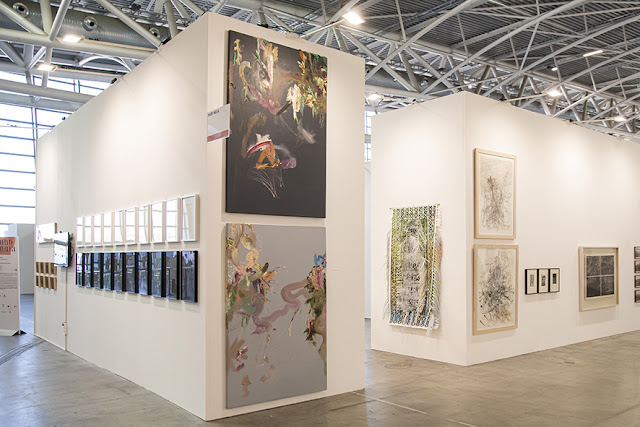
Mi era sfuggito ma ve lo segnalo ora. Il 5 novembre 2021, all'Accademia Albertina di Belle Arti di Torino, era stata inaugurata la mostra Hub India, allestita sino al 9 gennaio 2022 presso quattro sedi (Accademia, Museo D'Arte Orientale e Palazzo Madama; sino al 7 novembre 2021 nell'ambito di Artissima). Alle ore 17.00 era stato proiettato il documentario Sama: Symbols and gestures in contemporary art practices. Italy and India vol.1, diretto da Onir.

Onir presenta così la sua opera: 'It is a film installation that explores the exciting world of Contemporary Art in both the Indian sub-continent and in Italy, and develops an emotional bridge between the two countries, as an example of the historical-cultural and socio-economic extremes of the Euro-Asian continent'. Trailer.
Nel comunicato stampa diffuso da Fondazione Torino Musei, si legge: 
'Un documentario visionario e pionieristico che, attraverso una moltitudine di voci, esplora il mondo dell’arte contemporanea e dell’artigianato nel subcontinente indiano e in Italia. In questa prima “puntata”, un novero di artisti italiani contemporanei, tra cui Stefano Arienti, Alessandro Sciarroni, Sissi, Marzia Migliora tra gli altri, si alternano ad altrettanti artisti indiani, come Sheba Chhachhi, Tanya Goel, Rekha Rodwittiya e Ayesha Singh, offrendo al pubblico uno spaccato dell’estetica delle due regioni che mette in luce il rapporto tra tradizione e modernità, le pedagogie dell’Oriente e dell’Occidente, il genere, le archeologie e le politiche del tempo; i temi della migrazione, dell’esilio, del tempo e della memoria; la religiosità e il sincretismo e le specificità regionali nell’era della globalità. Sama: Symbols and gestures in contemporary art practices. Italy and India è un progetto di Myna Mukherjee e Davide Quadrio, diretto in India da Onir e scritto da Alessandra Galletta. (...) Il film è commissionato e prodotto da Arthub, Engendered, Ambasciata d'Italia a Nuova Delhi, Istituto Italiano di Cultura di Nuova Delhi (IIC) e Indian Council for Cultural Relations (ICCR)'.


RASSEGNA STAMPA (aggiornata al 4 febbraio 2022)

- Hub India, Classical Radical, Manuela De Leonardis, Il Manifesto, 11 dicembre 2021: 'Il documentario raccoglie oltre cinquanta interviste ad artisti e intellettuali del subcontinente indiano e italiani, delineando una mappatura parallela incentrata sul significato di eredità culturale, identità, emigrazione, religione, stile, materia, tradizione, artigianato, globalizzazione. «Un esercizio di ricerca innescato da semplici domande che abbiamo posto agli artisti: come l’arte contemporanea preserva il passato, lo trasforma, lo contiene, lo osteggia?» – spiega Quadrio – «Cosa può dire ancora l’arte contemporanea? Cosa possiamo fare?»'.
'The first volume of the Indo-Italian documentary film project on contemporary art, which has been in the making for over a year, is now complete. (...) Directed/scripted by National Award-winning filmmaker Onir, (...) the documentary film was screened in the Capital earlier this week. SAMA has been shot at over a dozen locations, and features over 50 artist studios and artisan centres spanning the length and breadth of the two countries nomadically: from the white salt deserts of the Rann to the waterways of the Sundarbans and Dal Lake in India, the mountains of Dolomiti to the historicity of Venice in Italy. Sama, which means ‘similar’ in Sanskrit and Latin languages, is commissioned and produced by ArtHub Asia, Engendered, presented by The Embassy of Italy in India, and The Italian Cultural Institute of New Delhi and supported by the Indian Council for Cultural Relations. (...) On the occasion, Vincenzo De Luca, the Ambassador of Italy to India, said: “The documentary underlines the parallels between Italy and Indian history. It’s an important piece of work with great potential.” The hour-long film explores the world of contemporary art in the Indian sub-continent as well as in Italy and lends context by investigating the signs and symbols surrounding them in history and culture. It offers a glimpse into the aesthetics of the two regions, while also excavating rare forms of craftsmanship. In that sense, it develops an emotional bridge between the two countries, which despite their differences and complexities, share a common ancestral connection. It also features art historians, experts, and critics. The film will now have its run at film festivals globally before releasing on an OTT platform in India. Other volumes of the film are in the pipeline, whereas the second volume is expected to release by early 2022'.


- Because India and Italy are good together, Sucheta Chakraborty, Mid-Day, 9 gennaio 2022:
'“ Italy and India have this long history of the very old as well as the very new,” says Myna Mukherjee. (...) Indian and South Asian art often occupies a static, exotified space in the international forum, feels Mukherjee, restricted into exclusive categories like classical or spiritual. “I always say that there is no one story to be said about India. If someone wants to engage with a civilisation that’s this old and has so many epicentres for culture, they have to be willing to embrace its complexity.” Working with [Davide] Quadrio, who has substantial experience with Asian cultures, having worked in China for 25 years, Mukherjee who has lived in the US for over two decades says there was trust, as “both of us had lived outside our respective countries and faced a kind of representational glitch from opposite ends of the spectrum.” (...) 
[Sama] is shot in over a dozen locations and features over 50 artist studios and artisan centres across Italy and India. (...) This research-based travel covered almost six months in India and two months in Italy in the middle of the pandemic. “Because it was during COVID times, we had access to a lot of artists who would otherwise be busy with exhibitions and travel,” says Mukherjee.
“It was an intimate, personal and profound project, for which we were able to have this moment of concentration,” agrees Quadrio. Both for an exhibition at Artissima and later the film, the project used a wide and diverse range of artistic voices from the very well-known to the comparatively younger, based both within and outside metropolitan cities, and working with global and local reference points. The focus was both on “what remains from history and also how the contemporary can help preserve but also carry on with traditions,” he says. “In that sense, we found that Italy and India were good together.”
Moreover, one of the most important things the film aims at, Mukherjee points out, “is the idea of demystifying the east while imbuing the west with more soul, so also reversing the colonial eye for art, while making sure that the reference point for pedagogies is not just the west.” With other volumes in the pipeline and a second edition slated for release early next year, the project is decidedly ambitious. “The amount of work that’s been put in and the volume of material that we have is unprecedented,” admits Quadrio. “It’s a project that is alive and can go on. Some of the conversations we had are already beautiful films in themselves.” (...)
For Onir, while this was an opportunity to rediscover this world of art and be on journey of finding artists, their work and connections, the project also provided an intellectual release and energy in the middle of the pandemic. His presence, he says, was also a way to explore how someone outside this world of art would experience it. “The real discovery happened at the editing table,” he shares.  “Shot in India first, the material was then sent to Italy; the Italian part of the filming done keeping in mind what had already been shot here. It’s such an effortless experience. You go from one world to another without even realising that you have done so”.'

Sama

- ‘SAMA’: Discovering India and Italy’s artistic parallels, Georgina Maddox, The Hindu, 4 febbraio 2022:
'“It isn’t a technical documentary, but a journey of experiencing and understanding the long history of art in the context of nature, culture, tradition,” explains Onir. (...) “For me, the beauty is in finding threads that are diverse while having a commonality because that is what humanity is all about.” It is like poetry, he adds, “where you use different languages to convey the same emotion. You see nature, tradition, patterns, forms and colours of, say, Kashmir resonate [with those] in Gujarat, while being different. This has changed the way I see form and design, and will affect the way I shoot films.”
Bridging conversations
Sama means ‘similar’ in Sanskrit and Latin - making it an apt title for the film and the intention behind it. Steered by cultural producers and curators Myna Mukherjee and Davide Quadrio, the film started as a deeper investigation into sensibilities that were first touched upon by the duo in their 2021 exhibition at Artissima. “I was already collaborating with Davide and it made sense to look at India and Italy because they are at the two ends of an artistic ‘trail’ of Asia and Europe,” says Mukherjee. “The artists we interviewed are in constant conversation with the very new and very old, and both countries have a long history of aesthetics that draw upon classical traditions and bring them in dialogue with contemporary styles.” The 70-minute film (...) was screened a little over a month ago for a select audience at the Italian Cultural Institute in New Delhi. As the audience tracked the slow movement of a shikara across Kashmir’s Dal Lake, the rising waters of Venice, the vigorous performance of an Italian dance troupe cut by a shot of an impassioned Bengali Baul singer, they also entered the quiet studios of artists in India and Italy, talking about their work and their process: from Italian glass sculptures to gorgeously painted Indian contemporary canvases, helping them connect the dots that is our cultural inheritance. “I have always been interested in the arts, but since I left Kolkata and [moved to] Mumbai to work in Bollywood, I lost touch with it,” shares Onir. “So, when Myna got in touch with me for this project, I immediately said yes. It was a way of exploring different art forms, meeting artists, and travelling.”
A collective whole
The film lends context to Indo-Italian contemporary art by investigating the semiotics (study of signs and symbols) surrounding them in history and culture. “SAMA allows the audience to glimpse the aesthetics of the two regions, imagined as a collective continuum of different narratives that echo artists’ voices across continents and heterogeneous contemporary art practices,” says Mukherjee. “They also excavate now-rare and valuable forms of craftsmanship in Italy and India.” The project involved 50 artists from both countries, and includes names such as photographer-filmmaker Sheba Chhachhi, folk singer Parvathy Baul, multimedia artist Ranbir Kaleka, designer Andrea Anastasio, artist-choreographer Alessandro Sciarroni, and artists Rekha Rodwittiya, Marzia Migliora, Stefano Arienti, and Tanya Goel. Onir will begin shooting volume two in July/August, with the second film concentrating on abstraction, religion and how it encounters arts and aesthetics. Meanwhile, SAMA will travel to global film festivals, before releasing on an OTT platform'.


Quanto alla mostra, vi riporto di seguito il comunicato stampa diffuso da Fondazione Torino Musei:
 
'Hub India è una prolifica esplorazione degli innumerevoli registri che caratterizzano l’arte contemporanea del subcontinente indiano, una regione di estrema importanza nell’Asia meridionale e che sta svolgendo un ruolo sempre più rilevante nel mondo globale. Con la presenza di oltre 65 artisti provenienti da dieci delle più importanti gallerie e musei indiani, il progetto si profila come il più ampio e significativo dialogo che l’arte contemporanea indiana abbia intrattenuto con il mondo occidentale in tempi recenti. Hub India, a cura di Myna Mukherjee e Davide Quadrio, nasce come progetto per Artissima Internazionale d’Arte Contemporanea di Torino per poi espandersi in una mostra tripartita realizzata in collaborazione con Fondazione Torino Musei e con l’Accademia Albertina di Belle Arti di Torino. 

Maximum Minimum @Artissima
Artissima 2021, in collaborazione con Emami Art, presenta Hub India - Maximum Minimum, un nuovo focus geografico che intende offrire una ricognizione sulle gallerie, le istituzioni e gli artisti attivi in un’area d’importanza capitale. In uno spazio dedicato verranno presentati i lavori di gallerie e istituzioni indiane che offriranno una veduta d’insieme di una sorprendente cultura visiva che rispecchia le innumerevoli polarità, contraddizioni e dualità che compongono l’India. Dall’antico spiritualismo del paese al suo moderno materialismo, dal passato coloniale alla crescente centralità nell’economia globale e alla rapida urbanizzazione, dal dogma alla tecnologia, dal marginale al mainstream, dai monumenti storici all’architettura contemporanea, dal normativo al radicale, Hub India - Maximum Minimum presenterà una miriade di storie e rappresentazioni del subcontinente.
In collaborazione NATURE MORTE New Delhi – GALLERY ESPACE New Delhi – EMAMI ART Kolkata – AKAR PRAKAR Kolkata, New Delhi – ART ALIVE New Delhi – LATITUDE 28 New Delhi – SHRINE EMPIRE New Delhi.

Classical Radical @Palazzo Madama, MAO e Accademia Albertina
Classical Radical è una mostra in tre sedi che si sviluppa nelle sedi di Palazzo Madama – Museo Civico d’Arte Antica, del MAO Museo d’Arte Orientale e dell’Accademia Albertina di Belle Arti di Torino. Classical Radical presenta opere indiane contemporanee e moderne che esplorano i lasciti del passato e l’antichità nel qui e ora sociologico. Come le opere d’arte contemporanee illuminano, complicano e si riappropriano dell’eredità? Come si pone l’arte contemporanea nel variegato panorama di religioni e storie, e quali residui di motivi, stili e idee sono sopravvissuti attraverso i millenni fino ai giorni nostri? Le opere selezionate rappresentano uno spaccato di generi, medium e processi che vanno dai disegni e dipinti alle miniature e sculture, terrecotte e metalli, dipinti su carta e su tela, stampe, incisioni e opere digitali e virtuali, in un tentativo di analizzare le eredità classiche e tradizionali attraverso una nuova lente. Una ricerca a tutto campo che offusca le polarità di religione, casta o razza, Asia ed Europa, figurazione e astrazione per costruire uno spettro ampio di voci che vanno dai maestri moderni e contemporanei alle avanguardie, passando per gli artisti indipendenti appena scoperti. Più stratificato e complesso di una panoramica, questo percorso espositivo offre una lente caleidoscopica che sposta la percezione e sfida la stasi in modi elaborati, evocativi e mai riduttivi. (...)
In partnership con Kiran Nadar Museum of Art (KNMA). In collaborazione LATITUDE 28 New Delhi – AKAR PRAKAR Kolkata, New Delhi – ART ALIVE New Delhi – EMAMI ART Kolkata – GALLERY ESPACE New Delhi – SHRINE EMPIRE New Delhi – NATURE MORTE New Delhi – SAKSHI ART Mumbai – JHAVERI CONTEMPORARY Mumbai – VADEHRA ART New Delhi – VOLTE Mumbai.

Palazzo Madama - Museo Civico d’Arte Antica | Disruptive Confluences (Confluenze perturbanti)
La mostra a Palazzo Madama esplora il sincretismo e l’ibridismo attraverso opere per la maggior parte tridimensionali che collegano e contrappongono la straordinaria collezione del museo con la storia del subcontinente indiano, suggerendo complicate storie di scambi commerciali e religiosi, dominazioni, residui imperialisti ed evoluzioni sincretiche. Dando vita a un immaginario ibrido, al tempo stesso velato e provocatorio, la mostra rivela narrazioni e rapporti da una prospettiva eurasiatica, ma capace di porsi in dialogo e creare riflessioni significative con i duemila anni di storia di un edificio, che concilia una porta romana con una corte medievale e una scalinata barocca. In questo evidenziandosi quale storico luogo di riflessione di contesti ed esperienze anche profondamente differenti, ma alla ricerca di matrici comuni per individuare nuovi assi di dialogo.
Artisti: Jayashree Chakravarty, Ranbir Kaleka, Manjunath Kamath, Tayeba Begum Lipi, Benitha Perciyal, G Ravinder Reddy, Himmat Shah, Gulam Mohammed Sheikh, Prasanta Sahu, Ayesha Singh, LN Tallur.

MAO - Museo d’Arte Orientale | Residues & Resonance (Residui & Risonanze)
La mostra al MAO comprende opere del rinascimento contemporaneo che iconizzano e al tempo stesso obliterano lo stesso classicismo a cui fanno riferimento. I lavori sono radicati in un’eredità che esamina stili tradizionali, scuole e generi e si spinge oltre per stabilire con essi una relazione, un dialogo. Mentre gli interessi sono mutati con i capricci del tempo, le forme di queste opere hanno conservato ossessivamente pattern simili, risonanti di residui del passato. (...) Uno dei punti forti della mostra è una sezione radicale di neo-miniaturisti che prendono a prestito le decorazioni evocative, stilizzate e gemmate dei tradizionali stili miniaturistici e dei dipinti vasli, sovvertendole per esplorare modi in cui espandere e smantellare il vocabolario di uno stile apparentemente insulare. Anche l’arte della Regione himalayana offrirà grandi suggestioni, grazie all’installazione di una serie di opere dell’artista Paula Sengupta dal titolo The plain of Aspiration, un progetto che parla della diaspora dei tibetani fuggiti dal loro paese in seguito alla partenza del Dalai Lama nel 1959 e del tentativo di conservare anche altrove, attraverso la memoria, il loro stile di vita e la loro cultura. I lavori di Sengupta attingono fortemente alla tradizione dell’artigianato tessile e al simbolismo religioso tibetani e, nelle gallerie del MAO, vengono accostate alle opere della sezione dedicata alle copertine lignee intagliate.
Artisti: Waseem Ahmad, Khadim Ali, Anindita Bhattacharya, Sakti Burman, Sudipta Das, Priyanka D’Souza, Baaraan Ijlal, Manjunath Kamath, Puneet Kaushik, Samanta Batra Mehta, Piyali Sadhukhan, Paula Sengupta, Yugal Kishore Sharma, Nilima Sheikh, The Singh Twins, Waswo X Waswo.

Accademia Albertina di Belle Arti | Multitudes & Assemblages (Multitudini & Assemblaggi)
La traiettoria delle arti visive in India è caratterizzata da molteplici transizioni; abbraccia e interiorizza i discorsi più ampi del colonialismo, del nazionalismo e del modernismo internazionale. Si relaziona con le tradizioni visive alla luce del postmodernismo e cerca di legittimare la propria posizione nell’arena contemporanea della produzione d’arte. Narrazioni multiple si snodano simultaneamente, come elementi tattili che si rifiutano di perdere la loro realtà, presenza, velocità, calore o umidità, come incongrue testimonianze di un punto focale in un allestimento che mira a presentare una molteplicità di possibilità. Evocando più la nostalgia che la storia, queste voci si levano a volte all’unisono e a volte in una reciproca tensione, ai lati opposti del tempo, come uno specchio, ribaltando lo sguardo su un familiare ma radicale pastiche di liberazione, ecologia, urbanizzazione, migrazione, femminismo, genere, soggettività e sensazione.
Artisti: Harshit Agrawal in collaboration with 64/1, Amina Ahmed, Chandra Bhattacharjee, Sakti Burman, Sheba Chhachhi, Jogen Chowdhury, Sudipta Das, Priyanka D’Souza, Tanya Goel, Laxma Goud, Ganesh Haloi, Manjunath Kamath, Puneet Kaushik, Bharti Kher, Martand Khosla, Neerja Kothari, Balbir Krishan, Rahul Kumar, Tayeba Begum Lipi, Shruti Mahajan + Ravindra G. Rao, Paresh Maity, Debasish Mukherjee, Dr.Uttam Pacharne, Manish Pushkale, Mona Rai, Vajay Raut, Rekha Rodwittiya, Debanjan Roy, Prasanta Sahu, Wardha Shabbir, Shailesh BR, Shambhavi, Gulam Mohammed Sheikh, Nilima Sheikh, LN Tallur, Gopa Trivedi. (...)

Hub India è un progetto di Arthub & Engendered presentato in partnership con Indian Council for Cultural Relations (ICCR), Kiran Nadar Museum of Art, Fondazione Torino Musei, Artissima, Emami Art, Palazzo Madama, MAO e Accademia Albertina. Con il sostegno di Ambasciata d'Italia a Nuova Delhi, Istituto Italiano di Cultura di Nuova Delhi (IIC), Consolato Generale dell’India a Milano, Città di Torino'. 


Hub India, Classical Radical, Manuela De Leonardis, Il Manifesto, 11 dicembre 2021:
'Ma quante storie non dette si celano dietro l’apparenza, per lo più tra le mura domestiche in una società patriarcale. Dare voce a quel mondo sommerso attraverso la trascrizione grafica delle onde sonore, utilizzando le vibrazioni del rosso e dell’azzurro - due colori dalla forte valenza simbolica - è una priorità per (Piyali) Sadhukhan che va ben oltre la ricerca estetica. A dare forza al gesto dell’artista femminista di Calcutta (...) c’è (...) l’utilizzo di migliaia di braccialetti di vetro rotti e riassemblati sulla tela. (...) 
Questa stimolante kermesse guarda al subcontinente senza divisione di confini, India, Pakistan, Bangladesh e regione himalayana, coinvolgendo artisti multidisciplinari (...) e numerose gallerie, soprattutto di New Delhi, Calcutta e Mumbai, tra cui la storica Nature Morte di Peter Nagy. (...)
Denso di spunti critici, il dialogo tra queste opere contemporanee e le antichità dei musei torinesi crea un ulteriore corto circuito visivo, come nella sala di Palazzo Madama con le sue pareti damascate e la profusione d’oro zecchino quando ci si imbatte nella toeletta di Tayeba Begum Lipi (1969), artista del Bangladesh e co-fondatrice di Britto Arts Trust con cui parteciperà a documenta15. Al di là della patina di apparente leziosità, Once Upon A Time svela un messaggio neanche troppo implicito, con le centinaia di lamette da barba d’acciaio inossidabile che rappresentano non solo un pattern ma la struttura stessa del lavoro. Una tensione che strizza l’occhio alla materia portando l’osservatore a riflettere su questioni di genere, così come nelle sculture di Manjunath Kamath (Mangalore 1972) dove la violenza è percepibile nell’atto stesso di ricucire vecchie cicatrici nella formulazione di una nuova versione degli idoli in cui gli strati di terracotta, ceramica, cemento e acciaio sono come pagine di storia. 
Analizza l’ambiente rurale l’artista Prasanta Sahu (1968), incentrando su questo tema il progetto Mapping craters (2020-21): un’installazione di 60 calchi negativi in gesso, numerati, che ricordano i reperti archeologici. In questo archivio (sono presenti anche disegni, acquarelli e fotografie) offerto come cibo su una tavola imbandita, c’è la documentazione di un intero anno che l’artista ha trascorso fianco a fianco con un contadino senza terra nel villaggio di Amdahara Birbhum (Bengala orientale). Ritroviamo l’impronta degli attrezzi che sembrano arcaici ma vengono usati tuttora, dei cibi, di frutta e verdura, dei cibi, presenze rese visibili attraverso l’assenza. Una metafora del lavoro, del tempo e della fatica di chi coltiva e produce gli alimenti destinati alla collettività, che non compare nello scenario più ampio delle politiche del cibo. Per Prasanta Sahu che vive a Santiniketan (lì dove il poeta Tagore creò, nel 1901, una scuola a contatto con la natura nell’eremo fondato quarant’anni prima da suo padre Devendranath, sostenitore della modernizzazione del Bengala) questo approccio analitico serve a sottolineare il grande contrasto - l’incomunicabilità totale - tra i due mondi, rurale e urbano, della società indiana. 
Contrasti che investono anche altri aspetti sociali come è evidente negli stendardi ricamati, The plain of Aspiration (rivisitazione delle tangka tibetane) in cui Paula Sengupta (1967) porta la vita di tutti i giorni, così come l’artista pakistano Waseem Ahmed (1976) che con un’ironia sottile affronta nelle sue miniature i conflitti religiosi e politici.
Richiamano alla memoria le antiche miniature anche le fotografie seppiate della serie A Visitor to the Court su cui Waswo X. Waswo (1953) è intervenuto dipingendo elementi decorativi colorati che le rendono pezzi unici. Nell’autoproclamarsi erede della raffinatissima cultura moghul, il fotografo-scrittore (autore di India Poems: The Photographs, 2006) crea delle mise-en-scène in cui gioca sullo stereotipo dell’orientalista, ribaltando così quel rapporto di potere costruito dall’immaginario europeo del mondo «altro» (l’Oriente)'.