Visualizzazione post con etichetta F OPEN. Mostra tutti i post

02 novembre 2023

SALMAN RUSHDIE: LA CADUTA DEI GOLDEN


[Archivio]

Nel 2017 era stato distribuito - anche in Italia per Arnoldo Mondadori Editore - il romanzo La Caduta dei Golden di Salman Rushdie. Il 2 agosto 2019 Open pubblicava una lunga intervista concessa due anni prima dallo scrittore ad Aatish Taseer. “That the world that you knew, and that in a way made you - that world vanishes. I don’t think I’m alone in that,” says Salman Rushdie:

'It is that way with Rushdie: there is the work, dazzling and copious, but there is also the life, which has run like ‘a purple thread’ through our times. Indian independence; the Partition; the Emergency; demagogues on both sides of the border, and the rise of every species of fanaticism: they are part of the work; but they are also, in an almost freakish way, part of his life. History - and the pressures of the past - is his great theme; but he is also a plaything of history. It has used him in its story; it has made him seem like a character out of a Salman Rushdie novel, the creation of an imagination no less outlandish than his own. Writers normally sit at an oblique angle to the flow of events, quietly recording their passage. Not Rushdie. He has been swept up in the current, held aloft by the tide. He is a symbol of our times, forced forever to look in on himself, as if at another, and there must be something utterly weird about being Salman Rushdie. (...) He is forever bleeding off the page, and events in the outside world are forever seeping into his fiction. The new book, The Golden House, is no different. (...) The house whose garden we are sitting in once belonged to Bob Dylan. It has, now for many years, belonged to our mutual friend the painter Francesco Clemente. He, along with his wife, Alba, are the dedicatees of Rushdie’s new novel. (...) 

What struck me most forcefully as I read your new book - what I found very moving - was a kind of euphoria about escaping the past, and what America could mean in this context. (...) Have you known a euphoria akin to this yourself?
Not exactly in that way. But, of course, if you change countries, there’s a part of yourself that you leave behind. And I mean, that’s happened to me twice in my life. (...) The question you ask yourself, when that happens to you twice, is: what exactly has been left behind? (...) You know there’s always loss, but hopefully there’s also gain. I have thought a lot about both those things. Clearly my life would have been something else, if at the age of 21, I hadn’t decided that I wanted to stay in England, and try to write. (...) My parents had recently - to my mind, mistakenly - moved to Karachi. And so, the family home in Bombay was not there anymore. I’ve always thought that if my parents had still been living in our house in Bombay that I would have gone back, and I would just have continued there. (...) I felt deeply rooted in Bombay, and as far as I was concerned going to school [in England] had been an unhappy experience, going to university had been a much happier experience... but I thought of myself as from there. And had they not done this strange thing of moving (...) I think I would have just gone back there, and seen what I could do. But given the choice between Karachi and London, I felt much more at home in London than in Pakistan, where I’d never lived. But that clearly was a big fork in the road. And, in a way, Midnight’s Children came out of that. Because after some time of living in the West, I became quite aware of this probability, or the possibility, of losing touch with where I come from, especially since my family was not living there anymore. And I didn’t like that feeling, so writing that book was in a way an effort at reclaiming that past. And it meant a lot to me that the book was so well received there. (...)

America was something else...?
Well, America was two things. It was first a youthful dream. I had come here as a kid. I came to America for the first time when I was maybe 25, 26 or something like that. And that was very different. New York of the 1970s, this area, was completely unlike what it is now, much more run down, and dirty... Anyway, I kind of fell in love with it, partly because it was very youthful. New York in those days, because it was so cheap, was around here full of young artists. So, you came here and you met young writers, young painters, young film makers, young musicians. I thought: this is kind of amazing. This is a city of young people trying to do creative work. And then I came over the years, and I came to know it much better, and made many friends here. So, I told myself: one of these days... I want to just go and put myself there, and see what happens. I think it might be good for me. And when I actually did, towards the turn of the century, sort of around 1999, early 2000, when I finally did it, I truthfully didn’t set myself any limits. I thought this could be a few months, or it could be the rest of my life. I’m just going to go and see. I didn’t initially buy a place here. I only rented a place. (...)

But also, on the abstract level of the idea of America... you kind of fell in love with that too, didn’t you? I mean, you believed it? It has a hold on you.
Ya. But I’ve always thought the thing that has a hold on me is cities more than countries. I mean, I feel much more attached to Bombay than to India. And, in the same way, I felt a sense of belonging in London... And here...

You say that, but unlike certain writers, who write in very small ways about cities, you inhale countries. You deal in the grand format...
But the point of view is from the city. The point of view of America that one has from this city is very different than if we were, you know, sitting in Dallas... And there’s plenty of America that I don’t feel I would be at all at home in. But here, I did feel at home, and very quickly. Very quickly. That was what was interesting to me. I wasn’t a stranger here. I knew a lot of people. So, it wasn’t a cold entry. But I did quite unusually find myself feeling comfortable, feeling at home here at a very high speed, in a few months, and I thought: Oh. And I stayed, and then it became clearer to me that I would stay.

You spoke earlier about an anxiety about losing touch when you were in England, what about the anxiety of a writer whose entire subject is history, who adores history... What was it like to be in a place like America that is almost willfully ahistorical?
But you see, my whole training was as a historian, and I’ve never lost that way of looking at the world. In your final year in Cambridge, in a history degree, you do three special subjects. It’s all you do. They offer you 75. And you just have to choose three, and that’s all you do. And the three that I chose have in their own way ended up being very significant in my life: One was Indian history from 1857-1947, that was one. The second was: Muhammad, and the rise of Islam, the early caliphate. The third was the United States, or America, from 1776-1877, the end of reconstruction. (...) So, I was really quite deeply interested in American history from then, and have remained so. (...) Having come from a very old country, and then to quite an old country, and then to arrive in a young country, it’s different. You know, a house in New York that’s two hundred years old is really old. Whereas in London, everybody lives in houses that are two hundred years old. So even on that level your relationship with the past is different. And this is a very unsentimental town about the past. It tears down the past all the time. Every day you drive somewhere and you see a missing block. And what is interesting is that people immediately forget what was there. It is an immediate erasure of the past. (...) I have also suffered from the same kind of amnesia. This city tears itself down, and immediately people forget what was there. (...)

There’s this feeling - and it runs right through this book, and the rest of your work as well - of release from the past, and then on the other side there’s this Cassandra-like voice of caution that keeps reminding people of the dangers of that loss. In Midnight’s Children, you talk about ‘the clouds of amnesia’. That forgetting is on the one hand a very troublesome thing, but it’s also a liberating thing...
Yes, as long as you know that it’s both. One of the things I tried to do in this book [The Golden House] - it’s related to your question about the ahistorical - is to do something, which is quite dangerous, which is to write up against the present moment. To write about the day before yesterday. It’s very dangerous, of course. Because you can be wrong, you can be very rapidly outdated. There are all kinds of elephant traps about doing that. It also seemed very exciting, and right about the kind of place I was writing about, just to try to engage with the absolute contemporary, and see if you could get some kind of handle on it, and capture it. I did it before, you know. One of the things that happened with Midnight’s Children was that the later parts of Midnight’s Children were being written as the events were taking place. I was writing about the Emergency while the Emergency was still happening. And I remember thinking that I didn’t want the book to end like that, but I thought I can’t end the Emergency in the novel if it hasn’t ended in the world. So, when Mrs Gandhi called that election, and lost it, I felt kind of grateful to her. She gave me the end of the book! She allowed me to allow the book not to end in that moment. But I was really writing right up against it, you know... and there’s actually a passage in Midnight’s Children, in which Salim talks about this question of approaching the present, he talks about it using the metaphor of a movie screen, that the closer you get to the screen, the images break up, and I was very aware that that was what I was doing. And I’m doing it again. (...)

I feel that if intellectually-speaking we were to talk about Trump, or the political situation, you would regard it with a certain amount of dismay; but artistically, you’ve dealt with demagogues all your life. (...) There is a kind of artistic excitement in dealing with Trump, isn’t there?
I mean, you know, monsters are interesting... [chuckles under his breath, then aloud.] There are all kinds of awful things one can say, for example, the arc of history that goes from Obama to the election of Trump is actually quite pleasing: to go from a moment of complete hope and optimism to its absolute negation. That’s actually satisfying. I mean, I kind of guessed right; but I always also knew that if the other thing had happened [that is, had Hillary got elected], which would have been much more preferable to all of us, I would have had to shift the ending of the book around, and maybe it would have been less aesthetically pleasing... Somehow the thing that is very good for the book is very bad for us.

He likes you, doesn’t he? Trump?
No. I don’t know. He likes himself. But I’ve met him a couple of times. And he was very friendly. Terrifyingly. [Guffawing, and general laughter] (...) The most obvious demonstration of his affection was that - it was right about this time of year, when it was coming up to the US Tennis Open - and in that way that we’ve all become slightly too familiar with, he said, you know, that he had the best box - that his box was better than all the boxes. [more laughter]. And that if I - you know - wanted, I would be welcome to use his box at the US Open whenever I wanted...

Did you?
No, of course I didn’t! I immediately thought this would be like a career-ending move. (...) I’ve met him in passing two or three times, but I’ve never had a real conversation with him.

Well, we have this little background of history, and the past. So, when you see somebody like that [Trump], does he represent to you a politicised nostalgia for the past? Or is he quite an ahistorical creature? Where does he stand in relation to this idea of history?
Well, one of the things (...) I thought when I was writing Shame, which I thought again when I thought about Trump etc, was that sometimes you have very big historical events, which you can even describe as being tragic, but that the people are not of tragic stature, you know. (...)

It seemed to you like a Shakespearean play with...
With clowns! And I remember thinking that about Zia and Bhutto and all that. What would happen if you would perform King Lear, with everybody in it, like, circus outfits. It would still be King Lear, but it would acquire some horrible black farcical quality. And that’s sort of what I think about this. And that’s why in a novel [The Golden House] which is otherwise completely realistic, I introduce this idea of comic-book figures to represent these powerful combatants. I mean, just to put it simply: the Trump and the Joker are both unusual playing cards. [laughter]. So, I thought: well if not this one, then that one. Many people have talked about Trump coming from a reality show background, and about the country being debased into a kind of reality show mentality, and I think there’s a lot of truth in that. But I also think - in the way cartoons, whether Marvel or DC, have taken over the movies, things like that - I thought, in a way: here we are, three-dimensional, flesh and blood, realistic people, being ruled by cartoons. (...) 

With that Burmese diplomat in the novel there’s this moment when he says, ‘I’m never going home,’ there’s a point when you recognize that the journey stops here. Are you at that point?
Yes, yes I am. In the previous novel, there’s this moment, when my gardener, you know, who’s in love with his Djinn princess, where she tries to re-create him for the fantasy of the past, she sort of brings him back into old Bandra, and it upsets him. He says, ‘Stop it. I don’t want this.’ That realization that the sense in which you can’t go home again is: that it’s not there to go home to. That the thing that felt like home to you has changed so much that going back there doesn’t give you that feeling. And I think... Bombay, there’s still little bits of what is now called South Bombay, where I grew up. Many of those little bits are still there, and they still have a kind of evocative nostalgic force, but they don’t have more than a nostalgic force. They don’t have the sense of telling me that this is where I belong. They just don’t anymore.

There’s this moment in the novel where a character says to Nero [the main protagonist], ‘The city of my dreams is long gone. You yourself have built over it and around it and crushed the old under the new. In Bombay of your dreams everything was love and peace and secular thinking and no communalism, Hindu-Muslim bhaibhai... Such bullshit... Men are men and their gods and these things don’t change and the hostility between their tribes also is always there.’ And then there is this chilling bit: ‘Just a question of what’s on the surface and how far beneath is the hate.’ Well, the hate has come right to the surface...
Well, yes. That’s a global phenomenon. The rise of hate to the surface.

But wait, let’s stay with India...
Yes. I mean, it’s shocking to me... but you can be shocked, and not surprised. I don’t think it’s surprising. The way in which for many years - since the Emergency - politicians of all parties have used communal language in order to play this strange vote bank politics. They let that demon out of the bottle, and it doesn’t go back in.

Is Modi an embodiment of that demon?
No. Not only him. I think, everybody. The thing that is more alarming than Modi is the popularity of Modi. The fact that he is very, very popular. And that means that it ain’t just him. (...) The point is that there’s craziness bursting out all over. (...) All these countries that I’ve been so deeply connected with - the post-Brexit Britain, the post-Modi India, and the post 2016 election America - it’s all a question of what’s the matter with us. It’s too easy to put it all on the shoulders of one person.

But in Britain and America, there’s a difference. The two sides have held. The pendulum could swing again. India has been completely remade, don’t you think?
Yes, I think that’s true. It’s partly to do of course with the absolute Anschluss of the Congress party, the way there isn’t an opposition, which gives the government a very free hand, and yes: they’re embarking on a project of remodeling the nation, starting with text books... I haven’t been there, so I’m a little reluctant to say too much. Because the last time I was there was before the Modi election. Four years I haven’t been there. And that’s been a conscious choice, because I had a really horrible time the last time I was there.

How so?
I got surrounded by so much security that it became almost impossible for me to move. And, you know, if you’re in Bombay and you have a hundred men with machine guns going everywhere you go, you can’t say to your friends, ‘let’s meet for a coffee,’ and such and such, because you’re arriving with all that. It became almost like house arrest. I mean, in a hotel suite... But it was very, very difficult to deal with. Because you know I’ve had periods in my life when I’ve had to succumb to some of that, and for a long time now I’ve not had to, and having got out of that trap, the idea of putting yourself back into the trap is anathema. There was a strange moment. I was supposed to go to Calcutta to talk about the film [Midnight’s Children] there, and then I was informed that the government in Calcutta had instructed the police to refuse to allow me to enter. And I was told that if I landed in Calcutta, I would be put on the next plane out. I thought: apart from anything else, it’s incredibly insulting. And I thought, I don’t need to be treated like this.

We’ve been talking history. What do you think is the deeper historical urge that is expressing itself in India right now?
Well, it’s just that idea that the Hindutva people talk about all the time. Which is that in some way the Muslim arrival in India, and the many centuries of Muslim rule, and therefore, the spread of Muslim (rather than Islamic) culture, whether artistic, or architectural, or poetic, whatever - that, that is all somehow to be rejected. Because it was in some way inauthentic, and damaging of the - quote-unquote - ‘real India.’ And that the real India, which is Hindu India, must assert itself, and erase all that. Can any good come from that? Because when I go there, and I see young people who are very proud, I find myself very susceptible - not necessarily to their politics - but to their feeling of hopefulness... This is why I’m reluctant to say too much, because I haven’t been there. And so, I don’t know the answer. But what I do see has been unleashed is a kind of brute force, which is very worrying. And again, there are echoes everywhere. Like here, there are certain kinds of attacks that the President doesn’t condemn. (...)

Have you worried about your place as a writer in America, [or for America], even just how to write about America? Do you worry that America might not know what to do with someone like you?
No, no. I’m too long in the tooth. At this point, I just say what the hell I think, and people can make of it what they like. There are people who seem to willfully misunderstand what I think. I can remember, to name only one person, very unpleasant personal attacks on me from Pankaj Mishra, for example, to my mind completely misrepresenting my politics, and my way of thinking about the world. But that’s ok. I can argue back. But on the whole...

Well, since you brought him up, is there a certain kind of Left that is guilty of the things that it’s being accused of? There’s very nice discussion of transgendered identity in this book, and of identity in general, and the question of whether identity is a choice at all; or rather, as you say, a discovery...
Well, first of all, the question of identity is at the centre of the book. But what we mean when we talk about that is different. Here, the identity question is most often expressed in terms of gender identity, and of sexual politics. Whereas in India, for instance, it is much more in terms of religious identity, and communal politics. So, identity shifts. In England, the identity question had much more to do with whether England wanted to be part of Europe. So, the subject of identity is very heated these days, but the location of it varies in different places. I’m kind of amazed that there isn’t a Museum of Identity that I made up in the book. And I suspect there will be...

Are there excesses of the Left that worry you...
Yes. I think those Left-Right terms are beginning to matter less to me; but I do think it is easier to see the excesses of the Right because they are so in your face. (...) But I’m not impressed by the unwillingness of the Left to call things by their true names. And this idea, which started with Obama here, of trying to somehow... for example, trying to separate the words Islam and terrorism, as if the people performing the terrorist attacks could not, ipso facto, be Muslims. That seemed to me like nonsense. Someone who shouts Allah Hu Akbar before he blows himself up, and somebody who says that everything he does is done in the name of Islam - why should we not take that seriously? Now quite clearly it’s an idea of Islam that many Muslims might reject, you know, but that doesn’t mean it’s not a kind of Islam. And to say that it must be considered to be Not-Islam in order to maintain the idea that Islam is a good thing, it just seems disingenuous. I know that one of the things that happened with me in India was that there were many people on the Left who were unwilling to be supportive of me...

Because you had offended Muslims?
Because I had offended Muslims. And I think that’s still the case. And, actually, when you look at the world - just casting one’s eye out - yes there are moderate Muslims, but really the story is of the unraveling of that old Islam, the Islam you grew up with. The terrorists might be a tiny exception, but the change in the religion... is very real. It’s very real, and it’s partly fueled by enormous amounts of money for schools and priests, mullahs, to come and propagate this new Arabized, Salafi-Wahabi Islam.

So, here’s a question: do you feel that what we’re seeing in these countries - in the West, certainly in India - do you feel it’s a reaction to what happened to Islam? (...)
There is some of that. I think certainly some of what elected Trump has to do with fear (...) which he expertly manipulated. I think again in the Brexit vote there was a fear, but oddly it was a different fear. I mean, one of the things that has been unleashed in Britain is a hostility towards people with brown skins. Actually, they were more afraid of Polish immigrants than Muslim ones. But there was certainly xenophobia, and there’s certainly xenophobia here, and here there is also always the continuing story of racism towards African-Americans, and I think all of that elected Trump. There was just a whole bunch of Americans who could not stand it that for eight years there was a black man in the White House. (...)

There’s almost a feeling of emasculation related to exile. At one point in the book it is said, ‘maybe a woman’s life gains its meaning through such metamorphoses... but for a man it is the opposite... The abandonment of the past makes a man meaningless... An exile is a hollow man trying to fill up with manhood once again... Such men are easy prey.’ Do you feel like you are easy prey? Has exile made you vulnerable to women?

No, because I don’t feel like an exile. There’s a difference between a migrant and an exile. (...) The bits of the world I can’t go to, I don’t care about. The bits of the world I do feel connected to, I can go to. As I say, there’s a kind of problem that arose in India because of security, but that’s a solvable problem. And I’m in the process of talking to people to solve it. No, it’s not that kind of exile; it’s not a physical exile. I remember reading.... I don’t know if this is true, or not, because this was only one news article... that the Indian Academy had refused to allow any of my work to be on the syllabus because apparently I was insufficiently Indian. That feels offensive, that feels more like being excluded from something...

But what about just the fact of your carrying around the broken pieces of different societies that don’t exist anymore. (...)
That’s quite true, that’s quite true. But I think that happens to many people if you have a longish life. That the world that you knew, and that in a way made you - that world vanishes. I don’t think I’m alone in that. I think previous generations probably had that feeling too.

Yes, but there are people who have also known a feeling of wholeness...
I’ve always envied writers who have remained deeply rooted in one place all their lives, and just written from that knowledge. Like Faulkner. You live in this tiny corner of the world, and it’s enough. You can make a lifetime of art out of your deep knowledge of that little place. I’ve always thought that would be nice. But that hasn’t been what happened to me. And so, you have to use what your life gives you. And yes, I do feel that the India I grew up in - and loved - is vanishing at high speed. That the England that I thought I knew turns out to be a different place. One of the things that all of the people who were on the other side of the Brexit campaign have to recognize is that the country isn’t what we thought it was. And all this little England nostalgia behind Brexit - it’s the same as Make America Great Again - comes out of that same nostalgia for a non-existent past. When was it that America was great? (...)

You’re seventy this year. In the years that you’ve been alive, we have seen the phenomena of the rise of America, of a country on the up. Do you feel that the years you have left in America will be a time of pessimism and decline?
This is a time of pessimism and decline; but, beneath that, there is another thing happening. Which also partly explains the Trump phenomenon: which is that the country is changing very dramatically. That White Americans are like a minority, and that Hispanic and other Americans are rapidly becoming a majority. And also, where the social attitudes of the next generation are much more progressive.

So, it’s just a question of waiting for some old white people to die. Really?
Really, it is that. It’s that Gramsci thing: the old refuses to die so the new cannot be born. It feels like a transition moment. There’s old White America clinging on for dear life...

So, this seems to you much more like a last gasp, a death rattle...
I hope so. I hope so. Yes, it does feel like that... because it’s so crazy. The things being clung on to are so before-the-flood, sort of ancient idea... and one of the things that are puzzling about this country is that in the last few years, whenever there have been national surveys about the social attitudes of Americans, progressive attitudes have a very large majority. So, if you ask most Americans what they think about gay rights, or climate change, or gun laws, or immigration reform, on all these issues there are very large progressive majorities. The one exception is abortion, which is fifty-fifty. But, apart from birth control, there are progressive majorities on most social issues, and yet this country just elected the most regressive government that there’s been in a century. And that’s partly because nobody goes to vote.

Now you say that you love cities, but when you venture out of New York, do you feel that Nabokovian love for the great bosom of America...
In a way, yes I do. One of the things I’ve been thinking since I finished this book. You know you’re always thinking: what next? The truth is I don’t know what next, but I do know that I want to get out of the bubble. And, you know, if New York is this rather unusual place in America; I mean, I love it, but it’s unusual, then I think maybe, you know, I have to get on the road. (...) Sometimes you have to go and find the story. (...)

Now, we’ve talked about the past; we’ve talked about India and America; we’ve talked about Trump, I want now to talk about women and love... (...) 
It is difficult being physically separated from my family. Not just both my sons, but my sister, and her daughters. That’s not easy, but it’s easier now that the boys are older. Because when Milan was little I felt the need to zoom back and forth a lot. Now they can do the zooming back and forth. They like the idea of having a place to stay in New York City. It kind of works out, but it’s difficult. But there we are! It’s just the way things are. As far as the rest of it is concerned, ya, everybody wants love. And I’ve been lucky and unlucky, and no doubt the next thing will let me know which one I am.

Is it different with age? Does that stuff make a difference? Or do you feel exactly as you did when you were 45?
Well, I feel the same, but it’s quite clear to me that what people see is not the same. [Laughter] So it is different, ya. But you have to play the cards you’re dealt. And it’s alright. I’m not unhappy. I have a good life. [Pause] Don’t ask me to tell you more because I’m not going to tell you. Not on the record, anyway...[Laughter]'. 

24 agosto 2022

MOHSIN HAMID: L'ULTIMO UOMO BIANCO (THE LAST WHITE MAN)


Un paio di settimane fa è stato distribuito nelle librerie The Last White Man, l'ultimo romanzo di Mohsin Hamid. Vi segnalo l'articolo ‘I write more with my ears than my eyes,’ says Mohsin Hamid, di Nandini Nair, pubblicato da Open il 19 agosto 2022:

'Over the years, Mohsin Hamid has mastered the art of the big little novel. In the slimmest of novels, the 51-year-old grapples with the heaviest of subjects. His themes have spanned the large issues of the 21st century - terrorism and immigration, racism and homelands. The Reluctant Fundamentalist (2007), which clocks in at less than 200 pages, is even today one of the most astute 9/11 novels. Exit West (2017), at less than 250 pages, reminds us that we are all migrants. His most recent novel The Last White Man (...) sticks to the slim-novel brief at 192 pages, and reminds us that race is a construct and a dangerous one. To Hamid’s credit, his novels are not vehicles for issues, even as he uses fiction to shine a light on today’s faultlines. He is a smart storyteller who never allows topicality to eclipse the narrative. Readers and critics have lauded his works, The Reluctant Fundamentalist sold one million copies, and was shortlisted for the Booker Prize in 2007 as was Exit West, a decade later.

The Last White Man opens with a Kafkaesque premise; “One morning Anders, a white man, woke up to find he had turned a deep and undeniable brown.” At first, he thinks there is an interloper in the room, only to realise that the interloper is him. When he looks at his reflection in the mirror, “He wanted to kill the coloured man who confronted him here in his home, to extinguish the life animating this other’s body, to leave nothing standing but himself...” With time, others in the unnamed city too begin to change colour. Some reconcile to the new reality. Others resort to violence and arson. And a few recoil and turn against themselves as well. The novel’s opening gambit propels it forward. As a reader, one gets invested in the lives of Anders and his at-first-friend and then loving-partner Oona. What is to become of them, as the occasional flareup and then the riots engulf the town? What would happen if one’s skin colour changed, what would happen if everyone’s skin colour changed?
The novel often feels like a Black Mirror episode with menace lurking in the quotidian. Peril is ever present, always threatening to whisper boo around the corner. This doomy air is dispelled only by the growing relationship between Anders (a gym trainer) and Oona (a yoga instructor). In Hamid’s novels - whether Exit West or The Last White Man - the couple coheres even as the world unravels around them. Just as in How to Get Filthy Rich in Rising Asia (2013), Hamid reminds us that in the final reckoning the only thing that matters is the knowledge that “you have loved,” similarly his other novels raise companionship above all else.


Recently, speaking on a Zoom call, from the US, the Pakistani-British writer says that after completing Exit West he had initially thought of writing a book on “technology and our relationship with it,” but that soon morphed into something else, something that was, perhaps, bigger. The idea that was “calling out to him” had to do with technology and categorisations. He explains, “Technology encourages us to sort things and sort people in particular, liking something, unliking something, following somebody, unfollowing somebody. And I’m interested in the idea of messing with that, trying to disrupt that. And so this notion of a world where it becomes impossible to sort people by their racial category, was calling out to me more than a novel about our relationship with technology, in general.” Hamid started work on The Last White Man with the title already fixed in his mind.

The evolving relationship between Anders and Oona centres the novel, while their relationship with their parents bolsters it. Oona’s mother (who has recently lost her son to an overdose) is a conspiracy theorist who spends hours watching television and believing that a plot to end her “kind” is near. Oona tries to extract her mother from these theories, but barely succeeds. Anders’ father is dying, he was once a strong robust man, who is now only a man in pain. Even as Oona and Anders try to feed their own relationship they must also tend to their parents and witness the travesties of old age.
Speaking about the relationship between the characters and their parents, Hamid says, “I suppose the novel is a eulogy. It’s a novel about loss, and it’s a novel about people who lose things, lose people they love and also who lose something that they’re attached to, which is this sort of racial identity. Anders is grappling with the loss of his father, alongside the loss of his whiteness.”


Hamid’s novels walk this tightrope between loss and hope. The loss is that of a world changing beyond recognition, a loss of identity and self. And hope is always born from the camaraderie of the couple, whether it is Nadia and Saeed of Exit West or Oona and Anders of The Last White Man. Hamid says, “life is a kind of calamity,” and elaborates that living is about reconciling with the fact that while there is “beauty and poignancy” we will all grow old and die. “We’re here as impermanent beings - is one of the fundamental tasks of being a human being,” he says.
This has, of course, been the eternal conundrum of human life, but perhaps, in recent times, the rate of change has accelerated. In order to deal with these changes, Hamid feels we tend to look back at a past with great nostalgia, whether it is the “Golden Age of Islam or some imagined golden age that Hindutva is rooted in, or Britain before migrants arrived. Or America in the 1950s”. Our spiritual traditions - whether it is Hinduism or Sufiism or Islam - try to show us ways to deal with the drama and impermanence of life. He says, “In my novels, what I often try to do is to explore those ideas, against this dramatic backdrop, which in the novels is even more dramatic than just the fact that we’re all getting older. I want to see what are the ways to transcend this and to move beyond it.” He has always been fascinated by the literature and poetry of the Sufi tradition, where love “is the way to transcend the terror of being a temporary being.” He says, “So, each of these novels is in its own way a love story. And in Exit West it’s a love story very much about letting go and letting go of each other. And in The Last White Man, it’s maybe three love stories. The love of Anders and Oona, who actually come to see each other more clearly as the novel progresses. But also the love of Anders for his father and Oona for her mother, both of which are also playing out against the backdrop of all this change.”


In The Last White Man, Oona’s mother is revolted by the darkening of people, and Anders’ father is uneasy with it. But it is this change that brings Oona and Anders closer together. While the world spins senselessly, they find solace in each other. With Anders and with time, Oona finds that she can “shed her skin as a snake sheds its skin, not violently, not even coldly, but rather to abandon the confinement of the past, and unfettered, again, to grow.” Optimism is essential for Hamid’s enterprise. It is his way to push back against a nostalgic politics that harps on the past. He says, “All around us we see environmental degradation. We see rising inequality. We see rising intolerance. That does predispose us towards a kind of nostalgic politics, to people who say, ‘Oh, the way it used to be 50 years ago or 500 years ago or 1,000 years ago was better,’ and we should use that as our inspiration of where we need to go. That’s very dangerous because usually the past wasn’t really all that good. We need to resist this profound nostalgic political impulse. You can’t really resist it unless you find something else to attach your imagination to, and I think unless there’s some sort of optimism about where we might go, it’s very difficult to attach our imaginations to things. What my novels often try to do is to win through to a kind of optimism, not a naive optimism that everything will be fine, but an optimism that if we imagine differently, different things could happen. So, an optimism of action, not an optimism of just passivity. That is very important to me.”


Hamid is perhaps better suited to write of homelands and borders than most, as he has spent chunks of his life in the US, the UK and Pakistan. A graduate of Princeton University and Harvard Law School, he wrote his early novels while working as a management consultant. Back at Princeton University Hamid was in Toni Morrison’s class. One of the possessions he holds most dear is an early draft of Moth Smoke, edited in her “beautiful handwriting in fountain pen”. He worked in London in the early noughties and moved back to Lahore with his family in 2009.
Living across the globe, Hamid has written from different vantage points. Moth Smoke published in 2000, is set mainly in Lahore, and was written largely when he was in the US in his 20s. He spent his 30s in London, writing The Reluctant Fundamentalist that was mainly set in the US. How to Get Filthy Rich in Rising Asia never named a city in particular but was clearly about an Asian city and was written while in Lahore. His last two novels have similarly pushed back against particular geographical names and locations. He says, “I needed to resist the instinct to be representative of this place, to say, ‘I can describe this place’ or ‘I’m reporting from this place’, because I think that is quite dangerous to allow yourself to imagine that you can be representative, and so I intentionally despecified the place of that novel.” The Last White Man was written in both Lahore and New York. He adds, “The power of literature is that we can imagine ourselves into existences that are different from our own, into lives of people who are not us, and so that’s what I really wanted to do with this book.”


Hamid’s signature style, perfected over time, is his reliance on the comma and his neglect of the full stop. His writing day is spent pacing up and down in his study and reading aloud every line to himself, rather than simply clacking at keys. He says, “I write more with my ears than my eyes,” adding, “the way we process language is through our aural circuitry. The circuitry of our hearing. And of language.”
In order to create a musicality to his text, he uses proper nouns repeatedly. To take a random example, on page 162 of my proof copy, a single sentence runs for 28 lines without a full stop, with close to 30 commas and 10 mentions of the name Oona and three mentions of Anders’ name. Hamid explains his technique, “I’ve tried to lean heavily on the comma. A comma is a kind of forward leaning pause. It’s a pause, but you keep going.”
His choice of punctuation is for reasons of both style and content. The lack of full stops endows the text with rhythm and slackens resistance. Hamid says, “You don’t stop to resist the sentence until you’ve gone quite a long way. And that’s nice because it continues to carry the reader along through ideas that may be strange, or maybe initially, off putting. If the musicality of the ideas is one that you accept, you may very well choose to accept the words”.'


Aggiornamento del 16 gennaio 2023: L'ultimo uomo bianco, pubblicato da Einaudi, da qualche giorno è in distribuzione nelle librerie italiane.

ALIA BHATT: DIECI ANNI DI CARRIERA


Per la talentuosa Alia Bhatt il 2022 segna il decimo anno di carriera, un invidiabile percorso professionale contrassegnato da successi - solo un paio di passi falsi - sia di pubblico che di critica. Diverse testate indiane hanno dedicato ampio spazio alla giovane attrice. Vi segnalo alcuni articoli:

Is there anything Alia Bhatt can’t do?, Kaveree Bamzai, Open, 15 agosto 2022:

'Alia [Bhatt] always wanted to be a Hindi film heroine. Her father [Mahesh Bhatt] insists her upbringing was not “filmi”. Alia agrees, “I didn’t grow up on a film set. I knew my parents would go away for a while but it was only much later that I realised my father was related to movies and my mother [Soni Razdan] did theatre and TV shows. Growing up, I remember they would play a lot of music, there would be music sittings for movies. But my relationship with acting started with television. I was in my own la la land, watching Karisma Kapoor, Govinda, David Dhawan movies. I would watch Ekta Kapoor’s TV series such as Kasautii Zindagii Kay. I discovered Mahesh Bhatt’s cinema much later. But by the age of four, I had decided to become an actor.” She was seven when she saw Zakhm (1998) and sent her stepsister Pooja Bhatt a note on it. “I remember Pooja telling me she was stunned by her sensitivity at that age,” says Mahesh Bhatt.


As a child, she got many offers to be an actor. “But my mum wanted me to live the life of a child, and not start so young,” she says. When she was nine, her mother took her to [Sanjay Leela] Bhansali to audition for the role of the young girl in Black (2005) that finally went to Ayesha Kapur. “My mum was very keen on me being part of his movies. I had no clue I was going to that meeting. It was only when we were entering Sanjay Sir’s building that she told me. It was where I met Ranbir for the first time. He was taking pictures of me, very eager, being the assistant. I remember Bhansali telling my mother, ‘This girl will be a heroine one day.’ (...) Life does not go according to plan. And sometimes, as women, we forget to define who we are in our own roles. (...) The way I’ve chosen my roles, the timing for my film releases, nothing has been planned. I got married at 29 - I thought I would not get married until much later. Very early on, in my career and personal life, I realised you had to go with what happens naturally, to go with your gut feeling, to go with what feels right as opposed to what you think is right.”


Her greatest gift is her intuitive ability to understand a script, says her mother, actor Soni Razdan. (...) “Student of the Year hadn’t come out but there was something about this child-woman that struck me. I offered her the role of Veera in Highway and asked her to read the script,” he [Imtiaz Ali] says. She did, and loved it, though she was apprehensive about being in every scene of the movie. “My team was not convinced though,” says Ali, and he asked her to the office one day to tell them the story of Highway as she understood it. They were blown away,” he says. 
Gauri Shinde, who directed her in Dear Zindagi (2016), says she has everything one needs to be a great actor, “She is damn real, unafraid to show vulnerability both onscreen and offscreen; highly sensitive and intuitive at such a young age; is sharply focused on her craft; and has a natural charm, energy and honesty that is so appealing that one can’t help but fall in love with her.” She also has the gift of listening, says her Darlings director Jasmeet K. Reen. “When you tell her about the character, you can see her mentally taking notes. Even in readings, she just reads without expression. When the camera starts, she just explodes,” says Reen. (...) Her mother says Alia has a photographic memory that helps her in her performances. (...)


When she finally did get a role in a Bollywood movie, she was 17. It was after a series of auditions and Alia still remembers going to meet [Karan] Johar in his office after she was selected. “I was still in my school uniform,” she says. Johar remembers it slightly differently. (...) “I had met her when she was very tiny because she would come to the film set as Bhatt Sahib has directed two films for my dad. I had not kept in touch. Then I called up her mom and asked whether I could have a meeting. By then, we had auditioned 300 girls for the lead in Student of the Year. Alia walked in and she was really chubby and cute. She had come in her school uniform (...) and we chatted. There was something extraordinary about her. After that, she did the audition and it was amazing,” he says. He then told her he would want her to get into workshops for fitness and acting. Three months later, when they did photo shoots, he knew she was a “bona fide movie star”. He feels she is the finest actor in the country currently, and he means both men and women. Razdan acknowledges his role - he is really like her second father, she says. (...)


Until Student of the Year happened, Razdan says the family was all set to send Alia to the UK or the US for a year’s acting course. She remembers holding Alia’s hand for the first two years of her career, because she was so young. But after the initial phase, Alia took her own calls, says the mother. How different is her stardom from that of her immediate predecessors, the troika of Deepika Padukone, Anushka Sharma and Katrina Kaif? Unlike them, she is not a particularly gifted dancer. (...) Unlike the three of them who relied on the Khans for their initial stardom, she didn’t have that choice because of her physiognomy. So, either by choice or coincidence, she challenged the Khan patriarchy. Gauri Shinde’s Dear Zindagi featured Shah Rukh Khan, but in an avuncular cameo. Luck and timing are also on her side. She is in the industry at a time when stories are the priority. (...)


Alia’s stardom is also carefully constructed as a conversation with the audience on social media. When her first appearance on Koffee with Karan revealed her lack of general knowledge, she converted it into an opportunity and made “dumb” her calling card. In 2014, the popular YouTube channel, AIB, collaborated with her to create a video called “Genius of the Year”, a spoof of the event. (...) Around the same time, Alia received both critical acclaim and commercial success for her performance in Highway followed by Udta Punjab (directed by Abhishek Chaubey, 2016), and later, Raazi (Meghna Gulzar, 2018). Suddenly, from an entitled star kid she came to be seen as a real actor. (...)


She lets the world (with 68.3 million followers) into her life with Instagram. It is very different in the case of both Deepika and Anushka, whose stardom was more controlled, the lines between personal and private clearly drawn. (...) Add to that a careful balance of commercial cinema and middle-of-the-road movies. (...) And there is a burgeoning career that keeps her priority front and centre, the desire to entertain. For Alia, the last 10 years have gone by very fast. “When I’ve made a mistake, I’ve moved on. I don’t reflect too much, nothing happens for a second time. It’s a different day, a different step. There’s still a lot of work to do, especially now. Maybe, I have the ability to make things happen. I can make a film like Darlings, act in it, co-produce it. I like the idea of showcasing a new director and a new script. That has always been the endeavour. I loved the experience of putting together Darlings, from okaying the script, to working on the story, to the way the film is presented. It makes me so proud to see the human spirit in collaboration. I love that dynamic,” she says. (...) Alia’s heritage is multicultural. On her father’s side, a Muslim grandmother and a Gujarati Hindu grandfather; and on her mother’s side, a Kashmiri Pandit grandfather and a German grandmother. (...) Alia has the thirst to do much more, says her father. She’s looking beyond the horizon. In a battered Bollywood, perhaps her cooperative way of working will usher in a new era'.


- Aila, Alia!, Mayank Shekhar, Mid-Day, 20 agosto 2022. Il testo include il video dell'intervista integrale:

'[Udta Punjab] Bhatt recalls her trainer [Pankaj Tripathi], whom she’d meet every day, mastering body language, Jharkhandi dialect, down to how her character sits on haunches for hours. It’s the only time in her career that Bhatt confesses she went “method” on herself. Meaning, abandoned cell-phone, never stepped out of hotel room, consumed no entertainment, spent time interacting/empathising with local youth, never switched on the TV, and simply marinated in the character, until the shoot ended. Why? Because she wanted to prove she was “a chameleon as an actor.” To whom? To herself, she says. (...) She had in fact read the said script, through Shahid Kapoor, her co-actor in the romantic fantasy, 'Shaandaar' (2015), that they were shooting at the time. She actively went up to [Abhishek] Chaubey, asking him to consider her for the battered female lead. The initial look-test didn’t wholly convince him either. She even learnt to play hockey for a month, which is only part of the character’s back-story, not even in the film. The effort totally matches the outcome. Although she says, “There is a part [of me] that says I won’t do it again; of course, never say never. I only played that part for 20 days, which was great. I don’t know how I would have survived it for, say, 60 days.” (...)


With Gangubai, Bhatt reveals about Bhansali being the performative inspiration: “I took so much of Sir’s personality and put that into Gangubai’s character - the way he speaks, thinks, has a certain attitude. (...) Because it is in his head. Film is the director’s medium. And then it’s the written word. The actor has to collect all those things and place it in front of the camera.” (...)
“I am very open to people’s opinions. That is the only way a person learns. But there is [this] humbling part [in my personality] that also comes with my upbringing, and the people around me. I am not the first member of my own fan club. I do not believe the sun shines out of my backside. I genuinely believe I am here to do a job, and must continue to do it well, which is a by-product of a lot of people doing their job well. It is not just me. I value that. (...) I recently realised that I have literally not been a ‘present’ friend for 10 years. And they let me be ‘unpresent’, because they knew I was chasing something. And you have to make sacrifices to try and get what you want. I have the same [set of] nine friends I went to (...) school with. At the end of the day, I feel most comfortable with them. There is a certain version of myself that I have to be in a public space, which I don’t, in their company. What matters to them is me, being me. That’s very grounding. The reason I have not lost them, is because of them. Because they have been so understanding, supportive.” (...)


Here’s Bhatt, the actor, with a house, car, checked, before 21; Bollywood debut before 20; started a film company, and then married, and is even expecting a child, before she turns 30! Is she following some timeline - yes/no/maybe?
Bhatt says, “Contrary to the character in Darlings, I don’t have a list. I have never had a plan. In fact, I used to think I will get married very late. I was one of those girls, who didn’t really talk about marriage much. But it is totally different, when you fall deeply in love, and you also feel like, okay, no, you want to get into that next point of your life. That happened very naturally with Ranbir [Kapoor]. I don’t know why. It just happened. And I am not feeling like my work will stop, pause, or change. I will continue to work till the very end. But that [raising a family] section of your life is something that you have to give your time and energy to. It is not going to happen by itself.” As for manifesting life events, here’s something that can’t be denied about her relationship with her now-husband, Ranbir Kapoor. Over the past decade, pick up any interview, especially the rapid-fire round type stuff that’s common on YouTube chats. Every time she’s been asked about a crush, someone she’d like to date on-screen, etc - inevitably, her answer has been Ranbir Kapoor. Which is mildly strange, since both of them had been dating other people, all through. It’s almost like she set her eyes on this guy, and simply announced to the world that that’s the one she’s gonna end up with. Bhatt laughs, “You know, it is really weird. I was saying it as a regular ‘cute girl’. I was not actually chasing Ranbir on the side, or plotting to get Ranbir; none of that was happening. The fact that I was saying it obviously means I was not thinking about it. Sometimes when you think about it, you never say it. It is beautiful how it naturally worked out, when we started working together on Brahmāstra. For the longest time, we were socially meeting each other. But we had our own lives. There was no interaction, nothing. There was not even a friendship. I could not even call Ranbir a friend. But it naturally happened on that one flight to Tel Aviv, when we both were not seeing anybody. Both of us were single. Both of us were like, ‘Oh my God, what were we doing all these years?’ ‘Why aren’t we together?’ It was a question he kinda asked me. I was like, ‘I don’t know!’ So that’s what I was talking about. You cannot plan something like this”.'


18 aprile 2022

THE DIBAKARIAN WAY OF LIFE

[Archivio]

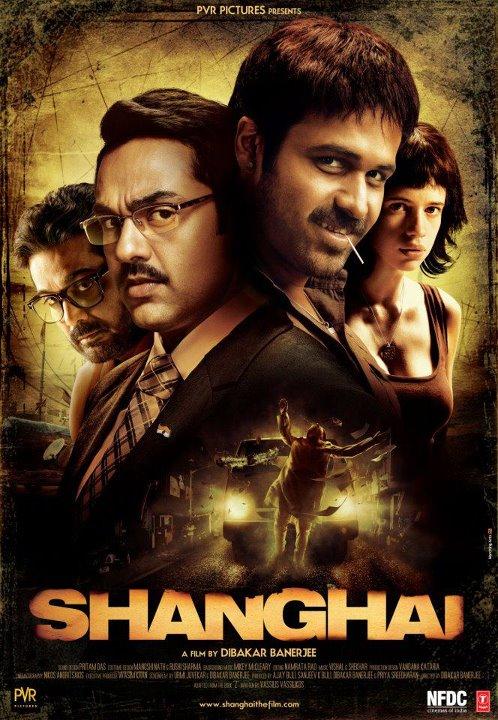
Vi ripropongo una delle interviste più interessanti concesse dal regista Dibakar Banerjee. The Dibakarian Way of Life, Shaikh Ayaz, Open, 4 maggio 2012:

'If anything, Dibakar Banerjee dislikes critical discussions on his films, and never, for strictly “emotional” reasons, revisits them once they are made. As a filmmaker, he takes up real issues and turns them into scripts sparkling with bittersweet humour (...) and mordant satire (....), while retaining a strong middle-class flavour. His fourth film, Shanghai, an adaptation of the Greek novel Z, promises to tear into the development issue that has gripped middle-class India in the post-Liberalisation era. Here, he talks movies, politics, social issues and digresses from time to time but returns to the topic, asking with concern after every answer, “You know what I mean?”

For Shanghai, was the point of origin the novel Z or the film Z?
After LSD, there was a lot of anger in me. I felt like doing a truly political film where I could express myself freely. My writer Urmi Juvekar and I were discussing films like All the President’s Men and Costa-Gavras’ Z, and suddenly she said that is her favourite film. She suggested that I read Vassilis Vassilikos’ novel and gave me her personal copy. It’s a book that’s difficult to find here. And I found it fascinating. I thought there was so much in the book that matches the India of today. But we realised very early on that the film could not be brought forward anymore as a source material. For that, we had to go back to the novel and draw from the central incident and other peripheral events which didn’t find mention in the film. That formed 30 per cent of our story and the rest was totally rewritten and reconceived, keeping contemporary India in mind.

What were the difficulties you faced while Indianising the ideas of a novel originally written in Greek?
First of all, you have to understand that people are people everywhere. The central emotions that define us as human beings, such as anger, sadness, lust, emotion, ambition and belief, are common everywhere. The best way to adapt a story that’s set in a foreign culture is to forget the trappings of that culture and go into the core of human experience. The characters of Z are as alive and universal as anyone in today’s India. Of course, we had to change the background and the overall construction because what was valid in the 1960s Greece is not valid in India of 2012. Also, the book is politically and ideologically driven, where left and right are extremely well defined. In those days, Communism, the Cold War, Berlin Wall and Iron Curtain etcetera were huge issues. In the post-modern world, after the fall of Communism and other global political developments, I don’t think there is any true ideological divide that a layman can discern in today’s politics. I cannot figure out if one Indian political party is saying anything substantially different from the other, and even if it is saying so, I cannot see if they are doing anything substantial at all. When I say doing, it is related to the ideology of that party. In modern India, there are no political ideologies; there is just political power, or the lack of it, or the ambition for it, or the misuse of it, or the abuse of it. While adapting Z, the first thing we had to do was get rid of ideology.

And? 
And, this India is sharply divided. People who have power, people who don’t, people who have privileges, people who don’t, people who can decide and shape their destinies, and people who can’t. These are the faultlines around which Indians live out their existence. The use and abuse of power is uniformly distributed across India. If you have a good story and if your editor doesn’t back out, you have used your power correctly. But every time you wine and dine with a film star just because you enjoy the access and you write good things about his bad film, then you are misusing your power. So, the abuse of power is one of the underpinnings of Shanghai.

How much space does the ‘Mumbai will become Shanghai’ spiel occupy in your story?
There is no Mumbai here. It is based in a nameless town because the dream to become Shanghai is a pan-India phenomenon. It could happen anywhere in India. All citizens live in the belief that suddenly their city/town will become beautiful; that there will be malls, high-rises, flyovers and shining roads; basically, a city that enshrines all the values of development as defined by consumerist Western society.

Are you taking a potshot at the issue of development then?
Yes, because that is the most contentious issue for a majority of Indians. The idea is to question what we call development, how we achieve development, whose development it really is, who benefits from this progress and why we are choosing a certain brand of development over the other. If you take society as an amalgamation of different interests, we can say with certainty that everyone’s interests cannot be served at the same time; it’s not practical. The easier way is to say that we are doing this in ‘national interest’. We need to find out whether it is really in the interest of the nation or in the interest of a certain political class that is selling that dream. These issues were certainly on our mind when we thought of making this film.

In what ways does politics affect you - not only as a filmmaker but more significantly as a citizen?
If you think you are not a part of politics in the post-World War II democracy era, you are a fool. All of us are a part of politics; which means either you are a part of the reasons or consequences, or you are the victim or beneficiary. The success of a citizen in a politically-defined society depends on how much s/he can be a part of the reasons, rather than being at the receiving end of the consequences. Every political citizen probably has this urge to be a part of the decision-making process. That’s why you hear people say frustratedly, “Arrey yaar, India mein presidential system hona chahiye thha.” (India should have had a presidential system). Since you are not able to say it, you wish it away, accepting the fact that you cannot be in power because you have been indoctrinated into believing that politics is what other people do. Personally, I am into politics - but I am at the receiving end of it. I believe what I do for politics is say it through my cinema.


Can cinema bring about political change?
You know and I know that films don’t change shit. They just react to the environment and put some ideas into existence. My duty is to let my films exist in the political and social domain so that if it has to fire someone’s imagination some day, it will.

How important is humour to you?
If you see a lack of humour in any art form, in the most artistic of achievements, it is the surest sign that it does not come from the heart; that it is not spontaneous, that it is manufactured, preachy and it wants to say that it is superior to you. Most messages from God or gods - basically written down by men only - don’t have any humour in them because they are written to tell other people that their God or gods is or are superior. It’s different with an artist. When he reflects on something, it can’t ever be without humour because in life the moment there is tragedy, right next to it there is comedy.

When you are making a film, are you totally consumed by it?
You have to think about it all the time. Filmmaking is a piece of sound you may have heard, it’s a piece of colour in the room, a certain smile you saw on someone’s face, a certain dance step you saw a drunk man execute on the road, a certain song you sing during your shower, a certain word you think of while sitting on the pot; you subconsciously keep throwing ideas and that’s how you go on enriching your film in terms of its detailing.

Are you in the habit of watching your films after their release?
No, I can’t bear to look at them even for a second. (...) You could say a part of me goes away with it once I am done with a film. I get emotional and then frustrated because I know there are some moments that won’t come back. It’s disturbing-disconcerting.

What do you think of the films that are being made today?
Professionally, I’m quite encouraged. What it means is a little more leg room for me to make the kind of films I want to, and at the same time earn enough to put my daughter through college. I am a filmmaker by commitment and by profession. My commitment takes care of the fact that I make the kind of films I believe in, and profession simply means films are my bread and butter. The fact that the audience is watching different kinds of films, and the fact that they are making far more money than in the previous age because there are more cinema halls and per ticket profits, now that’s a good situation for people like me. (Laughs) It may sound selfish but it looks like I will survive another 20 years, till my daughter finishes college, and then I can call it a day.

What about your commitment to cinema as an art form?
All arts are basically a handle or key for us to strive for that perfect life, that perfect society, that perfection of beauty and ideas. All our arts try to show us the ideals of life. If you take cinema as an art form, probably in the current environment - the last decade or so - there is something in our cinema that disturbs me. Sentiments pass off as true emotions, prettiness as true beauty and abstraction as depth; everything is too slick, too packaged. You have to tell the audience that ‘Now there is violence and you need to feel sad’, ‘Now drums are playing so the thrill starts’. We are giving a very McDonaldised version of what truth is and what ideal life is. This is not a complaint; it’s a slight sense of discomfort that in a country of billions where you have so many films being made, you can count on your fingers ones that are actually trying to grapple with the issues of our lives. My grouse is not against people who make films. The bigger comment is on society. We are so stressed and so caught up in that traffic jam from home to office, so engrossed in the dream of owning a four BHK [bedroom, hall and kitchen] flat on the 25th floor that we don’t have time to reflect on the truth. Therefore, we don’t want to confront cinema that even remotely threatens to unsettle that dream. This is endemic not only to Bollywood but Hollywood as well. I am not counting people like Anurag Kashyap, Sudhir Mishra and others in this, because so-called alternative cinema is trying hard to correct the balance. Very rarely do I come across a film that has something to say.

Which was the last such film?
A very commercial, very slick film called Zindagi Na Milegi Dobara. It managed to say something about friendship.

Do you believe your work has made a difference or contributed to cinema as an art form?
Honestly, I don’t know. I have no idea why I make films. If I knew the answer to that, I would stop making films. I would rather have my filmmaking be a function of some unresolved conflict inside me because if I have resolved it or if I become content, there would be no need to make films anymore. What happens with me is, I have this need to react to what’s going around me and communicate that to the next bunch of people. Take me as a semi-conductor who selectively holds back certain electrical impulses and transmits certain electrical impulses because when it comes to you it’s a changed impulse. (Laughs) I was trying to answer your question as logically as possible but the bizarreness of my answer proves that I really don’t know why I am making movies. All I can tell you is that when I am making a film, I am me; it’s some kind of a Dibakarian phenomenon.

If not a filmmaker, what would you be?
(Laughs) Dead'.

03 marzo 2022

MADHURI DIXIT: THE RETURN OF THE QUEEN


Il 25 febbraio 2022 Netflix ha distribuito The Fame Game, serie in otto episodi diretta da Bejoy Nambiar e Karishma Kohli, prodotta da Karan Johar. Trailer. The Fame Game segna il debutto di Madhuri Dixit nel mondo delle serie. La diva interpreta il ruolo principale, una famosa attrice hindi di nome Anamika Anand. The Fame Game sta registrando in India un lusinghiero successo. Il settimanale Open dedica a Madhuri la copertina del numero del 7 marzo 2022, e pubblica un lungo articolo a firma Kaveree Bamzai, Madhuri Dixit: The Return of the Queen. Riporto di seguito un estratto:

'Madhuri, who will turn 55 this year, began in (...) 1984. (...) Just for context, the three Khans, her contemporaries, made it big on the small and big screens four years later. She has been through the worst phase of the film industry, when women were infantilised, given bows and bands in their hair, made to wear shimmering pink lipstick and glittering blue eye­shadow, and given costumes fit for plastic dolls. She has survived rumours of affairs (with co-star Sanjay Dutt), a terrible case of acne, a kissing scene in Dayavan (1988) which she regrets to this day, and a media that wrote her off as often as it declared her the new No. 1. Yet she survived and thrived, setting the template for the Hindi film heroine: homegrown beauty, dancing skills and a girl-next-door charm which made the audience relate to her. As film scholar Aysha Viswamohan says, Madhuri owned the 1990s. (...) “She could effortlessly straddle the boundaries between being a glam doll and a simple middle-class girl. She was the last of the female stars who ruled the single-screen theatres,” she says. (...) 
The emblematic actress and the item girl. There are many Madhuris. (...) Ageless. Timeless. Peerless. In a career spanning 38 years, is it any wonder we have so many Madhuri Dixits to reclaim and revisit? And then there is the Madhuri of the dance contests, the online dance platform she has launched, and the Instagram reels, dancing like no one is watching, smiling to fans, cooking with her husband, singing with her older boy, and now even wanting to learn tennis. “I don’t dwell on the past,” she says, her 12 years in the US echoing in a faint twang. “It’s done, let’s move on. I want to do something more, something better all the time. There’s always something new to learn,” she says, sitting in a white pant­suit, one leg propped up on the chair, the other swinging slightly, her high heels abandoned. She is the picture of grace, comfort, ease.
It wasn’t always so. She started out as a nervous newbie with two pigtails and thin arms (...) at the age of 17, and would have remained a footnote from a forgotten film had three men not decided to reinvent her career. They released a six-page ad in the film weekly Screen, listing the names of eight directors who were keen to work with the young actress. Despite five flop films before this, the announcement gave Madhuri the sheen of a newcomer. The men: producer Boney Kapoor; his brother, actor Anil Kapoor’s secretary, Rakesh Nath; and director Subhash Ghai, then at the height of his fame, who (...) shot a showreel for Madhuri and sent it to the directors.

Ek Do Teen

Each of the three men would play a significant role in the legend that Madhuri became. But it was a fourth person, a woman, who would give form to the allure these men saw in the slim, young aspiring microbiologist. And predictably for Madhuri, it was a dance that made her a star. ‘Ek Do Teen’, a song written by Javed Akhtar, is set almost at the beginning of N. Chandra’s gritty Tezaab. Composed in 20 minutes by Saroj Khan, it took Madhuri 16 days of laborious rehearsal and seven days of shooting, including a continuous 24-hour shoot, to produce. For her, “It was like a classroom.” She learnt how to dance for the camera with this song.
Energetic, vigorous, expressive, the song, shot in Mehboob Studios, transformed her into a star. The sweet smile combined with the heaving chest, the exaggerated swaying of the hips and the pelvic thrusts created a new kind of heroine who could subsume the function of the vamp. The big hair, the glittery costume, the elaborate stage were usually elements of the vamp’s repertoire. But Madhuri brought to it a charming innocence which was all Saroj’s doing. Writing in February 1989, film critic Madhu Jain called the film the dark horse of 1988 and ascribed much of its success to the song which is “driving people crazy. Ek do teen, they hum from the shower to the office, from the office to the bedroom and everywhere else in between.”
The dance marked a turning point in the history of Hindi film dance for several reasons, writes gender and sexuality scholar Paromita Vohra. For the first time, it presented a clear heroine figure in a dance that is chiefly sexy, and presented sexiness with a robust, bodily series of steps. From this film on, a Madhuri Dixit film meant there had to be a Madhuri Dixit dance item in the film. The songs were full of double meanings and suggestions, as well as winks and teasing steps (...) - all of these featured much heaving of breasts, sticking out of bottoms and sinuous hip movements. Saroj also developed the signature step, which was repeated along with the refrain of the song, and through which cinema culture became physical culture, allowing those watching to imitate the dancing bodies, says Vohra.
Saroj was as focused on Madhuri’s face as her body. Though she had never been classically trained, Saroj had understood the fundamentals of Kathak and Bharatnatyam over her years as a group dancer and assistant choreographer. She poured all her learning into ‘Ek Do Teen’ and into Madhuri. She introduced sensuality, distinct from vulgarity, in the traditional Bollywood dance, skirting the line between pure classicism and cinematic extravagance. Saroj didn’t just dance with her body, she danced with her soul. And she made Madhuri a star. Madhuri recalls the time: “Every producer wanted me to do a dance number in his or her film... We were shooting a song for Tridev. There were three actresses. Sonam was a bigger star and so, she was made to stand in the centre. But as soon as ‘Ek Do Teen’ became a hit, the producer changed our positions. I was in the centre.”


Her frequent co-star from that era, Anil Kapoor, with whom she shared the once powerful Rakesh Nath, says he doesn’t want to take any credit for her career. “She has made it on her own, with the support of her wonderful, dignified and simple parents; she’s gifted and a born actress who blossomed into a big star but she will always be a daughter, wife, mother, and a dear friend. A fabulous dancer with a million-dollar smile.” Their friendship has endured since 1985, even when she married cardiac surgeon Dr. Shriram Nene in 1999, went to Gainesville, Florida, and then Denver, Colorado, and lived in the US for 12 years before moving back. It has weathered storms, including rumours of discomfort caused by Madhuri’s rivalry with the other great female star of the era, Sridevi, who eventually and controversially married Boney Kapoor in 1996. Madhuri shared the throne with Sridevi for a while and then came the blockbuster Hum Aapke Hain Koun..! that made her the nation’s sweetheart. By 1994, she had toppled Sridevi from her No. 1 position and was on the cover of practically every magazine with her radiant smile.
It is difficult to imagine how many hearts Madhuri broke when she married cardiac surgeon Dr. Nene, whom she was introduced to by her brother in the US. Deepika Padukone once laughingly recounted in an interview how her father, badminton star Prakash, locked himself in the bathroom to mourn her marriage. Madhuri’s reversal of fortune coincided with the arrival of women who had won global beauty events. By the late 1990s the definition of ‘beauty’ had changed forever and had paved the way for a different kind of heroine who fit the requirements of a more international kind of screen presence, points out Viswamohan.

Choli Ke Peeche Kya Hai

Madhuri’s ethnicity had a lot to do with her rise, says veteran film critic Maithili Rao. Maharashtra had waited a long time for a Marathi mulgi (girl) to rule the industry as its prime diva, says Rao. “After Nutan, an accomplished actor with gravitas, there was a palpable underlying angst that none of their own rose to be the reigning queen in the city of dreams,” says Rao. Madhuri is perhaps the best dancer we have had, with her natural grace, infectious joie de vivre and intuitive ability to make the erotic acceptable. ‘Choli Ke Peeche’ in Khal Nayak is the most famous (infamous?) example of cinema as the most powerful tool to empower the male gaze. Sanjay Dutt’s eye­patch emphasised visual pleasure that catered to male fantasy. Its risqué lyrics and celebration of rustic raunch outraged many puritans but Madhuri’s shapely shoulders shrugged off any charge of obscenity, notes Rao.
Despite ‘Ek Do Teen’ and ‘Choli Ke Peeche’ being synonymous with her rise to fame, the Madhuri paradox cast her in the image of the good beti-bahu [figlia-nuora] imbued with family values. “Nisha of Hum Aapke Hain Koun..! is everyone’s favourite daughter, who combined docility with a sparkle of mischief.” (...) says Rao.
Similarly, she says Saraswati of Beta, in time, became the template of the bahu who righted wrongs done to her simpleton husband. (...) This story of a determined, intelligent bahu restoring the right patriarchal order has been a favourite trope of popular literature and films. Saraswati is not the coy bride of earlier films. Beta rechristened Madhuri as the dhak dhak girl where she seduces the innocent husband with her heaving breasts and alluring smile, creating her own path to justice. Madhuri is the feminine strong woman who uses her Mohini [personaggio in Tezaab] avatar with discretion.
And yet the 1990s’ women often dressed like girls, perhaps to match the men, who were boys. Remember Madhuri in Dil, with her long dresses, which can only be described as Barbie frocks, and the big hair? Madhuri grew up, but the Khan boys didn’t, moving on to ever younger heroines in an effort to remain evergreen. It was a time when women were girls on the set too, with the ever present Mummy. Madhuri, too, was accompanied everywhere by her mother, even to parties where the men and women were segregated. One actress of the era remembers attending parties where the men drank in one room while the women sat, usually with their mummies, talking desultorily in another room.


Unlike Anamika Anand, Madhuri was never forced into the film industry. She chose to make it hers because she loved the work. “Whatever I did was because I wanted to,” she says. She is the gold standard for heroines, the perfect balance of wholesome goodness and secret sensuality, of little-girl innocence and womanly wiles, of perfect professionalism and easy warmth. (...) But she isn’t all sweetness and light. She has no time for excessive flattery. Incompetence irritates her too. “If everyone in this world did what they were supposed to do, wouldn’t it be a wonderful place?” she asks. Anger is not a totally unfamiliar emotion to her, but it takes some doing she says to get her really upset: “I’m a calm and patient person by nature.”
Madhuri loves the freshness of the streaming series. As she says: “It’s not just that Anamika is based in the film industry but it’s her relationship with her family. Her mother, her husband. That was fascinating to me because I’ve grown up in a very different, sheltered environment. My mom has always stood by me. Anamika Anand is completely the opposite. She did things because her mother was so domineering and now that she has everything, she doesn’t want to lose it. She’s clinging to it.”
Madhuri’s father ran a workshop making switchboard control panels and handled her finances, while her mother, a trained classical vocalist, was always there to support her, to pep her up when she was down: “I always had her. But there was no one else to guide us. I was just fortunate to get good directors and good roles,” she says. Madhuri the actor has been through some rough times. There were no vanity vans to retreat to, there were rarely air conditioners, the shifts were long, and sometimes there were two in a day, and there was no entourage to protect the star. “I had a hair­dresser, a make-up artist, and my mom and sometimes my manager would drop in to see (...). That’s it. Now we have a social media team and so many teams that follow us wherever we go because that is the world we live in right now. I don’t see anything wrong in it because everything matters now. What you’re doing on social media, what you’re doing on the set, how you look, what you’re wearing. Now you need a whole village to create a star.”
What’s new is also the number of women on the set. “When I began the only women on set were me, my mum, my female co-stars and the hairdressers. That’s it (remember even make-up artists were a male preserve until 2014 when Charu Khurana took the matter to the Supreme Court). But today, when I walk on to a set, there are female assistant directors, directors, cinematographers, there’s a woman in every department. Writers, photographers, it’s so heartening to see them making a mark,” she says.

Madhuri Dixit in The Fame Game

Madhuri seems remarkably sanguine about ageing. “It’s great to have fans in all age groups,” she says, “whether it’s mothers or kids, grandparents or grandchildren.” She’s a mom first and last. “Fame is great but your kids are your legacy finally. You’ll always be protective of them. You’ll always love them and you’ll always stand up for them and give your life for them. That’s what Anamika is as well, a tigress who wants to protect her children at all costs but who also loves them for who they are, unlike her mother (...) who wanted her to be a particular way.”
The time away from India gave her perspective. “I chose to do that. I met Ram and decided this is the man I want to marry and I did. It was something I had dreamt for myself, having a house, a husband, kids. It was a big part of my dream for myself,” she says. First they lived in Gainesville for two years, and then in Denver for 10. “Coming back was also an eventuality. My parents were getting old, I thought it’d be great to have the boys (Arin, 19, and Ryan, 17) grow up in India. Culturally, it was much richer for them,” she says. “They learnt the tabla, the piano; it was great to give them the art and culture that we have. Coming back was a great journey; I started working again. It was not planned, just organic.” She talks about her supportive husband, her mother-in-law especially who is a career woman herself (she’s a real estate agent). “My mom is a classical vocalist so I always had the art in me. I had this support system. Whenever I think of other women, I do hope they have this kind of family behind them,” she adds.
Madhuri doesn’t regret returning to India. (...) Her husband is happy too. (...) Their online academy, Dance With Madhuri, which he manages now, has taken off, and both are passionate about it. “Accessibility to good gurus is limited. There is a time and cost constraint. But at Dance With Madhuri, you can come and learn dance at your convenience from the privacy of your home. It is in 199 countries, we have an audience everywhere. We have a community of artists who can converse with each other. I wish Anamika had done that,” she says.
When she’s not Anamika, she is with her boys, talking to them, sharing something with them, or she is with her husband (...) “There’s always something new to learn.” And that is the secret to her enduring appeal. At the heart of the goddess is a diligent, dutiful and dedicated student'.