Visualizzazione post con etichetta L RECENSIONI. Mostra tutti i post

29 dicembre 2024

VAJRA CHANDRASEKERA VINCE IL PREMIO NEBULA 2024


L'8 giugno 2024 sono stati resi noti i vincitori dei prestigiosi premi Nebula. The Saint of Bright Doors dello scrittore srilankese Vajra Chandrasekera si è aggiudicato l'ambitissimo premio per il miglior romanzo - e non potrei essere più felice. Ma non è tutto. The Saint of Bright Doors, finalista anche ai prestigiosi premi Hugo, ha conquistato, fra gli altri, il premio della rinomata rivista di fantascienza Locus per la migliore opera prima (in precedenza Chandrasekera aveva pubblicato racconti).

Vi segnalo la recensione di Jake Casella Brookins, pubblicata da Locus l'11 ottobre 2023:
'Truly superb books - ones that are complete, that are organic, that invite themselves into your brain fully formed and transport you somewhere else, that leave you humming and staring and obsessed, that leave characters and images and ideas hard-printed among your own memories - are hard to talk about. It’s hard to talk about Vajra Chandrasekera’s The Saint of Bright Doors
Well, let’s begin with the simple bits. A secondary-world fantasy, the novel follows Fetter, a boy with strange gifts - shadowless, able to see demons, able to slip off gravity like a loose robe. Born to a (not the) messiah, Fetter is trained by his mother - herself something of a potent magician - to kill his own father, and take apart his entire religion. But at some point in his youth Fetter walks away from his patricidal mission, moves to the city, begins a new life. Joins a support group for other former Chosen Ones. There, in Luriat, the city of the titular bright doors, Fetter begins to discover who he really is, who he really wants to be - and finds himself caught up in a complicated mesh of revolution, scientific inquiry, and the strange and ground-shaking truth of his world. (...)


The Saint of Bright Doors starts in a clearly mythic, fantastic mode; twenty pages in Fetter is using dating apps, discussing crowdfunding campaigns. The supernatural elements persist, become deeper and stranger, even as Fetter’s world is revealed to be about the same as our contemporary world, technologically; yet Chandrasekera doesn’t juxtapose these elements winkingly or for laughs. The world hangs together, and for all that the story’s magical elements feel real, have the unpredictable-but-inevitable feeling of a dream or a fairy tale, it’s not an unquestioning world: Fetter, and other characters he meets, engage with the world, even the magical bits, study them, question them, draw conclusions from them. Chandrasekera is able to call his own bluff, repeatedly, in ways that feel very science-fictional - and still reveal that there are more and stranger cards to be dealt. (...)
The Saint of Bright Doors (...) has a remarkably unique and coherent texture. Alongside these absorbing, convincing details - city streets and noises, food, clothing, architecture, characters who entail a whole set of cultural assumptions in their table manners, unforgettably strange devils and apparitions - one of the more striking aspects of The Saint of Bright Doors is its commitment to the revolutionary impulse and societal critique. Fetter’s mother told him, “The only way to change the world is through intentional, directed violence.” It’s a statement he’s ambivalent about at best, particularly about how directed such violence can ever be, but he finds himself drawn into the orbit of reformists and revolutionaries, appalled at the intrinsic atrocities of the state. This is not a black-and-white moral story: The Saint of Bright Doors captures the Byzantine complexity and reifying systemicity of state violence - and Chandrasekera’s subversion of Chosen One narratives is delightfully oblique, allowing Fetter his confusion and side quests, and pivoting the narrative away with a few absolutely stunning twists.


Beyond these politics (if there is such a thing), the novel deploys some truly huge ideas in how it plays with the writing and rewriting of history and culture, how events and interpretations layer and contradict each other, are locked away for lifetimes only to emerge again. It’s a heady literalization of “mashing up;” it takes a serious look at what happens when tropes and cultures collide, and it’s all the more satisfying for how grounded in character it all is. Fetter is a wonderfully drawn and complex young man, surrounded by equally complex characters and realities that he (and thus we) understand imperfectly. A lot of my favorite moments in the book stem from Chandrasekera’s remarkable sense for stakes of personal, rather than contrived, significance - Fetter’s guilt over merely feeling attracted to someone, and the way his boyfriend laughs it off; the way that personal possibilities, that others’ opinions, are on the table as potential sacrifices or rewards - far more compelling than stock melodramatic life-or-death, save-the-universe plot points.
It’s a hard book to talk about - I’ve gone this far and barely told you about the present-on-every-page fantastic elements, the mechanics of the bright doors, the importance of theater, the dances of the devil-doctors and the demonic surveillance-state-analog of Fetter’s father and his saints. There is so much going on here, and yet it all fits together perfectly - book of the year material, no question, and one I’m already returning to'.

Nel gennaio 2024 era stata distribuita in Italia l'antologia Ecoceanica. Futuri dal Sud globale che include un racconto di Chandrasekera (clicca qui). I Nebula sono assegnati dalla Science Fiction and Fantasy Writers Association, i premi Hugo dalla World Science Fiction Society.  

13 gennaio 2024

SHRAYANA BHATTACHARYA: DESPERATELY SEEKING SHAH RUKH

[Archivio]

Vi propongo una rassegna stampa relativa al saggio del 2021 Desperately Seeking Shah Rukh. India's lonely young women and the search for intimacy and independence, a firma dell'economista Shrayana Bhattacharya. Il volume indaga la condizione socio-economica femminile in India partendo da uno spunto piuttosto bizzarro: se e in quale modo la superstar hindi Shah Rukh Khan ha influito nella vita personale delle sue sostenitrici, in particolare nel periodo della liberalizzazione economica (anni novanta). Viene da chiedersi: esiste davvero qualcosa che il Re non possa fare?

- Taps into the Myth and the Mannat of SRK, Prathyush Parasuraman, Film Companion, 2 novembre 2021:
'Mannat
Shrayana Bhattacharya in her fascinating book, (...) her love letter to both Shah Rukh - not Shah Rukh Khan, not SRK, but Shah Rukh, an invitation to intimacy - and women, calls him "the receptacle of so many of our expectations". Often, she capitalizes the H in He when referring to him, both aware of and buying into his god-like stardom. (...) Is it possible to extract the human from the myth? No? The alternative, which is what Bhattacharya does here, is then to contextualize that myth. (...) In 2017 (...) 60% of the audience members at an Indian cinema hall were men. Even in Mumbai, the single screen theaters are often bastions of male assertion. Most of the women Bhattacharya speaks to - from small towns, villages, big cities, the metropolis - were often dictated to never visit the theater. When they did so secretely, they were punished, slapped. It was an unsafe place, unbecoming of a woman. And yet Shah Rukh emerged in their lives, "divided by class, united by fandom", with pirated copies and music cassettes of his films, the television revolution that brought his cinema into the house, and later the internet, which would bring the entire archive of his films and interviews under the access of a thumb swipe. (...) But Bhattacharya is clear that while he elicits female fandom, he isn't a feminist icon. The characters he plays often champion noxious ideas of entitlement or dated pursuits of love. But his unthreatening gait, his inviting charm, and his interviews where he champions his wife paint an aura of the masculine ideal. (...) Even by measuring the screen time given to the men as compared to the women in his films, Bhattacharya notes how there is more space and time for women in his cinematic universe compared to his contemporaries. (...)
The labour market
Reading Desperately Seeking Shah Rukh, I often felt like I was reading two different, often unconnected books - one on the condition of women in the labour market, and the other, about how these women relate to, aspire towards, or seek solace from Shah Rukh. (...) The book on the labour market is cutting, precise, laden with statistics, and then counter-statistics to doubts you might and will have; the kind of careful defensiveness that comes from being surrounded by skeptics. Bhattacharya notes that the labour force participation of women has dropped despite the economic boom. The numbers are shocking. Between 2004 and 2011, while the economy was growing at around 7%, the share of women in the labour force fell to 33%, and thereon even further. In 2017, it hit a historic low of 23,3%. The pandemic further pushed this decline. India is the only middle-income country where economic growth and poverty reduction has not led to more women working outside of their home. India is placed among the bottom 5 countries on gender gap in economic participation. (...) But this isn't just an economic problem. It is a problem of social conditioning, for even among the wealthiest top twenty percent of urban Indians between the ages of 20 and 55, only 6% of married women were employed. But how does this connect to Shah Rukh? The women Bhattacharya speaks to - 80 in-depth interviews - (...) are also fans of Shah Rukh Khan. The tether, as one can imagine, between the labour market and the Shah Rukh fandom, is very thin. It is this part of the book, on Shah Rukh's fandom, that feels awkward and repetitive in its insistence on profundity. The insights are shaky, like throwing ideas at a wall, hoping something will stick. She uses the famous "Shah Rukh or Salman?" question as an icebreaker, and has met many a fan through this. Some of them are confused by her prodding. (...) Often Shah Rukh emerges only on the edges of their story, unimportant, but dressed up to feel central. (...) One of the fans Bhattacharya interviews, facetiously, but also, perhaps, correctly, developed a test to detect misogyny in Indian men using the fandom they belong to, "If a man likes Shah Rukh, he is usually progressive. If a man likes Salman, he is bad news. If a man likes Aamir, he's often a bearded liberal who likes his own voice too much. My test rarely fails".'

- In the sunshine of Shah Rukh's love, Uday Bhatia, Mint, 22 gennaio 2022:
'“I thought I was collecting stories about how women see Shah Rukh Khan and his films. In fact, I was collecting narratives of how they saw themselves and those around them.” This is the crux of Desperately Seeking Shah Rukh, an ambitious and impassioned non-fiction book that looks at the lives of women in India through the lens of their fandom. Shrayana Bhattacharya, a senior economist at the World Bank, spoke to women across economic strata for 15 years about love, work, agency, and the actor whose films offer everything from diversion to comfort and encouragement. (...)
Did the realisation that this is a book about Shah Rukh’s female fans, and not about the man himself, arrive at the start?
I think it came towards the middle, to be honest. In 2006, I was sent to collect data, the way any research assistant would. All these women I was sent to survey, when I would ask them about their wages, their working conditions, these were realities they were very aware of. I was uncomfortable that these people were so bored, so I started talking about Shah Rukh. I thought I was asking them about him, about his films, but instead they were talking about their husbands, their lovers, how difficult it is to earn money to watch Shah Rukh. I diligently had these conversations. Some of them knew I was thinking of converting these into an academic book at that time. Till 2013 it was, to me, these women and how they see Shah Rukh. Then, I decided - for personal reasons - that I wanted to broaden the scope of the book to include my own class. It’s when I started to talk to them and went back to look at the old notes that it occurred to me this was no longer a book about Shah Rukh Khan. I realised he was actually a research device. Then I completely restructured the book. (...)
One thing you reiterate is that these women are active creators of the Shah Rukh persona.
Received wisdom was he was the creator of that persona, and everyone else was just a consumer. But I realised that narrative is totally wrong. If you look at what’s usually said about Shah Rukh, it’s that he’s an NRI (non-resident Indian) star, who caters to thirsty housewives. I did not see that at all. I knew that he was the person who narrated the story around social mobility, but the amount he symbolised that to people from an elite background surprised me. And then what really surprised me was the way women in working class and low-income communities thought of him as being an escape when their lives were so difficult, giving them almost a demonstration of what a good man could be. I was shocked about the way women would cry about his films when talking about the lack of romantic agency in their lives. I was really surprised how, for a younger generation of women, he represents opportunity and liberalisation.
Why do you term his best performance that of the “unapologetic middle-class superstar”?
This is where the economy reacts with film. Inequality among our top 10%, the difference between the mega rich and the merely rich, has grown unimaginably. And I think he captures this. When people look at him, they see a merely rich person who has become mega rich. He has been, from his early 20s, the hyper elite of our country. And yet people feel so taxed because of the way network wealth is so important in our economy, that they will all look at him as someone who “made it”, who triumphed over patronage and networks. Another reason I think is important is he came to prominence in that liberalisation period. Suddenly, there were creative spirits of the economy that had been unleashed - he’s one example of that. He capitalised on everything the reform process maintained. (...) We think of him as capturing that original moment. I will say one more thing. If you look at his (early) interviews, I don’t think anyone is talking about money and the need to earn it and hold on to it (as much as he is). Bollywood stars don’t talk about money. But he’s saying openly in interviews that I needed to take loans, I needed to buy a house. He was very open about it.
You write that women who grew up watching Shah Rukh films graduated to watching his interviews in their 30s. Why do you think this is?
I think there are three reasons. One is that he was one of the first actors who, in the 1990s, talked about feeling bad, feeling depressed. I think a lot of women connected with him because he addressed these everyday negative feelings of anxiety, competition, job market issues. The second reason people were very enchanted was that he was a good public speaker. I know so many women, and men also, who said they would take tips on how to talk in public from his interviews. And the third is just that they are really charming and fun. He will entertain you, he will illuminate - it’s a performance. And there’s a fourth thing, which is particularly for women. If you look at the interviews, he was always talking about his mother, his wife. He was talking about marital fidelity, about his female co-stars. We can say some of it might be posturing - but he was saying it. I don’t think any of our male superstars at that time were valorising womanhood.
At one point, you paint, and address, a composite picture of the Shah Rukh fan. It reminded me of how, in market research, one is asked to visualise the target group as a single person.
The way I did that was, there were about a hundred women from my class group whom I spoke to. I wrote up an average. And then I thought, what’s a way to communicate an average? So what’s on the page is the median elite Shah Rukh fan.
Did you debate whether to interview Shah Rukh for the book?
Actually, I never thought of it. (...) This is not a text about Shah Rukh but a text about gender and economy, and he played this research device role to enter into the lives of these women. (...) He doesn’t need to be involved, because, in a way, it’s not him as a person but him as a construct. I realised that if he entered the agency would no longer be with the ordinary fan. He’s so powerful - it would just become him and his voice.
The book was to release around the time the storm over his son Aryan Khan exploded. Were you worried that a narrative you had constructed over so many years might spin out of control?
No, and this is something that’s heartening. I was confident that the love for him superseded whatever internet trollery political agents could buy. Having said that, I faced abuse from right-wing nuts when I put up an innocuous tweet about how I used to stand outside Mannat. I know that because of who he is and where we are as a country, the moment you say this generation of women is in love with a Muslim actor, there are people who will react with extremely hateful views'.

Shrayana Bhattacharya

- In a sea of Indian men, why everyone is seeking Shah Rukh, Sarim Naved, The Wire, 8 febbraio 2022:
'Khan is a unifying factor for women, Adivasi and Brahmin. The author is an accomplished economist and writer, choosing Khan as the constant for her study of Indian women, and to an extent men, born in the ’80s and ’90s. It goes beyond the anecdotal and evaluates its subjects utilising hard data as well. While Khan may be the constant, the variables are many - caste, class, geographical and occupational. The struggles of these women, divided by these variables, are of course very different from each other. Some seek personal fulfilment while others are just looking to make a living. (...) I can fully endorse this work - it is deeply engaging, and as a reader, or at least a male one, will take your minds down many paths which you did not know existed. As an analysis of the world of 30-something metropolitan professionals, regardless of gender, it’s a therapeutic read. It’s just accurate. The Shah Rukh Khan mythos started in the mid-1990s and is still going strong, even if every new release is not a monster hit. Khan is now in the news mostly for the attacks on him and his family. The myth is a dangerous one for the current ruling dispensation. It unifies what they want to divide. This man who flaunts his faith while maintaining an old-world air of accommodative secularism does not conform to the stereotype that they wish to assign to him. A work as detailed as this would obviously have taken years to plan, research and to write. By luck or design, the book has released at a time when Khan has become more relevant than ever. The “idea of India” that is the site of all political contestation these days now incorporates the fate of Shah Rukh Khan as an unavoidable part of its own destiny. Will Khan stay in India? Will he continue acting in films? Will he withdraw from public life? These are questions not only about Khan the person but about the trajectory that the country is on. Leaving one’s own imagined grievances with Khan aside, the man is rather uniquely placed to influence this country and society. We need people who can communicate charm, empathy and kindness. So, I say, Khan for PM. Why the hell not?'.

- recensione di Suman Joshi, The Hindu, 12 marzo 2022:
'Using Shah Rukh Khan’s films and the reforms of 1991 as starting points, Shrayana Bhattacharya makes women talk about their lives, from compromises to outright rebellion. (...) This genre-bending book looking at women in post-1991 India draws you in from the word go. (...) It presents a powerful commentary on the lives of Indian women and the ways they deal with inequities. Most importantly, it provides women a toolkit to navigate the changing landscape of economy and society in their search for freedom and happiness. 
Watershed moment 
The watershed moment of the 1991 reforms serves as an anchor, as the author traces the rise of the Indian economy and the simultaneous arrival of Shah Rukh Khan as a superstar. The author wears her economist hat lightly, but combines hard economic data, such as falling female labour force participation rate, hidden taxes women pay and a whole host of metrics, with surveys and interviews to paint a picture of the state of women. What makes this work special is her ability to use heart-warming, everyday stories to provide a relatable view of complex economic phenomena. The book draws on her work of following the trajectories of a group of women across caste, religion and class groups over several years. It has a generous smattering of songs and dialogues from SRK’s movies, deploying his work as a literary tool to string together stories of women whose paths would otherwise never cross. The magical SRK touch adds to the readability and fun quotient of the book. (...) ‘Fantasies’ give a glimpse into what Shah Rukh inspired in young elite girls growing up in the 1990s. The stories, one of which is the author’s own, and interviews of women bring out the contradictions women confront and the compromises they have to make despite being educated and upwardly mobile. Questions are raised regarding gender relations among the well-heeled. “Why do women resign their love lives to the trappings of male power and prestige? Why do so many successful women acquire a taste and tolerance for inequality in their private lives?” An interesting side story is the ringside view of Delhi drawing rooms with their own codes; and the trappings of power and male chauvinism. Her astute observation about the gaps in confidence arising out of social conditioning - “The upper class mating market seemed neatly divided between males with unwarranted self confidence and women with unwarranted self-doubt” - makes one question and ponder over what can be done to bridge these gaps. The 1991 reforms are estimated to have pulled millions of people out of poverty. A transformation of this magnitude that included structural changes in the economy was bound to have an impact on women. The expansion in large scale manufacturing, urbanisation and the boom in IT services changed the nature of the economic opportunities available, thereby impacting familial relationships too. 
Gambles for a dream 
‘Baazigar’ tackles the changes in the nature of relations within families and the societal contract during this economic boom. It also throws light on the nature of resistance for women in tier two cities, away from the cosmopolitan milieu of the big cities. The stories of women in this section all involve the baazis, gambles that women in tier-II cities take in an attempt to live a life they dream of. The stories ‘The Accountant’ and ‘A Girl called Gold’ are characterised by the struggle and strife at home to gain an education, choose a career and resist the pressures to “settle down”. While Gold makes the ultimate gamble and runs away from her Rajasthan home, The Accountant wages her battle of resistance within the confines of her home, revealing the many shades of pushback against restrictive traditional family structures. Women claim their space in their own unique ways, choosing from a spectrum of options from compromise to outright rebellion. There is no magic bullet to empowerment. No book studying gender in India can be complete without studying the lives of women from the informal economy, who are in the bottom two-thirds of wages, in households at or below the poverty line. In ‘Working from Home’, the author leaves the capital and travels to Gujarat, Jharkhand and the Northeast. She provides insights into the invisible lives of women in home-based industries such as textiles and tobacco as also domestic and field survey workers. The first stop is Ahmedabad. Given the vast socio-economic gap between the author and the women, how does she get these women to open up about their lives, love and aspirations? Through Shah Rukh and his movies and music, of course! The women open up about their struggles after the author uses the ice breaker question: “who is your favourite actor?” Using the metaphor of dialogue from the movie Kuch Kuch Hota Hai - “a home that is built on the foundations of compromise and not love is not a home (ghar), it’s a house (makaan)” the author demonstrates the give and take that women of the slum struggle with for mobility and economic independence. The second story is from Rampur, U.P., where Manju represents the boredom of women in small town India that have been denied agency for work and leisure. While young men get to ride bikes and watch movies, girls are denied mobility for work or leisure thus experiencing inequality through boredom. 
In her conclusion, the author draws attention to the “crisis of love” and discusses solutions to issues women face. She makes a compelling argument to avoid big bang revolutions or twitter hashtag movements, instead imploring women to attempt “intimate revolutions”, where each one of us looks into our personal equations to address our own disequilibriums'. 


18 novembre 2022

AMITAV GHOSH: LA MALEDIZIONE DELLA NOCE MOSCATA


Un mese fa Amitav Ghosh era in Italia per presentare il suo ultimo lavoro, La maledizione della noce moscata, pubblicato da Neri Pozza Editore (clicca qui). Vi segnalo la recensione del volume redatta da Elena Spandri e pubblicata da Il Manifesto il 13 novembre 2022: Amitav Ghosh, in ascolto di un seme a forma di pianeta. Di seguito un corposo estratto:

'Chi è familiare con la scrittura di Amitav Ghosh sa bene che l’invenzione narrativa, alimentata da una approfondita ricerca storica, antropologica e scientifica, è da sempre il perno della sua militanza critica. Attraverso storie appassionanti di personaggi e luoghi, lo scrittore più cosmopolita della diaspora indiana ammette i lettori nel proprio laboratorio, per coinvolgerli ma soprattutto per scuoterne le certezze e allargarne le prospettive sulle grandi questioni del nostro tempo. Il saggio appena uscito per Neri Pozza, La maledizione della noce moscata, (...) alza ulteriormente la sfida, parlando di cambiamento climatico in rapporto al colonialismo e al nuovo ordine globale, attraverso la storia di una pianta. 

Recluso tra le quattro pareti dello studio di Brooklyn «in un vago stato di intontimento e dissociazione», mentre la moglie assiste il padre malato in Virginia e il coronavirus ostenta il suo potere sull’umanità, Ghosh ritrova per caso degli appunti di un viaggio in Indonesia nel corso del quale si era imbattuto in un volume ottocentesco sulla colonizzazione delle isole Banda, che riportava un massacro della popolazione locale perpetrato dalla Compagnia olandese delle Indie orientali nel XVII secolo. Non conoscendo l’olandese, comincia a leggere il testo compulsando le parole con un programma di traduzione; fino a quando, conquistato dall’argomento, decide di contattare uno storico dell’Asia che gli fornisce un glossario dei termini arcaici e dei loro corrispettivi moderni. 

«Ben presto fu come se due entità non umane, internet e il coronavirus, entrambi operanti su scala globale, si fossero riunite per creare un portale fantasmatico e trasportarmi, attraverso lo spirito di un olandese defunto da secoli, alle isole Banda in quella notte del 21 aprile 1621». Da quel momento epifanico, l’albero della noce moscata diventa il fil rouge di una estesa riflessione sui nessi tra la colonizzazione dell’Asia e delle Americhe e il trauma del cambiamento climatico, ovvero la maledizione di un modello di sviluppo capitalistico basato su un «individualismo patologico». (...)

A fronte della corsa allo spazio caldeggiata dai magnati della terra nell’intento di sfuggire all’incipiente estinzione della specie umana, la suggestiva vicenda di questa pianta esotica e resiliente diventa una «parabola di umiltà» attraverso cui predisporre la mente all’ascolto di voci non umane, silenziate da secoli di «capitalismo estrattivista». Finché Gaia, la «Terra vivente», non si è ridotta a mero «deposito inerte di risorse». (...) Con toni sempre più perentori e apocalittici, il libro mette al bando la concezione meccanicistica della natura ereditata dal razionalismo occidentale e sollecita tutti a un atto di fede nella possibilità di recuperare quella percezione del vitalismo terrestre che è stata cancellata dalla memoria collettiva, dopo secoli di «terraformazione» coloniale, sopravvivendo soltanto presso culture -  come quella dei nativi americani - brutalmente sospinte ai margini della modernità.

«Ciò che la Terra ha realmente esaurito non sono le risorse ma il significato. Sconfitta, inerte, passiva, la Terra non è più in grado di nobilitare, né dilettare né produrre nuove aspirazioni. L’unica cosa che può produrre nelle mente di chi crede di averla conquistata è il disprezzo che nasce dalla familiarità». Non stupisce la nettezza con la quale il saggio imputa alla cultura protestante e alla letteratura inglese un ruolo determinante nella diffusione dell’idea che «l’empatia e la socievolezza sono garbate finzioni che non reggono in circostanze estreme, quando emergono realtà primordiali quali l’egoismo e l’aggressività». 

Tuttavia, il senso di questa scrittura va oltre la denuncia dei misfatti della Storia: la noce moscata, infatti, non compare soltanto nella veste di una merce preziosa che ha scatenato un genocidio ed è sopravvissuta all’agrobusiness imposto dagli ingegneri europei su un minuscolo lembo di Asia. Nelle esperte mani di Ghosh, la vicenda della spezia più ambita del diciassettesimo secolo diventa traccia vocale della pianta dalla quale è derivata, una traccia che l’autore ha colto e tradotto nel linguaggio umano, dando seguito a un programma di re-incantamento della natura attraverso l’immaginazione creativa (annunciato nella Grande cecità e già realizzato nelle opere recenti), che è tanto necessario al benessere collettivo quanto ad alto rischio di fraintendimento e di cooptazione da parte di «ecofascismi» che utilizzano l’ambientalismo per rafforzare le gerarchie sociali e rendere chi sta ai margini sempre più invisibile. 

Ghosh ne è pienamente consapevole, ma è altrettanto convinto che valga la pena correre il rischio. Cresciuto nell’alveo di una cultura politeistica che concepisce gli dei «come intermediari spirituali tra l’umano e il non umano», e in aperta polemica con un’Anglosfera che ha fatto un dogma «dell’idea che l’egoistico conseguimento degli interessi individuali sia un tratto universale della natura umana», Ghosh (...) riesce a far coesistere materialismo e spiritualismo, pragmatismo e vitalismo, con la stessa disinvoltura con la quale abita molteplici mondi'. 

Progetto Scienza 2022 Le Nostre Domande

Aggiornamento del 16 giugno 2023: nel novembre 2022 lo scrittore partecipò alla prima puntata, registrata all'università di Padova, del programma Progetto Scienza 2022 Le Nostre Domande di Rai Cultura. Video.

14 ottobre 2022

RAM V E FILIPE ANDRADE: LE MOLTE MORTI DI LAILA STARR


Dal 28 luglio 2022 è in distribuzione il volume a fumetti Le molte morti di Laila Starr, scritto dall'autore indiano Ram V e illustrato da Filipe Andrade, pubblicato da Panini Comics, nel cui sito leggiamo: 'L'umanità sta per scoprire l'immortalità e, come risultato, l'avatar della Morte viene scacciato sulla Terra, a Mumbai, per vivere una vita mortale nei panni della ventenne Laila Starr. Non riuscendo a venire a patti con la sua nuova condizione, Laila trova un modo per tornare al momento in cui nacque il creatore dell'immortalità. Se non lo fermerà prima che cambi per sempre il corso della Storia, la morte diventerà solo un retaggio del passato'.
Vi segnalo la recensione di Michele Garofoli, pubblicata da Lo Spazio Bianco il 30 settembre 2022: 'Ram V esibisce una prosa lirica e poetica, mai ridondante, in cui emerge la sua filosofica visione dell’umanità. Straordinaria la diversificazione delle voci narranti: una sigaretta in attesa di spegnersi e concludere il suo ciclo vitale, oppure un tempio cinese abbandonato che si preoccupa della persona anziana che passa tutti i giorni a trovarlo si alternano a quella di una Laila sempre più dubbiosa, ora cosciente dei limiti intrinsechi della condizione umana, del tempo che ne delimita in modo ineluttabile l’inizio e la fine e dell’utilizzo che facciamo di questo intermezzo. Vita e morte, due facce della stessa medaglia il cui imprescindibile legame ci conduce verso una conclusione ricca di significato, emozionante e commovente. Un fumetto a tratti stupendo, scritto con capacità e consapevolezza'. 


28 maggio 2022

GEETANJALI SHREE VINCE L'INTERNATIONAL BOOKER PRIZE 2022


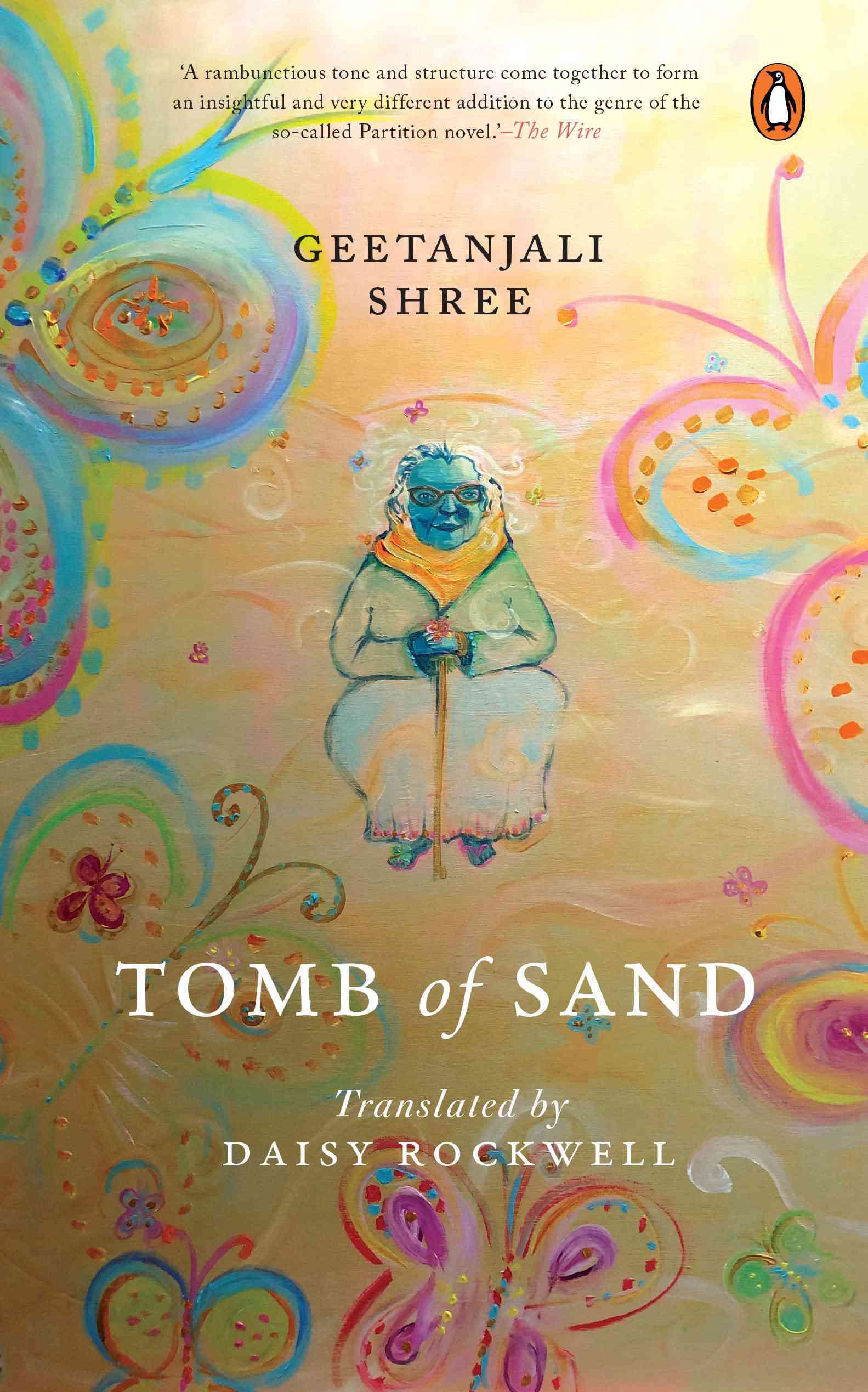
L'International Booker Prize 2022 è stato conferito a Geetanjali Shree per il romanzo Ret Samadhi (2018), in lingua hindi, tradotto in inglese da Daisy Rockwell (titolo Tomb of Sand). In Italia verrà pubblicato il 19 gennaio 2024 da Solferino col titolo Ret Samādhi - Oltre la frontiera. Ret Samadhi è la prima opera hindi selezionata dall'International Booker Prize, e la prima in una lingua indiana ad aggiudicarselo. Nel comunicato ufficiale, si legge: 'Tomb of Sand is the first book originally written in any Indian language to win the International Booker Prize, and the first novel translated from Hindi to be recognised by the award. Set in northern India, the novel follows the adventures of an 80-year-old woman who unexpectedly gains a new, and highly unconventional, lease of life. The result is a book that is engaging, funny and utterly original, at the same time as being an urgent and timely protest against the destructive impact of borders and boundaries - whether between religions, countries or genders' [Geetanjali Shree] "This is not just about me, the individual. I represent a language and culture and this recognition brings into larger purview the entire world of Hindi literature in particular and Indian literature as a whole".' 

L'International Booker Prize, che non va confuso con il Booker Prize, premia il miglior romanzo non in lingua inglese, tradotto in inglese e pubblicato nel Regno Unito o in Irlanda. L'autore vince 50.000 sterline, da dividere con il traduttore. Quanto al Booker Prize, gli autori indiani (o di origine indiana) che hanno conquistato sino ad oggi il prestigioso premio sono V.S. Naipaul (In uno Stato libero, 1971), Salman Rushdie (I figli della mezzanotte, 1981), Arundhati Roy (Il dio delle piccole cose, 1997), Kiran Desai (Eredi della sconfitta, 2006) e Aravind Adiga (La tigre bianca, 2008). I figli della mezzanotte si è aggiudicato anche il Booker of Bookers Prize nel 1993 per il 25esimo anniversario del premio, e il Best of Booker nel 2008 per il 40esimo.


Ret Samadhi

RASSEGNA STAMPA/VIDEO (aggiornata al 13 febbraio 2024)

- Stirring the plot: A Wknd interview with author Geetanjali Shree, Poonam Saxena, Hindustan Times, 18 marzo 2022:
'A brilliant, celebrated Hindi writer, with five novels and five short-story collections to her credit, Shree’s latest and fifth novel Ret Samadhi, translated into English as Tomb of Sand by American translator and writer Daisy Rockwell, has been longlisted for the International Booker Prize (alongside 12 other books). It is the first novel translated from Hindi to be in the running for the prestigious award. Shree has made literary history. When the book’s UK publishers (...) sent her word two days before the public announcement of the list, Shree says she didn’t quite grasp the implication. “I was pleased, of course,” she says. “But I was a bit detached.” Gradually, as the news sank in, she began to feel humbled and grateful. (...) “Can anyone claim this is the only Hindi work worthy of honour? Of course not. But I feel a sense of wonderment about my own work, that so many people, sitting so far away, have read the book and liked it.” She’s not thinking of whether she’ll win or not. She’s not in any race, she says. “Something wonderful has happened to me. For me, it’s a proud Hindi moment. Let’s leave it at that.”
At a hefty 700-plus pages, Ret Samadhi / Tomb of Sand is the story of an 80-year-old Indian woman who loses her husband, turns her back on her life and her family, and travels to Pakistan, to her pre-Partition past. That description cannot begin to do justice to the complexity of the story and characters, or to the novel’s unique literary style. Some chapters, for instance, are just a single sentence; in another chapter, a single sentence stretches over three pages. An interviewer described the varying lengths as reminiscent of an ECG graph. And then there’s the way Shree uses words, creating an almost musical rhythm, pairing words that roll into one another; pairing others that sound the same but mean completely different things.
This also makes Ret Samadhi / Tomb of Sand a demanding read, and an extremely challenging book to translate. “Why must a book be easy to read?” Shree says. “I enjoy the audio quality of language, I enjoy turns of phrase. Language is all about breath, not just easy breathing but fun breathing, different kinds of breathing. But you can’t have erratic breathing which will make you collapse. There has to be balance. Often language is treated as just the carrier of ideas, of the story. For me, language has its own presence and independent personality.”

Geetanjali Shree e Daisy Rockwell

When Ret Samadhi was first released, in 2019, Shree sent a copy to French translator Annie Montaut, who translated Shree’s 1993 novel, Mai. As soon as she read the book, Montaut announced she was going to translate it. “She found a publisher. I never even met them,” says Shree. “It was shortlisted for the Emile Guimet prize in 2021, which was wonderful. Both Annie and Daisy asked me such detailed questions about the book, I had to research myself and my book often, to answer them.” Daisy’s translation is a tour de force, all the more remarkable since Shree and she have never met.
Shree’s journey as a Hindi writer probably began when she was still a child, growing up in small towns across Uttar Pradesh, picking up Hindi in many registers - sophisticated (...) poetry meets, the street, children’s magazines; but most of all, her mother. “I always spoke to my mother in Hindi. My Hindi was nurtured by her,” she says. “When I went away to college in Delhi, I wrote long letters to her in Hindi. She’s 96 today and she’s picked up enough English, but it’s not her comfortable language.” When Shree started writing, she dabbled in English at first, but soon realised that Hindi was the language she wanted to express herself in. The question she is still asked most often, she says, is: Why do you write in Hindi (the unsaid rest of the question being, “when you could very well write in English”). “This could only happen in an ex-colonial country,” she says. “Here, people can say, ‘Oh, I can’t read Hindi’ or ‘Hindi is so difficult,’ without being embarrassed or ashamed in the least. In fact, some say it with pride.” She pauses, then adds, “English is the language of power, it’s the link language of the world and you must learn it by all means. But that doesn’t mean one should be ignorant of one’s own rich lineage, or be proud of that ignorance!”
Shree’s first few stories were published in the 1980s, in the prestigious Hindi literary journal Hans. Like many writers, she says she needs absolute peace and solitude to write. She and her academic husband lead quiet lives in Delhi. She often escapes to write, sometimes retreating to a rubber plantation in Kerala, sometimes to writers’ residencies abroad. Shree has just completed her sixth novel Sah-Sa (which Hindi readers will recognise as a play on the words sahsa or suddenly; sah or together; saha, to endure; and sa or like). (...) She hasn’t sent it to the publisher yet. Why the hesitancy? “Maybe it’s the Covid years. Maybe the world feels like it’s turning upside down,” she says. “Is there a tomorrow? Is the world going to reinvent itself or are we heading towards doom? I’ll send the manuscript to the publisher when I feel ready”.'


- Recensione, Shree Thaarshini Sriraman e Vighnesh Hampapura, Scroll, 23 aprile 2022. Più che una recensione, il pezzo è un'analisi. Di seguito riporto un estratto, ma vi consiglio di leggere il testo integrale:
'This novel (...) does not believe in “100 percent exactness,” and cannot be described in its entirety with exactitude. (...) Whoever the character and whatever the scene, the novel writes us heightened and thickened descriptions of the conventional and unconventional business of being (in) a family. But this isn’t some sort of a character-oriented, plot-driven novel. Family is only one character, and Tomb of Sand is a fable too. This story sprawls across “anything and everything” you could imagine, and also all the things you never could. (...) Inanimate entities are full of life too. (...) And Tomb of Sand cares for every story it encounters, giving generous attention to sunlight, glimpsing conversations, canes, (...) party chatter - all tailing into the wandering river of the tale and blending in. People intertwine with things intertwine with ideas. (...) Not once does it seem like these connections are contrived. The novel’s roving eye instead picks up all the infinite ways in which the world intersects, and its wild tendency toward free association loosens the borders with which we frame the world, inviting us to open up new possibilities of contact between its anythings and everythings. (...) The links are tenuous, volatile, and unpredictable. (...) All zig, all zag, those are the styles of the novel. The modes and the moods change together. (...) The razzmatazz of the novel is not in the drastic alterations of its style across the three parts, but the brazen amendments of its voice with every chapter and sometimes within the very chapter. The story, that is, is not delivered to us in a single genre or approach. There is a speech, two monologues, a complaint, a mental letter (...), a single-sentence paragraph running for pages - apart from all the other bizarre approaches through which the novel unravels its ideas. (...) Tomb of Sand cares little to ask: “which is reality and which is make-believe?” (...) And a strange “I” enters again and again and again (that is, thrice), (...) who casually takes over from the third-person omniscient narrator like a breeze flips a curtain, scattering an insight here and a comment there in first-person. No justifications, no explanations, and we never question why. Probability and relevance are irrelevant; irreverence reigns (in and over) the narration. (...) Shree is a great withholder of plot in Tomb of Sand, giving us instead snippets from associated events that aid us to glean an impression of what might have transpired. Perhaps that is why metaphors are so central to the novel: the simplest of details are delivered through them. (...) Writer is genius, translator ingenious. Daisy Rockwell: grazie, rockstar! (...) Tomb of Sand asks us to cross borders ceaselessly'.


- Video: premiazione
- Video: dichiarazioni della giuria
- International Booker Prize 2022, vince Geetanjali Shree, Corriere della Sera, 27 maggio 2022:
'La proclamazione è avvenuta durante una cerimonia a Londra: la giuria ha definito l’opera «estremamente esuberante e incredibilmente giocosa». [Geetanjali] Shree (1957) ha battuto la favorita della vigilia, la polacca Olga Tokarczuk, Premio Nobel della Letteratura 2018. (...) «Non avrei mai sognato di ricevere il Booker, non avrei mai pensato di poterlo fare», ha dichiarato Shree. «È un riconoscimento enorme. Sono stupita, felice, onorata». Shree è autrice di tre romanzi e di diverse raccolte di racconti, anche se Tomb of sand è il primo dei suoi libri a essere pubblicato nel Regno Unito. La traduttrice Rockwell (...) ha tradotto diverse opere della letteratura hindi e urdu. Tomb of Sand, lungo 725 pagine, racconta la storia di una donna di 80 anni che, dopo la morte del marito, cade in una profonda depressione e poi riemerge per ritrovare la vita. L’anziana decide di andare in Pakistan per affrontare il trauma irrisolto della sua esperienza adolescenziale durante la «Partizione». (...) Il viaggio è l’occasione per rivalutare il significato dell’essere madre, figlia, donna e femminista. (...) Frank Wynne, presidente della giuria del premio 2022, ha definito il libro «straordinariamente divertente, enormemente coinvolgente, affascinante e leggero, nonostante gli argomenti trattati».'


- Shree: «La mia India al di là di tutti confini», intervista concessa dalla scrittrice a Eugenio Giannetta, Avvenire, 13 febbraio 2024:
'Il romanzo può essere letto come una protesta contro l’impatto distruttivo dei confini, tra religioni, Paesi e generi.
Sì, certo. Una delle maggiori preoccupazioni del romanzo riguarda tutti i tipi di confini che affliggono la vita umana. Una realtà inevitabile: i confini possono esserci, ma per chiarire e definire una forma, per rendere conveniente lo scambio, non per dividere e scatenare ostilità. Il romanzo è un appello secondo cui, invece di esserci muri che chiudono fuori, i confini dovrebbero essere ponti che collegano.
Nel suo libro parla anche di depressione. Il tema della salute mentale è oggi argomento che merita sempre più attenzione.
La depressione non è che un sintomo di un malessere più ampio. Il mondo di oggi è pieno di cause che portano alla depressione. Sfortunatamente, di conseguenza, la salute mentale richiede un’attenzione sempre maggiore.
Si parla poi di lutto e identità.
La prima delle tre sezioni di Oltre la frontiera può essere letta come una meditazione sul lutto. La seconda sezione, dopo la liberazione dal lutto prolungato, è una celebrazione del miracolo chiamato vita. Ma anche quel miracolo (...) è segnato da un lutto successivo, che è più traumatizzante di quello della prima parte. E nell’ultima sezione arriva la morte eroica dell’anziano protagonista che getta nel lutto anche gli uccelli. Per quanto significativi e commoventi siano questi atti intermittenti di lutto, c’è anche un lutto più ampio e duraturo che attraversa l’intera narrazione, di un ordine mondiale pluralistico, ricco e diversificato che lentamente perde terreno. Trattandosi di una perdita profondamente personale e di civiltà, questo lutto è anche una consacrazione e un’iconizzazione dell’entità defunta o in partenza. Una consacrazione che potrebbe ispirare le generazioni future a ripristinare quel mondo che sta scomparendo.
Questo libro potrebbe essere anche un’occasione per ridefinire alcuni significati come l’essere madre, figlia, donna?
Nella finzione non mi propongo alcuna rivalutazione consapevole. Anche nel caso in cui scrivo su temi simili a quelli di cui ho già scritto, il mio scopo è sempre quello di esplorarli di nuovo. L’esplorazione però è umana e artistica, non accademica, e apre un’esperienza ma non cerca di dare risposte.
Parlando di stile e linguaggio: il libro alterna una sorta di flusso di coscienza a capitoli brevi di poche righe, con un tono di fondo umoristico nonostante la complessità dei temi affrontati.
Nel discorso di accettazione alla cerimonia dell’International Booker Prize ho descritto il romanzo come un’elegia ridente. Eppure, nella mia narrativa c’è poco di premeditato e pre-progettato. Né il tema né il modo di trattarlo sono decisi in anticipo. L’opera sviluppa la propria dinamica e sceglie la sua andatura, la via da seguire.
Che momento stanno vivendo la letteratura hindi e indiana?
La letteratura hindi, con altre letterature in lingua indiana, sta attraversando una fase vibrante. Stanno emergendo nuove voci, audaci, innovative e senza paura.
Nella sua intervista per il Booker Prize ammette di non aver mai finito Il nome della rosa. Pensa che lo finirà? Altri italiani che ha letto o vorrebbe leggere?
Sono una grande sostenitrice della serendipità. Non so dire quando Il nome della rosa mi richiamerà. Adoro Il Barone Rampante di Italo Calvino e altri. Non tenterò nemmeno di raccontare ciò che Primo Levi mi ha insegnato. Ricordo Pirandello dai tempi di quand’ero studentessa. Elena Ferrante è una fonte di ispirazione, ma la mia lettura è casuale e ho molto altro da leggere. L’Italia è ricca culturalmente e non si può che trarre beneficio da un legame più profondo con essa. (...)
La spartizione del 1947 quanto ha influenzato e quanto influenza ancora sistemi politici e popoli?
Nel dispiegarsi del suo impatto, la spartizione catastrofica del 1947 è un evento continuo. La ferocia dell’impatto varia nel tempo, ma la spartizione non cessa mai di essere una presenza sempre minacciosa. Gli effetti di divisione purtroppo continuano a manifestarsi in modi nuovi e diversi. Il momento attuale è particolarmente preoccupante, soprattutto per gli sviluppi in India e Pakistan. (...) Tanto altro sta ribollendo e aspettando di esplodere. Le persone combattono non solo per i confini nazionali ma anche per molti altri, che sono diventati motivo di preoccupazione nel romanzo. E, naturalmente, siamo impegnati a ribaltare il confine del nostro ambiente e dell’intero pianeta a suo e nostro danno'.


03 marzo 2022

JANICE PARIAT: LE NOVE STANZE DEL CUORE


Dal febbraio 2022 è in distribuzione nelle librerie Le nove stanze del cuore, di Janice Pariat. Nel sito di Bompiani si legge: 'Il corpo è la casa del cuore e il cuore è la casa di coloro che ci hanno amato e che abbiamo amato nella vita. Nove personaggi ricordano il proprio rapporto con la stessa donna, nove voci senza nome che in città senza nome compongono con prospettive sfumate, sovrapposte, complementari, persino contraddittorie, la biografia sentimentale di una figura sempre in chiaroscuro, che scopriamo pian piano attraverso chi a un certo punto l’ha conosciuta o credeva di averlo fatto. Le nove stanze del cuore è uno sguardo caleidoscopico sulla natura fragile dell’identità e sull’intimo mistero che la sottile meccanica del nostro cuore e di chi lo abita rappresenta per tutti'.

Vi segnalo la recensione di Francesca Pellas pubblicata ieri da Il Foglio: 
'Come sarebbe il racconto della vita di una donna se a farlo non fosse lei, ma gli uomini che ha amato? Sarebbe, forse, un insieme di frammenti molto vividi, perché ognuno di loro, di lei, avrebbe visto un pezzetto, adorandone determinati stati di grazia e detestando alcune sue caratteristiche, e chissà quali. Non siamo gli stessi per tutti, e nel rivelare la nostra natura più intima possiamo svelarne più d’una, a seconda del momento in cui ci troviamo e della persona a cui consentiamo l’accesso. È la premessa su cui si basa e si snoda Le nove stanze del cuore di Janice Pariat, appena uscito per Bompiani nella bella traduzione Marina Morpurgo. A Bompiani va il merito di aver reso disponibile in italiano questa favolosa scrittrice indiana (finalmente, era ora), ormai al suo secondo romanzo, arrivato dopo Seahorse (“Il cavalluccio marino”), molta poesia, e la raccolta di racconti Boats on Land (“Barche sulla terraferma”), che parlava di miti, cascate, spiriti, alberi e persone ferite. In Le nove stanze del cuore, Pariat ci fa conoscere una donna attraverso le voci di nove persone che l’hanno amata, otto uomini e una donna. L’intero libro è alla seconda persona singolare, un lungo tu, come se tutti loro si rivolgessero in qualche modo a lei. (...) Il risultato è qualcosa di magico. Pariat non fornisce dettagli geografici precisi, non si nominano mai l’India, l’Inghilterra, l’Italia: si intuiscono e basta. Andiamo in una città con il fiume, in una senza fiume, in una città sul mare, nella città d’infanzia. Quei luoghi potrebbero essere ovunque, e la protagonista potrebbe essere noi. Le sue delusioni, la sua speranza, sono così vivi da prendere vita nella testa di chi la legge raccontata dagli altri, e pensare che non sappiamo nemmeno come si chiama. Eppure quante volte siamo stati lei?'.

30 dicembre 2009

INDIASCAPES - IMAGES AND WORDS FROM GLOBALIZED INDIA


Il nuovo numero della rivista on line dell'istituto di anglistica dell'università L'Orientale di Napoli è interamente dedicato all'India: Indiascapes - Images and words from globalized India. Per quanto concerne il cinema, segnalo:
- Love and punishment. How passion is meted out in Bollywood, nel quale il professor Alessandro Monti, capo del dipartimento di orientalistica dell'università di Torino, analizza pellicole celebri fra cui Devdas, Dilwale Dulhania Le Jayenge, Kabhi Alvida Naa Kehna, Mother India, Vivah, Fire, Provoked, Shakti - The power, Namastey London;
Enduring identities in diasporic cinema, in cui viene analizzato Provoked.
La rivista include anche la recensione di Schermi indiani, linguaggi planetari, saggio di Lidia Curti e Susanna Poole, pubblicato nel 2008 da Aracne Editrice.

(Grazie a Jane per la segnalazione)

19 aprile 2009

SHAH RUKH CAN: RECENSIONE DI BOLLYWOOD HUNGAMA


Joginder Tuteja firma la recensione del volume Shah Rukh Can, pubblicata nel sito di Bollywood Hungama il 13 aprile 2009. Di seguito un estratto:

'Mushtaq Shiekh rappresenta Shah Rukh Khan come un eroe, più che un amico e un collega. E non solo come il suo eroe, ma come l'eroe di un intero Paese se non del mondo. Il volume sembra quindi scritto da un ammiratore e non da un saggista: c'è il desiderio di esplorare tutto ciò che concerne l'attore, e la considerazione positiva di ogni aspetto che lo riguardi. Il ritratto che ne risulta è troppo unidimensionale. Se dobbiamo dar credito a quanto scritto in Shah Rukh Can, sembra che la star non abbia mai commesso un passo falso, che sia il performer più intelligente sulla piazza, e che, se anche esistano in lui delle lacune da colmare, l'attore non abbia alcun bisogno di lavorarci sopra perché tanto è amato comunque. Possiamo anche concederlo, ma di certo si sente la mancanza di almeno un commento non positivo su Shah Rukh. A parte questo, il testo esplora in 350 pagine (con pochissime immagini) la vita dell'attore prima e dopo il successo. L'autore non solo racconta molti aneddoti curiosi, ma analizza dettagliatamente anche un argomento sinora inesplorato: il punto di vista di Shah Rukh Khan su recitazione e spettacolo. Peccato questa parte sia molto verbosa e molto tecnica'.
Giudizio del recensore: *** 1/2