Visualizzazione post con etichetta V DOCUMENTARI. Mostra tutti i post

13 marzo 2023

NAATU NAATU E THE ELEPHANT WHISPERERS VINCONO L'OSCAR


Ieri sera, alla cerimonia di conferimento dei premi Oscar, l'industria cinematografica indiana si è aggiudicata ben due statuette:
- la trascinante Naatu Naatu, di M.M. Keeravani, tratta dalla colonna sonora del film telugu RRR, ha vinto l'Oscar per la miglior canzone originale, soffiandolo ai brani di superstar del calibro di Rihanna (Lift me up) e Lady Gaga (Hold my hand). La statuetta è stata ritirata da Keeravani e dal paroliere Chandrabose. Naatu Naatu, in precedenza premiata con il Golden Globe, è stata rappresentata da danzatori professionisti nel corso dell'evento; Kaala Bhairava e Rahul Sipligunj hanno cantato dal vivo. L'esibizione è stata annunciata da Deepika Padukone. Presenti in sala S.S. Rajamouli, Ram Charan e Jr NTR. Recensione di RRR.
- il cortometraggio documentario tamil The Elephant Whisperers, diretto dalla regista Kartiki Gonsalves e prodotto da Guneet Monga, ha vinto l'Oscar nella sua categoria.

Video Variety: Ram Charan 
Video Variety: Jr NTR
Video ABC: Deepika Padukone e rappresentazione di Naatu Naatu
Video ABC: proclamazione della miglior canzone originale
Video Hotstar: proclamazione del miglior cortometraggio documentario
Video: dichiarazioni di Guneet Monga


Da destra: M.M. Keeravani e Chandrabose


Da sinistra: Kartiki Gonsalves e Guneet Monga


Kartiki Gonsalves: Vanity Fair Oscar Party

Vanity Fair Oscar Party

Mumbai, 13 marzo 2023


30 luglio 2022

KOLKATA EXTREME | DOWN AND DIRTY IN KOLKATA

Cosmic Sex

[Archivio]

Si parla troppo poco di cinema indipendente indiano. Vi ripropongo un testo del 2012 dedicato ai cineasti più trasgressivi della scena bengali. Kolkata Extreme | Down and dirty in Kolkata, Nandini Ramnath, Mint, 12 ottobre 2012:

'There wasn’t an empty seat at the premiere of Amitabh Chakraborty’s Bengali movie Cosmic Sex at the Osian’s Cinefan film festival in Delhi in August. Delegates crammed into the 1,865-seater Auditorium 1 at the Siri Fort complex, seduced by the promise of uncensored sexual intercourse in an Indian film (they weren’t disappointed). The presence of lead actor Rii, easily one of the most uninhibited women in Indian cinema, further electrified the crowd. The diminutive beauty, who hands out lessons in desire and sexual fulfilment to a truth-seeking young man, gamely took on questions after the screening about whether she was “as erotic as her character" and what she thought of Sigmund Freud. A few questions were about the movie’s exploration of the idea of achieving spiritual equilibrium through sex. But people mostly wanted to take a closer look at the actor who is the face of an exciting and promising strain of independent film-making. 
It’s experimental, transgressive, idiosyncratic and phantasmagorical and it is emerging out of the most relaxed among the metropolises - Kolkata. The West Bengal capital has a long-established tradition of radical and independent-spirited film-makers, from Ritwik Ghatak and Satyajit Ray to Subrata Sen and Suman Mukhopadhyay. So it is only natural that the city is producing several fascinating experiments in documentaries and features. (...)
Cosmic Sex includes ideas previously explored by 53-year-old Chakraborty in his 2006 documentary Bishar Blues, about Bengal’s Muslim fakir tradition. A young man named Kripa encounters a prostitute, a eunuch and, most crucially, a female ascetic named Sadhana on his journey of sexual self-discovery. Kripa’s experiences unfold as a reverie amid a mythic landscape that is identifiably the Bengal of wandering ascetics and miracle workers. “Cults like the fakirs and the Bauls feel that sexual energy is the most powerful force that flows outwards all the time, because of which there are manifestations of happiness, unhappiness and death," Chakraborty says at his home in Kolkata. “The only way to get out of this is to reverse the sexual energy. You have to go back to the unchanging energy source." Cosmic Sex is only Chakraborty’s second movie in 23 years after his experimental debut Kaal Abhirati. (...)

Bishar Blues

Q’s musical Tasher Desh (The Land of Cards). (...) Based on Rabindranath Tagore’s operatic critique of social rigidity, which was inspired by Lewis Carroll and written in 1933, Q’s fantasy adventure, about a prince who strains at his royal leash, will be premiered at the International Rome Film Festival in November and will be released in India in 2013. Q says Tasher Desh has been in the making ever since he decided to become a film-maker. “Tasher Desh is an immensely popular production that is usually treated as a kids’ play," he says. “In the neighbourhood in which I grew up, the guy who could sing would get the central character, the prince. I was the prince for the neighbourhood, but then I got demoted when the play was performed at school. I was horribly disappointed and vowed that this would be avenged."
A trailer reveals that like in Gandu, Q is jettisoning conventional storytelling modes in favour of an audio-visual head rush through a theatrical acting style, hand-held, highly mobile camerawork and rapid-fire editing. The film has been shot in West Bengal and Sri Lanka. (...) “I didn’t care for the story - it is an experience, with its songs and its exotica," Q says. “I believe in the present moment, not in stories. Tasher Desh is structured like a fairy tale, it’s metaphysical and metaphorical." Tasher Desh has been produced by Q’s outfit Overdose, Kolkata-based recording studio Dream Digital, Belgian company Entre Chien Et Loup, the National Film Development Corporation and Anurag Kashyap Films. The movie brings Q a few steps out of the Kolkata underground and into the mainstream - sort of. “I don’t think Tasher Desh will bring us into a mainstream that means palatable and marketable," Q says. “I am trying to counter the fact that we don’t have channels of distribution for alternate content."
Gandu, made in 2010, was never meant to be released. The experiment in extreme cinema that more people have heard of than seen was a break-out for Q and a breakaway from the realism and restraint usually found in commercial film-making. The mostly black and white movie (...) follows an angst-ridden young man’s journey towards self-fulfilment through highly stylized camerawork, choppy editing and interludes of profane Bengali rap. The protagonist’s claustrophobia, stemming from his sterile surroundings and his sense of emasculation, literally explodes in a no-holds-barred colour sequence of sexual intercourse, which has earned the film eternal notoriety.

Tasher Desh

Q is an agent provocateur with a plan. He has been assiduously working towards creating an alternative system of finance and distribution with Overdose (its business cards promise “explosive Indian content"). He collaborates with a tightly knit group of like-minded souls, some of whom he has grown up with, in the production of “cheap and dirty pictures about sexual, social or political extreme content that otherwise can’t be made", on budgets of ₹ 25-30 lakh [1 lakh = 100.000], that will subsidize each other.
“Since a production house can’t operate on one production, our strategy is to go for two kinds of cinema," he says. “We can make films like Tasher Desh, which is nothing like Gandu but carries the same spirit. If that works out, we have a killer set-up - we can make cheap, extreme films that are not bound by distribution in India. (...) We can recoup the money internationally as well as keep up the fight of pushing the boundaries of viewership." The label Bangla Black has been set up expressly to launch regular attacks on the system. “These are all gambles, high-velocity risks, but they are not uncalculated," Q says. (...)
His partner in cinema and in life [is] Rii, officially Rituparna Sen. (...) When she met Q in 2003, she had spent two years modelling and acting in television. She thought his debut feature Tepantorer Mathe would give her a foothold in the movies. “I thought the film would make me a star, but I was heartbroken when I found it was not going to come out," she says. The two started seeing each other, and Rii got introduced to the film-makers who would turn out to be the leading lights of Kolkata Candid: Shyamal Karmakar, who edited Tepantorer Mathe, and Amitabh Chakraborty, who was making Bishar Blues. “I love films that are challenging and borderline and dangerous," Rii says. “I will do anything for these three film-makers - they are crazy and difficult, but I love their work. Lust is not their prime focus."


Karmakar, an editor who trained at the Film and Television Institute of India in Pune, is one of Q’s major inspirations. Karmakar’s documentary I Am the Very Beautiful, made in 2006, is a genre-defying exploration of the film-maker’s desire for a bar singer named Ranu Gayen. Karmakar makes no bones about his attraction to Gayen, who is attached to his friend. He asks her to sleep with him and films her semi-naked. Gayen is no shrinking violet either, and as director and subject come dangerously close, the documentary explores the nature of voyeurism and the difficulty of maintaining a pretence of objectivity or distance. Karmakar is in thrall of female sexuality, and unlike many other film-makers, he doesn’t pretend otherwise.
“My idea of sexuality was ruptured in Pune," says 48-year-old Karmakar at his office at the Satyajit Ray Film & Television Institute in Kolkata, where he heads the editing department. “I fell in love with women with different moralities and attitudes to morality." Some film-makers explore dreams, some nightmares, while others confront their sexual fantasies, he says. “I want to tell the truth," Karmakar says. “I am very scared to tell my stories, but telling them is important. There are very few places to screen your films in Kolkata," he observes. “But it helps to be under the radar. The less I am seen by people, the better for me."

Q

Perhaps there is no better place than Kolkata to unleash the private into the public. “If you look at what’s happening in Bengali cinema, it’s been brewing for over a decade and a half," says Moinak Biswas, professor at Jadavpur University’s film studies department. “Things have come to a head - there is an all-time record of production in Bengali cinema. Soon, most of these films will find it difficult to get a release." A film like Gandu came as “a slap on the face" of a wave of domestic dramas that were “stifling and didn’t show anything happening beyond well-furnished middle-class homes", Biswas says. “What was unconvincing and disturbing about Gandu was a very male and adolescent expression. I think Amitabh is much more contemplative - whatever one’s disagreements with his film, he has pushed it beyond explicitness and sensationalism into a zone of contemplation."
Kolkata’s advantage is that it isn’t yet facing the pressures of being a centre of global capital, like Mumbai or Delhi. It is in that sweet place between its radical past and possibility-filled present. “This city makes space for us to be here," Q says. “The film-makers here are not contaminated." Kolkata lets an actor like Rii coexist with the poppets and retiring beauties of the mainstream film industry - even though, she says, people still don’t know how to slot her. “My life is so abnormal," she points out. “I live with my boyfriend who is named Q and directs me in films for which he asks me to suck another man’s cock. They are completely head-fucked".'


21 dicembre 2021

HUB INDIA


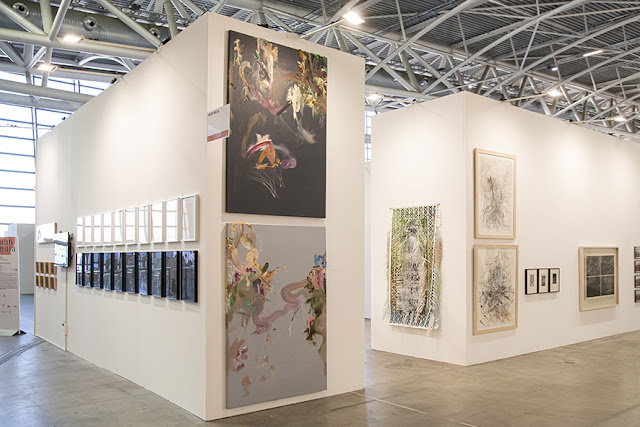
Mi era sfuggito ma ve lo segnalo ora. Il 5 novembre 2021, all'Accademia Albertina di Belle Arti di Torino, era stata inaugurata la mostra Hub India, allestita sino al 9 gennaio 2022 presso quattro sedi (Accademia, Museo D'Arte Orientale e Palazzo Madama; sino al 7 novembre 2021 nell'ambito di Artissima). Alle ore 17.00 era stato proiettato il documentario Sama: Symbols and gestures in contemporary art practices. Italy and India vol.1, diretto da Onir.

Onir presenta così la sua opera: 'It is a film installation that explores the exciting world of Contemporary Art in both the Indian sub-continent and in Italy, and develops an emotional bridge between the two countries, as an example of the historical-cultural and socio-economic extremes of the Euro-Asian continent'. Trailer.
Nel comunicato stampa diffuso da Fondazione Torino Musei, si legge: 
'Un documentario visionario e pionieristico che, attraverso una moltitudine di voci, esplora il mondo dell’arte contemporanea e dell’artigianato nel subcontinente indiano e in Italia. In questa prima “puntata”, un novero di artisti italiani contemporanei, tra cui Stefano Arienti, Alessandro Sciarroni, Sissi, Marzia Migliora tra gli altri, si alternano ad altrettanti artisti indiani, come Sheba Chhachhi, Tanya Goel, Rekha Rodwittiya e Ayesha Singh, offrendo al pubblico uno spaccato dell’estetica delle due regioni che mette in luce il rapporto tra tradizione e modernità, le pedagogie dell’Oriente e dell’Occidente, il genere, le archeologie e le politiche del tempo; i temi della migrazione, dell’esilio, del tempo e della memoria; la religiosità e il sincretismo e le specificità regionali nell’era della globalità. Sama: Symbols and gestures in contemporary art practices. Italy and India è un progetto di Myna Mukherjee e Davide Quadrio, diretto in India da Onir e scritto da Alessandra Galletta. (...) Il film è commissionato e prodotto da Arthub, Engendered, Ambasciata d'Italia a Nuova Delhi, Istituto Italiano di Cultura di Nuova Delhi (IIC) e Indian Council for Cultural Relations (ICCR)'.


RASSEGNA STAMPA (aggiornata al 4 febbraio 2022)

- Hub India, Classical Radical, Manuela De Leonardis, Il Manifesto, 11 dicembre 2021: 'Il documentario raccoglie oltre cinquanta interviste ad artisti e intellettuali del subcontinente indiano e italiani, delineando una mappatura parallela incentrata sul significato di eredità culturale, identità, emigrazione, religione, stile, materia, tradizione, artigianato, globalizzazione. «Un esercizio di ricerca innescato da semplici domande che abbiamo posto agli artisti: come l’arte contemporanea preserva il passato, lo trasforma, lo contiene, lo osteggia?» – spiega Quadrio – «Cosa può dire ancora l’arte contemporanea? Cosa possiamo fare?»'.
'The first volume of the Indo-Italian documentary film project on contemporary art, which has been in the making for over a year, is now complete. (...) Directed/scripted by National Award-winning filmmaker Onir, (...) the documentary film was screened in the Capital earlier this week. SAMA has been shot at over a dozen locations, and features over 50 artist studios and artisan centres spanning the length and breadth of the two countries nomadically: from the white salt deserts of the Rann to the waterways of the Sundarbans and Dal Lake in India, the mountains of Dolomiti to the historicity of Venice in Italy. Sama, which means ‘similar’ in Sanskrit and Latin languages, is commissioned and produced by ArtHub Asia, Engendered, presented by The Embassy of Italy in India, and The Italian Cultural Institute of New Delhi and supported by the Indian Council for Cultural Relations. (...) On the occasion, Vincenzo De Luca, the Ambassador of Italy to India, said: “The documentary underlines the parallels between Italy and Indian history. It’s an important piece of work with great potential.” The hour-long film explores the world of contemporary art in the Indian sub-continent as well as in Italy and lends context by investigating the signs and symbols surrounding them in history and culture. It offers a glimpse into the aesthetics of the two regions, while also excavating rare forms of craftsmanship. In that sense, it develops an emotional bridge between the two countries, which despite their differences and complexities, share a common ancestral connection. It also features art historians, experts, and critics. The film will now have its run at film festivals globally before releasing on an OTT platform in India. Other volumes of the film are in the pipeline, whereas the second volume is expected to release by early 2022'.


- Because India and Italy are good together, Sucheta Chakraborty, Mid-Day, 9 gennaio 2022:
'“ Italy and India have this long history of the very old as well as the very new,” says Myna Mukherjee. (...) Indian and South Asian art often occupies a static, exotified space in the international forum, feels Mukherjee, restricted into exclusive categories like classical or spiritual. “I always say that there is no one story to be said about India. If someone wants to engage with a civilisation that’s this old and has so many epicentres for culture, they have to be willing to embrace its complexity.” Working with [Davide] Quadrio, who has substantial experience with Asian cultures, having worked in China for 25 years, Mukherjee who has lived in the US for over two decades says there was trust, as “both of us had lived outside our respective countries and faced a kind of representational glitch from opposite ends of the spectrum.” (...) 
[Sama] is shot in over a dozen locations and features over 50 artist studios and artisan centres across Italy and India. (...) This research-based travel covered almost six months in India and two months in Italy in the middle of the pandemic. “Because it was during COVID times, we had access to a lot of artists who would otherwise be busy with exhibitions and travel,” says Mukherjee.
“It was an intimate, personal and profound project, for which we were able to have this moment of concentration,” agrees Quadrio. Both for an exhibition at Artissima and later the film, the project used a wide and diverse range of artistic voices from the very well-known to the comparatively younger, based both within and outside metropolitan cities, and working with global and local reference points. The focus was both on “what remains from history and also how the contemporary can help preserve but also carry on with traditions,” he says. “In that sense, we found that Italy and India were good together.”
Moreover, one of the most important things the film aims at, Mukherjee points out, “is the idea of demystifying the east while imbuing the west with more soul, so also reversing the colonial eye for art, while making sure that the reference point for pedagogies is not just the west.” With other volumes in the pipeline and a second edition slated for release early next year, the project is decidedly ambitious. “The amount of work that’s been put in and the volume of material that we have is unprecedented,” admits Quadrio. “It’s a project that is alive and can go on. Some of the conversations we had are already beautiful films in themselves.” (...)
For Onir, while this was an opportunity to rediscover this world of art and be on journey of finding artists, their work and connections, the project also provided an intellectual release and energy in the middle of the pandemic. His presence, he says, was also a way to explore how someone outside this world of art would experience it. “The real discovery happened at the editing table,” he shares.  “Shot in India first, the material was then sent to Italy; the Italian part of the filming done keeping in mind what had already been shot here. It’s such an effortless experience. You go from one world to another without even realising that you have done so”.'

Sama

- ‘SAMA’: Discovering India and Italy’s artistic parallels, Georgina Maddox, The Hindu, 4 febbraio 2022:
'“It isn’t a technical documentary, but a journey of experiencing and understanding the long history of art in the context of nature, culture, tradition,” explains Onir. (...) “For me, the beauty is in finding threads that are diverse while having a commonality because that is what humanity is all about.” It is like poetry, he adds, “where you use different languages to convey the same emotion. You see nature, tradition, patterns, forms and colours of, say, Kashmir resonate [with those] in Gujarat, while being different. This has changed the way I see form and design, and will affect the way I shoot films.”
Bridging conversations
Sama means ‘similar’ in Sanskrit and Latin - making it an apt title for the film and the intention behind it. Steered by cultural producers and curators Myna Mukherjee and Davide Quadrio, the film started as a deeper investigation into sensibilities that were first touched upon by the duo in their 2021 exhibition at Artissima. “I was already collaborating with Davide and it made sense to look at India and Italy because they are at the two ends of an artistic ‘trail’ of Asia and Europe,” says Mukherjee. “The artists we interviewed are in constant conversation with the very new and very old, and both countries have a long history of aesthetics that draw upon classical traditions and bring them in dialogue with contemporary styles.” The 70-minute film (...) was screened a little over a month ago for a select audience at the Italian Cultural Institute in New Delhi. As the audience tracked the slow movement of a shikara across Kashmir’s Dal Lake, the rising waters of Venice, the vigorous performance of an Italian dance troupe cut by a shot of an impassioned Bengali Baul singer, they also entered the quiet studios of artists in India and Italy, talking about their work and their process: from Italian glass sculptures to gorgeously painted Indian contemporary canvases, helping them connect the dots that is our cultural inheritance. “I have always been interested in the arts, but since I left Kolkata and [moved to] Mumbai to work in Bollywood, I lost touch with it,” shares Onir. “So, when Myna got in touch with me for this project, I immediately said yes. It was a way of exploring different art forms, meeting artists, and travelling.”
A collective whole
The film lends context to Indo-Italian contemporary art by investigating the semiotics (study of signs and symbols) surrounding them in history and culture. “SAMA allows the audience to glimpse the aesthetics of the two regions, imagined as a collective continuum of different narratives that echo artists’ voices across continents and heterogeneous contemporary art practices,” says Mukherjee. “They also excavate now-rare and valuable forms of craftsmanship in Italy and India.” The project involved 50 artists from both countries, and includes names such as photographer-filmmaker Sheba Chhachhi, folk singer Parvathy Baul, multimedia artist Ranbir Kaleka, designer Andrea Anastasio, artist-choreographer Alessandro Sciarroni, and artists Rekha Rodwittiya, Marzia Migliora, Stefano Arienti, and Tanya Goel. Onir will begin shooting volume two in July/August, with the second film concentrating on abstraction, religion and how it encounters arts and aesthetics. Meanwhile, SAMA will travel to global film festivals, before releasing on an OTT platform'.


Quanto alla mostra, vi riporto di seguito il comunicato stampa diffuso da Fondazione Torino Musei:
 
'Hub India è una prolifica esplorazione degli innumerevoli registri che caratterizzano l’arte contemporanea del subcontinente indiano, una regione di estrema importanza nell’Asia meridionale e che sta svolgendo un ruolo sempre più rilevante nel mondo globale. Con la presenza di oltre 65 artisti provenienti da dieci delle più importanti gallerie e musei indiani, il progetto si profila come il più ampio e significativo dialogo che l’arte contemporanea indiana abbia intrattenuto con il mondo occidentale in tempi recenti. Hub India, a cura di Myna Mukherjee e Davide Quadrio, nasce come progetto per Artissima Internazionale d’Arte Contemporanea di Torino per poi espandersi in una mostra tripartita realizzata in collaborazione con Fondazione Torino Musei e con l’Accademia Albertina di Belle Arti di Torino. 

Maximum Minimum @Artissima
Artissima 2021, in collaborazione con Emami Art, presenta Hub India - Maximum Minimum, un nuovo focus geografico che intende offrire una ricognizione sulle gallerie, le istituzioni e gli artisti attivi in un’area d’importanza capitale. In uno spazio dedicato verranno presentati i lavori di gallerie e istituzioni indiane che offriranno una veduta d’insieme di una sorprendente cultura visiva che rispecchia le innumerevoli polarità, contraddizioni e dualità che compongono l’India. Dall’antico spiritualismo del paese al suo moderno materialismo, dal passato coloniale alla crescente centralità nell’economia globale e alla rapida urbanizzazione, dal dogma alla tecnologia, dal marginale al mainstream, dai monumenti storici all’architettura contemporanea, dal normativo al radicale, Hub India - Maximum Minimum presenterà una miriade di storie e rappresentazioni del subcontinente.
In collaborazione NATURE MORTE New Delhi – GALLERY ESPACE New Delhi – EMAMI ART Kolkata – AKAR PRAKAR Kolkata, New Delhi – ART ALIVE New Delhi – LATITUDE 28 New Delhi – SHRINE EMPIRE New Delhi.

Classical Radical @Palazzo Madama, MAO e Accademia Albertina
Classical Radical è una mostra in tre sedi che si sviluppa nelle sedi di Palazzo Madama – Museo Civico d’Arte Antica, del MAO Museo d’Arte Orientale e dell’Accademia Albertina di Belle Arti di Torino. Classical Radical presenta opere indiane contemporanee e moderne che esplorano i lasciti del passato e l’antichità nel qui e ora sociologico. Come le opere d’arte contemporanee illuminano, complicano e si riappropriano dell’eredità? Come si pone l’arte contemporanea nel variegato panorama di religioni e storie, e quali residui di motivi, stili e idee sono sopravvissuti attraverso i millenni fino ai giorni nostri? Le opere selezionate rappresentano uno spaccato di generi, medium e processi che vanno dai disegni e dipinti alle miniature e sculture, terrecotte e metalli, dipinti su carta e su tela, stampe, incisioni e opere digitali e virtuali, in un tentativo di analizzare le eredità classiche e tradizionali attraverso una nuova lente. Una ricerca a tutto campo che offusca le polarità di religione, casta o razza, Asia ed Europa, figurazione e astrazione per costruire uno spettro ampio di voci che vanno dai maestri moderni e contemporanei alle avanguardie, passando per gli artisti indipendenti appena scoperti. Più stratificato e complesso di una panoramica, questo percorso espositivo offre una lente caleidoscopica che sposta la percezione e sfida la stasi in modi elaborati, evocativi e mai riduttivi. (...)
In partnership con Kiran Nadar Museum of Art (KNMA). In collaborazione LATITUDE 28 New Delhi – AKAR PRAKAR Kolkata, New Delhi – ART ALIVE New Delhi – EMAMI ART Kolkata – GALLERY ESPACE New Delhi – SHRINE EMPIRE New Delhi – NATURE MORTE New Delhi – SAKSHI ART Mumbai – JHAVERI CONTEMPORARY Mumbai – VADEHRA ART New Delhi – VOLTE Mumbai.

Palazzo Madama - Museo Civico d’Arte Antica | Disruptive Confluences (Confluenze perturbanti)
La mostra a Palazzo Madama esplora il sincretismo e l’ibridismo attraverso opere per la maggior parte tridimensionali che collegano e contrappongono la straordinaria collezione del museo con la storia del subcontinente indiano, suggerendo complicate storie di scambi commerciali e religiosi, dominazioni, residui imperialisti ed evoluzioni sincretiche. Dando vita a un immaginario ibrido, al tempo stesso velato e provocatorio, la mostra rivela narrazioni e rapporti da una prospettiva eurasiatica, ma capace di porsi in dialogo e creare riflessioni significative con i duemila anni di storia di un edificio, che concilia una porta romana con una corte medievale e una scalinata barocca. In questo evidenziandosi quale storico luogo di riflessione di contesti ed esperienze anche profondamente differenti, ma alla ricerca di matrici comuni per individuare nuovi assi di dialogo.
Artisti: Jayashree Chakravarty, Ranbir Kaleka, Manjunath Kamath, Tayeba Begum Lipi, Benitha Perciyal, G Ravinder Reddy, Himmat Shah, Gulam Mohammed Sheikh, Prasanta Sahu, Ayesha Singh, LN Tallur.

MAO - Museo d’Arte Orientale | Residues & Resonance (Residui & Risonanze)
La mostra al MAO comprende opere del rinascimento contemporaneo che iconizzano e al tempo stesso obliterano lo stesso classicismo a cui fanno riferimento. I lavori sono radicati in un’eredità che esamina stili tradizionali, scuole e generi e si spinge oltre per stabilire con essi una relazione, un dialogo. Mentre gli interessi sono mutati con i capricci del tempo, le forme di queste opere hanno conservato ossessivamente pattern simili, risonanti di residui del passato. (...) Uno dei punti forti della mostra è una sezione radicale di neo-miniaturisti che prendono a prestito le decorazioni evocative, stilizzate e gemmate dei tradizionali stili miniaturistici e dei dipinti vasli, sovvertendole per esplorare modi in cui espandere e smantellare il vocabolario di uno stile apparentemente insulare. Anche l’arte della Regione himalayana offrirà grandi suggestioni, grazie all’installazione di una serie di opere dell’artista Paula Sengupta dal titolo The plain of Aspiration, un progetto che parla della diaspora dei tibetani fuggiti dal loro paese in seguito alla partenza del Dalai Lama nel 1959 e del tentativo di conservare anche altrove, attraverso la memoria, il loro stile di vita e la loro cultura. I lavori di Sengupta attingono fortemente alla tradizione dell’artigianato tessile e al simbolismo religioso tibetani e, nelle gallerie del MAO, vengono accostate alle opere della sezione dedicata alle copertine lignee intagliate.
Artisti: Waseem Ahmad, Khadim Ali, Anindita Bhattacharya, Sakti Burman, Sudipta Das, Priyanka D’Souza, Baaraan Ijlal, Manjunath Kamath, Puneet Kaushik, Samanta Batra Mehta, Piyali Sadhukhan, Paula Sengupta, Yugal Kishore Sharma, Nilima Sheikh, The Singh Twins, Waswo X Waswo.

Accademia Albertina di Belle Arti | Multitudes & Assemblages (Multitudini & Assemblaggi)
La traiettoria delle arti visive in India è caratterizzata da molteplici transizioni; abbraccia e interiorizza i discorsi più ampi del colonialismo, del nazionalismo e del modernismo internazionale. Si relaziona con le tradizioni visive alla luce del postmodernismo e cerca di legittimare la propria posizione nell’arena contemporanea della produzione d’arte. Narrazioni multiple si snodano simultaneamente, come elementi tattili che si rifiutano di perdere la loro realtà, presenza, velocità, calore o umidità, come incongrue testimonianze di un punto focale in un allestimento che mira a presentare una molteplicità di possibilità. Evocando più la nostalgia che la storia, queste voci si levano a volte all’unisono e a volte in una reciproca tensione, ai lati opposti del tempo, come uno specchio, ribaltando lo sguardo su un familiare ma radicale pastiche di liberazione, ecologia, urbanizzazione, migrazione, femminismo, genere, soggettività e sensazione.
Artisti: Harshit Agrawal in collaboration with 64/1, Amina Ahmed, Chandra Bhattacharjee, Sakti Burman, Sheba Chhachhi, Jogen Chowdhury, Sudipta Das, Priyanka D’Souza, Tanya Goel, Laxma Goud, Ganesh Haloi, Manjunath Kamath, Puneet Kaushik, Bharti Kher, Martand Khosla, Neerja Kothari, Balbir Krishan, Rahul Kumar, Tayeba Begum Lipi, Shruti Mahajan + Ravindra G. Rao, Paresh Maity, Debasish Mukherjee, Dr.Uttam Pacharne, Manish Pushkale, Mona Rai, Vajay Raut, Rekha Rodwittiya, Debanjan Roy, Prasanta Sahu, Wardha Shabbir, Shailesh BR, Shambhavi, Gulam Mohammed Sheikh, Nilima Sheikh, LN Tallur, Gopa Trivedi. (...)

Hub India è un progetto di Arthub & Engendered presentato in partnership con Indian Council for Cultural Relations (ICCR), Kiran Nadar Museum of Art, Fondazione Torino Musei, Artissima, Emami Art, Palazzo Madama, MAO e Accademia Albertina. Con il sostegno di Ambasciata d'Italia a Nuova Delhi, Istituto Italiano di Cultura di Nuova Delhi (IIC), Consolato Generale dell’India a Milano, Città di Torino'. 


Hub India, Classical Radical, Manuela De Leonardis, Il Manifesto, 11 dicembre 2021:
'Ma quante storie non dette si celano dietro l’apparenza, per lo più tra le mura domestiche in una società patriarcale. Dare voce a quel mondo sommerso attraverso la trascrizione grafica delle onde sonore, utilizzando le vibrazioni del rosso e dell’azzurro - due colori dalla forte valenza simbolica - è una priorità per (Piyali) Sadhukhan che va ben oltre la ricerca estetica. A dare forza al gesto dell’artista femminista di Calcutta (...) c’è (...) l’utilizzo di migliaia di braccialetti di vetro rotti e riassemblati sulla tela. (...) 
Questa stimolante kermesse guarda al subcontinente senza divisione di confini, India, Pakistan, Bangladesh e regione himalayana, coinvolgendo artisti multidisciplinari (...) e numerose gallerie, soprattutto di New Delhi, Calcutta e Mumbai, tra cui la storica Nature Morte di Peter Nagy. (...)
Denso di spunti critici, il dialogo tra queste opere contemporanee e le antichità dei musei torinesi crea un ulteriore corto circuito visivo, come nella sala di Palazzo Madama con le sue pareti damascate e la profusione d’oro zecchino quando ci si imbatte nella toeletta di Tayeba Begum Lipi (1969), artista del Bangladesh e co-fondatrice di Britto Arts Trust con cui parteciperà a documenta15. Al di là della patina di apparente leziosità, Once Upon A Time svela un messaggio neanche troppo implicito, con le centinaia di lamette da barba d’acciaio inossidabile che rappresentano non solo un pattern ma la struttura stessa del lavoro. Una tensione che strizza l’occhio alla materia portando l’osservatore a riflettere su questioni di genere, così come nelle sculture di Manjunath Kamath (Mangalore 1972) dove la violenza è percepibile nell’atto stesso di ricucire vecchie cicatrici nella formulazione di una nuova versione degli idoli in cui gli strati di terracotta, ceramica, cemento e acciaio sono come pagine di storia. 
Analizza l’ambiente rurale l’artista Prasanta Sahu (1968), incentrando su questo tema il progetto Mapping craters (2020-21): un’installazione di 60 calchi negativi in gesso, numerati, che ricordano i reperti archeologici. In questo archivio (sono presenti anche disegni, acquarelli e fotografie) offerto come cibo su una tavola imbandita, c’è la documentazione di un intero anno che l’artista ha trascorso fianco a fianco con un contadino senza terra nel villaggio di Amdahara Birbhum (Bengala orientale). Ritroviamo l’impronta degli attrezzi che sembrano arcaici ma vengono usati tuttora, dei cibi, di frutta e verdura, dei cibi, presenze rese visibili attraverso l’assenza. Una metafora del lavoro, del tempo e della fatica di chi coltiva e produce gli alimenti destinati alla collettività, che non compare nello scenario più ampio delle politiche del cibo. Per Prasanta Sahu che vive a Santiniketan (lì dove il poeta Tagore creò, nel 1901, una scuola a contatto con la natura nell’eremo fondato quarant’anni prima da suo padre Devendranath, sostenitore della modernizzazione del Bengala) questo approccio analitico serve a sottolineare il grande contrasto - l’incomunicabilità totale - tra i due mondi, rurale e urbano, della società indiana. 
Contrasti che investono anche altri aspetti sociali come è evidente negli stendardi ricamati, The plain of Aspiration (rivisitazione delle tangka tibetane) in cui Paula Sengupta (1967) porta la vita di tutti i giorni, così come l’artista pakistano Waseem Ahmed (1976) che con un’ironia sottile affronta nelle sue miniature i conflitti religiosi e politici.
Richiamano alla memoria le antiche miniature anche le fotografie seppiate della serie A Visitor to the Court su cui Waswo X. Waswo (1953) è intervenuto dipingendo elementi decorativi colorati che le rendono pezzi unici. Nell’autoproclamarsi erede della raffinatissima cultura moghul, il fotografo-scrittore (autore di India Poems: The Photographs, 2006) crea delle mise-en-scène in cui gioca sullo stereotipo dell’orientalista, ribaltando così quel rapporto di potere costruito dall’immaginario europeo del mondo «altro» (l’Oriente)'.

15 giugno 2012

SHANGHAI INTERNATIONAL FILM FESTIVAL 2012


Dal 16 al 24 giugno 2012 si svolgerà la 15esima edizione dello Shanghai International Film Festival. Fra i titoli indiani in cartellone: Kshay (2012) di Karan Gour, Michael (2011) di Ribhu Dasgupta, Bollywood - The greatest love story ever told (2011, documentario) di Rakeysh Omprakash Mehra e Jeff Zimbalist, Ek Main Aur Ekk Tu, Dhobi Ghat. 

12 ottobre 2011

DOHA TRIBECA FILM FESTIVAL 2011


Il Doha Tribeca Film Festival si svolgerà dal 25 al 29 ottobre 2011. In cartellone Bollywood - The greatest love story ever told (2011, documentario) di Rakeysh Omprakash Mehra e Jeff Zimbalist.
Una curiosità: il Doha Film Institute, finanziatore del festival, coproduce il nuovo progetto di Mira Nair tratto dal romanzo Il fondamentalista riluttante di Mohsin Hamid. Le riprese sono iniziate la scorsa settimana.

09 ottobre 2011

CHICAGO INTERNATIONAL FILM FESTIVAL 2011


La 47esima edizione del Chicago International Film Festival si svolge dal 6 al 20 ottobre 2011. Vi segnalo alcuni dei titoli indiani in cartellone: Gandu (2010, bengali) di Q, Inshallah, Football (2010, kashmiri, urdu, inglese - documentario) di Ashvin Kumar, Mausam, Patang (2017, hindi, gujarati, inglese - coproduzione indo-americana) di Prashant Bhargava.

17 settembre 2011

SUPERMAN VOLA A MALLIWOOD


L'India e il cinema. È ormai quasi banale sottolineare il folle, incontrollato amore che lega gli indiani al cinema. Niente al mondo, tranne forse il cricket (e i matrimoni), appassiona gli indiani quanto il cinema. E niente al mondo, tranne forse il cricket, unisce hindu e musulmani quanto il cinema. Le star sono considerate alla stregua di semi-divinità, e le loro immagini - amorevolmente poste accanto alle statuette degli dei e alle fotografie dei guru personali e dei congiunti defunti - arricchiscono le nicchie casalinghe dedicate alla preghiera quotidiana. Per gli indiani è una questione d'onore assistere alla prima proiezione dei film interpretati dai loro attori preferiti. Le sale cinematografiche vengono prese d'assalto, i bagarini fanno affari d'oro, sorgono tafferugli, ogni tanto ci scappa un ferito, interviene la polizia (quando non addirittura l'esercito). In sala ovazioni da stadio accompagnano i titoli di testa. E se la star è un pezzo da novanta, scoppiano petardi al suo ingresso in scena. Gli spettatori commentano ad alta voce, cantano, ballano, applaudono ad ogni battuta riuscita. E tornano. Una, due, n-volte. Chi - privato o piccola azienda che sia - può permettersi qualche risparmio, lo investe in un film e s'improvvisa produttore. Se in occidente gli aspiranti scrittori con un romanzo nel cassetto non si contano, in India pullulano gli aspiranti sceneggiatori (le case di produzione, sommerse da copioni, possono testimoniarlo).
Data la premessa, ovvio che l'industria cinematografica indiana dovesse diventare la prima al mondo per numero di pellicole prodotte. Praticamente ogni Stato dell'Unione indiana vanta una cinematografia nella lingua locale quando non due (succede ad esempio nel Maharashtra, centro del cinema in lingua hindi e in lingua marathi; o nel Bengala, centro del cinema in lingua bengali e in lingua inglese).

Malegaon è una cittadina (per gli indiani) e una città (per noi) situata nel Maharashtra nord-occidentale, a 280 chilometri da Mumbai. 1.200.000 abitanti, in prevalenza musulmani. Centro tessile. Buon livello d'istruzione, ma permangono consistenti sacche di povertà. Occasionali scontri interreligiosi. A Malegaon la gente di giorno lavora e di sera va al cinema. Dov'è la novità? Tutto tipicamente indiano.
Se non che i cittadini di Malegaon non si limitano ad andarci, al cinema. La passione è di quelle divoranti, e il cinema se lo fanno. Non sono esattamente professionisti. Operai tessili, artigiani, commercianti. La sera chiudono bottega, lasciano la fabbrica, e si trasformano in registi, in attori. Malegaon ha creato una sua propria industria cinematografica parallela specializzata in - leggete bene - parodie a basso costo di pellicole bollywoodiane e hollywoodiane. Investimenti minimi, coinvolgimento di parenti, amici, colleghi. Immaginazione, goliardia, intraprendenza. Proiezioni locali per un pubblico in delirio, introiti soddisfacenti. Riuscite ad immaginare un luogo più favoloso nel quale vivere?


Supermen of Malegaon è un documentario, realizzato nel 2008 dalla regista Faiza Ahmed Khan (e presentato con successo in diversi festival internazionali), che prende spunto dal film Malegaon Ka Superman di Nasir Shaikh. Nella recensione redatta da Mayank Shekhar, si legge:
'Nasir Shaikh è uno dei più appassionati cineasti indiani. Forse non lo avete mai sentito nominare. O forse avete sentito citare qualcuna delle sue pellicole. Ne ha girate tre, e l'ultima è la più ambiziosa. Di sicuro i suoi titoli sono sulla bocca di tutti nella cittadina da cui Shaikh proviene. Come la maggior parte dei registi, Nasir ha imparato l'arte di fare cinema guardando film hollywoodiani. Anni fa Shaikh realizzava video per i matrimoni. Ora si è votato ai remake di blockbuster. 
Malegaon è nota per la sua sconfinata passione per il cinema. Un fiume divide la comunità hindu da quella musulmana. La separazione è netta ma prontamente superata quando si tratta di Bollywood. Supermen of Malegaon è un tenero, divertente documentario che vi conduce nel cuore di questa città, ed è l'opera più spassosa mai prodotta sulla genesi di un film. Nel documentario, Nasir dichiara di essersi ispirato in passato a Bollywood per Malegaon Ka Sholay e per Shaan, e che questa volta, con Malegaon Ka Superman, ha preferito concentrarsi su Hollywod. I computer lo hanno aiutato. Gli attori hanno girato le scene davanti ad un tendaggio verde, e successivamente sono stati aggiunti i fondali generati con tecnica digitale. Il progetto a Mumbai gli sarebbe costato 200.000 rupie, ma lui, con la stessa cifra, avrebbe potuto realizzare quattro pellicole. E così ha preferito fare tutto da solo, bilanciando mezzi e qualità.
La parodia di Nasir trapianta Superman a Malegaon: il nostro eroe danza nei campi, schizza in cielo per catturare un segnale migliore per il cellulare, eccetera. Ed eccolo questo Superman: Shafique Shaikh, un ragazzo dalla pelle scura, piccoletto e sparuto in modo allarmante, con il costume azzurro di ordinanza e con una M stampata sul petto. La star ha dovuto chiedere un permesso al lavoro per poter girare il film. E finalmente lo ha visto per la prima volta martedì 6 settembre a Malegaon, in compagnia di duemila appassionati di cinema, fra cui Anurag Kashyap e Zoya Akhtar. L'attore sembrava soddisfatto ed estatico. Ma dev'essere stato scomodo assistere alla proiezione adagiato in un letto, con un tubicino nel naso. La mattina dopo, il 7 settembre, Shafique Shaikh, 28 anni, è morto per un cancro alla gola diagnosticato un anno fa'.


Il 7 settembre 2011 Anurag Kashyap ha dedicato numerosi messaggi all'argomento nel suo profilo Twitter:
'Sono appena rientrato da Malegaon... Ci sono andato per assistere alla prima di Malegaon Ka Superman. L'attore protagonista ha 28 anni e sta morendo di cancro. Malegaon va davvero pazza per il cinema. Una popolazione di 1.200.000 abitanti, 10 schermi all'aperto e 15 sale cinematografiche. Gli abitanti festeggiano i compleanni di tutte le star. A Malegaon hanno realizzato il primo film nel 1965, ma la pellicola fu confiscata dalle autorità: i produttori ignoravano l'obbligo del vaglio della censura. Il primo titolo distribuito fu Malegaon Ka Sholay, costato 50.000 rupie: ne incassò 200.000. Malegaon possiede i suoi Dharmendra, Gabbar (*), Salman, Aamir e Spider-Man. Il cinema è l'unica forma di intrattenimento a Malegaon. Per la prima volta nella mia vita sono stato tentato di realizzare un tipico film masala. L'ironia di Maleagon Ka Superman è che il protagonista, nella pellicola, lotta contro l'abuso di tabacco Gutkha, e nella realtà l'attore sta morendo di cancro alla gola causato dalla stessa sostanza. Il più grande regista della città, Nasir Shaikh, gestisce un negozio di tessuti. E lo Spider-Man di Malegaon vende latte condensato'. 
In seguito, lo stesso giorno, Anurag è venuto a conoscenza della morte di Shafique: 'Il Superman di Malegaon è morto stamattina dopo che lo abbiamo lasciato... dopo la sua première. Ha assistito alla proiezione con l'ossigeno... gli abbiamo parlato'.
(*) L'eroe negativo di Sholay

Shafique Shaikh ha lasciato la moglie e due bambini. La sua filmografia vanta titoli bizzarri quali Khandesh To Goa, Khandesh Ki Baraat, Khandesh Ka Qarazdar Master, Malegaon Ki Lagaan, Khandesh Ka Doctor.

Video NDTV: Anupama Chopra intervista Faiza Ahmed Khan e Nasir Shaikh
Trailer del documentario Supermen of Malegaon
Trailer di Malegaon Ka Superman


Aggiornamento del 29 giugno 2012 - Di seguito vi propongo alcune recensioni:
- Srijana Mitra Das, The Times of India, 29 giugno 2012, ***1/2: 'SOM marks new zest enlivening Indian documentary. It reflects global interest in desi movies. And it celebrates, with empathy and wit, our own fascination with films and the magic they make. (...) It is in cinema that India's vibrant creativity - its tales and taboos, its violence and splendour, its lilting music and haunting poetry (...) - find free and faithful expression. Cinema in India makes us laugh at our weaknesses, applaud our strengths, watch with tenderness and heart our grim lives and eternal hope. That is what makes it precious. And it is this quality of understanding that makes SOM. Go watch'. 
- Preeti Arora, Rediff, 29 giugno 2012, ***1/2: 'If there is one problem with SOM, it is the length. At close to 60 minutes, the film proves to be too short. An hour might seem like reasonable running time for a documentary, but this one is so real, so intimate, and so engaging that you can't help but feel disappointed as the credits begin to roll. SOM is independent documentary filmmaking at its most heartfelt, most sincere, and most enjoyable. (...) This kind of film happens once in a decade or less often. And if you don't like it, then it can only mean that films were never really your thing in the first place'.

Aggiornamento del 31 marzo 2013: la quinta edizione del Nashik International Film Festival si è svolta dal 21 al 24 marzo 2013 a Nashik, in Maharashtra, città natale di Dadasaheb Phalke, regista del primo film indiano della storia (Raja Harishchandra, 1913). Standing ovation ai selezionatori: il cartellone includeva ben cinque pellicole realizzate a Malegaon (Malliwood), e quindi ora il NIFF è sacro quanto la Nutella. Rediff pubblica oggi un magnifico articolo, What you should know about the Malegaon film industry, che tutti gli appassionati di cinema dovrebbero imparare a memoria ed interiorizzare. Di seguito un estratto:

'The most interesting aspect of the festival (...) was films from the town of Malegaon. (...) The body of work emanating from here is large enough to justify it being called Malliwood. Five of these films were shown at the festival. The films were not all that good content-wise and not well made, but they were made with passion by people who are not trained filmmakers and actors and that made them interesting and unique. Malegaon’s Malliwood is nowhere as big as Bollywood but they make films with equal zest and determination. Malliwood came into existence about 16 years ago with the film Kateeley Khazana, which was followed by Zara Zindagi and then Khursheed Siddiqui’s Desh Ki Pukar.
Khursheed Siddiqui, writer, director and actor of Raat Ka Teesra Paher, which was shown at the NIFF, sells vegetables to make a living. “I have spent about Rs 4.5 lakh (1 lakh = 100.000) to make this film. I have even sold my house. The actors love acting so they work free of charge and sometimes they even put in some money,” Siddiqui says. He says no one will put money into his films so he has to do it himself. (...) He has made three other films, Desh Ki Pukar, Kaun Soone Fariyaad, and Jheel Ke Us Paar. Desh Ki Pukar was made on a budget of a mere Rs 4,400 and was shot on VHS camera. The cinematographer was a man who took pictures at local weddings. So work was on a per day basis - if there was a wedding to shoot then the film shooting would stop for that day! (...)

Since Malliwood films are not released all over India, they don’t make much money. The urge to make the movies is almost always personal passion. Malegaon Ke Sholay, for example, was made by the owner of a video library who showed the movie in his library too. The film was made on a budget of Rs 50,000 and made around Rs 2.50 lakh. Malliwood artistes work on daily wages. They earn a livelihood selling vegetables or working in the textile factory in Malegaon, or run eateries or tea stalls. In the credits their names reflect their professions, like Salim Electrician, Iqbal Chaiwala, or Zaheer Cyclewala. It's a tough life. They work half a day on their jobs because they need the money and from 3 pm onwards they start shooting for the film. When they are short of money, all of them chip in. The male actors are locals but Malegaon’s conservative society does not allow local women to act in films, so actresses are mostly imported from Jalgaon. An actress is paid Rs 1,500 per day plus travelling expenses and food allowance. There are no vanity vans for anyone considering the shoestring budget, so male actors are taken to one side and females to the other side to change costumes. The costumes themselves are very tacky. (...) Equipment too is basic to say the least. There are no trolleys so cameras are placed on bullock-carts, cycles or bikes. And because of the small budget, motorbikes often have to be used because a car is too expensive.

With such basic material to work with, the script and story line is often flawed. But as Khursheed Siddiqui points out, things are not that much more logical in the bigger world of Bollywood. (...) Being such a small industry has one advantage - it slips under the radar of the censor board. (...) “Earlier people made films in secret and show them in video parlours. If police come we run with our video or DVD players,” says Siddiqui. Malliwood films have songs too but most of the songs are direct lifts from Bollywood films. They are mostly popular songs from old Hindi films. The whole song is played to which the hero and heroine dance. No one has ever objected to them copying the songs.
Most film makers in Malegaon struggle against the odds to make their films. An exception is producer and lead actor of Malegaon Ka Ek Tha Tiger, Firoz Tarzan. Firoz owns a plastic factory, so time and money are no problem. He made the film Malegaon Ka Ek Tha Tiger on a budget of Rs 4.5 lakh and the film only recovered Rs 2.86 lakh. But he is not worried. “I can only fulfil my hobbies now. I have my whole life to earn, so even if I lose money today, it is okay. I will earn it later.” Malegaon Ka Ek Tha Tiger has nothing in common with Salman Khan’s Ek Tha Tiger, though both films released on the same day and were playing in Malegaon theatres around the same time.

The people of Malegaon are proud of their films, even if the content, script, actors, and technical skills are below par. Showing admirable faith in this plucky industry that survives despite the odds, Khursheed Siddiqui says that if they had a good budget “what is Filmfare and National Awards? One day we will even win Oscars for our films”.'

13 maggio 2011

BOLLYWOOD AL TG2


Ieri sera, nel corso del telegiornale delle 20.30 di Rai Due, in occasione della presentazione al Festival di Cannes del film Bollywood - The greatest love story ever told, è stato mandato in onda un servizio con meravigliose immagini del cinema popolare indiano. Sullo schermo i volti di Shah Rukh Khan, Kajol, Hrithik Roshan, Aishwarya Rai Bachchan e di molti altri, si sono susseguiti sulle note delle entusiasmanti colonne sonore bollywoodiane, una tra tutte la trascinante Dhan Te Nan.

Non sappiamo fino a quando sarà disponibile questo imperdibile video sul sito del TG2: TG2 12/05/2011 ore 20.30 servizio 18. Affrettatevi!

08 maggio 2011

FESTIVAL DI CANNES 2011

Rakeysh Omprakash Mehra e Jeff Zimbalist (e Shekhar Kapur) - Cannes, 2011

Il Festival di Cannes quest'anno si svolgerà dall'11 al 22 maggio. Purtroppo non è previsto nessun film indiano in concorso. Fuori concorso, nella selezione ufficiale, verrà presentato Bollywood - The greatest love story ever told, documentario diretto da Rakeysh Omprakash Mehra e da Jeff Zimbalist, e prodotto da Shekhar Kapur in collaborazione con UTV Motion Pictures. La pellicola è un tributo alla cinematografia popolare in lingua hindi, ed è arricchita da numerosi interventi di divi bollywoodiani, fra cui Aishwarya Rai, Amitabh Bachchan, Madhuri Dixit, Katrina Kaif. Trailer.

Aishwarya Rai - Cannes, 2011

A differenza del cartellone del festival, la mondanità sembra pullulare di divi indiani.
Aishwarya Rai incanterà la Croisette per il decimo anno consecutivo, calcando con la sua regale eleganza il tappeto rosso in occasione della cerimonia di inaugurazione. La superstar parteciperà a diversi eventi anche nel corso della giornata successiva. Ash, testimonial storica di uno degli sponsor della manifestazione, sarà affiancata da altri due volti L'Oréal: Sonam Kapoor il 15 maggio, e Freida Pinto il 19 maggio.
Saif Ali Khan presenzierà l'11 maggio in qualità di testimonial di Chivas. Karan Johar il 18 maggio parteciperà ad una festa organizzata da Chivas. Madhur Bhandarkar, Ashutosh Gowariker, Anurag Kashyap e Anusha Rizvi completeranno la rosa dei registi indiani presenti a Cannes.


Sonam Kapoor - Cannes, 2011

Sonam Kapoor - Cannes, 2011

Karan Johar - Cannes, 2011

Mallika Sherawat - Cannes, 2011

Saif Ali Khan - Cannes, 2011

Minissha Lamba - Cannes, 2011

Aishwarya Rai e Madhur Bhandarkar - Cannes, 2011

Madhur Bhandarkar - Cannes, 2011

Ashutosh Gowariker - Cannes, 2011

Anurag Kashyap e Anusha Rizvi - Cannes, 2011

Vedi anche:
- Bollywood al Tg2, 13 maggio 2011
- Aishwarya Rai in Heroine, 13 maggio 2011


Sonam Kapoor - Cannes, 2011