Visualizzazione post con etichetta V ADATTAMENTI CINEMATOGRAFICI. Mostra tutti i post

08 dicembre 2023

IL RAGAZZO GIUSTO - LA SERIE


[Archivio]

Nell'autunno del 2020 Netflix propose - anche in italiano - la serie BBC in sei episodi Il ragazzo giusto, tratta dall'omonimo romanzo di Vikram Seth, diretta da Mira Nair e con un cast ricchissimo: Tabu, Vijay Raaz, Vijay Varma, Shahana Goswami, Ram Kapoor, Ishaan Khatter, Vivaan Shah, Ranvir Shorey, Randeep Hooda, Kulbhushan Kharbanda, Vinay Pathak, Vivek Gomber e Manoj Pahwa. Trailer. Vi segnalo di seguito un paio di interviste concesse dalla regista in quel periodo. 


'How much is A Suitable Boy itself a homecoming for you? How lived in does it feel to you?
Very lived in. I read the novel in 1993 soon after it came out. I read it twice. I didn’t want to leave my best friend at the end of it - it was that kind of a feeling. Vikram [Seth] had so extraordinarily captured that Nehruvian India [at] the moment we were trying to create [a] new country after freedom from the British. And yet we were so anglicised and spoke and dreamt in English. He coupled all that with a very astute eye on the politics of that time. So prescient in some ways. But, besides that, the wit and the sensuality, the great depths and layers of friendship between the families - the Khans, the Mehras, the Chatterjees, the Kapoors. It’s a world I do know, but I [have] also longed for. My parents married in 1951, the year of A Suitable Boy’s story. They travelled from Punjab to Orissa where he [Nair’s father] was an administrative officer [IAS officer], setting up the new capital of Bhubaneswar. That’s where I grew up, in those bungalows, with hardly any roads and a new airport, when I was eight years old. The idealism of that time has always attracted me.

The society that you are talking of - what hits home is a longing and a sense of nostalgia: what we were and where we have come.  Do you also see parallels with the situation now? 
I only came back to A Suitable Boy. I haven’t been holding a torch for it for the last 25 years, hoping to make it. Not at all. I moved on to my own work. Only when I heard that it was being made perhaps [that] I said, anyone but a gora [White] to make it, man! I need to make it [laughs]. Even the story of Babri Masjid is in it. The stories in it, the prescience of Vikram’s vision - the seeds were planted then. But there was the great beauty of the syncretic culture where we come from. The same cloth [from which they are cut], Hindu and Muslim, whether it be language or poetry or music. (...) That was actually the biggest magnet for me. (...) This is (...) the reason why I just had to make it. And make it with such great artistes who [are] deeply imbued [with] what I am talking about in terms of that syncretic culture. Tabu was the first one cast in my head and fortunately she loved it. It’s all about finding that spirit in who you choose and who you bring to the party, and I swear the greatest satisfaction of making A Suitable Boy was this great cornucopia of actors. And pretty much everyone said yes. (...) We cast for over 18 months, [from] all over India - 110 characters and they are all great. And, of course, I have old friends. Many of them started with me so they can’t say no to me. Even Vijay Raaz, who is now a big star, did two scenes for me, memorable scenes. Or Manoj Pahwa. These are  extraordinary actors who just came and lit up the screen. That was the real joy; to see Shahana Goswami completely sparkle without any inhibition and with great skill.

You have adapted many other literary works for the screen. What is it that made this fun or [conversely] a nightmare?  
I came to it when it had already been adapted by Andrew Davies, who is a master distiller of great big tomes like War and Peace, Les Misérables. He has craftsmanship on his side in such a fantastic way and also a great sense of humour and also the television structure of the cliffhanger, and there are so many in our book. It was there but it had to be culled out. At that time, it was eight hours [duration] and, frankly, the financing for an eight-hour, all-Asian drama in the Western world is always going to be challenging. I used to joke and say, it’s The Crown in brown, as magnificent, with as much sweep as [that] series, but the budget was some 10% of it. I don’t have the statistics, but it is always the case. You don’t have what you need when you are not a gora [White]. I am used to it and I always show it. I always give it to them: “Don’t see my struggle baby. But this is as good as anything out there”. (...) Having said that, we had to distil it further into six episodes of six hours. At that point I was deeply involved and basically added two things. One was to make the political interweave with the personal, [to say]  that it would not just be a marriage story - who will she marry,  who is the boy? It’s not only that. But it is much more interwoven with the politics of then, which is [also] the politics of now. That balance is what I tried to bring back in. Also, in the process, bringing back certain characters that had not been given the time of day. Like Mrs. Mahesh Kapoor, (...) who is the unspoken cornerstone, the foundation of this political family and is really the glue that holds this family together. Restoring some weight to some characters. And sadly, as is often the case, killing some characters, [by] just not having them. Secondly, I insisted on the language. It’s a beautiful novel in English that people spoke at that time. [But] if Saeeda bai would sing in Urdu, then why wouldn’t she talk in Urdu? Or the villagers. That was the discussion at every level. Vikram, thankfully, supported me, thanked me for “translating it back”, as he put it. For BBC it was quite radical to have their first big drama show in Urdu, Awadhi and Hindustani, mixed with English. But I could do this much and not more. I tried to juice it and do it as skilfully as I could and as naturally to the character as possible. There were other things. Music is my oxygen and it’s a huge part of everything that weaves these worlds together.

Even the incidental music ties in with the larger narrative very well. 
This is a very different style for the BBC: “Is it a Bollywood thing? What are these musical interludes? Can’t we just have some kind of a singing over there?” I would say, this is not Bollywood style; this is what I do, and this is why I am doing this. Basically, it was a vocabulary that was not familiar to them. But I must say they came around and they love it for what it is. And then I worked directly and closely with Vikram to get the balance and the nuance and the love and the complications, but most of all the friendship - the depth of it - correct between the Hindu and the Muslim characters. I did not want to fall into any traps of today. I wanted to make sure that we really got (...) what I wanted to say, which is syncretism. The structure of it was given to me and I carefully worked within.

The society as seen in A Suitable Boy is syncretic, but also at a point in time when the threads are beginning to unravel. Is there a sense of regret on how far we have come as a culture, country, society?  
Regret is like giving in to defeat. I am confronted by it - we all are - in such a direct, transparent fashion, whether it be renaming things, or pretending things just didn’t exist and, of course, the more targeted attacks we see every day. We cannot be defeated [by] this. We have to persevere, and we have to remember who we actually are. It’s within ourselves'.


- Going down Mira Road, Mayank Shekhar, Mid-Day, 21 novembre 2020 (il testo include il video dell'intervista integrale):

'Mira Nair's journey as an Odisha-born/bred filmmaker in America will seem greater to you, if you consider the first thing she did, landing up as an under-grad student at Harvard in the mid '70s. She went over to her course-mate from Bombay, Sooni Taraporevala, desperately to check on who the other Indians around were. There were only two - studying film. One of them, a gentleman named Anand Mahindra; the industrialist, whose surname carries the massive fleet of automobiles on Indian roads. "Anand was a really talented filmmaker. He's still an artist in his soul. I'll never forget the wonderful thesis-film he made, following a holy man up a mountain," Mira remembers. Screenwriter Sooni and Mira of course became great friends and colleagues thereafter - collaborating on notable productions like Salaam Bombay! (1988), Mississippi Masala (1991), and The Namesake (2006). Anand was the "big brother, who'd encourage everyone to move back to India [once done with studies]." As he did, taking over his family empire.

Speaking of famous associations from unrelated fields, a picture that once got widely circulated online was of Mira as Cleopatra and Shashi Tharoor as Mark Antony, in an inter-college Shakespearean production from the '70s. Mira was a student at Delhi University's Miranda House then; Shashi Tharoor, the undisputed star of St. Stephen's College. She's been asked about this picture on occasion during interviews. And I gauge from her responses before - it doesn't seem like she liked the college-kid Shashi Tharoor much! Did he throw big words at her? "Oh no, I just didn't like kissing him [in the play]. Back then, you know how it was - even if you got slightly physically close to someone, people would start cat-calling. It was ridiculous." As for the Tharoorosaurus bit, "Well, we used to tease Shashi [who hadn't lived or been abroad yet] about where he had got that accent from. (...) But he's always been a sport. He used to take it well!" (...)

Mira remains still one of the most critically acclaimed filmmakers - for a majority of her filmography. (...) Mira is formally trained in cinema verite - art/technique, mostly associated with documentary filmmaking, intended to convey realism. (...) The main muse for Mira's realistic lens was in fact the city of Bombay itself. (...) "Now they can call me a New York-based filmmaker in Bombay, but the fact is that not many saw Salaam Bombay, right under their noses. It was a life around us. When you live in it all the time, you can't see it well - having numbed yourself to it." This seamless transition from documentary filmmaking to fiction - something that writers of non-fiction find harder to be equally adept at - Mira admits, has helped define her work. And you can still sense strong stamps of it, even in later movies. (...) "Cinema of truth [cinema verite] sounds a little pretentious. It is very real, in the sense that you don't script everything. You just have to be humble enough to enter the world. Just be there. Of course your presence is shaping [the moment] to some extent. But it is also about being an observer to the situation, and eliciting things from [actors] - as they feel them, rather than you telling them what to say."

What this has also led to since her celebrated debut feature is - film after film, an established practice of casting 'real' people, as it were, or non-professional actors, alongside trained actors/stars, in the same frame. And watching this unique alchemy come to life on screen. For instance, Mira discovered Sarita Choudhury, who played Denzel Washington's love interest in Mississippi Masala, biking on a street in Cambridge once. She found Tillotama Shome (Alice in Monsoon Wedding) in the corridors of Delhi's Lady Shri Ram College. Even better, she picked up Kamini Khanna for a typically Delhi-Punjabi Shashi Aunty in the same film - spotting her on the walking track of a South Delhi park. Does she think everyone is essentially an actor then? "Not at all! It's about several things, but mostly instinct. I can tell immediately if the camera will love you or not. Or sometimes it doesn't matter if the camera won't love you, but can I use that in a way? Like [Pedro] Almodovar and his ladies are fantastic. And they so destroy the notion of what's beautiful before a camera. But the roles need that. So it depends on the role, of course."

While casting for Monsoon Wedding, she recalls, a newbie Vijay Raaz's face had caught her eye: "He'd walked in from the train station to (...) Churchgate. I don't know how I even remembered his name. Paresh Rawal, whom I admired a lot, had approached me for (...) Dube's part. We had a workshop in Delhi, which Paresh couldn't join. So then I had to take Tillotama [Alice] back to Bombay to rehearse with Paresh [Dube]. Naseer bhai [Naseeruddin Shah] had given us space above his flat for rehearsal. The door opened, and my eyes fell out. Paresh had gained 30 to 40 pounds. He looked like Alice's father, and this was supposed to be a love-story with him! (...) He said, 'I'll just lose [weight].' But we were shooting in literally four days! I just thought of the bald man with long ears and the widest mouth in the world, Vijay Raaz, and called him. I had not auditioned him, but I loved his look." The role expanded as Raaz came on board, killing it along the way. (This conversation between Mid-Day and Nair took place a day before Raaz was summarily arrested and subsequently bailed over a molestation charge on a movie set.) He's had a solid career since. 

Several Indian actors in the Bombay film industry similarly owe their first frame on the big screen to Mira. Right from Nana Patekar and Irrfan in Salaam Bombay!. Late Irrfan, she always felt, was cut from a different cloth from Bombay's leading men in the '80s and '90s. He delivered, arguably, his finest work with Mira in The Namesake (2006). Or Randeep Hooda and Ram Kapoor, for that matter. They were debutants in Monsoon Wedding; bona fide stars now. Why, even Kamini Khanna! She's played multiple versions of Shashi Aunty in every other Bollywood movie. This contribution to the Bombay film industry in particular, I suspect, isn't acknowledged enough about the New York and Kampala-based filmmaker.

Even more than a keen head-hunter, Mira is an all-encompassing aesthete, wholly invested in cinematography, literature, production design, colours, costumes, the craft of moulding actors/characters... (...) Given the résumé and musical references seeped into her work, besides an army of previous recruits from among top Bombay actors, I'm almost amazed that in all these years, Bollywood folk haven't ever attempted to co-opt Mira with a grand scheme/project? "I am not looking for that either. But I have really lovely friendships. Yash Johar and I were very close. (...) I really respect Aditya Chopra's mind. I had taken him on an idea - not for me to do, but for us to work together on. But, no, I don't think so. I think they think correctly - that I just make my own movies!" (...)

A film that would've brought (...) [Mira] back to Bombay - her early muse, and that too with Johnny Depp - was the adaptation of Gregory David Roberts' Shantaram. Regrets - that the film fell through? "I only regretted that I gave one-and-a-half years of my life to it. And we really had a good thing going. Not, otherwise. They were starting it again, and I was not interested!" Mira also famously let go of directing the fourth Harry Potter film, for the sake of The Namesake. She declined The Devil Wears Prada, going by the same measure of what interests her - and what she can do, better than similar directors on hire. (...) Exuding power, all right, in an industry that when she entered it - doing theatre in New York during day, waiting tables at night - there were barely any coloured people around, let alone desis, or women. (...) Mira first got on the road, splitting rent for an editing suite at a basement collective for offbeat artistes in New York. This is after she had shot Salaam Bombay!. Which she knew the West had no similar reference point for. Spike Lee, same age, also editing his film, would pay the other half of the rent!'. 

30 luglio 2022

KOLKATA EXTREME | DOWN AND DIRTY IN KOLKATA

Cosmic Sex

[Archivio]

Si parla troppo poco di cinema indipendente indiano. Vi ripropongo un testo del 2012 dedicato ai cineasti più trasgressivi della scena bengali. Kolkata Extreme | Down and dirty in Kolkata, Nandini Ramnath, Mint, 12 ottobre 2012:

'There wasn’t an empty seat at the premiere of Amitabh Chakraborty’s Bengali movie Cosmic Sex at the Osian’s Cinefan film festival in Delhi in August. Delegates crammed into the 1,865-seater Auditorium 1 at the Siri Fort complex, seduced by the promise of uncensored sexual intercourse in an Indian film (they weren’t disappointed). The presence of lead actor Rii, easily one of the most uninhibited women in Indian cinema, further electrified the crowd. The diminutive beauty, who hands out lessons in desire and sexual fulfilment to a truth-seeking young man, gamely took on questions after the screening about whether she was “as erotic as her character" and what she thought of Sigmund Freud. A few questions were about the movie’s exploration of the idea of achieving spiritual equilibrium through sex. But people mostly wanted to take a closer look at the actor who is the face of an exciting and promising strain of independent film-making. 
It’s experimental, transgressive, idiosyncratic and phantasmagorical and it is emerging out of the most relaxed among the metropolises - Kolkata. The West Bengal capital has a long-established tradition of radical and independent-spirited film-makers, from Ritwik Ghatak and Satyajit Ray to Subrata Sen and Suman Mukhopadhyay. So it is only natural that the city is producing several fascinating experiments in documentaries and features. (...)
Cosmic Sex includes ideas previously explored by 53-year-old Chakraborty in his 2006 documentary Bishar Blues, about Bengal’s Muslim fakir tradition. A young man named Kripa encounters a prostitute, a eunuch and, most crucially, a female ascetic named Sadhana on his journey of sexual self-discovery. Kripa’s experiences unfold as a reverie amid a mythic landscape that is identifiably the Bengal of wandering ascetics and miracle workers. “Cults like the fakirs and the Bauls feel that sexual energy is the most powerful force that flows outwards all the time, because of which there are manifestations of happiness, unhappiness and death," Chakraborty says at his home in Kolkata. “The only way to get out of this is to reverse the sexual energy. You have to go back to the unchanging energy source." Cosmic Sex is only Chakraborty’s second movie in 23 years after his experimental debut Kaal Abhirati. (...)

Bishar Blues

Q’s musical Tasher Desh (The Land of Cards). (...) Based on Rabindranath Tagore’s operatic critique of social rigidity, which was inspired by Lewis Carroll and written in 1933, Q’s fantasy adventure, about a prince who strains at his royal leash, will be premiered at the International Rome Film Festival in November and will be released in India in 2013. Q says Tasher Desh has been in the making ever since he decided to become a film-maker. “Tasher Desh is an immensely popular production that is usually treated as a kids’ play," he says. “In the neighbourhood in which I grew up, the guy who could sing would get the central character, the prince. I was the prince for the neighbourhood, but then I got demoted when the play was performed at school. I was horribly disappointed and vowed that this would be avenged."
A trailer reveals that like in Gandu, Q is jettisoning conventional storytelling modes in favour of an audio-visual head rush through a theatrical acting style, hand-held, highly mobile camerawork and rapid-fire editing. The film has been shot in West Bengal and Sri Lanka. (...) “I didn’t care for the story - it is an experience, with its songs and its exotica," Q says. “I believe in the present moment, not in stories. Tasher Desh is structured like a fairy tale, it’s metaphysical and metaphorical." Tasher Desh has been produced by Q’s outfit Overdose, Kolkata-based recording studio Dream Digital, Belgian company Entre Chien Et Loup, the National Film Development Corporation and Anurag Kashyap Films. The movie brings Q a few steps out of the Kolkata underground and into the mainstream - sort of. “I don’t think Tasher Desh will bring us into a mainstream that means palatable and marketable," Q says. “I am trying to counter the fact that we don’t have channels of distribution for alternate content."
Gandu, made in 2010, was never meant to be released. The experiment in extreme cinema that more people have heard of than seen was a break-out for Q and a breakaway from the realism and restraint usually found in commercial film-making. The mostly black and white movie (...) follows an angst-ridden young man’s journey towards self-fulfilment through highly stylized camerawork, choppy editing and interludes of profane Bengali rap. The protagonist’s claustrophobia, stemming from his sterile surroundings and his sense of emasculation, literally explodes in a no-holds-barred colour sequence of sexual intercourse, which has earned the film eternal notoriety.

Tasher Desh

Q is an agent provocateur with a plan. He has been assiduously working towards creating an alternative system of finance and distribution with Overdose (its business cards promise “explosive Indian content"). He collaborates with a tightly knit group of like-minded souls, some of whom he has grown up with, in the production of “cheap and dirty pictures about sexual, social or political extreme content that otherwise can’t be made", on budgets of ₹ 25-30 lakh [1 lakh = 100.000], that will subsidize each other.
“Since a production house can’t operate on one production, our strategy is to go for two kinds of cinema," he says. “We can make films like Tasher Desh, which is nothing like Gandu but carries the same spirit. If that works out, we have a killer set-up - we can make cheap, extreme films that are not bound by distribution in India. (...) We can recoup the money internationally as well as keep up the fight of pushing the boundaries of viewership." The label Bangla Black has been set up expressly to launch regular attacks on the system. “These are all gambles, high-velocity risks, but they are not uncalculated," Q says. (...)
His partner in cinema and in life [is] Rii, officially Rituparna Sen. (...) When she met Q in 2003, she had spent two years modelling and acting in television. She thought his debut feature Tepantorer Mathe would give her a foothold in the movies. “I thought the film would make me a star, but I was heartbroken when I found it was not going to come out," she says. The two started seeing each other, and Rii got introduced to the film-makers who would turn out to be the leading lights of Kolkata Candid: Shyamal Karmakar, who edited Tepantorer Mathe, and Amitabh Chakraborty, who was making Bishar Blues. “I love films that are challenging and borderline and dangerous," Rii says. “I will do anything for these three film-makers - they are crazy and difficult, but I love their work. Lust is not their prime focus."


Karmakar, an editor who trained at the Film and Television Institute of India in Pune, is one of Q’s major inspirations. Karmakar’s documentary I Am the Very Beautiful, made in 2006, is a genre-defying exploration of the film-maker’s desire for a bar singer named Ranu Gayen. Karmakar makes no bones about his attraction to Gayen, who is attached to his friend. He asks her to sleep with him and films her semi-naked. Gayen is no shrinking violet either, and as director and subject come dangerously close, the documentary explores the nature of voyeurism and the difficulty of maintaining a pretence of objectivity or distance. Karmakar is in thrall of female sexuality, and unlike many other film-makers, he doesn’t pretend otherwise.
“My idea of sexuality was ruptured in Pune," says 48-year-old Karmakar at his office at the Satyajit Ray Film & Television Institute in Kolkata, where he heads the editing department. “I fell in love with women with different moralities and attitudes to morality." Some film-makers explore dreams, some nightmares, while others confront their sexual fantasies, he says. “I want to tell the truth," Karmakar says. “I am very scared to tell my stories, but telling them is important. There are very few places to screen your films in Kolkata," he observes. “But it helps to be under the radar. The less I am seen by people, the better for me."

Q

Perhaps there is no better place than Kolkata to unleash the private into the public. “If you look at what’s happening in Bengali cinema, it’s been brewing for over a decade and a half," says Moinak Biswas, professor at Jadavpur University’s film studies department. “Things have come to a head - there is an all-time record of production in Bengali cinema. Soon, most of these films will find it difficult to get a release." A film like Gandu came as “a slap on the face" of a wave of domestic dramas that were “stifling and didn’t show anything happening beyond well-furnished middle-class homes", Biswas says. “What was unconvincing and disturbing about Gandu was a very male and adolescent expression. I think Amitabh is much more contemplative - whatever one’s disagreements with his film, he has pushed it beyond explicitness and sensationalism into a zone of contemplation."
Kolkata’s advantage is that it isn’t yet facing the pressures of being a centre of global capital, like Mumbai or Delhi. It is in that sweet place between its radical past and possibility-filled present. “This city makes space for us to be here," Q says. “The film-makers here are not contaminated." Kolkata lets an actor like Rii coexist with the poppets and retiring beauties of the mainstream film industry - even though, she says, people still don’t know how to slot her. “My life is so abnormal," she points out. “I live with my boyfriend who is named Q and directs me in films for which he asks me to suck another man’s cock. They are completely head-fucked".'


01 luglio 2022

WELCOME TO BOLLYWOOD: A DEVDAS FOR EVERY GENERATION


Il numero di maggio 2022 della rivista digitale australiana Senses of Cinema include uno speciale dedicato al cinema popolare hindi, Welcome to Bollywood, con la seguente motivazione: 'This dossier is an attempt to complicate and diversify the monolithic concept of ‘Bollywood’, to break it out of its critical ghetto in Western film criticism and challenge the Eurocentrism of film studies that fails to recognise Bollywood as an artistic phenomenon'. Gli articoli sono decisamente interessanti. In testi diversi, riporto degli estratti, ma vi consiglio di leggere le versioni integrali. 


'Devdas is an epic semi-autobiographical Bengali novella written by Sarat Chandra Chattopadhyay. The novel was written in 1901, though was not published until 1917 due to Chattopadhyay’s embarrassment over his story. He published several novels such as (...) Parineeta, (...) but Devdas remains his most popular novel. (...) Throughout the history of Indian cinema, directors have always gravitated to the story, starting with the 1928 silent version by Naresh Mitra. (...) P.C. Barua adapted three variants of the novel between 1935 and 1937 in Bengali, Hindi and Assemese and it has been adapted in many different languages. This article will focus on three Hindi adaptations of Devdas, analysing the directorial styles of Bimal Roy, Sanjay Leela Bhansali, and Anurag Kashyap. Each section will deconstruct each director’s interpretation of Devdas and how each film adapts to modernity and places itself within Bollywood cinema. 


Devdas (1955) Bimal Roy
Bimal Roy was an Indian film director and producer. (...) Roy continued his career adapting the works of Sarat Chandra Chattopadhyay, starting with Parineeta in 1953, Biraj Bahu in 1954, and Devdas in 1955. Bimal Roy must have had a particular bond with the story of Devdas as he had previously worked as a cameraman on P.C. Barua’s adaptation of Devdas (1935). Roy’s adaptation of the novel was not an instant box office hit, but the film was well received by critics. The screenplay was written by Nabendu Ghosh and dialogue was written by Rajinder Singh Bedi, taking the source material as gospel, and only adding a few changes to the original dialogue. The film stars the critically acclaimed Bollywood star, Dilip Kumar (Devdas), Suchitra Sen (Parvati/Paro) in her first Hindi film, and South Indian actress, Vyjayanthimala (Chandramukhi). (...) Devdas (1955) is considered one of the best-directed Bollywood films of the 20th century.
Adaptation
Set in rural Bengal in the early 1900s and filmed in black and white. (...) Roy is the only director to date who has chosen to explore Devdas’ and Paro’s childhood friendship in great length. (...) In the original text, Paro and Chandramukhi never meet, though, most film adaptations subtly play with the idea that they have to cross paths. Roy’s version suggests this prospect through a sensitive and powerful approach. Despite their loyalty towards Devdas, both are women who have been polarised by social class and caste and Roy draws attention to their inner strengths as women in common. Bimal Roy retains the essence of the novel’s characters while also adapting the narrative to suit post-independence domestic impediments. (...) More importantly, Bimal Roy gives empathy to a character that is fundamentally unlikeable. Devdas is a deeply flawed, tragic character - he is an antihero, a coward. The subtle performance given by Dilip Kumar emphasises this and humanises Devdas, delivering a realistic portrayal of a man drowning his grief in alcoholism. (...) The lifelong attachment Devdas and Paro have with each other is richly grounded in Bimal Roy’s adaptation of the novel. Roy’s version is the closest adaptation to the source material, using simple camera techniques to convey the complexities of love, passion, and grief. The cinematography is simple, using shadows and minimal lighting to highlight the doomed passion between the three characters. Through simple camera techniques, Roy manages to retain the essence of the story in the simplest of forms and upholds the Bengali culture and societal pressures enforced in the novel.


Devdas (2002) Sanjay Leela Bhansali (...)
Devdas (...) became the highest grossing Bollywood film of 2002. In an interview with Times of India, Bhansali stated that he wanted his version to be “bigger, better and more spectacular than any classical movie made in Indian cinema.” The film was the most expensive film made in India at the time. The screenplay was written by the director himself and Prakash Ranjit Kapadia. The cast consists of Bollywood superstars, Shah Rukh Khan (Devdas), Aishwarya Rai Bachchan (Parvati/Paro) and Madhuri Dixit (Chandramukhi). Sanjay Leela Bhansali’s Hindi reworking of Chattopadhyay’s novel is epic and grandiose, incorporating lavish set designs, costumes, and breath-taking dance sequences. 
Adaptation (...)
Bhansali indulges the viewer with dreamy, sensual scenes between Paro and Devdas. The lighting accentuates both of their figures, glowing with passion and love. (...) Shah Rukh Khan’s portrayal of Devdas treads a thin line of being an angry man and a coward, though, he is nonchalant and retains an element of defiance. (...) In post-modern fashion, Bhansali communicates his characters’ feelings through intricate choreography and song. (...) Despite Chandramukhi’s fondness for Devdas, she is independent, mature, and sophisticated. She does not give-up her profession for him, rather she takes pride in it. (...) Bhansali gives more agency to his female characters, bringing them together and bounding them in the space of female desire and devotion. (...) Sanjay Leela Bhansali’s adaptation of Devdas is a glamourous, mythical affair. He aims for the sublime, attempting to capture emotions through song and dance. The film is a feast for the eyes and Bhansali uses the crux of the story to master his visual style and craft, but the compassion and the simplicity of the original text is often lost in the melodrama and several subplots. 


Dev. D (2009) Anurag Kashyap (...)
Dev. D is a modern adaptation of Devdas that completely steers away from the previous adaptations that were set in the 1900s and places the characters in contemporary India. The adaptation explores the difficulty of modern youth, westernisation, metropolitan lifestyles and urban consumption. The film stars Abhay Deol (Dev/Devdas) and introduces audiences to Mahie Gill (Parminder/Paro) and Kalki Koechlin (Leni/Chanda/Chrandramukhi). (...)
Adaptation
Anurag Kashyap’s version of the Devdas story is divided into four parts: ‘Childhood’, ‘Paro’, ‘Chanda’ and ‘Dev’. The chapters allow for broader interpretations of the three main characters, fleshing them out and giving them all a developed narrative arc. (...) Paro (...) [is] an independent, modern woman in India. (...) Paro is shown to be something of a femme fatale in the eyes of Dev. He returns to Punjab with a narcissistic attitude and a sense of entitlement over Paro. When he overhears someone talking about Paro’s sexual activity, his masculine ego is bruised and rejects Paro’s sexual advances towards him, calling her a ‘slut’. Kashyap overtly points out the double standards of being sexually liberated as a woman versus a man. Consequently, Dev’s loss of Paro is due to his own insecurities as opposed to societal class structures that bounded the character of Devdas before. Kashyap offers a refreshing interpretation of Chandramukhi’s character, providing a backstory of how she becomes Chanda. (...) The final chapter focuses on the angst and existentialism of Devdas from the original text, though Kashyap demonstrates this in a dark and experimental manner. (...) Kashyap uses rotating shots and a blue hue to highlight Dev’s intoxicated state. Dev tries to spy on Paro from afar, further emphasising his ego and sense of masculine superiority. He wants to see Paro unhappy in her marriage to satisfy his ego. Paro meets Dev at the hostel and is disgusted by the way he is living. She states that she made the right decision getting married as Dev does not truly love her. Dev liked the idealised version of Paro rather than her true self. (...) Kashyap gives Dev a redemptive ending where he accepts his mistakes and moves on with his life. (...) The ending is more realist and suits the younger audience Kashyap is catering to. Overall, Dev. D is an ambitious reworking of the Devdas tale, placing the world and the characters in a contemporary setting. Kashyap reflects on modern-day anxieties and equality between men and women in India. He develops the characters of Paro and Chanda, allowing them agency. His adaptation is (...) using classic literature to re-evaluate and mock the archetypal characters in the novel and previous adaptations as well as catering to a younger audience.


To conclude, Devdas is a tale well-known within Indian cinema that has been remade and recreated into different styles and aesthetics. Bimal Roy’s 1955 black and white adaptation brings the individual tragedy of each main character to the foreground, remaining faithful to Chattopadhyay’s original text. Sanjay Leela Bhansali’s 2002 version brought glamour and melodrama to Indian and western audiences, while Anurag Kashyap offers a new perspective on the themes of Devdas, placing its characters in contemporary India and exploring patriarchy, sexuality, and individuality'.

Vedi anche Welcome to Bollywood: Critica internazionale e Nazionalismo. Il testo raccoglie i link a tutti gli articoli della serie.

18 aprile 2022

THE DIBAKARIAN WAY OF LIFE

[Archivio]

Vi ripropongo una delle interviste più interessanti concesse dal regista Dibakar Banerjee. The Dibakarian Way of Life, Shaikh Ayaz, Open, 4 maggio 2012:

'If anything, Dibakar Banerjee dislikes critical discussions on his films, and never, for strictly “emotional” reasons, revisits them once they are made. As a filmmaker, he takes up real issues and turns them into scripts sparkling with bittersweet humour (...) and mordant satire (....), while retaining a strong middle-class flavour. His fourth film, Shanghai, an adaptation of the Greek novel Z, promises to tear into the development issue that has gripped middle-class India in the post-Liberalisation era. Here, he talks movies, politics, social issues and digresses from time to time but returns to the topic, asking with concern after every answer, “You know what I mean?”

For Shanghai, was the point of origin the novel Z or the film Z?
After LSD, there was a lot of anger in me. I felt like doing a truly political film where I could express myself freely. My writer Urmi Juvekar and I were discussing films like All the President’s Men and Costa-Gavras’ Z, and suddenly she said that is her favourite film. She suggested that I read Vassilis Vassilikos’ novel and gave me her personal copy. It’s a book that’s difficult to find here. And I found it fascinating. I thought there was so much in the book that matches the India of today. But we realised very early on that the film could not be brought forward anymore as a source material. For that, we had to go back to the novel and draw from the central incident and other peripheral events which didn’t find mention in the film. That formed 30 per cent of our story and the rest was totally rewritten and reconceived, keeping contemporary India in mind.

What were the difficulties you faced while Indianising the ideas of a novel originally written in Greek?
First of all, you have to understand that people are people everywhere. The central emotions that define us as human beings, such as anger, sadness, lust, emotion, ambition and belief, are common everywhere. The best way to adapt a story that’s set in a foreign culture is to forget the trappings of that culture and go into the core of human experience. The characters of Z are as alive and universal as anyone in today’s India. Of course, we had to change the background and the overall construction because what was valid in the 1960s Greece is not valid in India of 2012. Also, the book is politically and ideologically driven, where left and right are extremely well defined. In those days, Communism, the Cold War, Berlin Wall and Iron Curtain etcetera were huge issues. In the post-modern world, after the fall of Communism and other global political developments, I don’t think there is any true ideological divide that a layman can discern in today’s politics. I cannot figure out if one Indian political party is saying anything substantially different from the other, and even if it is saying so, I cannot see if they are doing anything substantial at all. When I say doing, it is related to the ideology of that party. In modern India, there are no political ideologies; there is just political power, or the lack of it, or the ambition for it, or the misuse of it, or the abuse of it. While adapting Z, the first thing we had to do was get rid of ideology.

And? 
And, this India is sharply divided. People who have power, people who don’t, people who have privileges, people who don’t, people who can decide and shape their destinies, and people who can’t. These are the faultlines around which Indians live out their existence. The use and abuse of power is uniformly distributed across India. If you have a good story and if your editor doesn’t back out, you have used your power correctly. But every time you wine and dine with a film star just because you enjoy the access and you write good things about his bad film, then you are misusing your power. So, the abuse of power is one of the underpinnings of Shanghai.

How much space does the ‘Mumbai will become Shanghai’ spiel occupy in your story?
There is no Mumbai here. It is based in a nameless town because the dream to become Shanghai is a pan-India phenomenon. It could happen anywhere in India. All citizens live in the belief that suddenly their city/town will become beautiful; that there will be malls, high-rises, flyovers and shining roads; basically, a city that enshrines all the values of development as defined by consumerist Western society.

Are you taking a potshot at the issue of development then?
Yes, because that is the most contentious issue for a majority of Indians. The idea is to question what we call development, how we achieve development, whose development it really is, who benefits from this progress and why we are choosing a certain brand of development over the other. If you take society as an amalgamation of different interests, we can say with certainty that everyone’s interests cannot be served at the same time; it’s not practical. The easier way is to say that we are doing this in ‘national interest’. We need to find out whether it is really in the interest of the nation or in the interest of a certain political class that is selling that dream. These issues were certainly on our mind when we thought of making this film.

In what ways does politics affect you - not only as a filmmaker but more significantly as a citizen?
If you think you are not a part of politics in the post-World War II democracy era, you are a fool. All of us are a part of politics; which means either you are a part of the reasons or consequences, or you are the victim or beneficiary. The success of a citizen in a politically-defined society depends on how much s/he can be a part of the reasons, rather than being at the receiving end of the consequences. Every political citizen probably has this urge to be a part of the decision-making process. That’s why you hear people say frustratedly, “Arrey yaar, India mein presidential system hona chahiye thha.” (India should have had a presidential system). Since you are not able to say it, you wish it away, accepting the fact that you cannot be in power because you have been indoctrinated into believing that politics is what other people do. Personally, I am into politics - but I am at the receiving end of it. I believe what I do for politics is say it through my cinema.


Can cinema bring about political change?
You know and I know that films don’t change shit. They just react to the environment and put some ideas into existence. My duty is to let my films exist in the political and social domain so that if it has to fire someone’s imagination some day, it will.

How important is humour to you?
If you see a lack of humour in any art form, in the most artistic of achievements, it is the surest sign that it does not come from the heart; that it is not spontaneous, that it is manufactured, preachy and it wants to say that it is superior to you. Most messages from God or gods - basically written down by men only - don’t have any humour in them because they are written to tell other people that their God or gods is or are superior. It’s different with an artist. When he reflects on something, it can’t ever be without humour because in life the moment there is tragedy, right next to it there is comedy.

When you are making a film, are you totally consumed by it?
You have to think about it all the time. Filmmaking is a piece of sound you may have heard, it’s a piece of colour in the room, a certain smile you saw on someone’s face, a certain dance step you saw a drunk man execute on the road, a certain song you sing during your shower, a certain word you think of while sitting on the pot; you subconsciously keep throwing ideas and that’s how you go on enriching your film in terms of its detailing.

Are you in the habit of watching your films after their release?
No, I can’t bear to look at them even for a second. (...) You could say a part of me goes away with it once I am done with a film. I get emotional and then frustrated because I know there are some moments that won’t come back. It’s disturbing-disconcerting.

What do you think of the films that are being made today?
Professionally, I’m quite encouraged. What it means is a little more leg room for me to make the kind of films I want to, and at the same time earn enough to put my daughter through college. I am a filmmaker by commitment and by profession. My commitment takes care of the fact that I make the kind of films I believe in, and profession simply means films are my bread and butter. The fact that the audience is watching different kinds of films, and the fact that they are making far more money than in the previous age because there are more cinema halls and per ticket profits, now that’s a good situation for people like me. (Laughs) It may sound selfish but it looks like I will survive another 20 years, till my daughter finishes college, and then I can call it a day.

What about your commitment to cinema as an art form?
All arts are basically a handle or key for us to strive for that perfect life, that perfect society, that perfection of beauty and ideas. All our arts try to show us the ideals of life. If you take cinema as an art form, probably in the current environment - the last decade or so - there is something in our cinema that disturbs me. Sentiments pass off as true emotions, prettiness as true beauty and abstraction as depth; everything is too slick, too packaged. You have to tell the audience that ‘Now there is violence and you need to feel sad’, ‘Now drums are playing so the thrill starts’. We are giving a very McDonaldised version of what truth is and what ideal life is. This is not a complaint; it’s a slight sense of discomfort that in a country of billions where you have so many films being made, you can count on your fingers ones that are actually trying to grapple with the issues of our lives. My grouse is not against people who make films. The bigger comment is on society. We are so stressed and so caught up in that traffic jam from home to office, so engrossed in the dream of owning a four BHK [bedroom, hall and kitchen] flat on the 25th floor that we don’t have time to reflect on the truth. Therefore, we don’t want to confront cinema that even remotely threatens to unsettle that dream. This is endemic not only to Bollywood but Hollywood as well. I am not counting people like Anurag Kashyap, Sudhir Mishra and others in this, because so-called alternative cinema is trying hard to correct the balance. Very rarely do I come across a film that has something to say.

Which was the last such film?
A very commercial, very slick film called Zindagi Na Milegi Dobara. It managed to say something about friendship.

Do you believe your work has made a difference or contributed to cinema as an art form?
Honestly, I don’t know. I have no idea why I make films. If I knew the answer to that, I would stop making films. I would rather have my filmmaking be a function of some unresolved conflict inside me because if I have resolved it or if I become content, there would be no need to make films anymore. What happens with me is, I have this need to react to what’s going around me and communicate that to the next bunch of people. Take me as a semi-conductor who selectively holds back certain electrical impulses and transmits certain electrical impulses because when it comes to you it’s a changed impulse. (Laughs) I was trying to answer your question as logically as possible but the bizarreness of my answer proves that I really don’t know why I am making movies. All I can tell you is that when I am making a film, I am me; it’s some kind of a Dibakarian phenomenon.

If not a filmmaker, what would you be?
(Laughs) Dead'.

30 ottobre 2011

ANUPAM KHER IN SILVER LININGS PLAYBOOK


Dal 24 ottobre 2011 Anupam Kher è a Philadelphia sul set di Silver Linings Playbook, il nuovo film di David O. Russell tratto dal romanzo The Silver Linings Playbook di Matthew Quick, pubblicato in Italia col titolo L'orlo argenteo delle nuvole. Il ruolo del protagonista, Pat Peoples, è affidato a Bradley Cooper. Robert De Niro interpreta il padre di Pat, Kher è uno psichiatra. Anupam sarà impegnato per cinque settimane con le riprese delle sequenze che prevedono la sua partecipazione.
Aggiornamento dell'11 dicembre 2021: la pellicola è stata distribuita anche in Italia col titolo Il lato positivo. Di conseguenza, il romanzo è stato ripubblicato con questo nuovo titolo.


Anupam Kher e Robert De Niro

12 ottobre 2011

DOHA TRIBECA FILM FESTIVAL 2011


Il Doha Tribeca Film Festival si svolgerà dal 25 al 29 ottobre 2011. In cartellone Bollywood - The greatest love story ever told (2011, documentario) di Rakeysh Omprakash Mehra e Jeff Zimbalist.
Una curiosità: il Doha Film Institute, finanziatore del festival, coproduce il nuovo progetto di Mira Nair tratto dal romanzo Il fondamentalista riluttante di Mohsin Hamid. Le riprese sono iniziate la scorsa settimana.

ABU DHABI FILM FESTIVAL 2011

Saif Ali Khan - Abu Dhabi, 2011


La quinta edizione dell'Abu Dhabi Film Festival si svolgerà dal 13 al 22 ottobre 2011. Vi segnalo di seguito i titoli indiani in cartellone: Anhey Ghorhey Da Daan (2011, punjabi) di Gurvinder Singh, Charulata (1964, bengali) di Satyajit Ray.

Saif Ali Khan - Abu Dhabi, 2011

15 luglio 2011

ANURAG KASHYAP PRODURRÀ IL NUOVO FILM DI Q

Da sinistra: Q e Rii Sen in Love in India


Tasher Desh è un'opera teatrale musicale di Tagore, vagamente ispirata ad Alice nel Paese delle Meraviglie. Anurag Kashyap ha confermato di volerne coprodurre una versione cinematografica, in collaborazione con Q (alias Qaushik Mukherjee), uno dei registi più interessanti della scena culturale bengali indipendente contemporanea. Le riprese dovrebbero iniziare in autunno. La compagna di Q, l'attrice e ballerina Rii Sen, sarà nel cast. Quanto alla colonna sonora, Q intende fondere le canzoni di Tagore con sonorità jazz ed elettroniche, abbandonando dunque le atmosfere punk-rock e rap di Gandu, il suo precedente lavoro. Kashyap ha dichiarato in proposito: 'Non è tanto la reinterpretazione di Tasher Desh operata da Q ad affascinarmi, quanto Q stesso, nonché l'approccio musicale con cui ha affrontato la sceneggiatura. È come se Tagore incontrasse The Rocky Horror Picture Show'. (Fonte: The Times of India)


Gandu

Q ha diretto Gandu (2010), una delle pellicole più trasgressive del cinema indiano, presentata con clamore in diversi festival internazionali, fra cui la Berlinale 2011. Gandu era stato realizzato con un budget limitatissimo: tutti i partecipanti al progetto avevano prestato una collaborazione gratuita. Attualmente, Gandu sta lottando con la censura indiana per ottenere il via libera alla distribuzione nelle sale del Paese. Vi ricordo che la produzione d'autore bengali è unanimemente considerata la più sperimentale e occidentalizzata del cinema indiano. Fra l'altro i cineasti bengali classici si sono sempre ispirati al Neorealismo italiano.

Aggiornamento del 9 novembre 2012: Tasher Desh è in concorso al Festival Internazionale del Film di Roma 2012 (clicca qui).

14 gennaio 2011

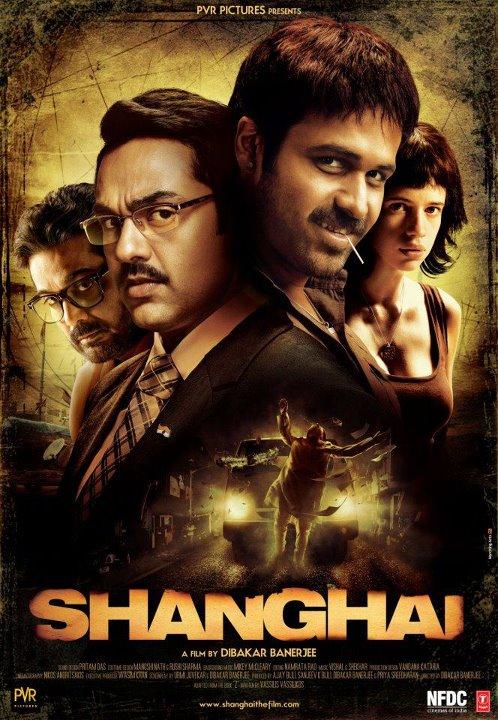
ABHAY DEOL E EMRAAN HASHMI NEL NUOVO FILM DI DIBAKAR BANERJEE: SHANGHAI

Da sinistra: Abhay Deol, Dibakar Banerjee, Emraan Hashmi


Dibakar Banerjee ha annunciato il suo nuovo lavoro: Shanghai, un thriller a sfondo politico, adattamento cinematografico di Z, romanzo del 1966 dello scrittore greco Vassilis Vassilikos. Dibakar ha lavorato per un anno e mezzo al progetto. I produttori hanno incontrato Vassilikos, il quale si è mostrato molto sorpreso ma soddisfatto della sceneggiatura. Abhay Deol e Emraan Hashmi sono nel cast. 
Video Movie Talkies della conferenza stampa: prima, seconda e terza parte.
Vi ricordo che, nel 1969, Costa-Gavras diresse Z - L'orgia del potere, pellicola che si aggiudicò, fra gli altri, l'Oscar per il miglior film straniero e il premio della giuria a Cannes. Una curiosità: pare che Vassilikos abbia vissuto per un certo periodo in Italia, durante l'esilio impostogli in passato dalle autorità greche.
 
Dibakar Banerjee è uno dei più promettenti talenti della neo-Bollywood. Dal suo godibilissimo debutto, Khosla Ka Ghosla, passando per Oye Lucky! Lucky Oye! - entrambi premiati col National Award -, sino allo sperimentale Love Sex Aur Dhokha, Banerjee ha incantato critica e pubblico, riuscendo a coniugare soggetti originali, sceneggiature ben costruite, ottime performance, budget contenuti, introiti soddisfacenti.
Abhay Deol, nipote di Dharmendra e cugino di Sunny e Bobby Deol, stupisce per la determinazione con cui sia riuscito a crearsi un'invidiabile carriera costellata di ruoli stimolanti e pellicole innovative. Abhay ha regalato una delle sue migliori interpretazioni proprio in Oye Lucky! Lucky Oye! di Dibakar Banerjee. Vi ricordo che Deol, nel 2009, era alla Mostra del Cinema di Venezia per la proiezione del lisergico Dev. D.

Emraan Hashmi in Once upon a time in Mumbaai

Ma è il terzo personaggio a rendere la combinazione davvero bizzarra: Emraan Hashmi, il serial kisser di Bollywood, rampollo del clan dei Bhatt. A differenza del collega Abhay, i passi falsi (Zeher, Jawani Diwani, Crook - solo per citarne alcuni) nella filmografia di Emraan non si contano, anche se nulla ha impedito alla star di coltivare un vivaio di fan innamorate. Hashmi possiede fisicità e carisma, e si cimenta con coraggio (o incoscienza) in ruoli negativi e spesso di carnalità inaudita per gli standard della cinematografia popolare hindi, in pellicole che trattano di adulterio (Zeher), relazioni sessuali prive di romanticismo (Murder, Aksar), pornografia e prostituzione (l'insolito Kalyug, Awarapan). Scavando con cura, emerge una sottile ma decisa vena di versatilità che ha consentito ad Emraan di interpretare personaggi lontani dallo stereotipo che la cronaca rosa indiana sembra avergli cucito addosso, e di partecipare a produzioni più articolate quali il verboso, a tratti sorprendente Chocolate, o il teso The killer. Hashmi ha sfoderato un fascino tragico in Raaz - The mystery continues (uno dei rarissimi horror hindi di successo), e un'insospettata eleganza in Tum Mile. Ma è nel 2010, con Once upon a time in Mumbaai, che la star ha conquistato in un colpo solo la critica e fasce più larghe di pubblico (anche maschile) grazie ad una performance vigorosa ed indimenticabile. Emraan, inoltre, sembra essere l'attore preferito del talentuoso regista Anurag Basu, da cui è stato scritturato per il conturbante Murder, lo zuccheroso (con un velo di quella malinconia che diverrà il marchio di fabbrica di Basu) Tumsa Nahin Dekha, e lo splendido, intenso Gangster.

Emraan Hashmi in Tum Mile


23 febbraio 2009

SLUMDOG MILLIONAIRE: ASSO PIGLIA TUTTO AGLI OSCAR

22 Febbraio 2009, Los Angeles. Durante una nottata favolosa Slumdog Millionaire, presentato con 11 nominations, si è aggiudicato 8 premi risultando il vincitore indiscusso della cerimonia. Il film, che è una coproduzione angloamericana, è la pellicola più bollywoodiana che abbia mai ottenuto un riconoscimento agli Oscar. Ci avevano provato, senza riuscirci, Mother India nel 1958 e Lagaan nel 2002, nella categoria Miglior Film Straniero.
Slumdog Millionaire vince e vince nelle categorie più importanti: Steven Spielberg, che ha fondato una società cinematografica a Mumbai, la Reliance Ada Group, ha consegnato la statuetta di Miglior Film nelle mani di Christian Colson, il produttore di Slumdog Millionaire.
Indiani sono i tre protagonisti che crescono per le strade di Mumbai, indiano è il romanzo a cui si ispira la storia, indiana è la colonna sonora composta dall'indianissimo A. R. Rahman. Tutti in piedi allora davanti ad Irrfan Khan e Anil Kapoor sul palco del Kodak Theatre, tutti in piedi davanti a A.R. Rahman che canta nel tempio di Hollywood.


16 febbraio 2009

IL CINEMA INDIANO ALLA CONQUISTA DELL'EUROPA

Continua il corteggiamento tra cinema indiano e produzioni occidentali.
Dopo il riconoscimento ottenuto da Slumdog Millionaire ai Golden Globe 2009, infatti, nel corso della cerimonia a Londra dei British Academy Film Awards (BAFTA), la pellicola diretta da Danny Boyle si è aggiudicata altri sette premi, tra cui quello per il miglior film, la miglior regia e la miglior colonna sonora.
E' toccato invece all'incantevole Aishwarya Rai rappresentare a Berlino il subcontinente indiano in occasione della Berlinale di quest'anno, conclusasi il 15 febbraio. La Rai ha sfilato sul tappeto rosso accompagnata da Steve Martin e Jean Reno, protagonisti insieme a lei di La Pantera Rosa 2, pellicola presentata fuori concorso in anteprima europea e che uscirà in Italia il 6 marzo.
Prendiamo questi piccoli e grandi successi come un augurio, in attesa che i film made in Mumbai vengano finalmente distribuiti anche nelle sale italiane.

Il sito dei BAFTA
Il sito della Berlinale
Il sito di The Pink Panther 2
Le foto di Aishwarya Rai a Berlino: clicca qui e qui

08 febbraio 2009

SLUMDOG MILLIONAIRE AI GOLDEN GLOBE

Domenica 11 gennaio 2009, a Beverly Hills, California, si è svolta la 66esima edizione dei Golden Globe Awards. Premiazione, quest'anno, di particolare interesse per noi irriducibili ed insaziabili Bollywood-addicted per due motivi.

Il primo, Slumdog Millionaire (The Millionaire), il film di Danny Boyle ambientato a Mumbai ed ispirato al libro di Vikas Swarup, Le dodici domande, ha fatto la parte del leone vincendo alcuni dei premi più importanti della serata:
Best Motion Picture - Drama - Slumdog Millionaire
Best Director - Danny Boyle
Best Screenplay - Simon Beaufoy
Best Original Score - A. R. Rahman

Il secondo, Shah Rukh Khan, gioia dei nostri occhi, è intervenuto alla cerimonia.
L'appuntamento è rinnovato al 22 febbraio 2009, alla notte degli Oscar, durante la quale Slumdog Millionaire sarà presente con dieci candidature.
Il sito dei Golden Globe Awards
Video Shah Rukh Khan alla premiazione
Le nominations agli Oscar