22 settembre 2021

MOSTRA DEL CINEMA DI VENEZIA 2019


[Archivio]

La 76esima edizione della Mostra del Cinema di Venezia si è svolta dal 28 agosto al 7 settembre 2019. Nella sezione Orizzonti erano in concorso:
- Chola (malayalam), diretto da Sanal Kumar Sasidharan e interpretato da Nimisha Sajayan, Joju George e Akhil Viswanath. 
- Darling, cortometraggio pachistano di Saim Sadiq. Darling si è aggiudicato il premio per il miglior cortometraggio. 
Il film d'animazione Bombay Rose di Gitanjali Rao aveva inaugurato, in prima mondiale fuori concorso, la Settimana Internazionale della Critica.

Sanal Kumar Sasidharan

RASSEGNA STAMPA/VIDEO

- Video ufficiale: intervista concessa il 2 settembre 2019 da Sanal Kumar Sasidharan, Nimisha Sajayan e Joju George.
- Recensione di Bombay Rose di Davide Di Giorgio, Duels, 29 agosto 2019: 
'Pennellate di colore, denso e materico, e la città progressivamente si forma: sin dai titoli di testa, Bombay Rose descrive un mondo assolutamente impressionista, che però è anche un viaggio nel quotidiano dell’India. (...) C’è, insomma, un mondo vivo, che si lega a doppio filo con una realtà da sogno, esplicitata dall’azione quasi sempre in secondo piano, contrappuntata dal passaggio delle auto in primo piano, che permette gli stacchi di montaggio. È il mondo del sogno, simboleggiato dai film di Raja Khan, divo d’azione di Bollywood, di cui è avido consumatore Salim. Ma anche dalle autentiche aperture oniriche del testo, che tracciano traiettorie a metà tra la fiaba e il mito, tra iconografie tipiche del folklore indiano (...) con l’immediatezza pur lirica e potente che crea collegamenti impossibili con le culture a noi più familiari (vengono in mente certi lavori di Lorenzo Mattotti, in testa ovviamente i suoi Quaderni indiani). La differenza lo fa proprio uno stile pittorico che Gitanjali Rao domina con la volontà di creare un poema visivo. L’artista scrive, dirige, disegna, gestisce l’animazione, cura il montaggio e compare un po’ in tutti i dipartimenti per trasmettere l’impressione di un’opera personalissima, eppure opportunamente contaminata da riferimenti vicini e distanti al mondo in cui racconta. (...) Una volta preparato il terreno, la storia può così concedersi il doppio passo di chi racconta una vicenda squisitamente popolare (a conti fatti un piccolo melodramma, pur nelle sue divagazioni più lievi) ma con implicazioni più alte: il ruolo della donna, lo scontro di culture e religioni, (...) le convenzioni sociali. Il sogno e il desiderio diventano pertanto chiavi di lettura del mondo e possibili punti di fuga di una realtà indagata nei suoi strati di colore attraverso una corposità del tratto, però sempre attenta a mantenere una certa levità iconografica. I personaggi sembrano come fluttuare, spesso non hanno ombra, propendono verso un altrove perennemente inseguito, sebbene siano ancorati a vite assolutamente problematiche. La ricerca è sempre orientata a una semplicità appagante, in grado di trasmettere empatia per i personaggi e fascino per le iconografie. La scelta dell’animazione da parte di Gitanjali Rao appare quindi chiaramente rivolta alla necessità di cercare soluzioni differenti per raccontare il nostro tempo e mondo'. 

Nimisha Sajayan

- Recensione di Bombay Rose di Alice Catucci, Sentieri Selvaggi, 30 agosto 2019: 'Bombay Rose è un film a più strati, sia sul piano stilistico che su quello di contenuto, e la sua vera bellezza sta nel fatto di di saper sfruttare le potenzialità del genere, prima fra tutti quella di comunicare la complessità in modo semplice, sussurrando direttamente a luoghi reconditi e interiori prima che ai piani alti, intellettuali e celebrali. Così Gitanjali Rao è bravissima nel rispettare la forma del racconto per bambini mettendo a punto un film duro ma anche dolcissimo, proprio a dichiarare l’estrema urgenza di tramandare alle nuove generazioni un messaggio di libertà'.
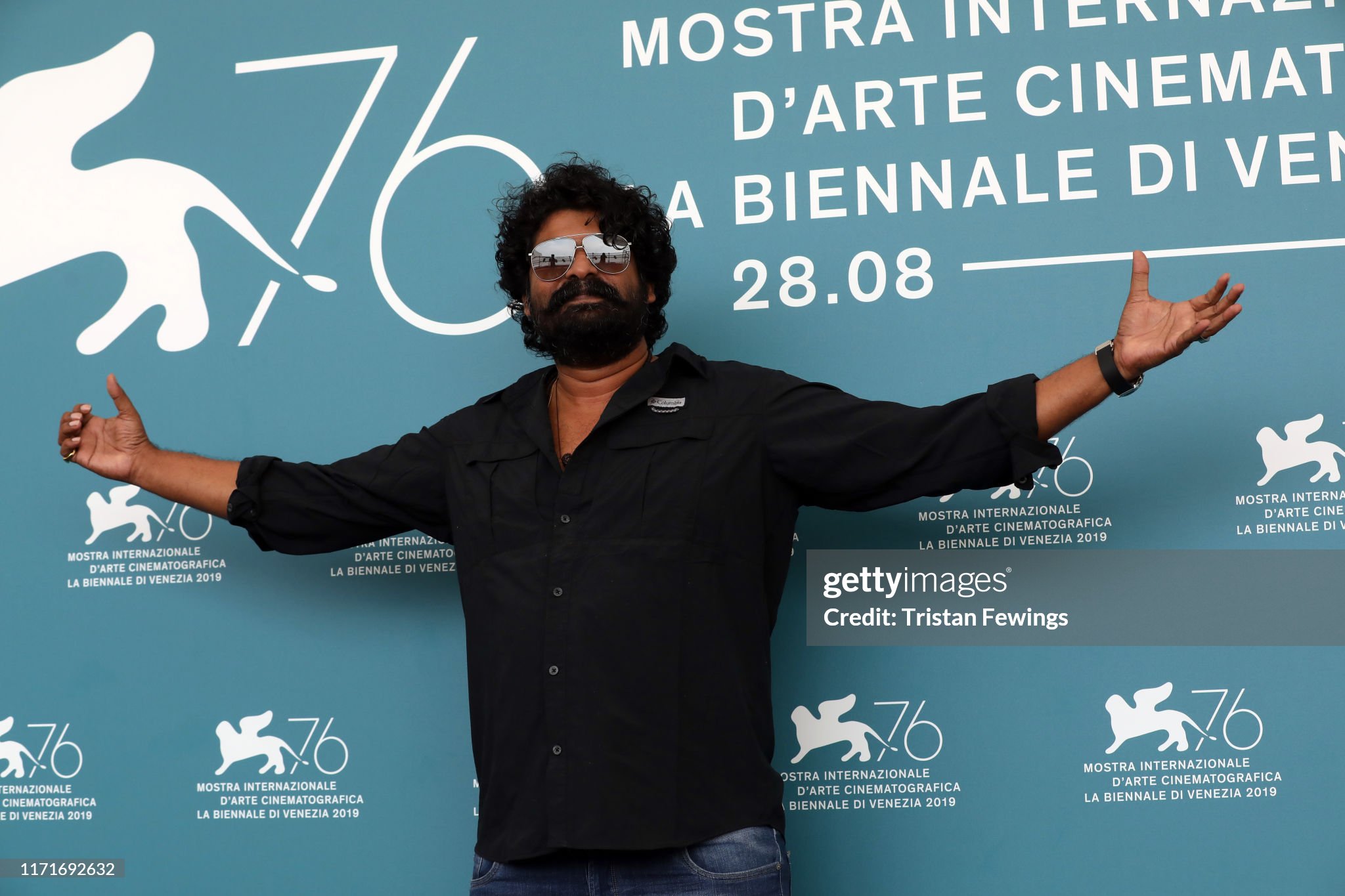
Joju George

- ‘This is the story of any young migrant in Bombay’, intervista concessa da Gitanjali Rao a Divya Unny, pubblicata da Open il 6 settembre 2019:
'Bombay Rose tells the story of migrants in Mumbai in a struggle for love and survival. How did your relationship with the city reflect in the story?
I have been a Bombay girl all my life. Growing up in the 70s when the city was a lot greener, calmer, more rudimentary than it is today. I remember there was a swarm of snakes and tortoises from the station to our home in Borivali, and the sea was much closer. It feels like a different time all together. After I joined JJ college of Arts in South Mumbai, I saw a whole new colonial side of the city, and new people. When I travelled I’d see working women in the trains, especially those coming home from the 6 am telephone exchange shift. It felt safe, and there was somehow more equality and equilibrium within sections of society no matter what class you belonged to. This was a migrant city and it felt so much more like home, than it does today perhaps. The people from the city and those who made the city their home work together, build lives together. Even today there is a skyscraper next to a slum. The working class and those you are working for live side by side. It’s polarising, but it also brings a lot of tolerance and vibrancy in your way of life.
Is the film inspired by these women?
It’s a story of any young migrant in the city. A story of service providers, not us privileged lot. It’s also a documentation of things as how people would see it. Many times I’d see these young girls selling clips and accessories in the trains. They’d be very chirpy and by the end of their day there would be this very animated discussion with their friends on how it went. I always imagined what their stories would be like. In Bombay Rose there is a young girl selling gajras who works on the street in the day, who is educating her sister and who dances in a bar at night for money. There’s a young boy selling roses who falls in love with her and deals with her reality. And there’s an older woman who used to be a background dancer in 50s Hindi films and is trying to re-imagine her world today. All these stories within the backdrop of the ever bustling city intertwine to make us understand what it feels like to live this life in the city. In Bombay you can almost look into someone’s house. Life is spilling out here, things are passing me by. You are either rushing for work or you are going somewhere for an appointment. If you could just stop and watch, what would you see, there’ so much that one can observe. That was the inspiration for Bombay Rose.

Akhil Viswanath

Yours is the first animation feature from India to travel to Venice, Toronto and now Busan. It’s a milestone in itself considering India is not exactly known for its animation work internationally. Do you see this as a step forward?
It’s taken me six years and a lot of patience and resilience to bring this film together. I have worked hard with a very solid team to evidence the skill of Indian animators and storytellers and Venice’s response has proved that all the hard work has paid off. Not that international festivals are the only benchmark for success, but, yes, since anime is a genre that’s explored far more in American and European countries, it becomes a good leveler for a film like Bombay Rose. Venice or Toronto already have very high benchmarks and it’s incredible to be part of that space. Plus a story like this based out of Bombay which is so true to its world, yet so universal resonating with audiences from the world over proves the fact that be it animation or live action, five minutes into a good film no one is thinking of the genre, but invested in the story.
Are social realities that reflect in your films (...) an important aspect of the landscape of your cinema?
Isn’t it for anyone who is trying to tell a story? After Babri Masjid and the 1993 blasts in Mumbai, I witnessed the politics of the city change. That’s when you don’t take a city for granted. Only stories of how it was remain and become part of your collective imagination. I remember I was doing theatre at the time with Anurag Kashyap and others and it affected all of us a lot. You will see that expression in his work as well as mine. Also social realities bind us together as human beings, the aftermath of it, the pieces that we are picking up make us who we are. This is a universal truth. Hence the colours, the sounds, the characters, the music all of it within my films would reflect it.

Saim Sadiq

Your work as an actor in Shoojit Sircar’s October (2018) was well-appreciated. Is performing on camera simple?
I worked under Satyadev Dubey when I was 16 as an actor for three years. That’s a very impressionable age and you don’t forget something you have learnt when you’re that young. His was also a very whiplash kind of teaching so there was no option but to learn. It was a time when you’re discovering yourself, forming opinions, learning about your bodies, and so much more. The problem was that I would often get confused between my acting self and real self. They would often clash. It became difficult to demarcate which is which after a while, which was a bit intimidating. It was the reason I quit acting. The ego of the actor has to be honed in a different way, which is why I prefer to be behind the camera.
Do you have any specific aims for 2D animation in India?
I want to tell the stories that are wholesome in a way that they need to move people. (...) The 3D version is too real. There is no room for imagination. In 2D people’s imagination fills up what’s lacking and they then become part of your story. It’s also a space that could do with some serious funding and attention in India. There are only a handful of us doing it and we have to do the best we can. I also want to keep our folk art alive through the films I’m doing because that’s the form of art that got very peripheral attention. (...) What I would like to do is take on the beauty of a certain time and bring that into a mainstream. (...) It is our responsibility to not let all the artisans die. And if a film like mine releases in the theatres here and people watch it in its full glory I would consider it as a big win. It would give so many people reason to do more'. 

Gitanjali Rao


Saim Sadiq e Susanna Nicchiarelli


28 agosto 2021

CONSERVAZIONE E RESTAURO DEI FILM INDIANI


Vi propongo integralmente l'articolo India has the world’s lowest survival rate of cinema. And this heritage needs attention, di C.S. Venkiteswaran, pubblicato oggi da The Hindu.

'Cinema might fire India’s imagination, but both imagination and passion fail when it comes to preserving the country’s rich cinematic legacy.
One of the most unorthodox directors to emerge during India’s parallel cinema movement in the 70s and 80s was G. Aravindan. With 18 films, seven national film awards, and a Padma Shri to his credit, he is rightly seen as a cinematic icon. Yet, appallingly, not one of the negatives of his films has survived. They are either lost or irreparably damaged. Finally, 30 years after his death, his film Kummatty (1979) has been restored and it premiered at the Cinema Ritrovato festival last month.
The restoration of Kummatty, hailed by Japan’s foremost film scholar and critic, Tadao Sato, as the most beautiful film he had ever seen, was done through an international collaboration, under the World Cinema Project initiated by Martin Scorsese’s The Film Foundation, the Film Heritage Foundation in India and the Cineteca di Bologna film archive in Italy.
In his book, The Death of Cinema, Paolo Cherchi-Usai refers to an article published in 1897 in which the life of a cinematograph frame is arithmetically worked out as ‘one-and-one-third seconds’. So, Usai says, it is the most ephemeral of things, whose life is even shorter than that of a firework, and he wonders whether film eventually exists only in the minds of its viewers. If so, physical preservation of film becomes secondary. Indian culture, with its penchant for concepts like maya and transience, seems to follow a similar attitude to cinema.
This is in spite of the fact that cinema, its images and sounds, stars, singers and stories inundate our everyday life and imagination. But when it comes to its preservation or archiving, attention and care are strikingly lacking. The National Film Archives of India (NFAI) was established in 1964 - a decade and a half after Independence - and whatever we have today in terms of the rich and varied legacy of the celluloid era of Indian cinema owes greatly to P.K. Nair, who headed the institution in its first decades (1965-1991). In his tenure, he collected over 12,000 films, of which 8,000 were Indian. Interestingly, Nair retired from the Archives when television was beginning to swamp the media scene and much before digital technologies changed the rules of the game.
The new technologies made preservation and storage of visual image easier and faster, and with significantly less spatial and infrastructural facilities. But has this actually given a boost to the quantum, quality and pace of film preservation, archiving and restoration in India?
According to Prakash Magdum, director of NFAI, “During the silent era, some 1,350 films were made in India, and only 30 survive now, and that too not in their complete form. It is to be noted that there is no legal deposit system in India that mandates the producer to keep one copy of the film at NFAI. Efforts are on to amend the Cinematograph Act, 1952, to bring in this provision, so that we can preserve the films cleared by the Central Board of Film Certification. NFAI currently has more than two lakh reels in its collection and we have managed to source more than 5,000 films in the last five years alone.”
Film historian and theorist Ashish Rajadhyaksha estimates the pure celluloid survivals at 8-10% of the films made. This is by far the lowest survival rate of cinema in the world, when compared to countries and industries of similar magnitude such as China (31%) and Argentina (30%). In other words, for governments, cinema has always only meant mass entertainment, one that needs to be curbed through censorship and leached through taxes.

South story

According to Theodore Baskaran, film scholar and historian of Tamil cinema, “Neither the government nor trade outfits took any initiative till the 1960s to preserve films. According to the Registration of Books Act of 1867, all published books have to be preserved in one of the national libraries. There was no such provision for films. It was only after half a century of filmmaking in India that the need to preserve films was felt.” Despite being a young art and of the print era, even written material on cinema is sparse. “If you look at the Tamil magazines of the 1920s and 1930s, you will hardly see any reference to cinema. They did not take any notice of the birth of a cultural colossus in their midst.”
Baskaran observes that, even from the first decade of Tamil talkies (1931-1941), when more than 240 films were made, only about 15 have survived. Interestingly, Marthanda Varma, made in 1931 (produced by Sunder Raj and directed by P.V. Rao), survived not due to any archival effort but for a legal imbroglio: after its initial screening, the film was confiscated following a copyright case filed by the publisher of the book on which the film was based. Decades later, in 1974, the film was salvaged from a book depot in Thiruvananthapuram; but only 7,915 out of the 11,905 feet of the film managed to survive.
This is how Shivendra Singh Dungarpur, who set up Film Heritage Foundation in 2014, traces the troubling statistics of our celluloid legacy: “Of the 1,338 silent films made in India, just 29 survive, many in fragments, some as short as 149 feet. Of the 124 films and 38 documentaries produced by the film industry in Chennai, only one film survives - Marthanda Varma (1931). By 1950, we had lost 70-80% of our films. This is excluding the numerous missing short films, animation films, television programmes, advertising commercials, home movies, etc., often forgotten in the shadow of the silver screen, but as important, and the fabric of our visual history.”
“There is something very wrong with the way we are taught to dismiss the art of seeing as something ephemeral and negligible,” said Martin Scorsese. But apart from the general apathy towards cinema as a vulgar mass art, unworthy of serious attention leave alone preservation and archiving, several other factors have contributed to the sad state of affairs. The sheer diversity, quantum and locations of production scattered across the country have proved to be a major hurdle.

On the scrap heap

The nature of the film stock itself was film’s worst enemy: its nitrate content was prone to rapid deterioration in tropical climates, and most film reels were scrapped and destroyed to salvage the silver content. After films completed their run in the theatres, they were forgotten and left to decay, or found their way to the scrap market. Many nitrate films were destroyed by fires at vaults, studios or even during projection. Even the more stable and non-inflammable cellulose acetate ‘safety films’ that came later are prone to decay if not stored in humidity- and temperature-controlled conditions.
While conscious, committed, institutional efforts to preserve films were slow to evolve, technological shifts helped to salvage them to a great extent. The advent of video technologies popularised the circulation of films through VHS cassettes, thus extending their lives. The advent of television spurred a new demand for old movies and, in turn, their transfer to video formats. The digital revolution that followed offered cheaper and easier storage formats like VCD and DVDs. Finally, the emergence of Internet platforms and sharing modes such as YouTube and torrents endlessly replicated whatever was left of films and made them available in the public domain. But the flip side of this quantum leap was the loss of quality and care for fidelity, leading to low-resolution reproductions and truncated versions.
According to Scorsese, the terms ‘preservation’ and ‘restoration’ are being indiscriminately appropriated by marketing experts “who know nothing about preservation itself but are aware of the economic potential of its public appeal. Many of the films made available today through electronic media are misleadingly hailed as ‘restored’, while nothing really has been done to enhance their chances to be brought to posterity.”

How to choose

Added to this is the problem of choosing which films to preserve. When there is a trade-off between the number of films and resources at hand, issues such as prioritisation, its criteria, agency, and timeline emerge. Even though FIAF’s (International Federation of Film Archives) 70th Anniversary Film Manifesto pleads, ‘Don’t Throw Away Film’ and considers every scrap of film as a visual document to be preserved for posterity, one can’t expect state institutions to be fired by such passion or inclusivity.
When priorities for preservation and restoration are set - like age, awards, critical acclaim, historical importance, and material condition - films that do not ‘qualify’ fall outside the scanner. In the process, works that were ‘ahead of their time’ may lose their only chance of survival. Political dispositions and biases of the state can also lead to ‘selective preservation’, which could relegate oppositional voices to oblivion. The essential precondition for proper restoration is the availability of the film material - good quality negatives or prints that are kept in temperature-controlled environments. Considering the number of films made in India, the facilities available are minuscule. As old technologies fade out, the basic production processes also disappear - for instance, the facilities for photochemical processes have become non-existent now. Added to this is the indifference of even the established production houses and banners towards preservation.
Even more tragic is the case of independent and experimental filmmakers. Most of their works were made on shoestring budgets raised through informal and personal sources of finance; they seldom had any established producer/ production house or even a permanent office address to follow up on the negatives kept in laboratories. Whenever there is pressure on storage space, or a shift in technology, the negatives and prints of these ‘orphaned’ films are the first casualty. As a result, the negatives of films of even the most eminent filmmakers in the country are not available for restoration.

New initiatives

One major initiative in the recent past is the establishment of the National Film Heritage Mission under NFAI that seeks to preserve, digitise and restore India’s cinematic heritage. The Mission has ambitious plans to conserve around 1,50,000 reels of film, digitise around 3,500 films and sound tracks, and restore around 2,000 landmark films. But the stupendous, costly and complex task of preserving India’s film heritage calls for more financial and technological resources, public-private partnerships, and curatorial synergies. It also requires coordinated and sustained involvement on the part of the film industry, film historians, curators and professional organisations in the field, and for international partnerships to bring in state-of-the-art know-how.
In recent decades, there have been a couple of significant initiatives in the non-state sector. One sterling instance is the independent digital repository Indiancine.ma that blends archival passion, historical perspective, and academic vision to create a very rich digital collection of Indian films. The other is Dungarpur’s Foundation. After Kummatty, the plan is to restore another Aravindan classic, Thampu, as well as Satyajit Ray’s Aranyer Din Ratri and Shyam Benegal’s Mandi.
But much more needs to be done. And it is a colossal task in a vast, vibrant and active film culture, where around 2,000 films are produced every year in as many as 45 languages. The diversity in centres of production, trade practices, platforms of exhibition, and modes of reception make the picture even more complex.
It is already too late, and if we don’t act right away, the most vibrant celluloid heritage in the world, and more importantly, one of the richest visual archives of our life, land and culture, will disappear forever'.

26 luglio 2021

MOSTRA DEL CINEMA DI VENEZIA 2021


La 78esima Mostra del Cinema di Venezia si svolgerà dal primo all'11 settembre 2021. Once upon a time in Calcutta, pellicola in lingua bengali diretta da Aditya Vikram Sengupta, è in concorso nella sezione Orizzonti. Gli attori Sreelekha Mitra e Arindam Ghosh sono attesi al festival. Trailer. Vi ricordo che il film muto Asha Jaoar Majhe, opera prima di Sengupta, era stato presentato a Venezia, nel 2014, nell'ambito della rassegna autonoma Giornate degli Autori, e si era aggiudicato il premio per il miglior regista esordiente (stesso premio conquistato anche ai National Award). Once upon a time in Calcutta è in cartellone a Milano, in occasione dell'evento Le vie del cinema 2021, dal 22 al 30 settembre.
Vi segnalo inoltre il cortometraggio pachistano Mulaqat, diretto da Seemab Gul, in concorso nella sezione Orizzonti.

Sreelekha Mitra e Arindam Ghosh - Venezia, 2021


RASSEGNA STAMPA (aggiornata al 28 settembre 2021)

- A city of walking ghosts and new beginnings, Nandini Ramnath, Scroll, 7 settembre 2021. Intervista concessa da Sengupta:
'The earliest image in Once Upon a Time in Calcutta is of fire. Out of the ashes emerge, appropriately enough, an elegy about one of India’s most storied cities. (...) Kolkata is both a graveyard of desires and the birthplace of new and sometimes unmanageable desires. The Bengali-language film follows Ela, a small-time actor, and the people in her lives. (...) After the death of her only daughter, Ela resolves to leave her husband Shishir and move out of their residence in an old building in South Kolkata. Ela’s journey is guided by the reappearance of an old flame and a tempting offer from the head of a building project in a satellite city on the outskirts of the megapolis. The movie also explores Ela’s relationship with her mother, a famed cabaret dancer, and her step-brother Bubu, who owns a theatre for stage productions in the heart of the city and is refusing to sell it to a real estate developer. Among the themes is the tension between the comfort of habit and the seductions of untested experiences, the rising influence of speculative capital and questionable get-rich-quick schemes, and the transactional nature of modern relationships. Stasis and rupture co-exists in the city of Sengupta’s imagination. Rabindranath Tagore is a talismanic presence in a movie filled with restless souls and the ghosts of an oppressive past. “All papers are fake these days,” a character observes - a truth that Ela is eventually forced to embrace. (...) Once Upon a Time in Calcutta contains striking tableaux, mood lighting and expressionist locations imbued with meaning and stories of their own. (...)
The city in your film appears to be growing outwards but hollowing out too.
The core of the city isn’t made of physical spaces but of people. That’s what I wanted to explore - the city and its various layers through the people. This is something I have been feeling for the past few years - the core of the city is kind of emptying out slowly. A lot of it has to do with globalisation and a booming information technology industry. There doesn’t appear to be a sense of great discovery, and getting to know people nowadays requires great emotional investment. For me, the film was about getting into the minds of the people. They inhabit worlds of their own with their own baggage and aspirations.
‘Once Upon a Time in Calcutta’ was previously titled ‘Memories and My Mother’, right?
Yes, that was previously the working title. The story and script were in a more magic realist space and had to do more with the fact that all the characters were motherless, and their mothers appeared to them as spirit. It started evolving and became more realistic. Of course, the city changed too, as did I. An earlier title was Aquarium, about looking at these different kinds of fish but from the outside. I liked the title a lot, but no one else did.
How has your relationship with the city of your birth changed, specially since you divide your time between Kolkata and Mumbai?
I lived full-time in Bombay between 2008 and 2011 and then again for a few years. I continue to work out of Bombay, it’s like my workshop. I feel most at home in Bombay, the people are warm and there is a sense camaraderie but the space gets to me. I moved back to Calcutta because I get more space to work here. I have my music and painting studio here. There are many things to crib about, such as the attitudes of people, the slowness of getting things done, the fact of being stuck in certain ideas. But there are also certain strange comforts - the familiarity of the afternoons the evenings, the sounds of bells, the smells of bedsheets that have come out of old wooden cupboards. It’s a complex love-hate relationship.
Tell us about the faces and places in your film.
Everything you see in the film is based on real people or experiences. For instance, the dinosaur that is demolished to make way for a flyover in the film - there was one such dinosaur that was built whe made in 1995 when the Science City [tourist attraction] came up. A flyover was built here later. When the half-made flyover approaching from one end and reached the dinosaur, it looked like the starting point of a race. I had clicked a photo at the time. It had a deeper meaning for me, and in fact, is the starting point for this film. Characters like the dinosaur cannot exit in this new eco-system. I always like looking for real locations and existing places. (...) There is no pre-decided colour palette. This is a contemporary film about the beauty as well as vast and stark differences in all these places - the clashing colours and un-coordination, in a sense. Bubu’s theatre is the Sarkarina theatre in Hatibagan. (...) When the theatre started declining, cabaret was introduced here. It’s where people like Miss Shefali performed. She appeared in a few Satyajit Ray films. (...) Ela is supposed to be her daughter in my film.
Why did you pick Gökhan Tiryaki as the cinematographer?
I have always wanted to work with him. His films with Nuri Bilge Ceylan are very character-driven, and I am a very visual person. The film is a mixture of both. I thought it would be interesting for him to have his mind on the film. Besides, I love collaborating with and working with people. We shot the film between January and March in 2019. I like to work with a light crew, I like it to be peaceful and meditative. When we would go the sets, Gökhan and I would first sit around and talk about the scenes. We would get the actors on the sets and then make them do their scenes over and over again. We would just watch them, and not film them. Gökhan would move round them like a planet to get the right point of view. Once we fixed the angle, we would only then take the shot.
Why made you cast film and television Sreelekha Mitra in the lead role?
The casting process went on for two years. But when writing Ela’s character, Sreelekha was the only one who I felt could play this role. Her own life and struggles have been similar to Ela’s. When we were shooting the film, she was trying to move to a new apartment at the end of the city. She has always felt that the Bengali film industry never gave her the love and respect she deserved. She has an interesting physicality, and brings greyness to the way she behaves with the other characters.


- Recensione di Once upon a time in Calcutta, Sankhayan Ghosh, Film Companion, 7 settembre 2021: 'There are many remarkable things in Aditya Vikram Sengupta’s Once Upon A Time in Calcutta, which begins with the death of the protagonist’s four year old daughter. One of them is how, instead of crushing her, the event sets the middle-aged and independent minded Ela (Sreelekha Mitra, in one of those roles that makes you wonder which came first: the character, or the actor?) on the path of liberation. (...) In another film, this would have been a personal journey narrative, disconnected from the larger forces at play. Sengupta’s film locates her in a specific time and place, connected to the events and spaces that have shaped Kolkata in the past few years. (...) The film has been rightly described as a chronicling of a post-communist era city. This is a new Kolkata - one that our cinema has failed to reflect. Once Upon A Time in Calcutta tries to articulate the complicated feelings for this new city of blue and white. The title makes sense for multiple reasons, and one of them is the refusal to let go of the past. (...) Once Upon a Time in Calcutta is both Sengupta’s most ambitious and conventional film. It shows the director in a somewhat new light. (...) Here Sengupta (...) has a better go at handling actors the way we are used to seeing in narrative cinema. And he seems to posses a natural talent for it, imbuing even the smallest characters with something unique to hold our attention. (...) This is a film rich in images, scenes and shots'.
- Recensione di Once upon a time in Calcutta, Gautaman Bhaskaran, CNN News18, 8 settembre 2021: 'Sengupta, who is also the writer, tries to present a city after it’s emergence post the 32-year Communist rule in West Bengal (whose capital is Calcutta, now renamed Kolkata). The piece is nostalgic both in its tone and tenor, and the richness of the colours gives an almost ethereal glow to the city. (...) The images are fascinating and certainly brought back memories of the city where I grew up, and whose decline I watched with a lot of sadness. (...) Once Upon A Time in Calcutta has a compelling plotline, but wanders away from it by taking on too many issues. A chit-fund scam, flyover collapses, corruption, jilted love and what not crowd the narrative making the pacing jerky. And unimaginative editing robs the feature of a certain crispness which could have been otherwise achieved. It also is far too long. Half way through, we lose sight of the core premise, and Sengupta’s effort is laudable, even ambitious, but somewhere he lets the reins slip'.


- Recensione di Once upon a time in Calcutta, Elisabetta Colla, Taxidrivers, 16 settembre 2021: 'Atmosfera grigia e cupa, (...) per raccontare una Calcutta insolita. (...) In alcuni momenti  difficile da seguire e poco ispirato. Pure la modalità in cui le storie vengono ad intrecciarsi e l’affresco di una Calcutta ‘altra’ interessano e colpiscono. (...) Una narrativa densa e noir, il c’era una volta di una favola drammatica, con qualche raro raggio di sole che sembra intravedersi di quando in quando nei difficili rapporti umani raccontati dal film. Il regista descrive individui con gravi problematiche esistenziali, solitudini relazionali e nostalgie di tempi migliori, quelli dell’infanzia, quando era ancora forte la dimensione comunitaria, e la difficile ricerca di un posto nel mondo, dopo aver sperimentato il dolore e la morte. (...) Ispirato a fatti realmente accaduti, il film (...) potrebbe alludere a una critica di Sengupta all’urbanizzazione selvaggia, priva di regolamentazione, che ha accelerato i processi di disintegrazione socio-familiare e favorito ulteriormente miseria e solitudine. “Il film è il culmine dei sentimenti e delle emozioni che provo per Calcutta e i suoi abitanti - afferma il regista - una città impegnata nel tentativo di stare al passo con un mondo in rapida evoluzione e le aspirazioni e gli sforzi di persone che annaspano in una metropoli in continua espansione. Utilizzando personaggi reali ed eventi effettivamente accaduti, il film è il mio tentativo di eliminare i vari strati della città un tempo comunitaria, per rivelare una condizione umana tragica ma, allo stesso tempo, piena di speranza e di gioia. Ho cercato di dare agli spettatori un vero spaccato delle acque torbide di Calcutta, attraverso dei personaggi vivaci che cercano in ogni modo di ritagliarsi un loro spazio, senza affogare”.'


- Recensione di Once upon a time in Calcutta, Raffaele Meale, Quinlan, 28 settembre 2021: 'Sono molte le suggestioni che derivano dalla visione di Once Upon a Time in Calcutta. (...) Innanzitutto emerge una riflessione che il film condivide con altre opere provenienti dall’Asia e viste al Lido: (...) in un mondo oramai completamente e compiutamente globalizzato, (...) anche nazioni che fino a qualche anno - decennio? - fa erano considerate “in via di sviluppo” quando non direttamente “terzo mondo” presentano fenomeni sociali ben noti e storicizzati in Occidente, ad esempio la cosiddetta gentrificazione. (...) Sengupta (...) ha le idee molto chiare, e partendo dallo spunto narrativo suggerito dianzi vorrebbe aprire uno squarcio nel velo posto di fronte all’India contemporanea, mostrando il rampantismo di un microcosmo sempre più avvelenato dal demone del potere economico, e dunque spinto ad azioni perfino inimmaginabili. Il suo è dunque un discorso parzialmente metaforico ma soprattutto morale, la visione di un mondo disgregato che ha perso le sue radici e fluttua in un contesto socio-economico dominato dalla barbarie, dall’homo homini lupus. La Calcutta mostrata nel film è una città/mostro, cloaca nella quale si annaspa e si può al massimo sperare di sopravvivere: perfino il raggiungimento di una apparente sistemazione, magari in un modernissimo grattacielo fuori dalla cintura del centro, è illusorio, e del tutto transitorio. Per mappare questo mondo in apparente progresso ed evidente autodistruzione Sengupta si lancia in un grande racconto corale, mettendo insieme trame e sotto-trame nel tentativo di permettere allo spettatore la posizione privilegiata (in uno dei grattacieli di nuova costruzione?) per una visione d’insieme. Il risultato non è privo di fascino, ma alla lunga risulta farraginoso anche perché il regista non riesce ad evitare quelle che appaiono in tutto e per tutto come scelte di comodo, o per meglio dire retoriche: ecco dunque l’amore del passato che torna a palesarsi celando però la verità sulla propria condizione familiare; ecco il criminale che si propone a Ela come risolutore della soluzione portando con sé suggerimenti a dir poco inappropriati; ecco il campo controcampo tra il reale - il teatro abbandonato da decenni al suo destino - e l’onirico - la memoria della donna che con le sue esibizioni aveva reso celebre il locale; ecco, infine, una politica corrotta che ama vendersi come innovativa, visionaria, moderna. Tutti schemi usurati, un po’ come lo schema Ponzi alla base della truffa immobiliare in cui viene messa in mezzo Ela, e che alla lunga appesantiscono un racconto cui avrebbe giovato una maggiore leggerezza espositiva, e forse anche un’ambizione meno evidente. Per questi motivi Once Upon a Time in Calcutta non riesce ad appassionare, se non per alcune singole intuizioni (il crollo non solo metaforico della politica cittadina nel finale, per esempio)'.

31 dicembre 2020

RADHE SHYAM: LE RIPRESE IN ITALIA


(Testo aggiornato il 12 aprile 2022)

Nei primi giorni dell'ottobre 2018 la troupe di Radhe Shyam era in Toscana per girare alcune sequenze. La pellicola, in lingua telugu, è diretta da Radha Krishna Kumar e interpretata da Prabhas e da Pooja Hegde. I set erano stati allestiti ad Arezzo (Pieve e Duomo) per riprese in notturna, Pisa (Ponte di Mezzo, Lungarni) e Lucca (Mura e centro storico).

Esattamente due anni dopo, nell'ottobre 2020, la troupe è tornata nel nostro Paese. Per la precisione in Piemonte: Torino (Parco del Valentino, Piazza Castello, Accademia delle Scienze, Palazzo Civico a Piazza Palazzo di Città, Palazzo Carignano, Palazzo Madama, Museo Nazionale del Risorgimento Italiano, Galleria Subalpina, Ristorante Al Cambio), Reggia di Venaria, Pian del Frais di Chiomonte, Stazione Ferroviaria di Ceres, Museo Ferroviario Piemontese di Savigliano (in provincia di Cuneo), castello di Barolo (in provincia di Cuneo), valli di Susa e di Lanzo.
Chiara Appendino, sindaco di Torino, a seguito dell'incontro con Pooja Hegde, ha dichiarato: 'Nonostante le enormi difficoltà dettate dalla pandemia, Torino è ancora meta di grandi produzioni cinematografiche internazionali, anche grazie all'importante lavoro di Film Commission Torino Piemonte. Quando mi hanno detto che si sarebbe girato a Torino il colossal di Tollywood Radhe Shyam ero molto soddisfatta: è una bellissima notizia e siamo orgogliosi che abbiano scelto la nostra città, sia perché occasione di lavoro per le nostre maestranze, sia per le ricadute economiche per l'indotto cittadino e anche per l’opportunità di portare Torino e le sue bellezze nel mondo. In questo periodo siamo tutte e tutti chiamati a rivedere il nostro modo di lavorare, ma la filiera cinematografica continua a darci lustro e non posso che ringraziare Film Commission e tutti gli operatori coinvolti. Pooja Hedge, has been a great pleasure'. 

A fine ottobre la troupe si è trasferita in Liguria, a Malpasso (in zona Finale Ligure). Sembra che anche nel 2018 fossero state girate alcune sequenze in Liguria. Agli inizi di novembre è la volta della Valle d'Aosta: La Thuile (Petosan), Breuil Cervinia (Plan Maison e Lago Blu), prato di Sant’Orso a Cogne. 
Anche Roma è inclusa nella lista delle location italiane (Parco archeologico del Colosseo, Parco degli Acquedotti). All'allestimento dei set hanno contribuito le scenografe Illia Boccia e Giulia Parigi.

- Teaser nel quale Prabhas pronuncia delle battute in italiano

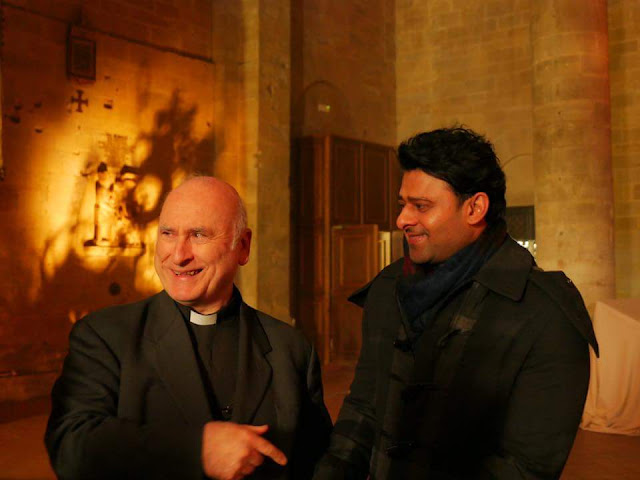
Da sinistra: Don Alvaro Bardelli, Prabhas, Marcello Comanducci - Arezzo, 2018

RASSEGNA STAMPA/VIDEO

'Bollywood scambia il giorno con la notte. Come i bambini più scatenati di giorno si riposa e di notte sta sveglio fino all’alba. L’alba della Pieve, fino all’altra sera. L’alba del Duomo da stanotte. Perché la macchina da guerra del cinema indiano si è trasferita armi e bagagli da un angolo all’altro del centro. Un trasloco nel quale ha conservato il parroco, visto che don Alvaro Bardelli guida sia la basilica che la Cattedrale. Un don Alvaro che ha seguito passo passo perfino di notte le riprese. Un po’ curioso, forse, ma anche tanto attento alla sua chiesa. Trasformata ma non snaturata. Impossibile avventurarsi tra le navate ma il passaparola va da sé: grandi lampadari pendenti, luci soffuse stile monastero, un gigantesco tavolo di legno, la copertura di quanto nel tempio non fosse in linea con il film. E fuori una mobilitazione d’altri tempi. Le gru si arrampicano da un lato all’altro della Pieve: e le luci esterne influenzano quelle interne, fasci «lunari» che potremo ammirare solo nel film. (...) Al centro lui, Prabhas. Il divo del cinema indiano, per una volta senza barba: basta una foto su Facebook e i like volano, trainati dall’altra parte del mondo. La stretta di mano con il padrone di casa, don Alvaro, e l’assessore Marcello Comanducci, che da mesi preparava questo sbarco, vengono riprese rapidamente in India. Prabhas stavolta è sbarbato e questo quanto basta a scatenare la curiosità dei fans. (...) Al centro una storia romantica: lui e lei che si incontrano, lontani come Giulietta e Romeo ma poi nel film fatalmente legati. Lei è Pooja Hegde, bella come solo le indiane sanno essere, da ieri sul set. (...) Intanto Prabhas, parlando con Comanducci, ha confessato di essere stato conquistato dalle bellezze della città. Bene, che ne parli in India, ai milioni di connazionali che pendono dalle sue labbra. Li aspettiamo a braccia aperte.'


- Video Rai 3: TGR Piemonte
- Bollywood porta i kolossal sul Po, Alessandra Muglia, Sette, 16 febbraio 2021:
'«In Italia mi sento libero: posso andare in giro senza che nessuno mi riconosca. (...) Del resto ogni mestiere ha qualche aspetto critico». Così dopo l’ultimo ciak italiano, eccolo dedicare le ultime ore prima del rientro a Mumbai allo shopping per le vie di Firenze. Via dal set piemontese e gita in Toscana. «Volevo vedere il museo di Leonardo da Vinci ma era chiuso, così ho ripiegato sugli acquisti. Ho preso delle bellissime scarpe di Ferragamo per mia sorella», racconta con un filo di voce, scusandosi per le ore di ritardo con cui si presenta al telefono per l’intervista. Del resto lui è Prabhas, l’attore del momento in India, Paese che venera i divi del grande schermo come dei. (...) Il suo Baahubali 2 (2017) ha segnato il record di incassi in India. Si capisce che siano altissime le aspettative sul prossimo film: Radhe Shyam, diretto dal giovane Radha Krishna Kumar. È la prima produzione indiana quasi tutta girata in Italia, tra Roma, Liguria, Valle d’Aosta, ma soprattutto a Torino e dintorni.
«Sarà una cartolina molto importante per la nostra regione» scommette Paolo Damilano, esportatore di Barolo nel mondo e presidente della Film Commission Torino Piemonte, la prima nata in Italia, nel 2000, per supportare le produzioni straniere nella logistica e nel reperire tecnici e troupe. La distribuzione prevista è da kolossal: Covid permettendo, ottomila sale nell’estate prossima. Del resto Prabhas è considerato il primo vero divo di tutta l’India. Il suo blockbuster Baahubali è stato doppiato nelle principali lingue del cinema indiano: non c’è soltanto l’hindi di Bollywood, a Mumbai, ma anche il tamil usato a Kollywood, Chennai, e il malayalam di Mollywood, in Kerala. Prabhas, uomo del Sud, nasce come stella del cinema di Tollywood, quello di Hyderabad, parlato in telugu. Poi il grande salto con Radhe Shyam, girato contemporaneamente in hindi e in telugu e doppiato nelle altre due lingue.
E pensare che Prabhas seppur figlio d’arte da ragazzo aveva altri progetti: «Avevo studiato business, ero timido, non pensavo di fare l’attore. Poi mio zio mi ha tirato dentro». Suo zio è l’ormai ottantenne Krishnam Raju, celebrità del cinema telugu poi datosi anche alla politica. Dedizione e disciplina hanno reso Prabhas una superstar. Per riuscire a interpretare al meglio il principe-guerriero buono di Baahubali si è preparato al ruolo per 5 anni. In Radhe Shyam, dismessi i panni da supereroe, è un chiromante indiano chiamato Shyam, altro nome di Krishna, «un dio molto romantico» ricorda lui. Radhe nella mitologia indù è la sua amata. Radhe Shyam: i due che sono uno; l’energia femminile e quella maschile che formano la perfezione dell’amore cosmico. «La storia inizia a Varanasi», la città sacra sul Gange. «Shyam vive lì, fa il chiromante», rivela Prabhas a 7, «poi lascia l’India, raggiunge l’Italia, si stabilisce a Torino e un giorno incontra Radhe, un’indiana che fa il medico a Roma», la magnetica Pooja Hegde.
Credenza lui, scienza lei: la storia appare incentrata sulla dialettica di lotta e attrazione tra tradizione e ragione, destino e libertà. Radhe Shyam diventa quasi un ossimoro: si riferisce a due personaggi distanti per modo di pensare e professione che l’amore avvicina. «Io in realtà non ho mai creduto alla lettura della mano o delle foglie di palma» confida Prahbas. Eppure in India indovini e astrologi hanno un gran da fare: molta gente continua a consultarli anche oggi prima di prendere qualsiasi decisione importante, dall’acquisto della casa al cambio del lavoro, alla data di matrimonio. Prabhas non ha ancora trovato il giorno propizio per convolare a nozze. E nemmeno la compagna, per la verità. Anche se rumour sui media locali parlano di nozze con Anushka Shetty, co-protagonista in Baahubali 2, a lungo osteggiate dalle rispettive famiglie.

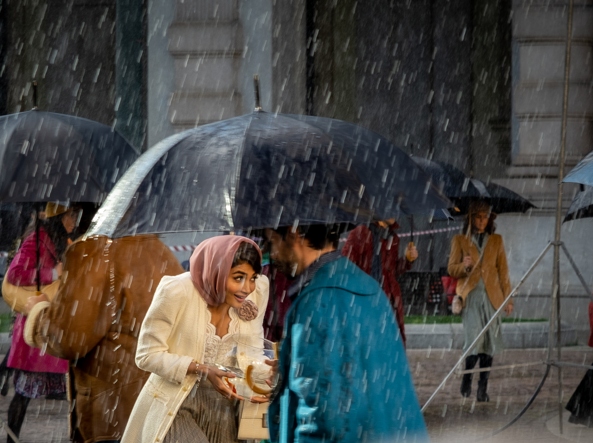
Pooja Hegde - Pisa, 2018

«Io e Anushka siamo soltanto buoni amici, ma la gente ci vorrebbe insieme anche nella vita», chiarisce l’attore. Resta il fatto che, nonostante il matrimonio d’amore sia il classico sogno del cinema di Bollywood, il 90% delle unioni in India sono ancora combinate o quanto meno semi-combinate, con la selezione dei maritabili fatta dalla famiglia. «Si dice che i matrimoni combinati siano più solidi. Ma io voglio sposarmi per amore». Per ora però Prabhas ha altro per la testa: «Non sono innamorato, l’unica cosa che desidero è che Radhe Shyam piaccia al pubblico».
In Italia, durante le riprese, il film è stato presentato come una sorta di Giulietta e Romeo in salsa indiana. Un’altra storia romantica con finale tragico (...) o con il tradizionale happy end bollywoodiano? «Come va a finire lo scoprirete guardando il film», taglia corto Prabhas. Quel che si sa è che questo amore corre sui binari. I due vagano per l’Italia in treno. Radhe Shyam è un film romantico, non ci sono combattimenti, non è un tipico masala film, dove il nome della mistura di spezie è preso in prestito per descrivere il mix di sentimentalismo, dramma, thriller, azione, canti e danze che ha fatto la storia e la fortuna del cinema popolare bollywodiano, genere mainstream per l’audience indiana, che ama guardare più generi diversi in un unico film, che tocchi tutte le emozioni. Ma non rientra nemmeno nel genere a vocazione più internazionale come The Lunchbox di Ritesh Batra, o Monsoon Wedding di Mira Nair, Leone d’oro a Venezia 2001.
È un film sui generis. «Anche il soggetto non è mai stato trattato prima: l’amore tra mondi opposti, osteggiato non da fattori esterni come famiglie, classi sociali, caste, ma dalle loro stesse convinzioni», considera Ivano Fucci, 35 anni. Sposato con Shweta Pandit, cantante e attrice di Bollywood, ha fatto da ponte tra la produzione indiana e l’Italia: la sua Odu Movies ha assistito oltre 80 titoli indiani dal 2010. Il primo trailer di Radhe Shyam è stato lanciato durante le riprese a Torino, a ottobre, nel giorno del 41° compleanno di Prabhas: si vede l’attore che taglia la torta e festeggia davanti a Palazzo Carignano con una Mini alle spalle e addosso un giubbotto nero alla Fonzie! Assaggio dell’ambientazione Anni 70 della pellicola. «Anche questa distanza temporale è un carattere distintivo del film: un passato vicino, che non sconfina nel mondo epico indiano di tante pellicole. Il regista riteneva che il contrasto ideologico tra i due protagonisti così diventasse più credibile, la credenza astrologica tempo fa era infatti più forte».
È soprattutto la quantità di scene girate in Italia a fare la differenza. «Prima le produzioni indiane andavano all’estero soltanto per girare le canzoni, il momento onirico del film. Tante erano ambientate sulle cime innevate della Svizzera, un paesaggio esotico per loro. Poi hanno iniziato a girare lì anche altre scene: una cinquantina di film dagli Anni 90 al 2005. Ho capito che c’era un sistema che attraeva le produzioni di Bollywod in Svizzera e poi anche i turisti indiani». Un caso di cineturismo che ha fatto scuola. «Bollywood era già approdata a Torino nel 2017 ma Radhe Shyam ci ha permesso di raccontare anche i luoghi della regione meno noti» si entusiasma Paolo Manera, direttore della Film Commission Torino-Piemonte. Anche Prabhas era già stato in Italia più volte. «Questo è stato il soggiorno più lungo: un mese. Mascherine e distanziamento hanno reso l’Italia più sfuggente ma è un miracolo essere riusciti a girare lo stesso in sicurezza».'


- La musica di Alberto veste i colori. Vatteroni approda a Bollywood, Cristina Lorenzi, La Nazione, 28 luglio 2021: il compositore italiano Alberto Vatteroni firma la colonna sonora del Making of Radhe Shyam.
- Radhe Shyam: il blockbuster indiano realizzato a Torino, 11 marzo 2022, sito di Cinecittà: 'Il primo grande film indiano interamente ambientato in Italia, e realizzato in particolare in Piemonte (le pochissime scene ambientate a Londra, sono comunque girate a Torino). (...) Il Presidente di Film Commission Torino Piemonte Beatrice Borgia precisa che “Radhe Shyam è un progetto che evidenzia al meglio il legame tra audiovisivo e turismo e che ha un potenziale promozionale unico per il territorio piemontese, grazie soprattutto alla grande notorietà dei suoi protagonisti. Da sempre il cinema contribuisce alla costruzione di un immaginario capace di incidere sul turismo: siamo certi che questo film potrà portare importanti benefici in tal senso e, inoltre, attrarre in Piemonte altre importanti produzioni asiatiche”. Le riprese - che hanno coinvolto complessivamente circa 1.000 professionisti in tutta Italia - hanno coinvolto anche le Alpi della Valle d’Aosta, il mare della Liguria, la Toscana e la Città di Roma grazie al sostegno delle locali Film Commission'.

Prabhas - Torino, Palazzo Carignano, 2020

- Valle d'Aosta - Il Kolossal indiano arriva in sala, CinemaItaliano, 11 marzo 2022: 
'La Valle ha ospitato le riprese alla fine di ottobre 2020. (...) “Il cinema indiano ama la nostra regione” ricorda la direttrice di Film Commission Vallée d’Aoste Alessandra Miletto, “questa è stata la decima produzione ospitata in Valle grazie al lavoro di collaborazione tra la Film Commission Vallée d’Aoste e il produttore esecutivo Ivano Fucci, (...) con il quale abbiamo un rapporto ormai più che decennale; dal 2011 ad oggi questo è infatti il decimo film indiano che si gira in valle. Questa è stata sicuramente la produzione più importante che abbiamo avuto finora, sia per la fama delle star coinvolte che per la dimensione produttiva. Attori, regista e produttori sono rimasti ammaliati dalla bellezza delle nostre location che sono diventate protagoniste dei momenti clou del film, le scene di ballo e canto tipiche del cinema indiano che sono anche contenute nei videoclip delle canzoni che la produzione ha lanciato nel corso dei mesi passati per promuovere l’uscita del film. Basti pensare che i 3 videoclip diffusi fino ad oggi hanno raggiunto un totale di circa 150 milioni di visualizzazioni. Come ben sappiamo, il cinema ha un enorme ruolo nel creare un immaginario che ha ripercussioni anche a livello turistico, e questo film che raggiungerà un pubblico di oltre 200 milioni di spettatori sarà uno straordinario biglietto da visita per fare scoprire il nostro territorio a livello internazionale. Entrambi i protagonisti sono inoltre seguiti da milioni di follower sui social, ciò che aumenterà ulteriormente la visibilità delle nostre location. Siamo felici di averlo potuto ospitare, grazie al grande lavoro di Ivano Fucci insieme alla nostra responsabile per le produzioni Monica Amato e alla collaborazione di tutte le amministrazioni coinvolte, che come sempre hanno offerto la loro massima disponibilità con un grande spirito di collaborazione che non può che fare bene all’economia del territorio e alla sua immagine”.'


- Prabhas credits Italian authorities for Radhe Shyam shoot despite odds, Murtaza Ali Khan, The Sunday Guardian, 12 marzo 2022:
'Radhe Shyam is (...) shot extensively in Italy. Prabhas is grateful to the support extended by the Italian government which allowed them to shoot the film at the height of the pandemic. “For Radhe Shyam, we had to create 1970s Italy. So, the idea was to shoot everything in Italy and mostly Rome. So we started in Rome with as part of a small schedule that was planned. We had to stop in the middle in order to complete Saaho as a lot of action sequences were still pending. When we returned to Italy for our next schedule, Covid started but the Italian government supported us a lot otherwise we wouldn’t have been able to do it,” reveals Prabhas who is chuffed that the film is finally releasing.
The Italian Embassy’s Deputy Head of Mission Pietro Sferra Carini is grateful to all those who made the project possible despite the great uncertainty created by the pandemic. He also presented Prabhas with the national flag of Italy as a token of his appreciation to the Baahubali actor in Delhi. “I am aware that all the shooting was done in a very safe environment as everyone involved was very respectful of the need to contain the spread of the disease. I am grateful to Prabhas and his entire team. I would also like to thank Ivano Fucci and the producing team from Italy because they were the persons engaged in making that happen. It was a multi-year project that was affected by the pandemic. Also, I would like to thank all the people in Italy who made it possible, notwithstanding what was going on in Italy in terms of restrictions. I am also grateful to my own colleagues here in India of the Italian diplomatic and consular network for their help with the visas,” explains Carini while describing it as a “total team effort”.
ENIT Italia, known in English as The Italian Government Tourist Board, played a pivotal role in bringing the project together. Abhijeet Dalvi, Manager, ENIT explains, “Our task is to bring it all together. If the makers want to shoot in Italy it is our job to get them in touch with the right people. So we connect the people and we also help them with their day to day requirements. For Radhe Shyam since we were behind schedule we had to take special permissions and shoot in the middle of the pandemic. I feel the perseverance of the Italians and the Indians really made it happen. A lot of the times we took advantage of the pandemic as we got to shoot in places with almost no crowd. And some of these places are known to be very busy.”

Prabhas e Pietro Sferra Carini - Delhi, 2022

The cast and the crew of Radhe Shyam had to face a lot of hardships during the course of the shoot. Prabhas credits the Italian authorities for ensuring the completion of the shoot despite insurmountable odds. “When we went first day both our director and our cameraman got Covid. The situation was really bad. I remember the director was directing us using an iPad while he was in quarantine. We had to replace our cameraman with an Italian cameraman to ensure that we completed the schedule. Whenever the cases were rising locally we had to shift to another place. At one place we had tryouts. It was just 5 minute away from the hotel. But next day the shooting was about to get cancelled but the government supported us and gave us full security which allowed us to complete the shoot. We should thank them a lot. If the Italian government had not backed us so wholeheartedly, we would have perhaps struggled to finish Radhe Shyam even today,” recollects Prabhas. Prabhas who plays a palmist in the film had a lot of support from the director Radha Krishna Kumar, which allowed him to get a better understanding of his character. “As part of my preparation for the part, I learnt some basics about the various lines on the palm. I also talked to some experts. Radha has a lot of experience with palmists that I don’t have. So, he told me lot of stories about how the palmists work, how they look, how they see, etc,” reveals Prabhas. Ever since the film’s trailer was released there has been a lot of buzz around the pairing of Prabhas and Pooja Hegde. “Well, it’s very important for a love story that the chemistry should work. A lot of the credit of course goes to the director’s vision, the cinematographer, choregraphers, and the art department. I feel the music is very important along with the visuals to get the chemistry right. And I think the real magic comes from the story and the treatment that the director chooses to give to the screenplay,” opines Prabhas.
The amount of time that Prabhas spent in Italy of late has allowed him to get a better understanding of the Italian culture and the people. “I must say that I like Italy a lot; the people there are so sweet and the authorities are very supportive. Also, I believe there are a lot of common qualities between Italians and Indians. We like to party a lot and so do they. We like to talk loud and so do they. They love food like us. So, you see, there are many things that bond us. I remember I was in Italy for a holiday and I had gone for a football match during the Euro Cup where I was cheering for the Italian team,” recounts Prabhas. (...)
A film of such a big scale with Prahbas in the lead will certainly inspire more Indian filmmakers to shoot in Italy which offers a wide variety of scenic locations. “For those who want to shoot in Italy, the most correct way to initiate is to have contacts in Italy. And this is something that Embassy in Delhi as well as the Consulate Generals in Mumbai and Kolkata can facilitate. We are opening very soon in Bengaluru. So once the contacts are established the most important thing is having Italian partners. There are field commissions in all Italian regions that are eager to cooperate and I must tell you that Italy offers amazing landscapes. And Radhe Shyam is the just right example. The film is shot across different parts of Italy such as Rome, Turin, Florence, etc. You will see the mountains, shorelines, and the architecture,” says Carini.
According to the Deputy Head of Mission Pietro Sferra Carini, Italy is committed to working closely with Indian filmmakers. “Last year Italy celebrated the festival of Italian culture in India and India celebrated the festival of Indian culture in Italy. And this triggered several dialogues on various issues and one of them is cinema. We upgraded the agreement of co-production a few months ago so that our companies, operators, producers, actors and all the people involved in the process can also have a legal framework within which to work. I am sure with the pandemic subsiding we will be able to see more of those examples of such co-operation,” sums up Carini'.

Prabhas e Radha Krishna Kumar

- Prabhas took off to Italy for a 10-day holiday before 'Radhe Shyam' release, Tejashree Bhopatkar, The Times of India, 13 marzo 2022: 'Prabhas often flies abroad to enjoy a quick holiday ahead of his film releases. Sticking to the norm, this time as well, the 'Radhe Shyam' actor has jetted off for a vacay. Prabhas has chosen Italy as a destination this time to get rejuvenate before he could start shooting for his next. A close source to the actor has revealed (...) that Prabhas had already left for his holiday on March 10. Before the release of 'Radhe Shyam', Prabhas took off a flight to Italy along with his friends. He will spend some gala time over there and will be back in the next 10 days'.
- Radhe Shyam, il film d'amore indiano girato tra le meraviglie d'Italia, da nord a sud, Elisabetta Pina, Dove, 16 marzo 2022: 'Realizzato grazie alla Direzione Generale Cinema del Mic, con la collaborazione dell’Ambasciata italiana in India e con il coinvolgimento di ENIT, (...) il film (...) è stato apprezzato dalla critica principalmente per la bellezza delle location italiane. (...) “I luoghi italiani una volta legati al cinema si fortificano e diventano portatori di esperienze memorabili che invogliano alla scoperta dei territori. I film sono uno stimolo alla valorizzazione delle location, valorizzazione che non è così automatica ma occorre predisporre strategie e spazi per l’accoglienza e una spinta a maturare interesse crescente per luoghi anche meno noti visti da angolazioni e punti di vista differenti”, ha dichiarato il Presidente Enit Giorgio Palmucci'.

Vedi anche Italy says Benvenuto, intervista nella quale Ivano Fucci di ODU Movies rivela alcuni dettagli interessanti relativi all'organizzazione dei set italiani di RS. L'articolo raccoglie le dichiarazioni di Prabhas e del produttore: 
'Prabhas: Italy has beautiful locations and we have shot here before, and I think it is always a wonderful experience shooting in Italy. I was fascinated by the scenic beauty and the awesome food there. Communication wasn't really an issue because I felt most of the natives are comfortable and happy speaking in English to tourists who can't speak Italian. (...) 
Pramod Uppalapati, (...) Producer (...): The Italians are some of the most friendly and cooperative people in terms of getting permissions for a shoot. They took measures to help us complete our shooting process without any hiccups in the schedule. Approximately 70 members were hired to be part of the local crew. They were very professional and a joy to work with. They understood what was expected from them and ensured that they gave a 100 per cent effort to deliver it. I would like to thank them for their cooperation and effort, which helped us in the successful completion of the shoot'. 

Pooja Hegde e Chiara Appendino


Malpasso, 2020

Barolo, 2020


Torino, Piazza Carignano, 2020

Barolo, 2020

Barolo, 2020

Torino, Palazzo Carignano, 2020

Torino, 2020

Valle d'Aosta, 2020