07 ottobre 2021

KABIR BEDI: STORIE CHE VI DEVO RACCONTARE


Il 19 ottobre 2021 sarà in distribuzione nelle librerie Storie che vi devo raccontare. La mia avventura umana, l'autobiografia di Kabir Bedi. Nel sito di Mondadori si legge:
'Raramente capita di leggere un’autobiografia così sincera. Kabir Bedi, l’indimenticabile Sandokan, ha messo a nudo la sua anima, raccontando in questo libro non solo la sua carriera di star internazionale, ma anche le tragedie che l’hanno colpito, i grandi amori tormentati, il sapore spesso amaro del successo. Un successo planetario, che l’ha portato da Bollywood a Hollywood passando per l’Italia. Perché è nel nostro paese che tutto è iniziato, quando il regista Sergio Sollima l’ha scelto per il ruolo di Sandokan nella miniserie dedicata al personaggio di Emilio Salgari, che con i suoi 27 milioni di spettatori resta una delle più viste nella storia della televisione italiana. Era il 1976, e dopo l’Italia Kabir conquistò l’Europa, poi Hollywood, che lo scritturò come antagonista di James Bond in Octopussy - Operazione piovra. Il giovane giornalista timido ma coraggioso che a Delhi riuscì nell’impresa impossibile di intervistare i Beatles, in pochi anni era diventato una star in tutto il mondo. Ma dietro questa facciata smagliante c’era un uomo integro, che cercava di conciliare i suoi valori, la sua spiritualità e i suoi affetti con le proprie ambizioni e con le leggi spesso ciniche dello star system. Tante le donne importanti della sua vita, dall’indomabile prima moglie Protima al grande amore Parveen Babi, attrice bellissima e tormentata, all’attuale moglie Parveen Dusanj, l’approdo sicuro dopo una vita tumultuosa. Tanti i dolori, su tutti la perdita dell’adorato figlio Siddharth (narrata con straziante sincerità nel sesto capitolo del libro) e la lontananza della madre Freda, diventata monaca buddhista quando lui era giovanissimo. I momenti migliori della vita di Kabir sono forse quelli che gli ha regalato l’Italia. E uno dei capitoli più divertenti del libro è dedicato ai suoi incontri romani: con Federico Fellini, che pur all’apice della fama gli racconta di non trovare produttori per finanziare i suoi film, o con Gina Lollobrigida, causa di un increscioso “incidente diplomatico” con l’allora fidanzata Parveen Babi. “La mia vita” scrive Kabir “è stata un ottovolante di emozioni.” E leggendo questo libro, magnificamente scritto, si ha proprio la sensazione di volare con lui'.
Ieri Kabir Bedi ha partecipato (in collegamento video) all'inaugurazione del Ca' Foscari Short Film Festival 2021 per presentare l'organizzazione umanitaria Care&Share di cui è sostenitore. (Al festival verranno proiettati anche due cortometraggi indiani di Shazia Iqbal e Tarun Dudeja).

Aggiornamento del 19 ottobre 2021 - Kabir scrive in italiano nel suo profilo Twitter: 'Oggi, 19 ottobre 2021, è un giorno storico per me. La mia autobiografia, Storie Che Vi Devo Raccontare, è uscita in Italia, che mi ha dato più fama, onore e amore di qualsiasi altro Paese. In questo giorno speciale, saluto la memoria di Sergio Sollima, che mi ha scelto per il ruolo iconico di Sandokan; Carole André, l'amore immortale di Sandokan; Philippe Leroy, suo fedele amico, e Guido e Maurizio De Angelis, per la loro musica indimenticabile. Spero che vi piacciano tutte le storie che ho raccontato, e scoprite cosa ho vissuto e imparato nella mia vita. Buona lettura! Per favore ditemi cosa ne pensate'.


RASSEGNA STAMPA/VIDEO (aggiornata al 23 dicembre 2021)

'Kabir Bedi’s recently published memoir Stories I Must Tell (...) has prominent sections on an Italian television show from 1976. That’s hardly surprising: titled Sandokan, the mini-series made the Indian actor a sensation in Italy and the rest of Europe and paved his path to Hollywood. (...) Salgari’s novels had already inspired Italian movies in the 1940s and 1960s, with Italian or American actors playing the pirate. By casting the half-Indian, half-British Kabir Bedi for the television version, director Sergio Sollima brought the character somewhat closer to his Asian roots. The show was released in Italian, French, German, Dutch and Spanish. (...) The first episode was telecast in Italy on January 6, 1976. Ten days later, Bedi and Parveen Babi, his partner at the time, landed in Rome for a tour. As Bedi writes in Stories I Must Tell, the mini-series had “exploded across Europe”. Its synth-heavy title track “Sandokaaaan!” was everywhere, as were Sandokan dolls and comic books. Ships were named after the character, Bedi writes, and humans lined up too: “Many people wanting to name their children ‘Kabir’ were rebuffed at the Registry office; the letter ‘K’ doesn’t exist in Italian.” The couple were thronged by hysterical admirers wherever they went, Bedi recalled. Sandokan devotees landed up at the hotel where Bedi and Babi were staying. Even the concierge wanted Bedi’s autograph: “My wife is crazy about you!” he told the actor. 
Bedi had been working in the Hindi film industry with mixed success since 1971. (...) Bedi’s career hadn’t taken off as expected, so the offer to headline a Italian series, however bizarre it might have sounded, came as a godsend. The show’s director, Sergio Sollima, was a well-known Italian filmmaker. (His son Stefano Sollima is an equally well-known director). (...) Sergio Sollima took many risks, Bedi recalled in his memoir: “Sergio’s insistence on Oscar-winning art director Nino Novarese gave the series its spectacular visual elegance. So did Marcello Masciocchi’s photography. Most remarkable of all was Sergio’s choice of musicians. Although he had done five film scores with Ennio Morricone, world-famous even then, he didn’t return to him. He had the courage to pick the exciting new creativity of the young Guido and Maurizio De Angelis for the score.” (...)
The triumphal return to Rome in 1976 was marked by a fair amount of drama. Even as Bedi exulted in his newfound popularity, his travelling companion was volatile. Parveen Babi appeared to be displaying early signs of a condition that was later diagnosed as schizophrenia. Bedi’s evocative memories of being mobbed by fans and meeting Italian celebrities (including Gina Lollobrigida and Federico Fellini) are laced with anecdotes of sparring with Babi. Bedi already had an Italian connection of sorts. His father, spiritual healer Baba Bedi, had moved to Italy in 1972. “What were the chances that a Bollywood actor and his Indian philosopher father would be well-known in Italy at the same time?” Bedi recalls asking his father. Baba Bedi replied: “Divine mischief!” (...)
His stardom in Italy had been made and marred by the television show’s success. Why wasn’t he being inundated with offers from Italian filmmakers, he asked a director. The reply, as Bedi writes: “You are Sandokan, Kabir! We cannot think of you as anything else. We make social and political films or typically Italian comedies. We can’t have Sandokan walking into our stories. It would spoil the film.” (...) 
Bedi was keen on getting Parveen Babi cast in Sandokan Rises Again, he writes in his memoir. It would have been her first international project. However, Babi walked out of the film before the shoot began. “The consequences were seismic,” Bedi writes. “No important actresses were free at such short notice. Sergio [Sollima] was forced to settle for a lesser-known lead, Teresa Ann Savoy.” (...)
In 2004, Bedi was in Island of the Famous. In the Italian reality television show, modelled on Survivor, 13 celebrities were marooned on an island in the Caribbean and made to forage for food. Bedi came second in the show. “People got to see Sandokan as a person,” he writes. Italy continued to remember the actor. In 2007, he had a role in the Italian TV show A Doctor in the Family. The same year, Bedi featured in the radio show Ch@T, playing a sailor who poses as Sandokan to impress an Italian woman who is a fan of the character.
By then, Bedi had travelled all over the world, had worked in Bollywood and Hollywood, and had earned a reputation as a crossover actor. But Sandokan, for better or worse, refused to leave Bedi’s side - a reminder of the enduring appeal of the rugged pirate who was created in the nineteenth century and made an Indian actor an icon in Italy well into the twenty-first century'.

Ca' Foscari Short Film Festival 2021

- Recensione, Manjula Narayan, Hindustan Times, 14 maggio 2021: 
'Thoughtful, brave, full of insights about life, occasionally naïve, and utterly honest, Kabir Bedi’s memoir is unlike anything you would expect from a Bollywood personality. But then Bedi, who has worked in Hollywood and continues to be wildly famous in Italy, has always been different from the other stars of his generation, the Amitabh Bachchans, the Shatrughan Sinhas, the Jitendras etcetera, who clung to bourgeois respectability even when the gossip magazines hinted at lurid escapades. Bedi was a member of the “bohemian Juhu gang” in the 1970s that included Shekhar Kapur, Mahesh Bhatt, Danny Denzongpa, Parveen Babi, Shabana Azmi, Parikshit Sahni and Jalal Agha, among others. 
He was in an open marriage with Protima (...) Bedi, the model and socialite who doubtless would have been the queen of Insta influencers today. (...) Kabir Bedi famously left his wife for Parveen Babi who, like Meena Kumari, Guru Dutt, and lately Sushant Singh Rajput, forms a part of Bollywood’s tragic tableau of stars who shone so bright they consumed themselves. (...) Kabir Bedi’s success in Italy where Sandokan (1976) made him a superstar put a strain on his relationship with Babi who, from this account, seems to have already begun the slide that ended in her lonely death in 2005, when “Her body was found in her Juhu flat four days after she died, a leg rotted by gangrene, a wheelchair by her bed.”
Followers of film gossip will focus on the multiple marriages, affairs, and stories of infidelity but Stories I Must Tell is much more than that. It features great sketches of Bedi’s remarkable parents - his “auburn-haired English mother Freda” who became an influential Buddhist nun known as Gelongma Karma Kechog Palmo and his father Baba who became a philosopher in Italy (there must be a karmic connection with the Italians somewhere), and offers glimpses of the politics of newly independent India. (...) Indian readers will be fascinated by the unusual (for us) frankness about sexual relationships and tales of struggle and success in Hollywood and Europe but it is the section on the suicide of Bedi’s brilliant schizophrenic son Siddharth that reveals the man’s vulnerable saddened core. (...)
The memoir is a tricky form and film stars who attempt it risk coming across as self-obsessed liars intent on whitewashing their pasts. That is not the case with this book, which is sometimes painfully honest. (...) The reader might never succeed in dodging the slings and arrows of outrageous romantic fortune but he will definitely understand that it takes a brave man to be this emotionally honest. An immensely readable account of a life touched by fame, adventure, much love and deep sorrow too, Stories I Must Tell marks Kabir Bedi out as a true original'.
- Kabir Bedi presenta il suo libro, Penelope Corrado, Secolo d'Italia, 21 agosto 2021: 'Kabir Bedi racconta la favola di un giovane bello, creativo e irrequieto che conquista il cinema indiano, poi quello italiano, poi quello mondiale. Ma il libro racconta soprattutto un’avventura umana, e ben presto si dimentica la star, per scoprire e amare l’uomo Kabir. L’attore racconta in prima persona la sua vita rocambolesca. Lo stile è brillante, e il libro cattura immediatamente il lettore in un ottovolante di avventure, di trionfi e di cadute, di amori burrascosi e di atmosfere da favola. Molte pagine sono dedicate all’Italia e agli incontri speciali, da Federico Fellini a Gina Lollobrigida. Quello che colpisce è la forte personalità dell’attore, un mix affascinante di idealismo e ambizione, di intelligenza e passione, di mondanità e spiritualismo'.


- I didn't become a megastar in Hollywood but the stint gave me a lot, Ankita Chaurasia, The Times of India, 17 ottobre 2021. Intervista concessa da Bedi:
'You wrote your book when you were alone during the pandemic. Was it a cathartic experience and did it, at any point, get to you? (...)
Of course, everyone has regrets. And I think it's important to acknowledge those regrets, to mourn having made those mistakes, but, like the pandemic, to move on, and look in hope at the future. What was the hardest thing for me was when I went back into tumultuous relationships, and to write about them in depth, with honesty, and frankness, not sparing myself either. I made those mistakes; I can only be frank, about others, if I'm frank about myself, and that's what I did. It's hard because you have to relive that. When I talk about my son's mental health issues and his problem, it's hard because I have to go back and relive it. Talking about my great successes as a superstar in Europe is the easy part, but sharing about the time when I faced financial upheavals in Hollywood 20 years later, because of the bad investments I made, and because of which I almost came to the point of bankruptcy, is hard. But it's just part of what I set out to do - tell the truth. I have lived an extraordinary life and the only way I can tell it is by telling it warts and all. It is of the great loves, but also the great heartbreaks, of euphoric moments of success, but also of absolute devastation, and also how I rose from that devastation to be decorated by the Italians with the highest civilian honor.
What does it mean to write a tell-all memoir at a time when celebs refrain from taking a stand on almost everything fearing a backlash from trolls? Didn't you at any point in time feel the same kind of pressure of being judged when sharing details of your personal life?
Ek kashmakash chalti rehti hai (There’s a constant dilemma) between the public's desire to know about a celebrity's life, and his desire to keep his life private. But the fact of the matter is, if you work so hard to become a celebrity, there's a natural curiosity about your life and you can't deny that. So these are not rights on either side; these are competing desires. You have to draw a line in the sand somewhere because you can't tell everything about your life, but you can't hide everything either. So, the trolls, which you face when you talk about your life or take a stand on any issue, come with the territory. You have to accept the fact that if you're a person of any significance, doing anything significant, there will be trolls, and you’ll deal with them. That shouldn't stop you from taking a stand, writing a book, talking about your life, supporting causes that you believe in. You can't stop being a vibrant, concerned human because of the fear of what people might say.
But sometimes your personal life shadows your professional one. Does that bother you how we put our celebs on a pedestal and expect them to be superhumans who can't make mistakes?
You have a very valid point. I don't blame the media for picking out the juiciest bits, because ultimately, people want readership. I don't mind them looking for a headline because they want to create a relatable headline, I understand that. But the minute they do that, it gives me the freedom to talk about the other things in my book. So, I have to thank them for the attention (smiles).
Do you ever get tired of being scrutinised all the time? Don't you sometimes want to take a break from being in the public eye?
People who work very hard to be known and become celebrities have no right to complain when they are recognised, or when people invade their privacy when they're out in public. Yes, there are certain things you lose - you can't just go to the beach and watch the sunset all alone and admire the people walking by you, and think about life the way you might have. But the fact of the matter is, it is so much better to be recognised by people, and be admired for what you've done. When people say please take a selfie with me, take it as a compliment, not an intrusion on your privacy. (...)
Why did you mostly play antagonist roles in films?
I played all kinds of roles in films - heroes, villains, supporting characters, fathers, uncles, bosses, gangsters - you name them. And I've played this in film industries across the world. The reason I got ‘Khoon Bhari Maang’ was that I was so versatile. When Rakesh [Roshan] called me to offer me the role, I wondered why wasn’t someone in Bollywood doing it and he told me that in that film, the hero turns into a villain, so heroes didn't want to do it and if he cast a villain, there would be no surprise. He told me I was the only one who could convincingly play a hero and a villain. I played all kinds of roles and still do. You can't play a hero all your life; you have to diversify as an actor.
Does it bother you that despite being such a huge star in Europe, Millennials and Gen Z might not know about your work? Are you doing something to change that?
That is one of the reasons I wrote my book. I dedicate this book to young professionals like my son, Siddharth, who want to make the world a better place. It's very important for young people today to know not just what happened to me and the success I had as an actor internationally, but what's also important is for them to know the times we lived in. What was it like to live in that age of social ferment when everything was changing? What was it like to be in Bollywood in the '70s, with the three great acting greats - Raj Kapoor, Dilip Kumar, and Dev Anand - rubbing shoulders with you at different events. What was it like to be in Hollywood of the ’80s and ’90s? What was it like to meet Audrey Hepburn and have a life-changing conversation with Sean Connery? You know, Omar Sharif was the first actor of Asian origin, who became a star in Hollywood, so he was a role model for me.
What’s the one craziest fan moment you encountered?
In Spain, the crowds were going mad, and there was one girl that screamed out loud, ‘I want to have your baby’ (laughs). That phrase became a mantra for the media in Spain for decades and defined my stardom there.
Bollywood actors who have worked in Hollywood films often complain about being typecast. Do you think that happened to you with ‘Octopussy’ or since?
My problem was the fact that in those days, they were not writing roles for Indians. What do you do? So I adapted by playing all foreign roles. And I played many foreign roles, like in ‘Bold and Beautiful’ which was the world's second most-watched show; I played a Moroccan prince in it for a year. It got me a worldwide fan following. In fact, in the James Bond film that I did, I was cast correctly. I was cast as an Indian citizen, which is what I am. I played an ethnically correct character. But nothing brings greater joy than watching the success of actors like Priyanka Chopra today. And yes, it is a little easier for them because roles are being written for people of different ethnicities but it's never easy in the film business; it is one of the hardest businesses to be part of. So, it's important that we acknowledge her... she had her own struggles and problems to overcome. But I've always said that anyone who survives 50 years in the film business, deserves an Oscar.
Why was your Hollywood career cut short? Didn’t you ever think of insisting on roles being written for you?
I protested and wrote articles to raise the issue of lack of diversity in Hollywood, but then, you know, one swallow does not make a summer. In time, enough people continue that process and protest. Diversity has today become an issue. You know, casting and writing for different ethnicities is part of Hollywood's agenda today. So I can say that I started the ball rolling by protesting. And that protest has continued and resulted in that diversity; that gives me great joy. But I wasn't entirely ever dependent on Hollywood; I did enough work in Europe. At this stage of my career, I've been given Italy's highest civilian honour. I've been knighted by the Italian Republic. So, let's not just be Hollywood-centric; it's not the only film industry in the world. Europe is the same size as America. It's no less. So to be recognised and to have that level of success in Europe doesn't diminish the level of my success internationally. But Hollywood gave me a worldwide base of fans. And yes, I didn't become the megastar that I could have in Hollywood. But it gave me a lot. It also gave me some of my hardest times. That's life.
Did you ever reject Bollywood projects that went on to emerge as hits for Hollywood films?
I'm not going to live on regrets because I don't believe in regrets. I just believe that the best is yet to come. And I still do.
Like you pointed out, roles are now being written for different ethnicities in Hollywood. But what about Bollywood? Are we writing roles for every age group, and ethnicity?
Bollywood has changed. It's making films of a very different type now; it's pushing the envelope. With OTT platforms, people are able to see films from around the world, and they're going to expect more from Bollywood. And Bollywood has always adapted as well. There are some things in commercial Bollywood cinema that remain the same - song and dance routines, which Bollywood does better than anybody in the world and is respected for it. Nobody asks why are people singing opera; it's an art form. The song-and-dance is part of our values, an art form; I don't think it is anything to be ashamed of. At the same time, we have a generation of directors making very realistic, hard-hitting, yet entertaining films. We are real quick learners; we were no slouches. We may not have the budgets of Hollywood, and we may not be able to get into the super expensive genres, but there's no limit to our imagination. And when you take a look beyond Bollywood, into the regional industries, do you realise that together, there's an extraordinary variety of films being made today. And we are still the world's biggest film producers. So, we're doing something right.
Did you ever think of settling down abroad?
Never. I lived abroad for almost 30 years of my life, but I always came back because I felt that I had to be among my people, who have problems that I care about, and values I share, whose problems I want to make my own, and whose destiny I wish to be part of. So, I always knew I would come back to India no matter how many years I spent abroad, and when the time was right, I came back. I still work abroad; they know me, and I have agents abroad. After returning, I have done several films here too. It could be possible I'd do my best role ever in any of the film industries, even now. I'm an eternal optimist. Everything can happen; I believe the best is yet to come'.


- Prima di essere Sandokan intervistai i Beatles, Candida Morvillo, Corriere della Sera, 19 ottobre 2021. Intervista concessa da Bedi.
- Video Rai omaggio alla carriera di Kabir e video Rai dell'intervento di Nino Frassica: Kabir Bedi, in collegamento da Mumbai, il 24 ottobre 2021 partecipa alla trasmissione Che tempo che fa.
- Sarò il primo a vedere il nuovo Sandokan, Mario Manca, Vanity Fair Italia, 3 novembre 2021. Intervista concessa da Bedi:
'Kabir Bedi non ha l'abitudine di riguardare i vecchi film e le vecchie serie che lo hanno visto protagonista, ma per Sandokan, lo sceneggiato di Sergio Sollima che gli ha cambiato la vita negli anni Settanta, ha fatto un'eccezione. «L'ho visto 5 o 6 volte. Mi riguardo solo per capire cosa avrei potuto fare meglio e per godere delle cose positive che ritengo di aver fatto bene», racconta Kabir dal quadratino di Zoom, collegato dalla sua casa di Mumbai. (...)
Perché ha deciso di scrivere la sua autobiografia proprio adesso?
Ho avuto una vita straordinaria e volevo condividerla non solo con la mia famiglia e i miei amici, ma anche con i fan e le persone interessate al mondo dello spettacolo, alla gloria e ai pericoli dello showbiz. La mia vita è stata una montagna russa: è la storia della mia ascesa, della mia caduta e della mia risurrezione.
Ha accarezzato il sogno di fare l'architetto, ma anche il regista: da bambino, invece, cosa sognava di diventare?
I bambini hanno molti sogni. Ero molto impressionato dall'esercito e sognavo di diventare un generale, ma anche un pompiere per poter salvare la vita della gente, e un giornalista. Mi sarebbe piaciuto fare l'architetto, ma non potevo permettermi quella strada per le condizioni economiche della mia famiglia. Una volta ammesso alla St. Stephen's, ho lavorato in tv e in radio, e questo mi ha portato a costruire la mia carriera. (...)
È sempre stato ambizioso?
No. Volevo una vita interessante, creativa. Volevo toccare e raggiungere il cuore della gente. Ho tentato molte cose ambiziose: in alcune sono riuscito, in altre no. Non sono mai stato disposto a fare qualsiasi cosa pur di raggiungere il successo. (...)
Cosa ha provato quando ha finito di scrivere la sua storia? 
Un senso di completamento incredibile. Era una storia che premeva per uscire e per essere raccontata da 10 anni. Mi chiedevo come fare, fino a quando non ho avuto un'epifania e l'ho scritta con grande passione. Non posso descrivere la soddisfazione di esserci riuscito. L'ho portato a mia moglie come dono per il suo compleanno e mi ha detto che non avrei potuto farle regalo migliore'. 

Kabir Bedi, Parveen Babi e Sergio Sollima: set de Il corsaro nero, 1976

- La mia carriera è cominciata quando intervistai i Beatles, Davide Turrini, FQ Magazine, 21 dicembre 2021 - Intervista concessa da Bedi:
'Può spiegarci le differenze tra il sistema cinematografico di Bollywood, poco celebrato e visto in Occidente, e quello di Hollywood?
Ce ne sono di grosse. La più evidente è che nei film bollywoodiani si usa la danza come forma di storytelling quindi in mezzo al dramma, all’azione, alla comicità partono lunghe e ricche sequenze di musica e ballo. È un aspetto peculiare che si è distinto fin da subito, un po’ come è stato il teatro kabuki per il cinema giapponese. Il mercato di Bollywood, tra l’altro, è imponente con oltre un miliardo di spettatori solo in India e si allarga in Israele come in molti paesi dell’Africa. Nella pratica ci vuole molto per girare un film bollywoodiano: ci si ferma spesso, si gira qualche giorno questo mese, qualche giorno quell’altro. Non c’è la tradizione di girare un film dall’inizio alla fine senza pause come nelle produzioni di Hollywood. Altra cosa simpatica, le star vivono un rapporto particolare e diretto con la musica, perché questa, soprattutto nel sud dell’India, unisce ed è naturale cantare tutti insieme, consolida il senso di comunità. (...)
Nel tour improvvisato di promozione di Sandokan in Italia molti divi vollero incontrarla. Il primo fu Federico Fellini con la moglie Giuletta Masina.
Ero un fan di Fellini. Una notte in un cinema indiano vidi una maratona con tutti i suoi film. Quando lui mi chiese di incontrarmi (...) non pensavo potesse mai succedere. Sembrava di essere in un suo film. Eravamo (...) [nell'] Hotel di Roma e pranzammo. Fece grossi complimenti alla mia fidanzata di allora, Parveen.
Il successivo incontro tra lei, Parveen e Gina Lollobrigida non andò benissimo...
Venimmo invitati a casa sua in mezzo ad altri amici. Lei mi prese da parte e volle parlarmi di tutto il suo amore per le cose asiatiche. Parveen era piuttosto arrabbiata di tutta questa attenzione. Successivamente andammo in un ristorante dove c’era anche una pista di ballo dove Gina mi trascinò in un istante. Parveen non era proprio d’accordo, anzi quando Gina le rivolse la parola trattandola come un’accompagnatrice lei rispose con rabbia: “No cara, sono con il mio uomo, perché io un uomo ce l’ho”.
Poi incontrò Sergio Leone...
La sua villa sembrava una fortezza. Guardie armate ovunque con mitragliette a tracolla. Era l’epoca della paura delle Brigate Rosse. Terrorizzavano chiunque e Sergio aveva paura che rapissero qualcuno dell’industria del cinema. Mi parlò moltissimo di un progetto che poi divenne C’era una volta in America. (...)
Lei rischiò la vita, tra l’altro, sul set de Il Corsaro Nero...
Girammo nei Caraibi. Eravamo a Cartagena in Colombia. E lì gli spagnoli che avevano occupato la città nel passato avevano costruito una enorme fortezza difensiva e nel golfo davanti ad essa avevano disseminato ulteriori costruzioni difensive poi finite in rovina. C’erano molte scene di battaglia da girare sopra la nave del protagonista. Questo galeone però non era una vera barca, ma era sormontata da una sovrastruttura di scena ed era trainata da un rimorchiatore per dare l’idea del movimento in mare aperto. Un giorno il pilota inesperto del rimorchiatore ci fece finire contro la struttura difensiva spagnola e la nave affondò. Non c’erano scialuppe e in pochi minuti tre quarti di nave erano sott’acqua. Abbiamo avuto molta paura. Io ne ebbi ancor di più mentre giravo un’altra scena in cui finivo in acqua. Non riuscii a togliermi gli stivali in tempo e si riempirono di acqua in pochi istanti. Pesavano come pietre e nonostante le gran bracciate mi sentivo trascinare sul fondo. Fu un momento molto drammatico. (...)
Poi c’è stato il sorriso della principessa Diana...
Uno dei vantaggi dell’essere attori in un film di James Bond è quello di poter partecipare alla première mondiale londinese del film. Ma fu come un piccolo incidente diplomatico perché il principe Carlo mi stava stringendo la mano destra e intanto aveva accennato al suo ricordo dell’India. Nello stesso istante la principessa mi prese la mano sinistra e me la strinse regalandomi un sorriso abbagliante. Ero imbarazzato e in confusione. Carlo se ne accorse e obbligò la moglie a seguirlo andando oltre. Lei emanava uno splendore che non dimenticherò mai.
L’Italia oltre a Sandokan le ha dato anche la partecipazione alla seconda edizione de L’isola dei famosi. Ci sveli un segreto: tutte le cose accadute lì sono vere?
Sì, confermo. Se non vincevi contest non mangiavi. C’è però una cosa buffa che mi è accaduta. Quando eravamo davvero affamati, ma davvero affamati, magicamente sono apparse noci di cocco sulla spiaggia'.
- Video DiLei, 23 dicembre 2021: intervista concessa da Bedi.


Aggiornamento del 21 marzo 2022: Kabir Bedi presenterà la sua autobiografia in varie città italiane. Il 23 marzo a Verona, alle ore 17.00 presso la Biblioteca Civica (evento trasmesso in diretta sul canale YouTube della biblioteca), alle ore 18.30 presso la libreria Il Minotauro. Il 24 marzo a Milano, alle ore 18.30 presso la libreria Mondadori di piazza Duomo. Il 25 marzo a Roma, alle ore 18.00 presso la libreria Mondadori di piazza Cola di Rienzo.


Milano, 2022

22 settembre 2021

MOSTRA DEL CINEMA DI VENEZIA 2019


[Archivio]

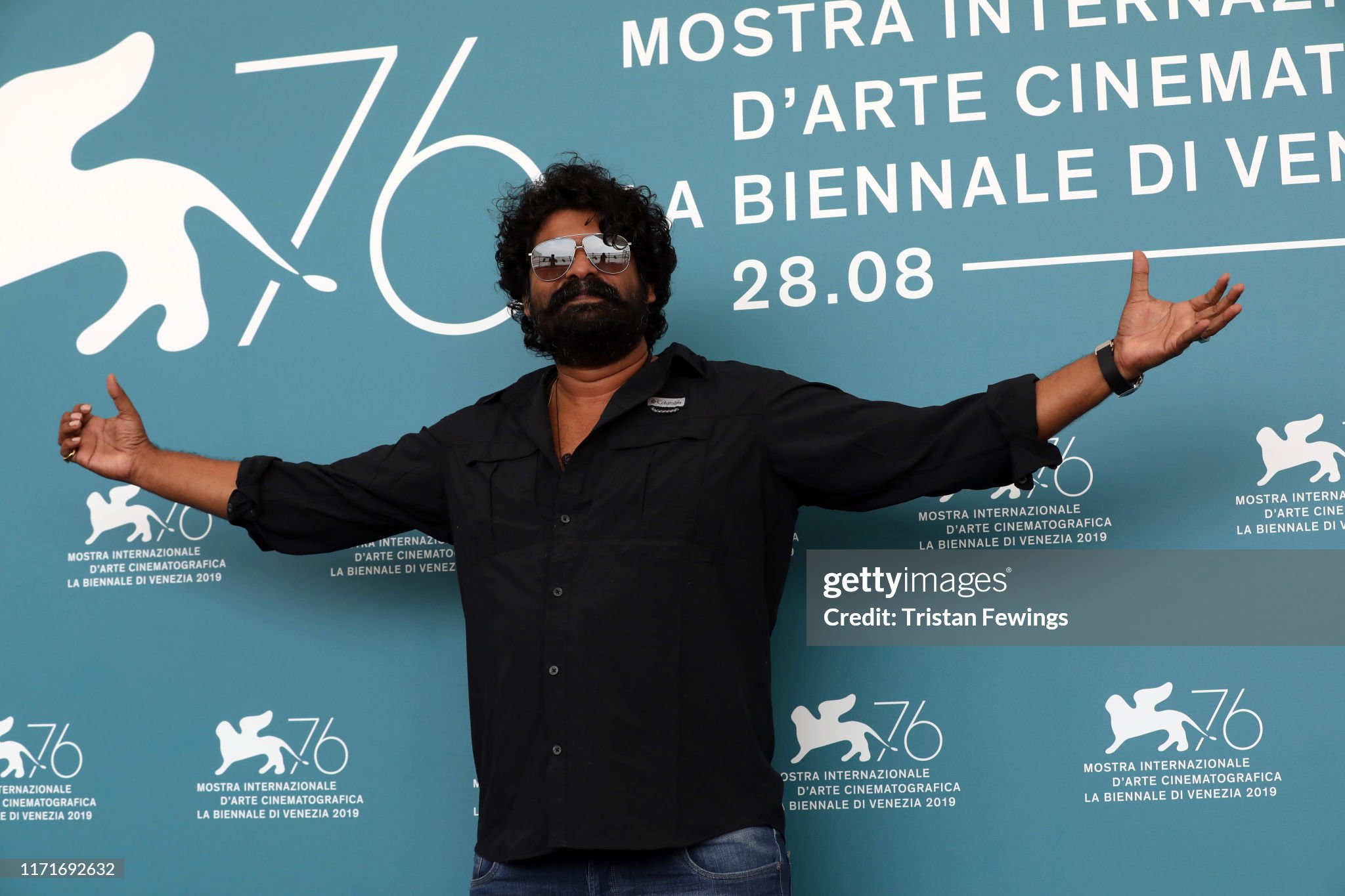
La 76esima edizione della Mostra del Cinema di Venezia si è svolta dal 28 agosto al 7 settembre 2019. Nella sezione Orizzonti erano in concorso:
- Chola (malayalam), diretto da Sanal Kumar Sasidharan e interpretato da Nimisha Sajayan, Joju George e Akhil Viswanath. 
- Darling, cortometraggio pachistano di Saim Sadiq. Darling si è aggiudicato il premio per il miglior cortometraggio. 
Il film d'animazione Bombay Rose di Gitanjali Rao aveva inaugurato, in prima mondiale fuori concorso, la Settimana Internazionale della Critica.

Sanal Kumar Sasidharan

RASSEGNA STAMPA/VIDEO

- Video ufficiale: intervista concessa il 2 settembre 2019 da Sanal Kumar Sasidharan, Nimisha Sajayan e Joju George.
- Recensione di Bombay Rose di Davide Di Giorgio, Duels, 29 agosto 2019: 
'Pennellate di colore, denso e materico, e la città progressivamente si forma: sin dai titoli di testa, Bombay Rose descrive un mondo assolutamente impressionista, che però è anche un viaggio nel quotidiano dell’India. (...) C’è, insomma, un mondo vivo, che si lega a doppio filo con una realtà da sogno, esplicitata dall’azione quasi sempre in secondo piano, contrappuntata dal passaggio delle auto in primo piano, che permette gli stacchi di montaggio. È il mondo del sogno, simboleggiato dai film di Raja Khan, divo d’azione di Bollywood, di cui è avido consumatore Salim. Ma anche dalle autentiche aperture oniriche del testo, che tracciano traiettorie a metà tra la fiaba e il mito, tra iconografie tipiche del folklore indiano (...) con l’immediatezza pur lirica e potente che crea collegamenti impossibili con le culture a noi più familiari (vengono in mente certi lavori di Lorenzo Mattotti, in testa ovviamente i suoi Quaderni indiani). La differenza lo fa proprio uno stile pittorico che Gitanjali Rao domina con la volontà di creare un poema visivo. L’artista scrive, dirige, disegna, gestisce l’animazione, cura il montaggio e compare un po’ in tutti i dipartimenti per trasmettere l’impressione di un’opera personalissima, eppure opportunamente contaminata da riferimenti vicini e distanti al mondo in cui racconta. (...) Una volta preparato il terreno, la storia può così concedersi il doppio passo di chi racconta una vicenda squisitamente popolare (a conti fatti un piccolo melodramma, pur nelle sue divagazioni più lievi) ma con implicazioni più alte: il ruolo della donna, lo scontro di culture e religioni, (...) le convenzioni sociali. Il sogno e il desiderio diventano pertanto chiavi di lettura del mondo e possibili punti di fuga di una realtà indagata nei suoi strati di colore attraverso una corposità del tratto, però sempre attenta a mantenere una certa levità iconografica. I personaggi sembrano come fluttuare, spesso non hanno ombra, propendono verso un altrove perennemente inseguito, sebbene siano ancorati a vite assolutamente problematiche. La ricerca è sempre orientata a una semplicità appagante, in grado di trasmettere empatia per i personaggi e fascino per le iconografie. La scelta dell’animazione da parte di Gitanjali Rao appare quindi chiaramente rivolta alla necessità di cercare soluzioni differenti per raccontare il nostro tempo e mondo'. 

Nimisha Sajayan

- Recensione di Bombay Rose di Alice Catucci, Sentieri Selvaggi, 30 agosto 2019: 'Bombay Rose è un film a più strati, sia sul piano stilistico che su quello di contenuto, e la sua vera bellezza sta nel fatto di di saper sfruttare le potenzialità del genere, prima fra tutti quella di comunicare la complessità in modo semplice, sussurrando direttamente a luoghi reconditi e interiori prima che ai piani alti, intellettuali e celebrali. Così Gitanjali Rao è bravissima nel rispettare la forma del racconto per bambini mettendo a punto un film duro ma anche dolcissimo, proprio a dichiarare l’estrema urgenza di tramandare alle nuove generazioni un messaggio di libertà'.

Joju George

- ‘This is the story of any young migrant in Bombay’, intervista concessa da Gitanjali Rao a Divya Unny, pubblicata da Open il 6 settembre 2019:
'Bombay Rose tells the story of migrants in Mumbai in a struggle for love and survival. How did your relationship with the city reflect in the story?
I have been a Bombay girl all my life. Growing up in the 70s when the city was a lot greener, calmer, more rudimentary than it is today. I remember there was a swarm of snakes and tortoises from the station to our home in Borivali, and the sea was much closer. It feels like a different time all together. After I joined JJ college of Arts in South Mumbai, I saw a whole new colonial side of the city, and new people. When I travelled I’d see working women in the trains, especially those coming home from the 6 am telephone exchange shift. It felt safe, and there was somehow more equality and equilibrium within sections of society no matter what class you belonged to. This was a migrant city and it felt so much more like home, than it does today perhaps. The people from the city and those who made the city their home work together, build lives together. Even today there is a skyscraper next to a slum. The working class and those you are working for live side by side. It’s polarising, but it also brings a lot of tolerance and vibrancy in your way of life.
Is the film inspired by these women?
It’s a story of any young migrant in the city. A story of service providers, not us privileged lot. It’s also a documentation of things as how people would see it. Many times I’d see these young girls selling clips and accessories in the trains. They’d be very chirpy and by the end of their day there would be this very animated discussion with their friends on how it went. I always imagined what their stories would be like. In Bombay Rose there is a young girl selling gajras who works on the street in the day, who is educating her sister and who dances in a bar at night for money. There’s a young boy selling roses who falls in love with her and deals with her reality. And there’s an older woman who used to be a background dancer in 50s Hindi films and is trying to re-imagine her world today. All these stories within the backdrop of the ever bustling city intertwine to make us understand what it feels like to live this life in the city. In Bombay you can almost look into someone’s house. Life is spilling out here, things are passing me by. You are either rushing for work or you are going somewhere for an appointment. If you could just stop and watch, what would you see, there’ so much that one can observe. That was the inspiration for Bombay Rose.

Akhil Viswanath

Yours is the first animation feature from India to travel to Venice, Toronto and now Busan. It’s a milestone in itself considering India is not exactly known for its animation work internationally. Do you see this as a step forward?
It’s taken me six years and a lot of patience and resilience to bring this film together. I have worked hard with a very solid team to evidence the skill of Indian animators and storytellers and Venice’s response has proved that all the hard work has paid off. Not that international festivals are the only benchmark for success, but, yes, since anime is a genre that’s explored far more in American and European countries, it becomes a good leveler for a film like Bombay Rose. Venice or Toronto already have very high benchmarks and it’s incredible to be part of that space. Plus a story like this based out of Bombay which is so true to its world, yet so universal resonating with audiences from the world over proves the fact that be it animation or live action, five minutes into a good film no one is thinking of the genre, but invested in the story.
Are social realities that reflect in your films (...) an important aspect of the landscape of your cinema?
Isn’t it for anyone who is trying to tell a story? After Babri Masjid and the 1993 blasts in Mumbai, I witnessed the politics of the city change. That’s when you don’t take a city for granted. Only stories of how it was remain and become part of your collective imagination. I remember I was doing theatre at the time with Anurag Kashyap and others and it affected all of us a lot. You will see that expression in his work as well as mine. Also social realities bind us together as human beings, the aftermath of it, the pieces that we are picking up make us who we are. This is a universal truth. Hence the colours, the sounds, the characters, the music all of it within my films would reflect it.

Saim Sadiq

Your work as an actor in Shoojit Sircar’s October (2018) was well-appreciated. Is performing on camera simple?
I worked under Satyadev Dubey when I was 16 as an actor for three years. That’s a very impressionable age and you don’t forget something you have learnt when you’re that young. His was also a very whiplash kind of teaching so there was no option but to learn. It was a time when you’re discovering yourself, forming opinions, learning about your bodies, and so much more. The problem was that I would often get confused between my acting self and real self. They would often clash. It became difficult to demarcate which is which after a while, which was a bit intimidating. It was the reason I quit acting. The ego of the actor has to be honed in a different way, which is why I prefer to be behind the camera.
Do you have any specific aims for 2D animation in India?
I want to tell the stories that are wholesome in a way that they need to move people. (...) The 3D version is too real. There is no room for imagination. In 2D people’s imagination fills up what’s lacking and they then become part of your story. It’s also a space that could do with some serious funding and attention in India. There are only a handful of us doing it and we have to do the best we can. I also want to keep our folk art alive through the films I’m doing because that’s the form of art that got very peripheral attention. (...) What I would like to do is take on the beauty of a certain time and bring that into a mainstream. (...) It is our responsibility to not let all the artisans die. And if a film like mine releases in the theatres here and people watch it in its full glory I would consider it as a big win. It would give so many people reason to do more'. 

Gitanjali Rao


Saim Sadiq e Susanna Nicchiarelli


28 agosto 2021

CONSERVAZIONE E RESTAURO DEI FILM INDIANI


Vi propongo integralmente l'articolo India has the world’s lowest survival rate of cinema. And this heritage needs attention, di C.S. Venkiteswaran, pubblicato oggi da The Hindu.

'Cinema might fire India’s imagination, but both imagination and passion fail when it comes to preserving the country’s rich cinematic legacy.
One of the most unorthodox directors to emerge during India’s parallel cinema movement in the 70s and 80s was G. Aravindan. With 18 films, seven national film awards, and a Padma Shri to his credit, he is rightly seen as a cinematic icon. Yet, appallingly, not one of the negatives of his films has survived. They are either lost or irreparably damaged. Finally, 30 years after his death, his film Kummatty (1979) has been restored and it premiered at the Cinema Ritrovato festival last month.
The restoration of Kummatty, hailed by Japan’s foremost film scholar and critic, Tadao Sato, as the most beautiful film he had ever seen, was done through an international collaboration, under the World Cinema Project initiated by Martin Scorsese’s The Film Foundation, the Film Heritage Foundation in India and the Cineteca di Bologna film archive in Italy.
In his book, The Death of Cinema, Paolo Cherchi-Usai refers to an article published in 1897 in which the life of a cinematograph frame is arithmetically worked out as ‘one-and-one-third seconds’. So, Usai says, it is the most ephemeral of things, whose life is even shorter than that of a firework, and he wonders whether film eventually exists only in the minds of its viewers. If so, physical preservation of film becomes secondary. Indian culture, with its penchant for concepts like maya and transience, seems to follow a similar attitude to cinema.
This is in spite of the fact that cinema, its images and sounds, stars, singers and stories inundate our everyday life and imagination. But when it comes to its preservation or archiving, attention and care are strikingly lacking. The National Film Archives of India (NFAI) was established in 1964 - a decade and a half after Independence - and whatever we have today in terms of the rich and varied legacy of the celluloid era of Indian cinema owes greatly to P.K. Nair, who headed the institution in its first decades (1965-1991). In his tenure, he collected over 12,000 films, of which 8,000 were Indian. Interestingly, Nair retired from the Archives when television was beginning to swamp the media scene and much before digital technologies changed the rules of the game.
The new technologies made preservation and storage of visual image easier and faster, and with significantly less spatial and infrastructural facilities. But has this actually given a boost to the quantum, quality and pace of film preservation, archiving and restoration in India?
According to Prakash Magdum, director of NFAI, “During the silent era, some 1,350 films were made in India, and only 30 survive now, and that too not in their complete form. It is to be noted that there is no legal deposit system in India that mandates the producer to keep one copy of the film at NFAI. Efforts are on to amend the Cinematograph Act, 1952, to bring in this provision, so that we can preserve the films cleared by the Central Board of Film Certification. NFAI currently has more than two lakh reels in its collection and we have managed to source more than 5,000 films in the last five years alone.”
Film historian and theorist Ashish Rajadhyaksha estimates the pure celluloid survivals at 8-10% of the films made. This is by far the lowest survival rate of cinema in the world, when compared to countries and industries of similar magnitude such as China (31%) and Argentina (30%). In other words, for governments, cinema has always only meant mass entertainment, one that needs to be curbed through censorship and leached through taxes.

South story

According to Theodore Baskaran, film scholar and historian of Tamil cinema, “Neither the government nor trade outfits took any initiative till the 1960s to preserve films. According to the Registration of Books Act of 1867, all published books have to be preserved in one of the national libraries. There was no such provision for films. It was only after half a century of filmmaking in India that the need to preserve films was felt.” Despite being a young art and of the print era, even written material on cinema is sparse. “If you look at the Tamil magazines of the 1920s and 1930s, you will hardly see any reference to cinema. They did not take any notice of the birth of a cultural colossus in their midst.”
Baskaran observes that, even from the first decade of Tamil talkies (1931-1941), when more than 240 films were made, only about 15 have survived. Interestingly, Marthanda Varma, made in 1931 (produced by Sunder Raj and directed by P.V. Rao), survived not due to any archival effort but for a legal imbroglio: after its initial screening, the film was confiscated following a copyright case filed by the publisher of the book on which the film was based. Decades later, in 1974, the film was salvaged from a book depot in Thiruvananthapuram; but only 7,915 out of the 11,905 feet of the film managed to survive.
This is how Shivendra Singh Dungarpur, who set up Film Heritage Foundation in 2014, traces the troubling statistics of our celluloid legacy: “Of the 1,338 silent films made in India, just 29 survive, many in fragments, some as short as 149 feet. Of the 124 films and 38 documentaries produced by the film industry in Chennai, only one film survives - Marthanda Varma (1931). By 1950, we had lost 70-80% of our films. This is excluding the numerous missing short films, animation films, television programmes, advertising commercials, home movies, etc., often forgotten in the shadow of the silver screen, but as important, and the fabric of our visual history.”
“There is something very wrong with the way we are taught to dismiss the art of seeing as something ephemeral and negligible,” said Martin Scorsese. But apart from the general apathy towards cinema as a vulgar mass art, unworthy of serious attention leave alone preservation and archiving, several other factors have contributed to the sad state of affairs. The sheer diversity, quantum and locations of production scattered across the country have proved to be a major hurdle.

On the scrap heap

The nature of the film stock itself was film’s worst enemy: its nitrate content was prone to rapid deterioration in tropical climates, and most film reels were scrapped and destroyed to salvage the silver content. After films completed their run in the theatres, they were forgotten and left to decay, or found their way to the scrap market. Many nitrate films were destroyed by fires at vaults, studios or even during projection. Even the more stable and non-inflammable cellulose acetate ‘safety films’ that came later are prone to decay if not stored in humidity- and temperature-controlled conditions.
While conscious, committed, institutional efforts to preserve films were slow to evolve, technological shifts helped to salvage them to a great extent. The advent of video technologies popularised the circulation of films through VHS cassettes, thus extending their lives. The advent of television spurred a new demand for old movies and, in turn, their transfer to video formats. The digital revolution that followed offered cheaper and easier storage formats like VCD and DVDs. Finally, the emergence of Internet platforms and sharing modes such as YouTube and torrents endlessly replicated whatever was left of films and made them available in the public domain. But the flip side of this quantum leap was the loss of quality and care for fidelity, leading to low-resolution reproductions and truncated versions.
According to Scorsese, the terms ‘preservation’ and ‘restoration’ are being indiscriminately appropriated by marketing experts “who know nothing about preservation itself but are aware of the economic potential of its public appeal. Many of the films made available today through electronic media are misleadingly hailed as ‘restored’, while nothing really has been done to enhance their chances to be brought to posterity.”

How to choose

Added to this is the problem of choosing which films to preserve. When there is a trade-off between the number of films and resources at hand, issues such as prioritisation, its criteria, agency, and timeline emerge. Even though FIAF’s (International Federation of Film Archives) 70th Anniversary Film Manifesto pleads, ‘Don’t Throw Away Film’ and considers every scrap of film as a visual document to be preserved for posterity, one can’t expect state institutions to be fired by such passion or inclusivity.
When priorities for preservation and restoration are set - like age, awards, critical acclaim, historical importance, and material condition - films that do not ‘qualify’ fall outside the scanner. In the process, works that were ‘ahead of their time’ may lose their only chance of survival. Political dispositions and biases of the state can also lead to ‘selective preservation’, which could relegate oppositional voices to oblivion. The essential precondition for proper restoration is the availability of the film material - good quality negatives or prints that are kept in temperature-controlled environments. Considering the number of films made in India, the facilities available are minuscule. As old technologies fade out, the basic production processes also disappear - for instance, the facilities for photochemical processes have become non-existent now. Added to this is the indifference of even the established production houses and banners towards preservation.
Even more tragic is the case of independent and experimental filmmakers. Most of their works were made on shoestring budgets raised through informal and personal sources of finance; they seldom had any established producer/ production house or even a permanent office address to follow up on the negatives kept in laboratories. Whenever there is pressure on storage space, or a shift in technology, the negatives and prints of these ‘orphaned’ films are the first casualty. As a result, the negatives of films of even the most eminent filmmakers in the country are not available for restoration.

New initiatives

One major initiative in the recent past is the establishment of the National Film Heritage Mission under NFAI that seeks to preserve, digitise and restore India’s cinematic heritage. The Mission has ambitious plans to conserve around 1,50,000 reels of film, digitise around 3,500 films and sound tracks, and restore around 2,000 landmark films. But the stupendous, costly and complex task of preserving India’s film heritage calls for more financial and technological resources, public-private partnerships, and curatorial synergies. It also requires coordinated and sustained involvement on the part of the film industry, film historians, curators and professional organisations in the field, and for international partnerships to bring in state-of-the-art know-how.
In recent decades, there have been a couple of significant initiatives in the non-state sector. One sterling instance is the independent digital repository Indiancine.ma that blends archival passion, historical perspective, and academic vision to create a very rich digital collection of Indian films. The other is Dungarpur’s Foundation. After Kummatty, the plan is to restore another Aravindan classic, Thampu, as well as Satyajit Ray’s Aranyer Din Ratri and Shyam Benegal’s Mandi.
But much more needs to be done. And it is a colossal task in a vast, vibrant and active film culture, where around 2,000 films are produced every year in as many as 45 languages. The diversity in centres of production, trade practices, platforms of exhibition, and modes of reception make the picture even more complex.
It is already too late, and if we don’t act right away, the most vibrant celluloid heritage in the world, and more importantly, one of the richest visual archives of our life, land and culture, will disappear forever'.

26 luglio 2021

MOSTRA DEL CINEMA DI VENEZIA 2021


La 78esima Mostra del Cinema di Venezia si svolgerà dal primo all'11 settembre 2021. Once upon a time in Calcutta, pellicola in lingua bengali diretta da Aditya Vikram Sengupta, è in concorso nella sezione Orizzonti. Gli attori Sreelekha Mitra e Arindam Ghosh sono attesi al festival. Trailer. Vi ricordo che il film muto Asha Jaoar Majhe, opera prima di Sengupta, era stato presentato a Venezia, nel 2014, nell'ambito della rassegna autonoma Giornate degli Autori, e si era aggiudicato il premio per il miglior regista esordiente (stesso premio conquistato anche ai National Award). Once upon a time in Calcutta è in cartellone a Milano, in occasione dell'evento Le vie del cinema 2021, dal 22 al 30 settembre.
Vi segnalo inoltre il cortometraggio pachistano Mulaqat, diretto da Seemab Gul, in concorso nella sezione Orizzonti.

Sreelekha Mitra e Arindam Ghosh - Venezia, 2021


RASSEGNA STAMPA (aggiornata al 28 settembre 2021)

- A city of walking ghosts and new beginnings, Nandini Ramnath, Scroll, 7 settembre 2021. Intervista concessa da Sengupta:
'The earliest image in Once Upon a Time in Calcutta is of fire. Out of the ashes emerge, appropriately enough, an elegy about one of India’s most storied cities. (...) Kolkata is both a graveyard of desires and the birthplace of new and sometimes unmanageable desires. The Bengali-language film follows Ela, a small-time actor, and the people in her lives. (...) After the death of her only daughter, Ela resolves to leave her husband Shishir and move out of their residence in an old building in South Kolkata. Ela’s journey is guided by the reappearance of an old flame and a tempting offer from the head of a building project in a satellite city on the outskirts of the megapolis. The movie also explores Ela’s relationship with her mother, a famed cabaret dancer, and her step-brother Bubu, who owns a theatre for stage productions in the heart of the city and is refusing to sell it to a real estate developer. Among the themes is the tension between the comfort of habit and the seductions of untested experiences, the rising influence of speculative capital and questionable get-rich-quick schemes, and the transactional nature of modern relationships. Stasis and rupture co-exists in the city of Sengupta’s imagination. Rabindranath Tagore is a talismanic presence in a movie filled with restless souls and the ghosts of an oppressive past. “All papers are fake these days,” a character observes - a truth that Ela is eventually forced to embrace. (...) Once Upon a Time in Calcutta contains striking tableaux, mood lighting and expressionist locations imbued with meaning and stories of their own. (...)
The city in your film appears to be growing outwards but hollowing out too.
The core of the city isn’t made of physical spaces but of people. That’s what I wanted to explore - the city and its various layers through the people. This is something I have been feeling for the past few years - the core of the city is kind of emptying out slowly. A lot of it has to do with globalisation and a booming information technology industry. There doesn’t appear to be a sense of great discovery, and getting to know people nowadays requires great emotional investment. For me, the film was about getting into the minds of the people. They inhabit worlds of their own with their own baggage and aspirations.
‘Once Upon a Time in Calcutta’ was previously titled ‘Memories and My Mother’, right?
Yes, that was previously the working title. The story and script were in a more magic realist space and had to do more with the fact that all the characters were motherless, and their mothers appeared to them as spirit. It started evolving and became more realistic. Of course, the city changed too, as did I. An earlier title was Aquarium, about looking at these different kinds of fish but from the outside. I liked the title a lot, but no one else did.
How has your relationship with the city of your birth changed, specially since you divide your time between Kolkata and Mumbai?
I lived full-time in Bombay between 2008 and 2011 and then again for a few years. I continue to work out of Bombay, it’s like my workshop. I feel most at home in Bombay, the people are warm and there is a sense camaraderie but the space gets to me. I moved back to Calcutta because I get more space to work here. I have my music and painting studio here. There are many things to crib about, such as the attitudes of people, the slowness of getting things done, the fact of being stuck in certain ideas. But there are also certain strange comforts - the familiarity of the afternoons the evenings, the sounds of bells, the smells of bedsheets that have come out of old wooden cupboards. It’s a complex love-hate relationship.
Tell us about the faces and places in your film.
Everything you see in the film is based on real people or experiences. For instance, the dinosaur that is demolished to make way for a flyover in the film - there was one such dinosaur that was built whe made in 1995 when the Science City [tourist attraction] came up. A flyover was built here later. When the half-made flyover approaching from one end and reached the dinosaur, it looked like the starting point of a race. I had clicked a photo at the time. It had a deeper meaning for me, and in fact, is the starting point for this film. Characters like the dinosaur cannot exit in this new eco-system. I always like looking for real locations and existing places. (...) There is no pre-decided colour palette. This is a contemporary film about the beauty as well as vast and stark differences in all these places - the clashing colours and un-coordination, in a sense. Bubu’s theatre is the Sarkarina theatre in Hatibagan. (...) When the theatre started declining, cabaret was introduced here. It’s where people like Miss Shefali performed. She appeared in a few Satyajit Ray films. (...) Ela is supposed to be her daughter in my film.
Why did you pick Gökhan Tiryaki as the cinematographer?
I have always wanted to work with him. His films with Nuri Bilge Ceylan are very character-driven, and I am a very visual person. The film is a mixture of both. I thought it would be interesting for him to have his mind on the film. Besides, I love collaborating with and working with people. We shot the film between January and March in 2019. I like to work with a light crew, I like it to be peaceful and meditative. When we would go the sets, Gökhan and I would first sit around and talk about the scenes. We would get the actors on the sets and then make them do their scenes over and over again. We would just watch them, and not film them. Gökhan would move round them like a planet to get the right point of view. Once we fixed the angle, we would only then take the shot.
Why made you cast film and television Sreelekha Mitra in the lead role?
The casting process went on for two years. But when writing Ela’s character, Sreelekha was the only one who I felt could play this role. Her own life and struggles have been similar to Ela’s. When we were shooting the film, she was trying to move to a new apartment at the end of the city. She has always felt that the Bengali film industry never gave her the love and respect she deserved. She has an interesting physicality, and brings greyness to the way she behaves with the other characters.


- Recensione di Once upon a time in Calcutta, Sankhayan Ghosh, Film Companion, 7 settembre 2021: 'There are many remarkable things in Aditya Vikram Sengupta’s Once Upon A Time in Calcutta, which begins with the death of the protagonist’s four year old daughter. One of them is how, instead of crushing her, the event sets the middle-aged and independent minded Ela (Sreelekha Mitra, in one of those roles that makes you wonder which came first: the character, or the actor?) on the path of liberation. (...) In another film, this would have been a personal journey narrative, disconnected from the larger forces at play. Sengupta’s film locates her in a specific time and place, connected to the events and spaces that have shaped Kolkata in the past few years. (...) The film has been rightly described as a chronicling of a post-communist era city. This is a new Kolkata - one that our cinema has failed to reflect. Once Upon A Time in Calcutta tries to articulate the complicated feelings for this new city of blue and white. The title makes sense for multiple reasons, and one of them is the refusal to let go of the past. (...) Once Upon a Time in Calcutta is both Sengupta’s most ambitious and conventional film. It shows the director in a somewhat new light. (...) Here Sengupta (...) has a better go at handling actors the way we are used to seeing in narrative cinema. And he seems to posses a natural talent for it, imbuing even the smallest characters with something unique to hold our attention. (...) This is a film rich in images, scenes and shots'.
- Recensione di Once upon a time in Calcutta, Gautaman Bhaskaran, CNN News18, 8 settembre 2021: 'Sengupta, who is also the writer, tries to present a city after it’s emergence post the 32-year Communist rule in West Bengal (whose capital is Calcutta, now renamed Kolkata). The piece is nostalgic both in its tone and tenor, and the richness of the colours gives an almost ethereal glow to the city. (...) The images are fascinating and certainly brought back memories of the city where I grew up, and whose decline I watched with a lot of sadness. (...) Once Upon A Time in Calcutta has a compelling plotline, but wanders away from it by taking on too many issues. A chit-fund scam, flyover collapses, corruption, jilted love and what not crowd the narrative making the pacing jerky. And unimaginative editing robs the feature of a certain crispness which could have been otherwise achieved. It also is far too long. Half way through, we lose sight of the core premise, and Sengupta’s effort is laudable, even ambitious, but somewhere he lets the reins slip'.


- Recensione di Once upon a time in Calcutta, Elisabetta Colla, Taxidrivers, 16 settembre 2021: 'Atmosfera grigia e cupa, (...) per raccontare una Calcutta insolita. (...) In alcuni momenti  difficile da seguire e poco ispirato. Pure la modalità in cui le storie vengono ad intrecciarsi e l’affresco di una Calcutta ‘altra’ interessano e colpiscono. (...) Una narrativa densa e noir, il c’era una volta di una favola drammatica, con qualche raro raggio di sole che sembra intravedersi di quando in quando nei difficili rapporti umani raccontati dal film. Il regista descrive individui con gravi problematiche esistenziali, solitudini relazionali e nostalgie di tempi migliori, quelli dell’infanzia, quando era ancora forte la dimensione comunitaria, e la difficile ricerca di un posto nel mondo, dopo aver sperimentato il dolore e la morte. (...) Ispirato a fatti realmente accaduti, il film (...) potrebbe alludere a una critica di Sengupta all’urbanizzazione selvaggia, priva di regolamentazione, che ha accelerato i processi di disintegrazione socio-familiare e favorito ulteriormente miseria e solitudine. “Il film è il culmine dei sentimenti e delle emozioni che provo per Calcutta e i suoi abitanti - afferma il regista - una città impegnata nel tentativo di stare al passo con un mondo in rapida evoluzione e le aspirazioni e gli sforzi di persone che annaspano in una metropoli in continua espansione. Utilizzando personaggi reali ed eventi effettivamente accaduti, il film è il mio tentativo di eliminare i vari strati della città un tempo comunitaria, per rivelare una condizione umana tragica ma, allo stesso tempo, piena di speranza e di gioia. Ho cercato di dare agli spettatori un vero spaccato delle acque torbide di Calcutta, attraverso dei personaggi vivaci che cercano in ogni modo di ritagliarsi un loro spazio, senza affogare”.'


- Recensione di Once upon a time in Calcutta, Raffaele Meale, Quinlan, 28 settembre 2021: 'Sono molte le suggestioni che derivano dalla visione di Once Upon a Time in Calcutta. (...) Innanzitutto emerge una riflessione che il film condivide con altre opere provenienti dall’Asia e viste al Lido: (...) in un mondo oramai completamente e compiutamente globalizzato, (...) anche nazioni che fino a qualche anno - decennio? - fa erano considerate “in via di sviluppo” quando non direttamente “terzo mondo” presentano fenomeni sociali ben noti e storicizzati in Occidente, ad esempio la cosiddetta gentrificazione. (...) Sengupta (...) ha le idee molto chiare, e partendo dallo spunto narrativo suggerito dianzi vorrebbe aprire uno squarcio nel velo posto di fronte all’India contemporanea, mostrando il rampantismo di un microcosmo sempre più avvelenato dal demone del potere economico, e dunque spinto ad azioni perfino inimmaginabili. Il suo è dunque un discorso parzialmente metaforico ma soprattutto morale, la visione di un mondo disgregato che ha perso le sue radici e fluttua in un contesto socio-economico dominato dalla barbarie, dall’homo homini lupus. La Calcutta mostrata nel film è una città/mostro, cloaca nella quale si annaspa e si può al massimo sperare di sopravvivere: perfino il raggiungimento di una apparente sistemazione, magari in un modernissimo grattacielo fuori dalla cintura del centro, è illusorio, e del tutto transitorio. Per mappare questo mondo in apparente progresso ed evidente autodistruzione Sengupta si lancia in un grande racconto corale, mettendo insieme trame e sotto-trame nel tentativo di permettere allo spettatore la posizione privilegiata (in uno dei grattacieli di nuova costruzione?) per una visione d’insieme. Il risultato non è privo di fascino, ma alla lunga risulta farraginoso anche perché il regista non riesce ad evitare quelle che appaiono in tutto e per tutto come scelte di comodo, o per meglio dire retoriche: ecco dunque l’amore del passato che torna a palesarsi celando però la verità sulla propria condizione familiare; ecco il criminale che si propone a Ela come risolutore della soluzione portando con sé suggerimenti a dir poco inappropriati; ecco il campo controcampo tra il reale - il teatro abbandonato da decenni al suo destino - e l’onirico - la memoria della donna che con le sue esibizioni aveva reso celebre il locale; ecco, infine, una politica corrotta che ama vendersi come innovativa, visionaria, moderna. Tutti schemi usurati, un po’ come lo schema Ponzi alla base della truffa immobiliare in cui viene messa in mezzo Ela, e che alla lunga appesantiscono un racconto cui avrebbe giovato una maggiore leggerezza espositiva, e forse anche un’ambizione meno evidente. Per questi motivi Once Upon a Time in Calcutta non riesce ad appassionare, se non per alcune singole intuizioni (il crollo non solo metaforico della politica cittadina nel finale, per esempio)'.