15 agosto 2022

KHALED HOSSEINI AND HIS NEW BOOK 'AND THE MOUNTAINS ECHOED'


[Archivio]

Il 15 agosto 2021, esattamente un anno fa, i talebani entravano a Kabul: l'Afghanistan era ormai nelle loro mani. Alla luce di quanto accaduto nel Paese, prima e dopo quell'evento, e che indirettamente ha coinvolto in parte anche l'Italia, fa una certa impressione rileggere la lunga e personale intervista concessa nel 2013 da Khaled Hosseini, nella quale il noto scrittore parlava della sua esperienza e della storia recente afgana, ed esprimeva le sue speranze - sino ad ora purtroppo disattese - in relazione al futuro. Ve la propongo di seguito.
Khaled Hosseini and his new book And The Mountains Echoed, Saudamini Jain, Brunch, 26 maggio 2013:

'Khaled Hosseini is perhaps the most well-known Afghan in the world. The Kite Runner was a heartbreaking story of an Afghan living in California who returns to Kabul to redeem himself of the guilt of shunning a childhood friend. In 2007, Hosseini released his second work, A Thousand Splendid Suns, a profound tale of two women and how their lives change through Afghanistan’s tumultuous decades. Both books, at heart, are a narrative of Afghan life - of human experience during war and how it brings out the best and worst in people. They’ve sold 38 million copies across 70 countries. Hosseini wasn’t always a writer. He was a doctor in Los Angeles, although he enjoyed writing stories, even as a child. And it is ironic that when he wrote his first book, he hadn’t been to Afghanistan since 1976 when he was merely 11 years old.
Hosseini was born in Kabul in 1965, the most peaceful time in the history of modern Afghanistan. Luckily for them, the Hosseinis moved to Paris (where his father was a diplomat at the Afghan embassy) just two years before the communist coup in 1978. As things got worse in Afghanistan - the Soviets invaded in 1979 - the family knew they couldn’t go back. "From our apartment in Paris, we received regular news of family members, friends, or acquaintances who had been imprisoned, tortured, killed, or had gone missing," the author recalls. In 1980, when he was 15, the family gained asylum in America. It’s where Hosseini learnt English, became a doctor, married and had two children. All far from the turmoil of his homeland.

And The Mountains Echoed is your first book that doesn't deal with the Taliban. Is it a conscious effort to move past the Taliban in your writing?
As a writer, well, I had written about it already in both my previous books. And I didn't want to dwell on the same thing again. I also felt no responsibility because I was born in Afghanistan to write about something that's going on in Afghanistan right now. You know, I'm a novelist. I see my role as someone who is guided by ideas that compel him. And for me, it wasn't a conscious effort not to write about the Taliban. It's just that it doesn't appeal to me at this point anymore. I really didn't want to retrace my steps. But also, organically, the way these characters were formed in my mind. They were characters that grappled with things that didn't play out in a large political war, dealing with things far more personal, intimate - loss of home, loss of parents or a child, trying to reconnect with your family, wanting to belong somewhere. These are the kind of things that these characters are struggling with.

What inspired you to write it?
The novel was not something that sprang fully formed from my mind, nor something that I sat down to plan. I may have thought of it as early as 2007, when I travelled to Afghanistan with the UN Refugee Agency to visit with returning Afghan refugees. One of the most striking parts of that trip for me was learning from village elders the devastation that Afghanistan's notoriously brutal winters visited upon impoverished villagers, routinely taking the lives of the young, the elderly, the sick and disabled. I listened with a mix of horror and admiration to the tales of survival, the choices villagers made, the lengths to which they went to protect their families through the cold season.
When I came home, I tried to picture what I would do under those same circumstances. Slowly, a family began to take shape in my mind-not unlike the many I had visited - one living in a remote village, forced to make a painful choice that most of us would find unbearable. At the heart of this family, I pictured a young brother and sister, who become the unwitting victims of their family's despair. The novel begins, then, with this single act of desperation, of sacrifice, an act that ruptures the family and ultimately becomes the tree trunk from which the novel's many branches spread out. The bulk of writing this novel, and really the joy of it, was in pursuing the far reaching ripples of this one act, discovering the lives it had touched and transformed and all the unexpected ways in which it still echoed through the decades.


How long did it take to write the book?
This book didn't actually take six years to write although it has been six years since the publication of my last novel. I spent a year forming ideas, just to find a proper voice to follow. I spent one year taking care of my father who became very ill and eventually died. This novel was actually started a month before my father died, in November 2009. So I spent about two-and-a-half years actually writing this book.

Is any of the new book autobiographical?
It's not autobiographical per se. There are occasional sections of the book where I've written about something I've personally experienced. One example is that I was in Kabul in March of 2003 like the characters of Idris and Timur are. I have some similar experiences as them, experiences of the post 9/11 Kabul. I was overwhelmed by a sense of having not gone for so long, trying to reconnect. In fact when I went to Afghanistan in 2003, a young girl had suffered the exact some injury in precisely the same way I've mentioned in the novel [And The Mountains Echoed]. I've changed the names. But I've met her only one time. And I never got to know her personally. I went to the hospital and I saw this young girl who had been attacked by a family member and suffered injuries on her head. And parts of her brain oozed out. It was shocking. I've thought about her a lot over the years. I've thought about how one responds to a tragedy like that, how one approaches something like that in a respectful human way. And it made for an interesting story about kindness about finding in yourself a way to help other people and what it takes to do that. So a part of that is my experience. But most of the novel is not at all.

Idris, one of the main characters in your new book, a doctor like you were, often feels guilty about living a comfortable life in America. Do you?
You know, I have been extremely fortunate. I've had a very good career, a very good life. And my living circumstances are not that different from those of Idris. So I share some of the sentiments about Afghans living in exile and some of the conflicts he faces when he goes home. When I go back to Afghanistan, I realise it was just pure genetic lottery that I ended up where I am right now. Nothing more than chance separates me from a family of refugees living in a camp in Pakistan. When you take stock of everything, the life you're living, and compare it to the obstacles other people are facing, it's human to feel a sense of guilt. That's partly the reason I started the foundation [The Khaled Hosseini Foundation provides humanitarian assistance in Afghanistan] - to try to turn that into something positive, something that can make a difference in people's lives.

When you were a child, your own family ended up living in Paris, unable to return home to Afghanistan due to the 1978 coup. What was this time of life like for you? What memories do you have of being an exile in Paris?
The first two years in Paris, from fall of 1976 to April of 1978, were quite wonderful. I had never been anywhere outside of Afghanistan and Iran, where I had lived as a child for two years. Paris flattened me the first time I saw it; it was a feast for the ears, the eyes, and in some ways for me, like having fast-forwarded 100 years. I felt like I had stepped onto the set of a science-fiction film. Prior to Paris, I had never seen a skyscraper, been in an elevator, ridden a subway, or watched cars speeding on a freeway. Those were happy years, with all of us in the family learning French, trying new foods, watching French TV, visiting famous sights, and generally adapting to a new culture - though with the understanding that this was temporary and that soon enough we would be reunited with our friends and family back in Kabul once my father's four-year post ended.
Our last two years in Paris, after the communist coup in 1978, were a time of transformation for us. Our world, as we had known it, was coming unraveled, and there was a sense for us that the ground beneath our feet was shifting in a very fundamental way. From our apartment in Paris, we received regular news of family members, friends, or acquaintances who had been imprisoned, tortured, killed, or had gone missing. We received phone calls from family members who had managed to escape and were trying to seek asylum in the West. It was a time of great instability and anxiety, culminating with my father's decision to seek asylum in the US, where we would have to adapt to a new culture, a new language, and a new way of life. (...)


So, you're absolutely American now.
No! I'm not absolutely American and I'm not absolutely Afghan. In fact, I spend little time thinking about these issues unless somebody asks me in an interview [laughs]. I've learnt organically to live this hyphenated life, you know, with my Afghan side and my American side. I've lived here for 30 years, that's an awfully long time. Inevitably American western sensibilities have seeped into my identity and my personality. But, I was born in Kabul and I lived my formative years there and there is a very, very small connection to Afghanistan. Every time I approach Afghanistan and the plane is about to land in Kabul, I feel a surge of emotions. This is where I was born, where I was loved for the first time. This is where I learnt to speak, to walk. All my childhood hopes and dreams are there. A very strong bond will always be there. Obviously, the bond is far less with my children, They've never been to Afghanistan, I hope to take them one day when it's more peaceful and as a parent I'm less paranoid about them being hurt. I want to show them they city, the house I grew up in. That's a dream at the time being.

But, what has most upset you on your return trips to Afghanistan?
The spread of violence to previously safe areas in Afghanistan is quite distressing. (...) The unavailability of basic social services (water, schools, jobs, shelter, etc) to large sections of the population is also a great disappointment, and is a major "push factor" in the decisions many Afghans make to cross the border illegally into neighboring countries to find a cheap labor market. Part of this is understandable, as Afghanistan was one of the world's poorest nations even prior to the Soviet invasion, and the task of rebuilding it is a Herculean one. But part of the responsibility also falls on the inability of the central government to meet the needs of its people. The absence of effective governance is all too palpable in many regions that I have visited, and the government's shortcomings - coupled with a public perception of pervasive institutional graft - are a source of enduring disappointment to the average Afghan citizen.

Obama has committed to withdraw US troops from Afghanistan in 2014. What do you think the future portends for the country?
I think the next few years will be a time of uncertainty and anxiety in Afghanistan, probably marked by continued political instability and spikes of violence, even as the country moves slowly and gradually toward some form of peace negotiations with the insurgents. The path to peace promises to be a treacherous one, as there is no clear leadership structure on the Taliban side, and the conditions each party will bring to the table are likely to create, at least for some time, a series of impasses. This is not to mention that foreign neighboring powers will have their own stakes and agendas in the process and are likely to exert their influence to ensure an outcome favorable to their own interests.
All this said, I am still cautiously optimistic that peace is a possibility in Afghanistan. Though I do fear- with the withdrawal of the West - a return to the chaos and ethnic civil wars of the 1990s, I am also hopeful that important lessons have been learned from that catastrophe and that the various factions have come to see the dividends of peace. Of course, outside parties have to observe and respect Afghanistan's sovereignty and allow Afghans to attain their own peace. My main hope is that when the peace negotiations do unfold, they are inclusive, and legitimate representatives of Afghan society are allowed to participate. This includes women. Women must be part of the reconciliation process and their interests must be protected at all costs. The agreement should not compromise human rights or relinquish the freedoms that Afghans, particularly urban women, have painstakingly secured over the last decade. The agreement must be just and reflect the genuine aspirations and will of the Afghan people.

Your books are very emotional and sentimental - unlike writing coming from the West. Why do you think your writing appeals to a western reader?
I don't think people respond to emotions no differently than they do in Asia. I have received very passionate, emotional letters from my readers. I don't find people any less emotional than they are there. Yes, my books are more or less in Afghanistan but at the heart they're family stories. They're about parents and their children, they're about love, they're about grief and about loss and about trying to find a home, wanting to belong to something. Those are very human experiences. They transcend any kind of culture, religion, race, language, no matter where you're from you can identify with that. The bewildering success of my books continues to surprise me. I just have to believe that people find something of themselves in my stories. I think, modern, contemporary fiction shies away from the emotional because they fear they might seem sentimental, which appears to be the great crime of writing contemporary fiction. And there's a respect for writing that is comical or analytical. And a kind of frowning on fiction that is strong on emotions. They call it 'pulling the heartstrings'. But none of that is of much concern to me. I write my stories the way that I feel them in my heart.


This is your first book set all around the world. What inspired such a wide range of settings, from Paris to Greece to California?
It is true that this is a less Afghan-centric book than the previous two. There was an attempt on my part in this book to expand the social, cultural, and geographic milieu of my characters and to add a more global flavor to the story. The book begins in Afghanistan and hops around the world, from Kabul to Paris to Greece to northern California and elsewhere. Partly, having traveled extensively the last few years, I wanted to expand the landscape for my characters as well, and partly I wanted to surround myself with a few characters who are nothing like me or the people that I know. There are wonderful writers - Alice Munro comes to mind - who can find an endless supply of deeply felt stories set, more or less, in the same settings. For me, I needed some fresh air, so to speak. I needed to, at least now and then, leave a story world that began with Kabul and ended with Kandahar.

Social boundaries are quite rigid in South Asia. But in your books, people from different backgrounds form intimate relationships. Did those lines blur in Afghanistan at the time? Or does it just make for a good story?
I think it makes for a good story. Although, in Afghanistan, those social boundaries were certainly prevalent but not quite as formal and rigid as they are in India. For me, what's interesting about this is that while growing up in an impoverished country, even in an upper-crust middle-class family, semi-Westernized like my family was, you live right next door to poverty. All you do is just walk down the street and you see abject poverty and you can't escape the two things living side by side. It's a fact of life. So for me, this opulent lifestyle right next door to poverty is fascinating. Economic chasm between people is something that is of interest to me. And something that I used to write about even as a child. It's something I've revisited a few times in my writings.

You write from the point of view of children, women, mothers, brothers and sisters. Is it as effortless as you make it seem?
You're very kind to say that, first of all, thank you. But nothing about writing is easy, ever, ever! Not a single moment in the entire writing process is easy. Everything comes with pain, effort, and is unpleasant. Your only hope is that after the suffering there is something that can be salvaged, something that can make you happy... Every single word that is on the pages of this book is a struggle'.

08 agosto 2022

SHAH RUKH KHAN, L'ACTEUR LE PLUS CELEBRE DU MONDE


[Archivio]

L'intervista non è fra le più brillanti, le domande sono molto generiche, le risposte la copia rimasticata di dichiarazioni rilasciate centinaia di volte in precedenza. Ma non capita tutti i giorni che Paris Match dedichi la copertina a Shah Rukh Khan e che organizzi una sessione fotografica a Mumbai, presso l'abitazione dell'attore. Quindi vale la pena conservare l'intervista (e i magnifici scatti) negli archivi del blog. Shah Rukh Khan, l’acteur le plus célèbre du monde, Dany Jucaud, 15 novembre 2012:

'Vous êtes musulman, et l’islam est aujourd’hui la cible de toutes les critiques. Comment le vivez-vous?
Je suis très perturbé par ce que je vois autour de moi. Je suis très croyant et j’ai étudié l’islam en profondeur. C’est une religion de paix. Le sujet de mon dernier film était : “Mon nom est Khan et je ne suis pas un terroriste.” Je ne me crois pas supérieur aux autres parce que je suis célèbre, Dieu m’a beaucoup donné, et j’essaie avec mes moyens de répandre douceur et gentillesse autour de moi.


A quel moment précis avez-vous compris que vous étiez devenu une star?
Le jour où je suis entré chez un barbier qui, sans me regarder, m’a dit : “Si vous voulez, je peux vous faire la coupe de Shah Rukh Khan!” Je n’ai toujours pas compris ce qui m’est arrivé. Rien dans mon environnement ne me préparait à faire ce métier. Mon père était avocat, ma mère juge. J’étais très jeune quand ils sont morts. Doué pour les études, je me croyais destiné à une tout autre carrière. Puis les événements se sont enchaînés. Sur soixante-quinze films, il y en a six dont je suis vraiment fier. Disons que j’ai été au bon endroit au bon moment. Je crois en Dieu. Parfois, je me dis qu’un jour, en regardant la carte du monde, il a pointé du doigt Bombay et a désigné au hasard une personne en se disant : “Celui-là sera célèbre.” Cette personne, c’était moi!

Vous provoquez des émeutes sur votre passage. Comment faites-vous pour garder les pieds sur terre?
Je suis très heureux d’être une star, mais je ne me suis jamais pris au sérieux. J’ai souvent l’impression d’être un imposteur et qu’on finira par découvrir qui je suis vraiment. Le succès ne vous apprend rien. Quand j’ai débuté, je croyais qu’il suffisait d’avoir du talent. J’ai vite déchanté en comprenant que, dans ce métier, le business est encore plus important que la créativité.


En Inde, on suit la vie privée des stars comme un soap opera. Comment réussissez-vous à préserver une part d’intimité?
Je mourrais pour mes fans. Sans eux, je ne serais pas là aujourd’hui. Je suis tellement ouvert sur ma vie que les gens pensent qu’ils me connaissent et que je n’ai pas de secret. La vérité, c’est que même ma famille ne me connaît pas vraiment. On ne voit de moi que ce qui brille, les maisons, les voitures, les costumes Dolce & Gabbana. J’ai de grands moments de solitude que rien ni personne ne pourra jamais combler.

Et si l’on parlait des femmes? On vous surnomme le “king of romance”. Pas facile à porter...
Je ne serais pas le “king of romance” si les femmes n’étaient pas aussi belles. Autant je suis à l’aise avec une actrice sur un plateau, autant je ne le suis pas dans la vie. On prend d’ailleurs souvent ma timidité pour de l’arrogance. En fait, j’ai du mal à m’attacher aux gens car j’ai trop peur de les perdre.


Vous fêtez aujourd’hui votre 21e anniversaire de mariage. Qu’est-ce que votre femme a de plus que les autres?
Elle me donne de l’espace. Elle sait que j’ai parfois besoin d’être seul. Elle est la première femme que j’ai osé inviter à danser et qui m’a donné son numéro de téléphone. Six mois plus tard, je la demandais en mariage. On a grandi ensemble, elle m’accepte comme je suis.

Beaucoup de divisions existent en Inde à cause des religions. Votre femme est hindoue, vous êtes musulman, comment est-ce perçu?
Je crois en Allah. Je prie chaque jour, ma femme aussi, mais nous ne suivons pas les rituels. Les politiques utilisent les religions comme une arme, pas tellement les gens. Alors que nous sommes dans un pays hindou, les acteurs qui ont réussi dans le cinéma sont pour la plupart musulmans. Le cinéma en Inde existe bien au-delà de la religion, c’est une religion en soi.


Les femmes sont folles de vous, comment arrivez-vous à résister à la tentation?
Je suis entouré des plus belles créatures qui soient, je les aime profondément, mais je n’essaie pas systématiquement de les mettre dans mon lit. Après la nature, les femmes sont ce que Dieu a fait de plus beau. Je les traite avec le plus grand respect. C’est ma façon de leur montrer à quel point je les aime! J’ai toujours placé les femmes sur un piédestal. Toute ma vie, elles m’ont aidé sans me juger. Elles auront toujours une place spéciale dans mon cœur, et mon épouse le sait.

Est-ce vrai que vous n’avez jamais embrassé une femme au cinéma ou est-ce une légende?
Ce n’est pas une légende, je trouve tout simplement ça antinaturel. Imaginez ce qui va se passer le jour où ça va arriver! [Rires.] Il y a deux choses que je ne fais pas au cinéma: embrasser une femme sur la bouche et monter à cheval. (...)


Votre fortune s’élèverait aux alentours de 500 millions de dollars. En connaissez-vous le montant exact?
Non, mais je sais que je suis très très riche. Il y a dix ans, j’ai donné à ma femme et à ma sœur une somme conséquente pour qu’elles se sentent en sécurité. Le reste, je l’investis dans les affaires ou dans le cinéma. Je n’ai pas d’agent. Si j’aime un script, je suis capable de passer plusieurs mois avec le metteur en scène, si je le respecte, à lui de décider ce qu’il veut me payer. Je dépense tout ce que j’ai. C’est injuste, je sais, mais quand on est riche l’argent vient toujours à vous.

Que vous êtes-vous offert avec votre premier cachet ?
Un voyage en train avec des amis pour aller voir le Taj Mahal. J’ai bu pour fêter ça une immonde boisson rose. J’ai tellement été malade que je n’ai rien vu!

Shah Rukh Khan e la figlia Suhana

Y a-t-il quelque chose que vous aimeriez posséder et que vous ne possédez pas encore?
Un avion dans lequel je pourrais laisser mes chaussettes et mes livres, et fumer tranquillement. Et un Oscar!

A ce point de votre vie, quelles sont vos certitudes?
La seule certitude que Dieu nous a donnée, c’est qu’on va tous mourir. Le temps rétrécit. Je veux tout: être un bon père, un bon ami, un bon acteur. Je suis hyperactif, je peux travailler soixante-dix heures sans m’arrêter. Je déteste les vacances. Dès que j’arrête, je déprime. Au paradis, Dieu va me demander ce que j’ai fait de ma vie et une journée entière ne suffira pas pour lui expliquer. Le plus important, c’est ce que je n’ai pas encore fait! Je suis habité par le même feu que lorsque j’avais 20 ans, je ne m’arrêterai jamais. Il faudra m’arrêter!

Vous qui êtes tellement adulé, au fond, vous vous aimez?
Si je m’aimais, je ne me réveillerais pas tous les matins en rêvant d’être quelqu’un d’autre, Batman ou James Bond'.


07 agosto 2022

LIFE OF IRRFAN


[Archivio]

Irrfan Khan ha lasciato un vuoto immenso. Leggo religiosamente le interviste che riesco a recuperare in rete, consapevole del fatto che in futuro non ce ne saranno di nuove, ed alcune sue considerazioni sulla vita mi stringono il cuore. Oggi vi propongo una lunghissima intervista, molto personale, concessa a Tavishi Paitandy Rastogi e pubblicata da Brunch il 31 marzo 2013. Una vena di umorismo, ma anche di malinconia, serpeggia in tutte le sue risposte. E scoprire che l'attore viveva in una casa dallo stile mediterraneo mi esalta. Life of Irrfan:

'There was something about kite flying that always fascinated actor Irrfan. He was struck by the dizzy heights a free-flowing kite would reach in the vast open sky. The way a mere piece of paper could trace its way in uncharted territory would keep him spellbound. “I loved the sense of freedom that the kite experienced. Inherently, I was dying to experience the same, in every sense of the word,” says Irrfan, as he sits down on the comfortable lounger at his Mediterranean-style Madh Island home. The white walls, big open balconies and glass doors reflect his mindset. Nooks and corners are bathed in bright blues. Fuchsia is set against black and white photos of his childhood, parents, wife and two sons. “My mother was always very scared. But I was very sure that I wanted to fly... Just like the kite,” says Irrfan as he rolls up a cigarette, takes a deep puff and continues looking across at the distant sea. “I wasn’t one to be tied down by lines, boundaries and discipline. It was very important for me to be free. In character and in action...”

Your attitude seems to translate into your actions, because the kind of work you do definitely does not conform to any given rules. How can it?
That is not my mindset. In fact, I hate routine and discipline. I think it ties a person down completely. I also hated school. Just hated it. I wanted to get out of it the minute I walked in. So much so that today I don’t even like going to a gym or running on a treadmill. The repetitive action of running bores me. I liked playing. Any sport or game interested me. And I was good at most of them.

But given your profession, is there any escaping the gym routine?
True, there isn’t. But I don’t do it regularly. I get into gym mode only if I am playing a character that requires a body type like that. Like when I did The Warrior (...) in 2001 or recently Paan Singh Tomar. But not on a regular basis.

Paan Singh Tomar. Your award winning performance with all that running you did... did it need extensive training?
I trained of course. You just can’t run a hurdle race. There are some technicalities that you must understand. You have to reduce the distance between your feet and the hurdle and you can’t adjust your steps only when you’re close to the hurdle, so you have to maintain a rhythm. I started my training three months before we started shooting. The coach came, taught me the basics, then went off. I practised on my own for some time, then he came back again. And so on. We had also planned the shoot in such a way that we would shoot the running scenes at intervals. But it so happened that all of them got shot together. So, for nearly a month, I was just running day and night.

And running barefoot on camera...
Yeah, but actually that isn’t a problem. In fact, all you have to do is find even ground. Then you are sorted.

When did you realise you wanted to act?
Oh! When I was very young. I think I was in Class 10 when I first saw a film. And I was so struck by it. I knew then that I wanted to act. But I couldn’t share this with anyone. No one would take me seriously. I was thin, extremely shy and had a voice like a woman. It took me nearly a year and a half to even tell my best friend about my deep desires. Poor him! On the face of it, he encouraged me but knowing my family, he knew I was in deep s***. (Laughs)


Your family wouldn’t have approved?
Absolutely not. Cinema was and to a very large extent even today is looked down upon back at my home. Though of course it’s much better today. In fact, we weren’t allowed to watch films for the longest time. It was considered a frivolous (...) profession. No one really took it seriously. I had to lie to go and watch a film. In fact, it took a great deal of story-telling. I had to go to great lengths to explain my absence from the house for three hours. I remember once I even cut myself on my hands and feet just to distract my parents’ attention after I had gone to watch a film. Even today, after the National Award, my mother’s first reaction was: “Okay, so you seem sorted for now, what of the future?” All I could say was: “Ji, uska bhi jugad kar raha hun.” [I am working towards it].

Judging by your independent mindset, it seems like you had an interesting family...
My family was a strange mix. We lived in Jaipur. The value system and culture is traditional and conventional but my family isn’t fanatically conservative. My mother never did purdah. My father and her - in a small place like Tonk in Rajasthan - would roam about in an open jeep. Ma came from a high profile family of hakims [giudici] and my father was a nawab [nobile musulmano]. They had seen some glorious times but then fell on hard days. Neither of them took anything from their families. They were completely self made. My father never really believed in bookish knowledge. He didn’t insist on academics, my mother did. It was very important for her. For dad, learning a craft and perfecting it was far more important. He respected that. So it was a strange mix. Films were taboo. But they didn’t raise an eyebrow when I decided to marry a Hindu, Bengali girl.

Really, you mean there was no drama?
It wasn’t filmi at all. In fact Sutapa [his wife] and I often joke that the response from both families was too thanda [fredda]! I knew her parents well and would often go to their house in Chittaranjan Park in Delhi. Both her parents and brother loved me unconditionally. There was a lot of affection and high regard. So they were rather happy when we decided to marry. My mother, on the other hand, was a bit apprehensive but once she met Sutapa, she was fine. Her concern was the other way round. She believed I was too much of a vagabond and kept worrying that I would dump Sutapa. (...)

You met Sutapa at the National School Of Drama (NSD), right?
Yes, we were classmates. She was this studious, smart, English-speaking, skirt-and jeans-clad (...) Dilliwali [cittadina di Delhi] and I was the backbencher vagabond from the cow belt. We hero-worshipped Mithun Chakraborty and she talked Robert De Niro. But we were friends. We talked, argued, hated each other, but we also missed each other and watched each other’s back. She was poor in drawing, so I’d often do her art work and take money for my bidis [sigarette economiche] and chai [tè] from her. We couldn’t afford cigarettes. I would save only 25 paise [centesimi] from my scholarship money and couldn’t waste it on bidis. In fact, Sutapa liked playing the caretaker.

Your time at the NSD was a turning point in your life, wasn’t it?
Completely. It was the game-changer for me. My father had passed away around the same time and being the eldest of four children, it was obviously supposed to be my responsibility to get the family in order. But I knew that my life in Jaipur was over and done with. I was desperate to get out at any cost. I couldn’t do any more of the useless evenings with friends, the idle gossip, the looking at girls and general waste of time. It was over. My admission to NSD was like my ticket to freedom. I had to pay R300 as my fees. I didn’t have the money. Friends didn’t really help, so I finally borrowed it from my sister. Ma wasn’t too happy. It was only after I convinced her that it was a proper course with classes and a curriculum that she let me go. The only lie that I told her was that once done, I would come back to Jaipur and become a theatre professor or some such. That was a possibility for sure, but it wasn’t ever in my mind. My goal was very clear. It was films and only films. But truly, NSD was my first flight! I was free for the first time. I was learning what I wanted to. There were no questions, no answers, no restrictions, no timings, no lies, no excuses. We learned a great deal - history, literature, etc - but the whole feeling was one of complete freedom. I loved it. The only thing that I didn’t ever understand was how anyone could put a method to feeling. For me, good or realistic acting was only possible if there was an emotional connect with the character. And no school can teach you to feel emotion. Either you have it or you don’t.


You were sure you wanted to do films. But was it difficult to get that first break?
Actually no. My first film Salaam Bombay! [1988] just happened. I was still in my final year of NSD when Mira [Nair] came and cast me in the film. And then it just started. In fact, I came to Mumbai only when filmmaker Govind Nihalani called me and wanted me to do some plays.

Why did you move to TV then?
Do you remember the kind of films that were made in the ’90s? It was the worst period for Hindi cinema. VCRs had come in and the middle class had stopped going to the theatres. Movies were being made only for the front-stall audiences. And as we were entering films, parallel cinema was breathing its last. So what was the option? It may not have been my first choice but I can’t deny that TV gave me a great high. People still talk about Banegi Apni Baat and Chandrakanta. I experienced stardom for the first time with these two serials.

Till Haasil and The Warrior happened...
Those two films were again turning points. Asif [Kapadia, film director] had seen some of my work and gave me The Warrior. Till the film was complete, I had no idea how it had shaped up. It was only after the film premiered in New York that I realised the magnitude of the whole thing and the overwhelming response. It had a strange effect on people. In London, people came out of the theatres and said they felt cleansed. The media went crazy. All they talked about was my presence. For the first time I became aware of a thing called screen presence and the fact that I had it. The India appeal though still eluded me till Haasil in 2003. Tigmanshu [Dhulia, film director] and I were in NSD together. We are friends first. It was his first film and a life changer for me. Haasil got me my first brush with stardom in films. I wasn’t the hero. I was the villain in the film but I won awards and was recognised as an actor in Hindi films.

But life didn’t change much, did it?
No. In fact, my wait for a good role, a big film and a call from a big director kept increasing. I would wait endlessly for that one phone call. People would see me on TV or in some films, appreciate me, but it never translated into big films. I was desperate. I was even ready to play a side villain’s sidekick. But that too didn’t happen. And I could never go and ask for work. I was too shy and found it very humiliating to go and tell people to see my pictures or give me a job.

Do you feel you were underrated?
Initially maybe. But I realised I was a certain type. I wasn’t your quintessential hero. I was more an actor and Hindi cinema didn’t really have scripts, roles or films to cast me adequately. We didn’t make such films then. Now it’s changing. This is not the peak, we’ll come to that in a few years. I have done some great films, Maqbool, 7 Khoon Maaf, Billu, Mumbai Meri Jaan, Rog... And of course Paan Singh Tomar... But they came at intervals. Now there are some great directors who have different sensibilities. People like Anurag Basu, Anurag Kashyap, Dibakar Banerjee, Milan Luthria, Vishal Bhardwaj, they are ready to push the envelope, and that is what we need.


You have done select work in Hindi cinema but you are India’s best known name in Hollywood...
Thank God and yes, touch wood, I am in an enviable position there. But that is again perhaps because directors in Hollywood are ready to take the risk. Be it Asif Kapadia, [The Warrior], Michael Winterbottom [A Mighty Heart], Danny Boyle [Slumdog Millionaire] or even Ang Lee [Life of Pi], each one of them was ready to play with the character and let your performance flow. There are no set rules. They don’t cast you in the same mould. The Warrior gave me screen presence and in The Namesake [2006] my character was supposed to be almost invisible. The only reason I keep doing Hollywood is because they awaken the actor in you. The experience of your performance is brilliant. As an actor you feel enriched. There is no money there. It’s only the feel.

No money?
No. One, they don’t pay very well. Two, whatever they pay, they take more than half of it in taxes. And the amount of time that they demand, you can do 10 films in India in that time. But the experience as an actor is unparalleled.

Did you think Paan Singh Tomar would do so well?
Of course not. We believed in the film. Tigmanshu, me and the rest of the crew. But no one else did. Why do you think it was in the cans for four years? But every film has a vibe, an energy. It comes with its own destiny. This film too had it. All through when we were making the film, it kept encountering hurdles but every time, it worked its way out. The vibe was very positive. Slumdog Millionaire had the same thing. The original studio refused to sell it. They decided to take it out in DVDs. Danny Boyle panicked, took the film to Toronto, 200 people from Fox Searchlight saw the film and wanted it immediately. It was released only in one theatre in New York but then it started rolling and crossed $300 million. Even in The Namesake, it was supposed to be Gogol’s film [the lead protagonist]. My character of Ashok Ganguly was a side track. But the film ended up being Ganguly’s film. Could we have predicted it or planned it? No. It’s destiny.

You believe in destiny?
Yes, I feel life has a design for you. You can’t change it. So there are two ways: either try and figure out what, how, when, why, life, death; or just believe that you are living a free life. You have to be patient and let life take its course. You can romance life better this way.

Are you a romantic?
Hard core. I am a very passionate, romantic man. I love being in love. It makes you sensitive. I look for romance, humour and wit even in the most serious roles. In fact I hate being serious. I keep trying to put in witty one-liners in my dialogues. Unfortunately, no one has really given me a role like that. Life in a Metro was the only film where I experimented with humour. I also did Dil Kabaddi but it didn’t work that well.

So is that your next avatar?
Well, I am waiting. I know I want to do an action-romantic film. But I have to wait for a good script and a good director who will cast me. Life is transient... I am living every moment.'

06 agosto 2022

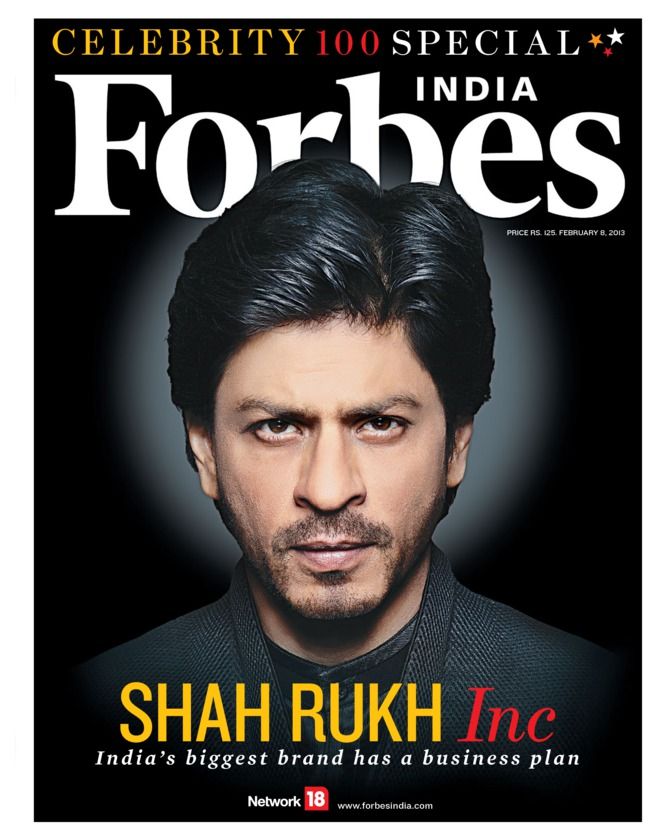
SHAH RUKH INC

[Archivio]

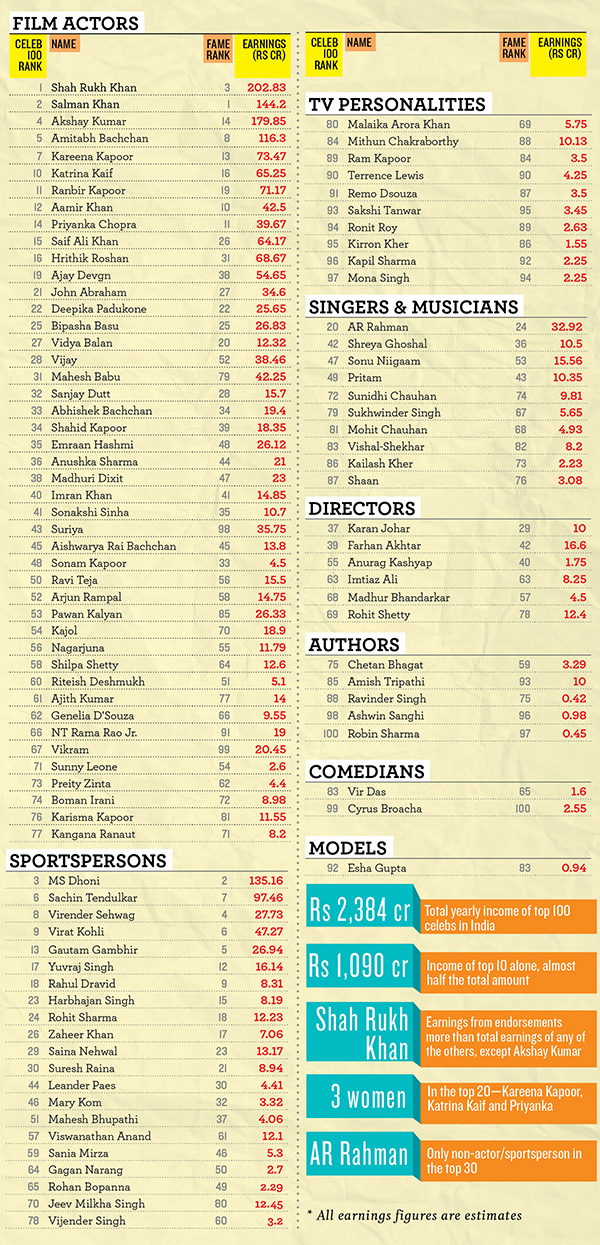
Vi propongo un estratto da una lunghissima intervista, suddivisa in due articoli, concessa da Shah Rukh Khan a Forbes India, in occasione del numero speciale dell'8 febbraio 2013 dedicato alle 100 celebrità più famose del subcontinente. Vi anticipo che la superstar cita ben due volte il nostro Paese (il Re ci ama). Per quanto riguarda la classifica, SRK si aggiudica il primo posto, Salman Khan si posiziona saldamente al secondo (clicca qui), Akshay Kumar è quarto, Amitabh Bachchan quinto, Kareena Kapoor settima, Katrina Kaif decima. Aamir Khan deve accontentarsi del dodicesimo posto, Hrithik Roshan del sedicesimo, Aishwarya Rai del quarantacinquesimo. Primo fra i registi, Karan Johar al trentasettesimo.

SHAH RUKH INC, Charles Assisi, Deepak Ajwani, Sohini Mitter:

'He ambled in trailing charm and cigarette smoke. An assistant placed a glass of whiskey in his hand. And we began to talk. Or rather, he did.
“I can do a line in a minute. I can memorise 20 pages and deliver it. I go for these rehearsals because in the space of work I am in, my performance, somewhere, besides the lines and production, I should be able to do something to improve the experience of someone watching it. That is the essential aspect of business I am in, or why I am in it, mashallah the business has prospered, I have the best of people and I have fantastic people, but we never discuss monies in this office.”
Huh?
We had been warned: By people who have seen him from close quarters - “He’s a master of the rehearsed ad-lib”; “He can speak and speak and say nothing, and you’ll only realise that two days later”; “He will duck all questions on Red Chillies Entertainment” - by those who said we were wasting time talking business with him - “The man has no clue what he’s doing” (a big-name producer); “He’s lost it in his head” (a distributor) - and of course, we knew he’d be late - “With him, I just kill my ego and wait” (a director known for his punctuality, and whom most actors would kill to work for) - and so we spent a day waiting for the call from his office - “He’s busy, you’ll have to get here on a two-hour notice” - which didn’t come, and then another day, and then we’d got the call, and scrambled to his home, where we had waited... Five... Mind... Numbing... Hours.

And then his publicist (...) told us he was coming. But: “Be gentle with him please. He’s sick and running 101 degrees.” And then, yes, he ambled in, and smiled, and we suspended disbelief and forgot our irritation and were enthralled listeners. At some point, though, self-preservation kicked in. Perhaps it was the realisation that we were hearing things we’d heard before. Some we recognised, word for word, from quotes we’d read in a story on him in Outlook 13 years ago. He was feeding us pre-digested faff. Charmingly, convincingly, with all the smooth delivery and sincerity of a used-car salesman on crack cocaine. But faff.
We gently reminded him we’d heard all this before. As gently as possible, we told him many people think he’s all gas. He didn’t blink. “They’re completely right. I don’t take offense to that.” Did we hear a switch click? The tone was the same, but he seemed to be going off-script. “I don’t need to do all this. I have enough money to last a lifetime. But you’ve got to have passion. You’ve got to be like Walt Disney. (...) I’m focussed, and I know why I’m doing what I am doing.”
For the rest of the evening, platitudes were in short supply. We got logic, even if coated in self-deprecation, plans rather than sound-bites. About building a sustainable business, using lessons learned from the superstars of the corporate world. He claims he doesn’t understand business. But 72 hours after leaving his gravity field, the effects of his charm have worn off and it is possible to look dispassionately at what is obvious: SRK knows exactly what he is doing.


Stick to what you know
Red Chillies Entertainment, (RCE, the banner he runs his various companies under), he believes, has the potential to generate a few hundred million dollars a year, much like a Hollywood major. And it will outlast him. “Else I would have called it Shah Rukh Khan Productions. Everybody in the business names their companies after themselves. Not me. I wouldn’t put my face on my company. I’d say this guy fights too much, smokes in public and does all the wrong things.” From his idols he has learned this: Focus ruthlessly on what you know, to the exclusion of everything else. And entertainment is what he does know, understand and get excited about. If he has got into businesses that don’t play to that strength, he gets out. Like when he started an equipment-leasing division. “It wasn’t entertainment.” He sold it to an assistant who had interned on his sets. And “I don’t understand or watch these saas-bahu [suocera-nuora] kind of soaps. It’s worked well for Ekta Kapoor. She is a close friend and has done a great job. I can’t.” So Red Chillies Idiot Box, a firm he started to create television software, is now defunct.
Sport, however, is entertainment. “Sport brings kids in. It makes business sense to keep the young happy.” (...) Then there is his VFX (visual effects) business. (...) “I like to think big. I don’t think short-term. The short term doesn’t scare me. I have the guts because of repeated failures in the past. If Ra.One hadn’t succeeded, I would have gone on and made Ra.One II until I made it a calling card for VFX in this country. The bottom line is that all of these are entertainment. I’ve been entertainer of the year for 20 years. VFX is entertainment. Film production is entertainment. And cricket is entertainment. I am not as diversified as people think I am.”


Slick is good
Ten years down the line, SRK believes, Indian film-makers will be toast. Hollywood will take over, like they did in Japan, Korea, Europe and other parts of the world. By way of examples, he talks of Christopher Nolan’s Inception and James Cameron’s Titanic. Back in 1997, when Titanic was released in India, it grossed Rs 6 crore. But when Inception was released two years ago, it grossed Rs 12 crore from South India alone. In Hollywood, that’s peanuts. But they’re playing to a plan and every big studio, whether it’s Fox, Sony, Columbia, or a you-name-them, wants a piece of India. To drive the point home, he talks of how Fox Studios first tied up to release My Name is Khan across India. The idea wasn’t to make money, but to break the gates down. “Because I am Shah Rukh Khan, every Indian outlet opened their doors to Fox. I called up the ten-twelve people who represent all theatre owners in India, and they agreed.” That was the opening they needed. Fox is now the largest distributor in India and use the channels they built with My Name is Khan to push Hollywood content into India. (...) But, as more people flock to cinemas, Hollywood’s finesse will eventually win them over. India may make the most movies in the world, but “With all due respect, the production values are s***. Why will my kids watch that kind of crap when Hollywood offers something slicker?” (...)


If need be, plead (...)
He is (...) the best public relations ambassador RCE could have. “I was the first to go on the road, do television shows, go to malls and market films in those big, stupid, silly, over-the-top ways that people do today.” Usually, he says, “I never go out and ask for business.” But for the VFX part, he does. “I have to convince people to trust RCE. I get access because I am Shah Rukh Khan. I went out, met Rakesh Roshan and told him ‘Sir, let me work on Krrish.’ He likes me and knows I will do the best job possible because I have this technical keeda [itch].” There’s more. “Hollywood collaborations are happening as well. What we refuse to do is low-end work. We want to work on the core effects. In Ra.One, that special sound effect you hear requires intricate software. These are things we build. Once you have it, you can rent it out. (...) We live in fortunate times. The American economy is in a bad shape. It allows us to get the top VFX guys from America and we employ them on short-term bonds. For Krrish, the top people have come down. We employ them for short periods, give them the best possible lifestyles, and ask them to teach our kids how to do it.” (...)


Use yourself
He is intensely aware of how powerful he is as a brand, and isn’t bashful about using his weight. And he doesn’t think quarter-on-quarter. (...) “So when we were doing Ra.One, I was told we have superb sound, but theatres can’t reproduce it and owners won’t cough up the money to invest in the systems. So I personally went to Dolby and asked them if they can put 7.1 Dolby surround sound in theatres. They said they would if I added my branding to it. I called up theatre owners and told them, ‘Listen guys, I’m Shah Rukh Khan and I’m getting you this hardware from Dolby. Just put it up for me.’ They agreed right away. It added to the viewers’ experience without them even realising it. The graphics cards that were used to make Ra.One, each one is horribly expensive. Nvidia, the company that manufactures those cards, gave me 300 of them in return for my brand name. It’s a win-win proposition for everybody.” (...)


RCE is making profits now, but the Hollywood-sized scale Khan wants for it is still some time away. Can it get there? What could get in its way? Shah Rukh Khan is RCE’s biggest strength and potentially, its biggest weakness. He is promoter, ambassador, mascot, rainmaker, inspiration and fund-raiser, and to fit it all in, he drives himself at a pace that would prostrate ordinary people. Sure, that’s not unusual for business barons, but they are not also called upon to simultaneously spend many hours a day on film sets leaping, dancing and projecting charisma at a billion people. He’s 47 now, and the abuse he has put his body through will begin to take its toll. Will his superstar status last? That’s unpredictable, given the vagaries of the industry, but at a conservative estimate, he could hold his place at the top for four or five years. Is that enough time to take Red Chillies Entertainment to the top of the food chain? Yes, business empires have scaled up in less. But there’s this: Many actors, around the world, have started businesses, with ambitious, visionary plans. Not one has ever truly made a genuine success of it. King Khan won’t be just fighting himself; he’ll have to beat history. And we have the best seats in the house'.


I PRAY TO GOD THAT I NEVER BECOME A BUSINESSMAN, Charles Assisi, Deepak Ajwani, Sohini Mitter:

'Becoming India’s biggest showman
To be really honest, I don’t know how all of this has happened. (...) When you ask me to be honest, I don’t know how it all happened. I do a lot of things. This business has given me the opportunity to meet some of the biggest world leaders. I am personal friends with some of them. And the only ability I have learnt is to say I don’t know and I want to pass that on to my son.

Equating failure with poverty
I come from Delhi. (...) I lost my father when I was 15. I lost my mother. I had a sister who was not well. I equated failure to be poverty. I have come from there. I am scared of poverty. I have succeeded because I am scared of failure, which for me is poverty. I believe in dignity of labour also. (...) Where I came from, I had no money to eat. (...) I come from a very realistic place. My parents died in debt. I remember, during the promotions of Kabhi Haan Kabhi Naa in Gurgaon, someone from the audience yelled at me saying that my mother owes him five lakhs. My mother was no more then. Here I was, being a star, and I was being told she owed somebody Rs 5 lakh. I don’t want that to happen to my son. (...) I have so many awards. But I am still scared for me or my son 40 years from now. That’s why I don’t want to ever take a loan. (...) I just want to give a good education to my kids and tell them listen, we don’t owe anybody any money. (...)


SRK: Actor or entrepreneur?
I’m only an actor. I pray to God that I never become a businessman. What turns me on is working on a line or singing a song or being able to create a moment in front of the camera. It does not turn me on cracking a deal. (...) I like to get more into the creativity of film making which is writing. That is the starting point. I want to graduate inwards. I will get it wrong more often than I get it right. But the idea is that I do it for the creative part of it, for the excellence and tech creativity of it. I have never done it because of money. I’m all right losing money but I live to the purpose of the business which is to give happiness. (...)

Diversify but get the core right
Everything else follows. Film production is related to my core. It’s in the same business as I’m in. VFX is only going to enhance them. Action, production and VFX are at my core. These are the things I like. I even draw the sets sometimes. I write my fight scenes. These are extensions. I really like kids. Business wise too, I feel the biggest gap India has is in the sector of children. Our entertainment (...) gives no opportunities to them. Sports are also related to that. Because sports allow kids to come in, it becomes entertaining and commercially viable. It makes great business sense to keep the young happy.


Entertainment, Entertainment, Entertainment
The bottomline is that all of these are entertainment. And that’s my business. I’ve been the entertainer of the year for 20 years. VFX is entertainment. Film production is entertainment. Cricket is entertainment. And television is entertainment. So if you really look at it, it’s under the masthead of entertainment. So I am not that diversified [as you think].

Sports is passion
I remember when we were doing Chak De! India we went out to rent the Jawaharlal Nehru stadium to practise. We couldn’t get the National Stadium all the time. The officials told me it was booked for weddings. And they asked me why are you making a movie on hockey? I told them what are you doing? This stadium is meant for sports in this country. So, as a person, who has come to a position of choice, who is doing well, who wants the best for his kids, and I have a passion for sports, in fact my life’s dream is to make a stadium. People keep telling me why did you get into IPL? But how stupid is it? In a country with 1 billion people, only 11 kids can go on playing cricket for the next five years. Just think about it. What are the chances of your child or my child making it to a cricket team? So we need to build more platforms. I am not saying this [IPL] is the greatest thing. As things are developing, I feel very sad we don’t have a good football team. Ours is the only developing country that doesn’t have a good football team. From Chile to Uruguay to god-bless-them Nepal, they’re all fantastic. It’s a cheap game. (...)


Corporatisation changing the industry landscape (...)
Corporates are allowing us to market films in places as diverse as Surinam and Italy. That was amiss earlier. And now that they have come, the marriage between the two, that is the creative set of producers and the business side of studios in the last 5-6 years have turned out some good stuff. Another five years and things will grow a lot more. (...)

Star system
I remember Quentin Tarantino telling me this in Cannes 5-6 years ago; that the star system is what is going to sustain the film industry. And we are genuinely lucky to have a system like that already in place. Where there is no star system, there will be no film industry. (...)

Tap India’s youth
We [Indians] are looking at the wrong market. We should be trying to capture our own market. We should have one theatre for 10,000 people. And let’s make cinema to attract this young India that is emerging. But younger people are going to have younger thoughts and younger ideas. So if I don’t give them the best film, they will go. I can see my 15-year old son succumbing to Hollywood. We need to cater to the youngsters. If we don’t do it, before we know it, we won’t be making 200 films anymore. It will be 150, and then a time will come when we will have just 50 [films] to show and the others will be watching Hollywood films. It is already happening in the urban India. If we make it, it has to be kickass. We have to take cues from the West and that is the long term business thought I have. (...)


Image, PR and endorsements
I have an amazingly pretty face. I am a fantastic poster boy, no doubt about it. I started endorsements. (...) I endorse everything. My image doesn’t matter. What I become, the work I do is my image. I am not trying to be someone else. (...) He is a good boy, he is a family man, he is a superstar, and he is an intelligent guy. None of these things, I decided. Whatever my image is, that’s what I am. When people say I am intelligent, it is because I am educated and I am proud of it. I remember when I came in, a very big producer told me let’s claim you’re uneducated. (...) Why should it feel good to say that this guy came from the streets of Delhi and became a hero? I make educated decisions, good or bad or ugly. I keep saying this again and again. I am employee of this image and the image is who I am. I work for this image. But some days, you don’t like your boss. Some days you like to sit down with your boss and say Sir, everything is good about you. But what you said that day is stupid. I don’t work for an image. I have great PR without wanting to be so. I sell films. I sell the goods you want me to. Is it good for my image? Who am I to question a 100 year-old company? You haven’t questioned it, why question me? (...) It’s not as good or as bad when they say I am fantastic; truth is I am not as fantastic. When they say I am bad, I am not as bad. It’s all somewhere in the middle. So long as your family knows that. My son and daughter will grow up to know the right things. Are they going to live off the image their father created? That would be stupid. (...)

Future of children
The easiest thing for me to do is to launch my son as an actor. He is good-looking, and has the backing. But I really want him to be a sportsman because it is an important aspect in this country. (...) That’s a great life. You’re a star son; you should live a great life. Live in Italy somewhere, or Barcelona, have a good time. Go around with some good babes, and get paid for playing. But I would like my daughter to be an actress. I think she is talented and has a lot of interest and acts very well. I personally feel a lot of my stardom is because of the women who have worked with me and they haven’t got their due. It is my duty to make sure, that I pass on the mantle to my girl because that would make a statement that it is alright to be a girl and an actress and it is cool to be a woman'.

(Fotografie scattate da Dabboo Ratnani)


31 luglio 2022

NEW INDIA DESIGNSCAPE

[Archivio]

La mostra New India Designscape era stata allestita dal 14 dicembre 2012 al 24 febbraio 2013 presso la Triennale Milano. Riporto di seguito il comunicato stampa: 

'In mostra una inedita selezione dei più interessanti lavori dei designer indiani contemporanei, a cura di Simona Romano con la collaborazione di Avnish Mehta. New India Designscape presenta la complessità di un contesto, di un paesaggio, in cui prevalgono le interrelazioni e le continue interrogazioni sul progetto più che la fissità di identità nazionali e di figure in sé concluse, come i maestri delle generazioni passate. I giovani designer selezionati, permeati dalla matrice culturale dell’India ma fortemente contaminati da altri contesti, per lo più occidentali, attraverso i loro contributi progettuali propongono progetti che vivono in un delicato equilibrio tra l’innovazione e la tradizione.


Spesso sono proprio i contenuti mitici a essere riproposti, con una certa ironia, in oggetti comuni (per esempio in Mr Prick di Sandip Paul, nei Lotus pieces di Sahil and Sartak, nella Cheerharan Toilet Paper di Divya Thakur, in Cut.ok.Paste di Mira Malhotra, nella Hanuman T-shirt di Lokesh Karekar, negli abiti di Manish Arora, nelle Varanasi Cows di Kangan Arora) a dimostrazione che l’antico e il contemporaneo, il sacro e il profano, si mischiano in un tutto non immediatamente decodificabile (per i non indiani) portando nel quotidiano contenuti profondi con risvolti, nell’era globale, quasi terapeutici.
Altri oggetti partono dalla cultura materiale autoctona (ardua sfida dal momento che gli oggetti più comuni e tradizionali dell’India hanno un coefficiente di modernità, funzionalità, ed estetica difficilmente superabile) o la reinterpretano innovando alcune tipologie (come nella Disposable Mug di Paul) o utilizzando alcuni oggetti comuni come dei semilavorati per crearne altri (la Choori Lamp di Sahil and Sartak, i lettering di Hanif Kureshi, i gioielli di Shilpa Chevan).


Negli oggetti in mostra vengono riproposti anche alcuni immaginari di un’India meno mediatica, che espone a un confronto tra diverse realtà sociali, a cui si guarda con un’accettazione, non rassegnazione, che prende forma, più o meno inconscia, in altri oggetti quasi surreali come il Bori Cycle Throne di Gunjan Gupta; e tra questi confronti non poteva mancare una riattualizzazione post-coloniale del rapporto India-Inghilterra (il lettering Englishes di Geetika Alok).
Le esigenze concrete della vita dei villaggi di cui è fatta la maggior parte dell’India non urbana ispira invece il cosiddetto barefoot design in cui una lavatrice a pedali (Reyma Josè) e la struttura in bamboo per il carico e il trasporto di pesi sulle spalle (Vikram Dinubhai Panchal), fanno la differenza in termini di qualità di una vita di per sé difficile. Ma il design si pone spesso in dialogo anche con le raffinatissime tecniche artigianali rurali per ridisegnare gli oggetti tradizionali (gli abiti di Aneeth Arora, il furniture design in bamboo di Sandeep Sangaru e Andrea Noronha, i progetti di Garima Aggarwal Roy, il Flying bird e le Singing Leaves di Rajiv Jassal, i Natural dishes di Sanders e Kandula, la Bambike, bicicletta in bamboo di Vijay Sharma) e incentivare le piccole economie locali (i Bamboo Cubes di M.P. Ranjan, i Chitku works di Priyanka Tolia).

Bori Cycle Throne - Gunjan Gupta

L’India urbana invece, quella tecnologica, che si caratterizza più per lo sviluppo di processi e semilavorati che per il design, quasi trova un alter ego artistico nei lavori di Padmaja Krishnan (Excess mobile e Wood Pc) e di Ranjit Makkuni (progettista di sofisticate installazioni interattive che ci connettono con il sacro).
L’India, anche nel design, si rivela così, difficilmente organizzabile, classificabile, sistematizzabile, decifrabile. Convivono progettisti che vi rimangono con l’intento di cambiare le cose (in mancanza delle aziende sono molte le produzioni self-made in piccole serie), che vi tornano dopo lunghi periodi di formazione e attività all’estero, o che lavorano lontano dalla grande madre senza mai dimenticarla nei loro progetti. Un paesaggio, il designscape indiano, ricco, che attraverso le diverse articolazioni del dialogo tra modernità e tradizione, potrà produrre nuovi contenuti per una società globale sempre in continuo divenire, e, proprio per questo, sempre alla ricerca delle proprie ancestrali radici'. 


Vi segnalo l'intervista concessa da Simona Romano a Elena Sommariva, pubblicata da Domus il 15 febbraio 2013. New India Designscape:

'Sono molti i progetti in mostra sviluppati con le associazioni?
Simona Romano: La maggior parte dei prodotti raccolti qui è frutto di piccole autoproduzioni avviate dai designer stessi. In qualche caso, come lo sgabello-cubo di bambù di M.P. Ranjan, che combina lavorazione a macchina e dettagli artigianali di alta qualità, c'è anche l'idea di creare lavoro e dare vita a piccole economie. Le università stesse offrono corsi di barefoot design, che permettono agli studenti di trascorrere un periodo di tempo nei villaggi. Esiste la National Innovation Foundation, un osservatorio permanente sul territorio per individuare le invenzioni autoctone più interessanti. Come le pinze per salire sulle palme e raccogliere le noci di cocco. Gli oggetti sono molto eterogenei: a unirli è la relazione tra contemporaneità e tradizioni, che comprende non soltanto l'aspetto artigianale, ma anche quello simbolico. Dal Mahabaratha, stampato (con una certa ironia) sul rotolo di carta igienica Cheerarhan ai personaggi della mitologia indiana riproposti sui giocattoli di carta per bambini Cut.ok.Paste, fino all'immaginario dei film di Bollywood usato da Manish Arora per i suoi abiti.

Bambike - Vijay Sharma

Per il design indiano potrebbe essere quindi un buono sbocco lavorare sulle piccole economie locali?
Penso di sì. L'India non ha bisogno di passare attraverso il nostro sistema produttivo, perché ovviamente ci si confronta con disponibilità di mano d'opera immense e una grande qualità nella produzione artigianale. Credo che in questa forma organizzativa, fatta di piccole produzioni e di un processo di recupero delle tradizioni artigianali, ci sia la strada giusta per loro. E poi, forse, anche la nostra: l'India non ci offre soltanto la sua visione, ma anche le chiavi per rispondere ai problemi attuali. In questa forte relazione tra tradizioni e innovazione - che è il filo conduttore di tutta la mostra - ci può essere una fonte d'ispirazione anche per noi, ovviamente seguendo modalità diverse.

Cut.ok.Paste - Mira Malhotra

Il design indiano guarda anche all'Occidente. Come?
Penso che oggi non abbia alcun senso parlare di cultura indiana, occidentale o asiatica: siamo in un momento in cui la cultura è davvero frammentata. È molto difficile trovare identità e compattezze nei tanti flussi globali. La cultura si rinnova e modifica continuamente, quello che invece può servire al designer come strumento di lavoro sono le tradizioni. È sempre più difficile identificarsi con una cultura precisa. Per chi progetta, è un parametro troppo instabile. Però quello che può fare chi progetta è pensare concretamente alle tradizioni, fare emergere elementi dal passato, attualizzarli e riproporli nella contemporaneità. Tanto è vero che gli oggetti che hanno forti relazioni con la tradizione sono anche un po' oggetti transazionali, sono una medicina, un buon accompagnamento, per via dell'uso di tecniche tradizionali o perché contengono dei messaggi simbolici. Ci sono influenze occidentali, ma come parte di un processo biunivoco. Lo stesso Movimento Moderno è nato su ispirazione del Giappone. Non si riesce davvero a dire di "chi è cosa", ma di certo non si tratta di oggetti apolidi, proprio per via di questa riesumazione di diverse tradizioni e della valorizzazione delle culture locali.


L'apporto tecnologico è un aspetto che non avete considerato. Perché?
Quello tecnologico è un capitolo a sé. È un aspetto che viaggia in parallelo al progetto di design. L'India fornisce servizi come call center, semi-lavorati e software, e primeggia nella tecnologia "soft". Molto interessanti sono le due sculture di Ranjit Makkuni, un designer che ha lavorato per quasi vent'anni allo Xerox PARC creando interfacce multimediali e sistemi per l'apprendimento. Nel suo laboratorio, in India, mescola tradizioni e tecnologia. La scultura in legno Re-visualizing a green self, per esempio, racchiude al suo interno sofisticati dispositivi tattili e sonori. Nelle sue mostre, Makkuni ripropone riti e miti attraverso installazioni interattive per fare avvicinare la gente alla tecnologia in modo friendly. In India, c'è una fortissima modernità che s'incastra e mescola con qualcosa di atavico, a creare un incredibile melting pot. Chi è indiano, probabilmente, se ne accorge meno.


Anche l'allestimento è un vero progetto nel progetto.
Kavita Singh Kale si è ispirata alla sua scultura Fragile e al concetto di città in movimento. I fili servono a dare un'idea di equilibrio instabile. È un progetto di grande raffinatezza. Come spiega Avnish: "Molte volte, l'idea di fragilità è collegata a quella di sostenibilità, non bisognerebbe creare qualcosa che è difficile da distruggere. Se gli oggetti sono semplici, vengono consumati e distrutti automaticamente. Questo, secondo me, è uno dei campi che i designer dovrebbero esplorare: materiali sostenibili che, nell'arco di dieci anni, si consumano e si distruggono".'


Elephant, 2010 - Sangaru Sandeep